
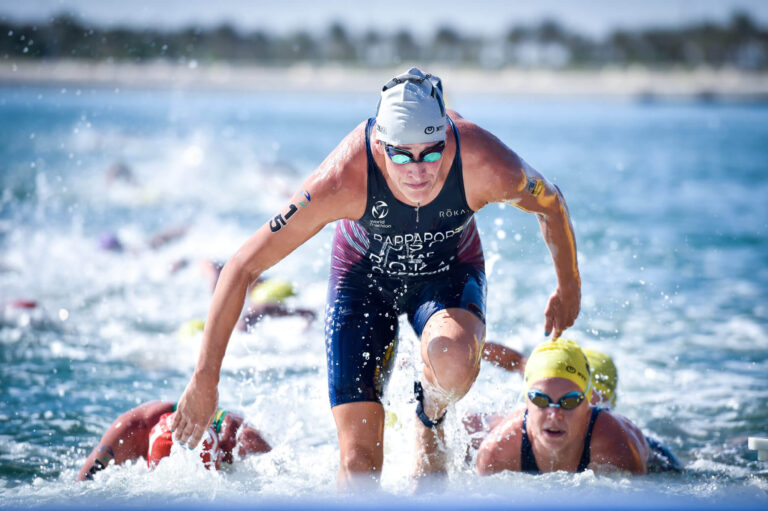
A simple change to the sleeves of your tri suit can change how fast and comfortable you feel on race day. Every triathlete I speak to, from club racers to long-distance competitors, asks the same question: should I wear sleeves or go sleeveless? This piece gives clear, expert guidance so you can make an informed choice for your next race.
I write as a triathlon journalist and former pro advisor with hands-on experience testing suits in pools, on bikes and in transition tents. Below I compare the two styles across the key performance and practical factors that matter in real racing, not just in lab numbers.
Sleeved vs Sleeveless
Rules and trends have shaped what athletes wear. Until the mid 2010s, many governing bodies limited sleeve options but recent rule changes in some federations opened the door to sleeved designs. That has led to a mix of choices at elite and age-group events, and no single answer fits every racer.
Both styles deliver solid performance when they fit well. A tight, well cut sleeveless suit can let your shoulders move freely in the water and avoid bunching on the bike. A sleeved suit can smooth the airflow on long bike legs and protect skin on hot, sunny courses.
To choose, weigh seven practical points: swim mobility, swim drag and wetsuit context, bike aerodynamics, loo stops and transitions, temperature and cooling, sun protection, and overall comfort. Read on for specific, actionable guidance in each area.
Swim mobility
Shoulder freedom is the first thing many triathletes think about. A sleeveless suit leaves the shoulder completely free and can feel less restrictive when you are explosive off the start or working on a high-cadence catch in the pool.
Fit matters more than sleeve presence alone. If a sleeved suit fits loosely across the shoulder it can reduce mobility, but modern sleeves are cut to follow the shoulder and rotate with your stroke. That said, some swimmers still prefer the naked shoulder feel of sleeveless for repeated, long stroke cycles.
If you choose a sleeved suit and worry about the swim, practice putting the suit off your shoulders and tucking it at your waist for the swim-only sections or non-wetsuit starts. Train this motion so it becomes quick and reliable in transition.
Swim drag and wetsuit context
Drag in the swim depends on whether you wear a wetsuit and on fit. For wetsuit swims, sleeve choice is largely irrelevant because the wetsuit covers everything and sets the hydrodynamic profile.
For non-wetsuit swims, a baggy suit of any style can billow and increase drag. A snug sleeved suit can give smoother lines and less water resistance than a loose sleeveless option, but the reverse is also true if the sleeved suit lacks correct fit.
You can also wear a swimskin over a tri suit. If you use a sleeved swimskin over a sleeved suit, allow extra practice to get used to any perceived restriction. Practice removing and donning a swimskin quickly in T1 to avoid losing race time.
Bike aerodynamics
Material and fit matter on the bike. A well-fitting tri suit fabric will be more aero than exposed skin in many non-drafting races, especially at steady high speeds. That gives sleeved suits an edge on long aero-focused courses.
Draft-legal racing is a different scenario. When you ride in a pack, aerodynamics from your suit are less decisive because group dynamics dominate. That explains why many draft-legal elites still favor sleeveless designs.
When considering aerodynamics, test suits under realistic conditions. Wind tunnel numbers are useful, but on-road handling, sleeve flapping and comfort in the aero position are equally important for race performance.
Comfort, temperature and sun
Comfort is the most personal factor and the one I recommend you prioritise. Some athletes report fewer seams digging in with sleeved suits, while others feel sleeved arms rub at the elbow or underarm. Body shape, posture on the bike and personal sensitivity will determine your experience.
Temperature control works both ways. Exposed arms aid heat loss through evaporation, which helps on hot days. Conversely, modern sleeved fabrics often include engineered zones that wick and ventilate, improving heat management even with coverage.
Sun protection is a clear practical advantage for sleeved suits on long, sunny courses. Sleeves protect the shoulders and upper arms from prolonged UV exposure and reduce mid-race sun-cream reapplication. If you race in equatorial or desert climates, sleeved suits cut sun risk and limit painful tan lines.
Race practicality and transitions
Transition speed and toilet stops are real-world considerations, particularly for long events. A sleeveless suit may be marginally faster to strip for a toilet break, but with practice the difference is only a few seconds for most athletes.
If you expect multiple stops, or value quick convenience, consider a two-piece race suit. Two-piece designs reduce faff at the loo and can improve comfort for some riders, though they are less common in elite circles.
Below is a short list of practical tasks to rehearse before race day to make sure your choice works in real time:
The following tasks help you verify fit and transition routines:
- Practice transitions: Rehearse taking off and putting on a sleeved suit from the shoulder in timed simulations to ensure speed and reliability.
- Test swimskins: Try swimskins over both sleeved and sleeveless suits to check range of motion and removal speed in T1.
- Simulate toilet stops: Do a mock stop mid-ride and test how easily you manage re-dressing to judge any time loss.
- Ride in aero position: Spend a session on the trainer or on the road in your race position wearing the suit to detect rubbing or restriction.
Quick comparison
To bring the main differences into one place, a simple comparison table helps you match features to race goals. Use it as a shorthand when choosing the suit for a specific event.
The table below compares core attributes across sleeved and sleeveless suits:
| Feature | Sleeved | Sleeveless |
|---|---|---|
| Swim mobility | Good when well cut; may feel slightly restrictive for some swimmers | Maximum shoulder freedom; favoured by many swimmers |
| Swim drag (non-wetsuit) | Tighter fit can reduce drag | Risk of billowing if loose |
| Bike aero | Often more aero on long, steady efforts | Less aero benefit; suits skin in pack racing |
| Sun protection | High | Low; more skin exposed |
| Transition speed | Slightly slower for arm movement | Quicker to strip in many cases |
Key Takeaways
There is no universal winner. For non-drafting, long-course racing where aerodynamics and sun protection matter, a well-fitting sleeved suit is often the better match. For swim-heavy events, draft-legal races or athletes who prize absolute shoulder freedom, sleeveless remains a top choice.
Prioritise fit over fashion. The best suit is the one you can move in, race in comfortably and operate reliably in transitions. Spend time testing suits in swim, on the bike and in mock transitions so you choose with confidence.
Try both styles in training, measure lap and transition times, and pick the suit that reduces compromise on the aspects most important to your race plan. Share your experience with other athletes and refine your choice with real-world data rather than opinions alone.