
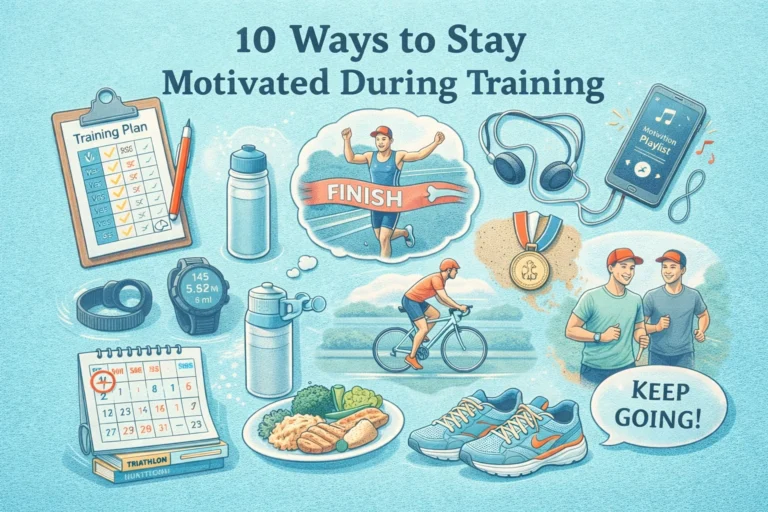
I love the race feel. That first push at the start, the rhythm in the swim, the flow on the bike, and the final run all begin in training. This short guide shows clear, practical ways to stay motivated training so you can enjoy the process and perform better.
You will find ten focused strategies designed by a triathlon journalist and coach. Each tip is easy to use. Read on to pick the techniques that fit your life and training load.
1. Set clear goals to stay motivated training
Goals give training a direction. When you know what you are aiming for, each swim, bike, and run has meaning. Simple goals keep focus and reduce wasted effort.
Start with one primary goal and break it down. Use time, distance, or skill targets. Keep them realistic and measurable so you can track progress every week.
Before you plan sessions, write your targets. If you want race fitness, set milestones for technique, volume, and race pace. This habit helps you set achievable goals and stay engaged day after day.
Here are common goal types you can choose from to help shape a training block.
- Performance goals: finish time or placing at a race.
- Process goals: weekly training consistency or technique focus.
- Skill goals: pacing, transition speed, or stroke efficiency.
- Health goals: sleep, body weight, or injury prevention.
2. Build a structured plan
A plan reduces decision fatigue. Know what to do each day and why. A simple weekly plan guides sessions and recovery. Plans also let you measure how well you stick to the work.
Keep the plan flexible. Life happens. Adjust weekly but keep the core structure. If you miss a session, move it or shorten it. The idea is to keep momentum, not to chase perfection.
Work with a coach or use an established template if you are new. A clear schedule makes it easier to commit to long-term training and helps you stay motivated training when the road gets tough.
3. Track progress and celebrate small wins

Tracking turns vague feelings into measurable gains. When you can see improvement, motivation rises. Use simple metrics: time, distance, perceived effort, heart rate, or session completion.
Record results and review them weekly. This habit shows trends. It highlights strengths and flags areas to improve. Seeing steady progress makes hard workouts feel worth it.
Celebrate small wins. Reward consistency and improvements. A short reward keeps morale high and supports long-term commitment.
The next list offers practical metrics you can track easily during training.
- Weekly training hours and completed sessions.
- Target pace or power for key sets.
- Perceived effort and recovery quality.
- Technique markers like stroke rate or cadence.
4. Train with others and join a community
Training with people raises accountability. A swim partner, group ride, or local club makes you more likely to show up. Social goals can be as powerful as performance goals.
Look for teammates who push and support you. Shared schedules and friendly rivalry keep sessions interesting. You learn from others and gain simple motivation every week.
If you want social structure, find local groups or online forums focused on triathlon. Talk openly about goals and training load. This builds trust and helps you become one of the motivated triathletes who keep coming back.
For many athletes, motivation triathlon comes from the team culture. The shared focus and routine lift your training when you need it most.
5. Vary sessions to avoid boredom
Repeat workouts drain interest. Vary intensity, duration, and location. Mix hard interval days with easy technique sessions. Add cross-training for variety and injury prevention.
Plan a weekly cycle of different focuses. One day for speed, one for endurance, and one for technique works well. Variation keeps the nervous system engaged and helps physical adaptation.
Small changes help too. Try a new route, a different pool lane, or a trail run. New stimuli keep your brain and body interested, and they help you stay motivated training long term.
6. Use mental tools: create motivational mantra
Mental cues help you push through fatigue. Short phrases focus attention and steady breathing. A mantra can be used before hard sets or during long sessions.
Practice a few lines that feel strong and true to you. Keep them simple. Use them at the same moment each session so they become part of your routine and automatically boost effort.
Try different mantras in training to see what works. A good phrase can change the tone of a workout and make tough intervals feel more manageable.
Below are sample mantras you can test and adapt. Use them when you need a quick mental reset.
- “One set, one effort.”
- “Smooth and strong.”
- “Breathe, drive, recover.”
- “Finish strong, one step at a time.”
If you want a clear action, try to create motivational mantra before a key block of training. Naming the phrase creates mental habit and focus.
7. Manage recovery and avoid motivation pitfalls
Poor recovery kills morale. Fatigue makes training feel joyless and hard to maintain. Prioritize sleep, nutrition, and easy days as part of the plan.
Watch for common motivation pitfalls: overtraining, constant comparison to others, and too many all-or-nothing goals. These traps reduce enjoyment and increase injury risk.
When motivation dips, step back. Check training load, sleep, and stress. Small adjustments often restore energy and motivation faster than more hard work.
Be kind to yourself. Rest is part of training. Smart recovery keeps progress steady and keeps you engaged season after season.
8. Schedule training and make it non-negotiable
Put sessions on your calendar like work meetings. A visible block of time makes it real. Treating training as a plan priority reduces the chance you will skip it.
Use fixed session times and flexible session content. If the day is busy, shorten the workout instead of canceling. This preserves habit and keeps confidence high.
Over time, scheduled training becomes a routine you expect. Routines make it easy to stay motivated training because you no longer waste willpower deciding whether to train.
9. Focus on process and micro-habits
Big goals are useful but they can be overwhelming. Focus on daily actions you can control. Small wins add up. This keeps motivation steady and reduces anxiety about outcomes.
Pick 1-2 micro-habits to build each month. Examples include laying out kit the night before, doing a five minute warm-up routine, or logging training immediately after each session.
Micro-habits create momentum. They help you be consistent even on busy days. Consistency beats bursts of effort when building race fitness and confidence.
10. Review, adapt, and keep purpose
Regular review keeps training meaningful. Set a weekly check-in to assess progress, adjust targets, and keep priorities clear. Reviews stop small issues from growing into big problems.
Adapting plans based on life and form keeps training realistic. If a goal no longer fits, change it. The point is steady progress, not stubborn perfection.
Keep your bigger purpose in mind. Maybe you race for health, family pride, or personal challenge. Reconnecting with that purpose helps you stay motivated training through ups and downs.
Key Takeaways
Staying motivated is a skill you can develop. Use clear goals, a simple plan, and small daily habits to build momentum. These actions keep training practical and rewarding.
Mix social support, mental tools like a mantra, and thoughtful recovery to avoid common motivation pitfalls. When you track progress and celebrate small wins, motivation grows naturally.
Start with one or two changes today. Try to set achievable goals, schedule sessions, and test a short mantra on a hard interval. Small, steady steps will make you a more consistent and happier athlete.
Enjoy the process. The training you do now builds the athlete you will be later. Keep the work fun and clear, and you will stay motivated training through every season.