
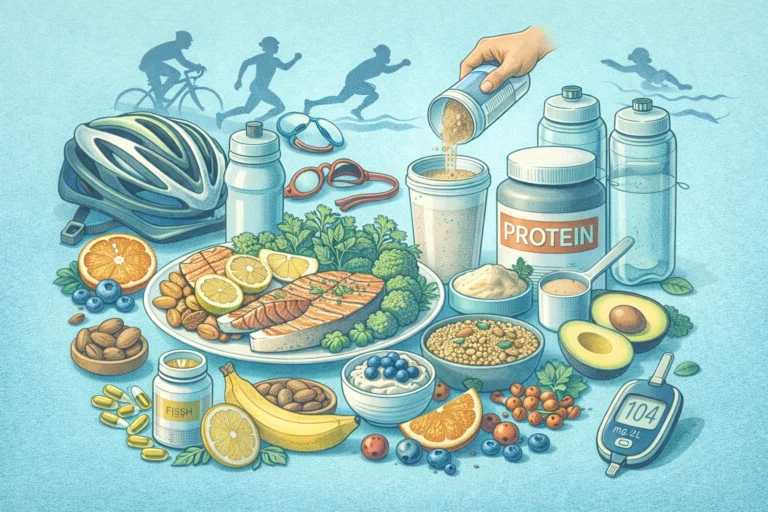
Want simple, proven ways to fuel better for swim, bike, and run? This guide on triathlonhealth nutrition gives clear steps you can use today. I will share what to eat, when to eat, and how to test fuel so you perform and recover well.
Fueling Basics for triathlonhealth nutrition
Good nutrition starts with energy. You need to match the food you eat to the workout you do. That means more calories on hard training days and fewer on rest days.
Macronutrients are the main building blocks. Carbohydrates give quick energy. Protein repairs muscle. Fat fuels long, steady work. Balance all three to suit your training load.
Hydration and electrolytes matter as much as calories. Sweat rate varies by person, heat, and effort. Drink to prevent big weight loss during long sessions. Small losses are normal, but large ones cost speed and focus.
Below is an easy set of targets to guide your daily planning. These are general ranges to start from and adjust by experience and testing.
Use the list to set daily macronutrient targets and adjust by training:
- Carbohydrates: 5 to 10 g per kg body weight per day. Increase toward 8 to 10 g/kg on very heavy days.
- Protein: 1.2 to 1.8 g per kg body weight per day. Aim for 20 to 30 g each meal.
- Fat: 20 to 35% of total calories. Focus on unsaturated fats and small amounts of omega-3s.
- Fluids: Start with 300 to 500 ml in the hour before long sessions. Sip regularly during training.
Training-Day Nutrition

Training-day nutrition is about timing and practical choices. You want steady energy for long sessions and sharp efforts for interval days. Planning meals and snacks around workouts helps you train hard and recover fast.
Before easy workouts, a small snack and some water is enough. For longer or harder sessions, you need more carbs before and refuel during. Practice what you will use on race day during long training sessions.
Recovery starts in the first 30 to 60 minutes after training. That window is great for carbs and protein to restore glycogen and help muscles rebuild. A simple snack works very well.
Here are clear examples of what to eat before, during, and after different sessions. Read them and pick options that match your taste and schedule.
Choose fueling options based on session length and intensity:
- Short easy session (under 60 minutes): Small snack like a banana, yogurt, or a slice of toast 30 to 60 minutes before.
- Long session (90+ minutes): 30 to 60 g carbs per hour during; sports drink, gels, or real food like bananas and rice balls.
- High-intensity intervals: 1 to 4 g carbs per kg in the 2 to 4 hours before. Keep an easy warm-up fuel like 20 to 30 g carbs 15 to 30 minutes before hard efforts if needed.
- Post-workout: 20 to 40 g protein plus 0.8 to 1.2 g/kg carbs in the first hour after long or hard sessions.
Race-Day Nutrition Strategy
Race day is where practice pays off. You must test fuel during training so your stomach accepts it on race morning. Follow a plan that matches race length, weather, and your gut tolerance.
Start with a pre-race meal that is familiar and easy to digest. Avoid new foods, heavy fat, and large amounts of fiber on race morning. Time the meal so you feel comfortable and energized.
During the race, aim for steady carbohydrate intake to avoid energy drops. Break the race into feeding checkpoints. Small, regular amounts are easier on the stomach and keep fuel steady.
Below are simple race-day plans and fuel choices for common triathlon distances. Use these as a template and test them in key training sessions.
Pick a race feeding plan that fits your distance:
- Sprint: 30 to 60 g carbs total during race. One gel or a small sports drink is often enough, plus water.
- Olympic: 60 to 90 g carbs total. Use gels, chews, or a drink split across bike and run.
- Half Iron: 90 to 120 g carbs per hour on the bike if possible, and 60 to 90 g per hour on the run. Practice gut training for high carb rates.
- Ironman: Aim for up to 90 g carbs per hour if your gut tolerates it. Include liquids, solids, and salty snacks to keep electrolytes balanced.
Recovery and Adaptation
Recovery nutrition is what lets training create gains. Eat to rebuild glycogen, repair muscle, and support immune function. Good recovery speeds up progress and lowers injury risk.
Timing helps, but so does total intake across the day. Make sure you meet your daily carbohydrate and protein targets, not just the post-workout snack. Meals should be balanced and spaced every three to four hours.
Sleep, hydration, and anti-inflammatory foods support recovery too. Bright fruits, vegetables, lean protein, and whole grains help your body adapt to training stress.
Here are priority actions for recovery you can apply right after a session and across each day.
Follow these recovery priorities to improve adaptation:
- Immediate refuel: 20 to 40 g protein plus carbs soon after long or hard sessions. Chocolate milk, a smoothie, or a recovery drink are easy choices.
- Balanced meals: Every meal should contain carbs, protein, and vegetables. This keeps glycogen stores full and muscles ready for the next session.
- Hydration and electrolytes: Replace sweat losses gradually. Include salty foods if you sweat heavily to restore sodium.
- Rest and sleep: Nutrients work best with 7 to 9 hours of sleep. Plan light days after very hard sessions.
Meal Plans and Sample Menus
Clear, repeatable menus make everyday fueling simple. Use templates that match your training day. Keep choices familiar and easy to prepare to reduce stress.
Below are sample menus for an easy day, a moderate day, and a heavy training day. Adjust portions by your body size and hunger. These are ideas you can tweak and repeat.
Start with these examples and change foods you do not like. The goal is consistent intake of carbs and protein spread across the day.
Here are simple sample menus you can apply right away:
- Easy day: Breakfast – oats with banana and nut butter; Lunch – chicken salad with quinoa; Snack – yogurt and fruit; Dinner – salmon, rice, green beans.
- Moderate day: Breakfast – toast with eggs and fruit; Snack – energy bar before a workout; Lunch – turkey wrap and fruit; Post-ride – smoothie with milk, banana, protein; Dinner – pasta with lean beef and salad.
- Heavy day: Breakfast – oatmeal, honey, egg whites; Pre-ride snack – sports drink and a small sandwich; During ride – gels and drink every 30 to 45 minutes; Post-ride – recovery shake and bowl of rice with chicken; Evening – balanced meal with extra carbs.
Supplements and Practical Tips
Supplements can fill gaps but they do not replace good food. Use them to make fueling simple or to cover specific needs like iron or vitamin D if tests show a deficiency. Always test one supplement at a time.
Caffeine is a legal performance aid for many athletes. Taken before hard sessions or races, it can sharpen focus and reduce perceived effort. Test timing and dose in training so it does not upset your stomach or sleep.
Electrolyte mixes and concentrated carbohydrate products are useful for long sessions. Real food should still be part of your plan. Sports products are tools not full solutions.
Below are practical supplement choices and safety notes to guide smart use.
Consider these supplements and safety tips:
- Protein powder: Useful for quick post-workout recovery. Choose 20 to 30 g per serving and mix with carbs for best effect.
- Caffeine: 3 to 6 mg per kg body weight about 60 minutes before key efforts. Start at the low end to test tolerance.
- Electrolytes: Use drinks or tablets during long sessions, especially in heat. Match sodium intake to sweat losses.
- Iron and vitamin D: Only use with blood test confirmation and medical advice. Overuse can be harmful.
Key Takeaways
Good triathlonhealth nutrition is simple when you use a plan. Match calories to training, balance macronutrients, and focus on timing. Consistency beats extreme diets.
Practice your race-day plan in training. Test foods, fluids, and supplements before the race. Your gut needs practice to accept higher carbohydrate rates during long efforts.
Recovery matters as much as the workout. Protein and carbs soon after hard sessions help muscles rebuild. Sleep and steady meals complete the process and keep you progressing.
Take small steps. Track what works, and make gradual changes. With steady practice of these triathlonhealth nutrition steps, you will feel stronger, recover faster, and race more confidently.