

Recovery makes training useful. Every swim, bike, and run session breaks you down so the next session can build you back stronger. This article explains triathlon recovery practices that help you recover faster, stay consistent, and avoid injury. Read on for practical steps you can use right away.
Why recovery matters for triathletes
Recovery is not optional for triathletes. Training stress breaks down muscle fibers, depletes energy stores, and stresses the nervous system. Without recovery, training benefits do not happen. You get tired, performance stalls, and injury risk rises.
Good recovery helps adapt to training. Your body repairs damaged tissues, restores glycogen, and balances hormones. Those processes make you faster, stronger, and more resilient. Recovery also helps your mind. It lowers stress, improves focus, and keeps motivation high.
Understanding recovery means appreciating both rest and active strategies. Rest days are important. Active recovery slots are useful. Nutrition and sleep both play major roles. Combining those pieces into a weekly plan is what separates steady progress from burnout.
Core principles of triathlon recovery practices
There are basic principles that guide effective recovery. Knowing them helps you pick the right tools for each training block and for each athlete. These principles work for beginners and for pros.
First, recovery is specific to the stress applied. A long ride taxes legs and glycogen. A hard swim taxes upper body and breathing. Recovery should match those stresses with the right rest, nutrition, and movement. Second, recovery is cumulative. Small misses add up across a week. Third, recovery is measurable. Track how you feel, and use objective measures where possible.
Below is a short list of practical principles to follow during your weekly routine. Each item is a simple rule you can apply to most training plans, from base season to race taper.
Use the list to shape decisions for daily recovery choices.
- Prioritize sleep, aim for consistent bed and wake times and 7 to 9 hours nightly.
- Refuel quickly after sessions, targeting a mix of carbs and protein within 45 minutes.
- Plan recovery days into your week and treat them like training sessions.
- Use active recovery to promote blood flow and reduce stiffness without adding fatigue.
- Monitor load with simple metrics, like RPE, heart rate, and how your legs feel.
Nutrition and hydration in triathlon recovery practices
Food and fluid are the repair materials your body needs. After a session, eating the right mix of nutrients accelerates muscle repair and restores energy stores. Hydration helps maintain blood volume, which in turn moves nutrients to tissues and removes waste products.
Timing matters. Aim to eat a recovery snack or meal within 30 to 60 minutes after moderate to hard sessions. That window is when muscles are most receptive to glucose and amino acids. Your snack should include carbohydrates to refill glycogen and protein to support repair.
Below are specific food choices and guidelines to help you plan meals around training. Use these ideas as building blocks for real meals that fit your tastes and routines.
Suggested foods work for gym sessions, long rides, bricks, and swims. Adjust portions by session length and intensity.
- Quick recovery snack: yogurt and banana, chocolate milk, or a small sandwich with lean meat.
- Post-long session meal: grilled chicken with rice and vegetables, salmon with sweet potato and greens.
- Hydration: water for short sessions; electrolytes or sports drink for long or hot sessions.
- Protein target: 20 to 30 grams within an hour for most athletes after a hard session.
- Carbohydrate target: 0.5 to 1.2 grams per kilogram of body weight per hour after long sessions, repeated until glycogen is restored.
Sleep and circadian factors for recovery
Sleep is the most potent recovery tool you have. It supports hormonal balance, muscle repair, memory consolidation, and immune function. Longer and deeper sleep equals more time for these processes to happen. This is why consistent sleep beats erratic schedules for long-term progress.
Quality matters as much as quantity. A night of fragmented sleep may feel like much less rest. Aim for uninterrupted sleep blocks and a cool, dark, quiet bedroom. If you train early, plan your day so you can still get adequate total sleep, perhaps by adding a short nap.
Small routines help. Going to bed and waking at the same time trains your internal clock. Avoid high-intensity training very late at night. Limit caffeine later in the day. Use naps smartly. A 20 to 40 minute nap can restore alertness without interfering with night sleep.
Here are practical sleep tips to include in your weekly routine. They are easy to test and adjust as you track training effects.
- Set a sleep schedule and aim to keep it even on rest days.
- Wind down with low-stimulus activities an hour before bed, such as reading or stretching.
- Create a sleep-friendly environment with a cool room and low light.
- Use naps after heavy sessions if you cannot extend nighttime sleep.
- Track sleep trends rather than single nights to spot problems early.
Active recovery methods that work
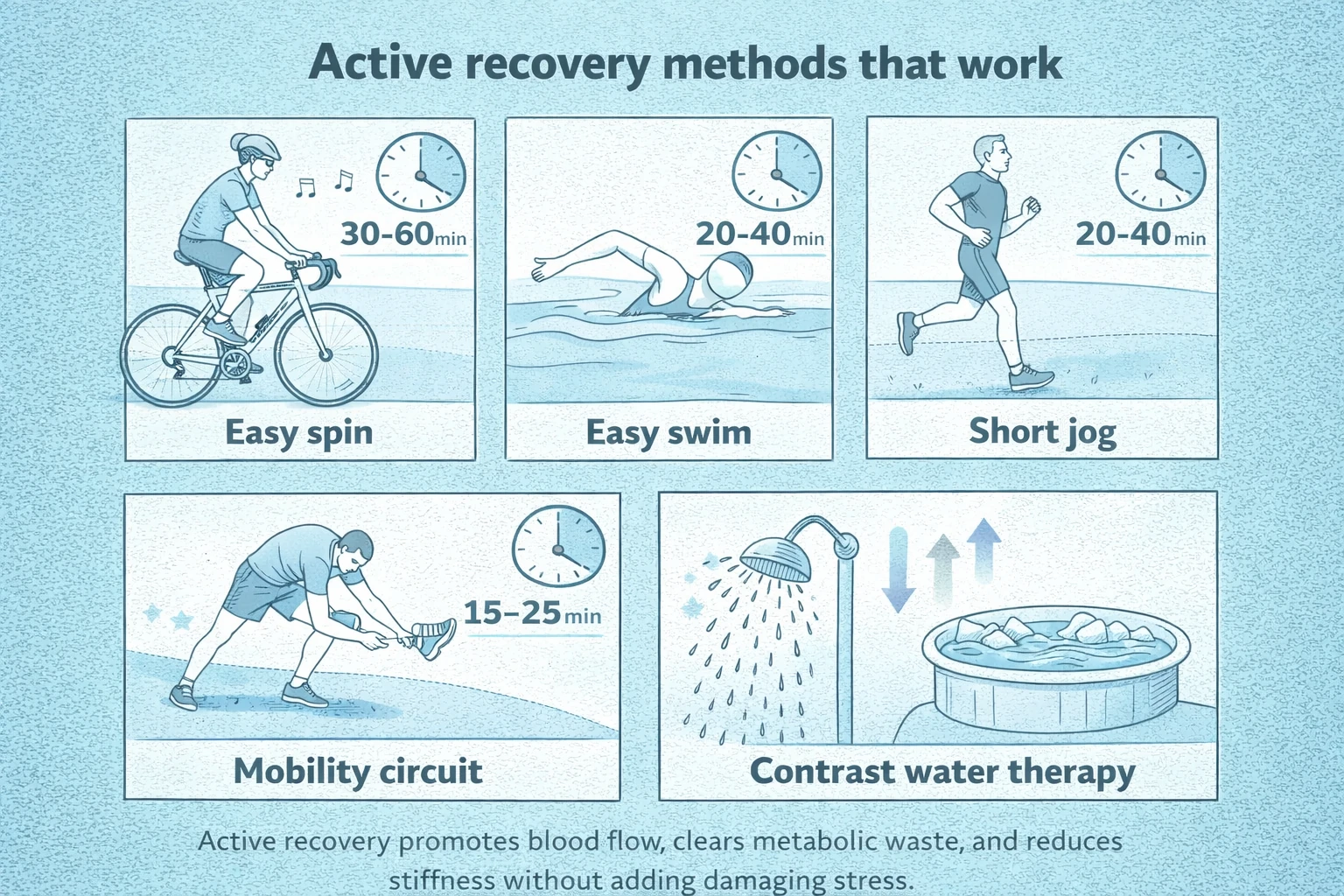
Active recovery promotes blood flow, clears metabolic waste, and reduces stiffness without adding damaging stress. These methods often feel easier than full workouts. Done correctly, they help you be fresher for the next hard session.
Common active recovery options include easy swims, light spinning, gentle jogs, and mobility circuits. Intensity should be low to moderate and kept brief. The goal is movement and circulation, not additional overload.
Below are effective active recovery sessions you can use the day after a hard workout. Each is designed to keep fatigue low while supporting tissue repair and flexibility.
Pick one or combine a couple depending on your sport focus and joint needs.
- Easy spin: 30 to 60 minutes at conversational effort, high cadence to flush the legs.
- Easy swim: 20 to 40 minutes with smooth strokes and focus on technique.
- Short jog: 20 to 40 minutes at a relaxed pace on soft ground.
- Mobility circuit: 15 to 25 minutes of dynamic mobility and light core work.
- Contrast water therapy: short warm rinse and quick cold exposure to stimulate circulation, used sparingly.
Mobility, soft tissue, and recovery tools
Mobility and soft tissue work reduce tightness and help joints move through better ranges. That means more efficient stroke mechanics in the pool, smoother pedal strokes, and less compensatory strain when running. These methods also reduce the risk of chronic injuries.
Common tools include foam rollers, massage sticks, lacrosse balls, and compression garments. These are not magic cures. They are practical aids that support recovery when used with proper technique and timing.
Here are simple, low-risk protocols you can add after key sessions or during recovery days. The goal is to relieve hotspots and restore range without causing more damage.
Use gentle pressure and slow movement. Pain beyond a firm tension is a signal to back off.
- Foam rolling: 5 to 10 minutes focusing on quads, IT band areas, glutes, and calves after hard rides.
- Targeted ball work: 2 to 5 minutes per spot for shoulders and upper back after heavy swim sessions.
- Light stretching: 10 to 15 minutes of dynamic and static stretches on recovery days.
- Self-massage: Use hands or tools to relax tense muscles, do not press into acute pain.
- Compression: Short-term use after long efforts to reduce swelling and speed return to baseline.
Monitoring recovery: metrics and signs to track
Monitoring your recovery makes your choices more precise. Simple metrics give a clear view of your current state. That helps you decide whether to push, maintain, or back off. It also lets you spot trends and adjust training before problems arise.
Useful metrics are both subjective and objective. Subjective measures include rating of perceived exertion, mood, sleep quality, muscle soreness, and motivation. Objective measures include resting heart rate, heart rate variability, training power, and functional tests like jump height or a short time trial.
Below is a short list of practical tools to track. Use two or three measures consistently so you have reliable data. Track them daily, and review weekly to find patterns that suggest recovery issues.
Consistency and context matter. A single bad day does not prove a chronic problem, but repeated signs should prompt a plan change.
- Morning resting heart rate: note significant rises above normal baseline.
- Heart rate variability: use trends rather than single values.
- Daily wellness questionnaire: short check on mood, sleep, soreness, and appetite.
- Session RPE: use to calculate training load alongside duration.
- Simple performance tests: short sprint or time trial to confirm readiness before key sessions.
Periodization and recovery across training phases
Recovery needs vary by training phase. During base periods you aim to build volume with steady fatigue management. During build periods you add intensity and need more targeted recovery. During taper, the goal is to recover fully while keeping sharpness.
In base phase, schedule slow steady sessions with more frequent active recovery days. Use easy weeks every three or four weeks. In build phase, add micro-recovery tactics like shorter high-quality sessions and focused nutrition to speed repair. In taper, reduce volume while keeping intensity short to maintain neuromuscular readiness.
Below are practical rules to use across phases. These help you adjust rest and recovery without losing training stimulus or adding unnecessary fatigue.
Keep notes on how you respond. Individual differences matter for ideal recovery frequency and intensity.
- Base phase: higher frequency of low-intensity work, one full rest day per week, and one light week every 3 to 4 weeks.
- Build phase: include active recovery after high-intensity sessions and consider two lighter days following long efforts.
- Taper phase: reduce volume by 40 to 60 percent over the final two weeks while keeping intensity bursts.
- Race week: focus on freshness, sleep, and sharp, short sessions with easy recovery days before race day.
- Off-season: longer rest blocks and variety to heal chronic issues and refresh motivation.
Sample weekly recovery plan for triathletes
A clear weekly structure makes recovery habits easier to follow. The example here is flexible. Adjust session lengths and intensities to match your experience, goals, and time available. The sample balances work and recovery so you can stay consistent.
This plan assumes a moderate training week for a committed age-group athlete. Swap days around as needed and use the list below as a template for easy implementation.
Remember to adjust nutrition, sleep, and monitoring to support the week. Treat easy sessions as important parts of the plan, not optional extras.
Sample week layout follows. Use it as a starting point and tune it with feedback from your body and training metrics.
- Monday: Rest or very easy active recovery, short mobility session, focus on sleep and meals.
- Tuesday: Hard bike intervals or tempo run, then protein-rich recovery snack and light foam rolling.
- Wednesday: Easy swim or recovery spin with technique focus, short nap if needed.
- Thursday: Interval swim or threshold run, followed by targeted soft tissue work and a balanced meal.
- Friday: Easy day with mobility, short bike to keep legs loose, and early bedtime.
- Saturday: Long ride or long run at aerobic pace, with planned refuel and active recovery the following day.
- Sunday: Short recovery swim or spin, stretching, and low-key family time for mental recovery.
Common recovery mistakes and how to fix them
Even experienced athletes make predictable recovery mistakes. Spotting these errors and fixing them quickly saves weeks of progress. Knowing what to avoid helps you keep training consistent and injury-free.
One common mistake is treating easy days like optional. They matter. Another is under-fueling after long sessions, which delays glycogen replacement. A third mistake is ignoring sleep. Poor sleep often cancels the benefits of good training and nutrition.
Below are common errors with practical fixes. Try one or two fixes at a time and track results. Change comes from steady habit adjustments, not from sudden overhauls.
Use this list to check your weekly routines and to build better habits in recovery.
- Skipping rest days: schedule them and treat them as non-negotiable for growth and injury prevention.
- Poor nutrition timing: carry a recovery snack to every long or hard session to avoid delays in refueling.
- Training through pain: distinguish soreness from sharp pain and seek professional advice for persistent issues.
- Overreliance on tools: use foam rolling and compression as aids, not as replacements for sleep and proper nutrition.
- Lack of monitoring: pick a few simple metrics and track them consistently to avoid unseen fatigue buildup.
Implementing recovery during race week
Race week requires careful tuning. The aim is to arrive fresh but sharp. That means reducing volume, maintaining some intensity, and paying attention to sleep, food, and mental state. Your routine should be simple and consistent to avoid surprises.
Start by trimming training volume while keeping the quality. Short, race-paced efforts with full recovery help maintain neuromuscular readiness. Increase sleep priorities and avoid late-night travel if possible. Stick to familiar foods and avoid experimentation.
Small details matter. Plan your race kit, meals, and warm-up in advance so you reduce stress on the final days. Use light mobility and short activation sessions to keep the body responsive. Monitor morning readiness to spot any issues early and adjust plans calmly.
Below is a short checklist for race week. Use it to keep recovery consistent without adding extra stress.
- Reduce volume by 40 to 60 percent while keeping short, sharp efforts.
- Prioritize sleep and aim for consistent bedtimes in the three nights before the race.
- Practice race nutrition that you know works during your long training sessions.
- Keep routines simple and avoid trying new equipment or foods in the final week.
- Use light mobility and short activation sessions the morning of the race to wake up muscles.
Key Takeaways
Recovery is the quiet work that turns training into performance. Proper rest, nutrition, sleep, and smart sessions combine to produce improvement. Triathlon recovery practices are simple to understand but require consistent application.
Make recovery a core part of your weekly plan. Schedule rest days, plan nutrition, track simple metrics, and use active recovery wisely. Small daily habits add up to big improvements over weeks and months.
Start with one change: add a recovery snack after every hard session, or commit to one full rest day per week. Track the effect for a month. You will likely find better energy, fewer aches, and more consistent progress. Keep testing and adjusting as you grow as an athlete.
These practices are practical and proven. Use them consistently, and your training will pay off with more fitness and fewer setbacks.