
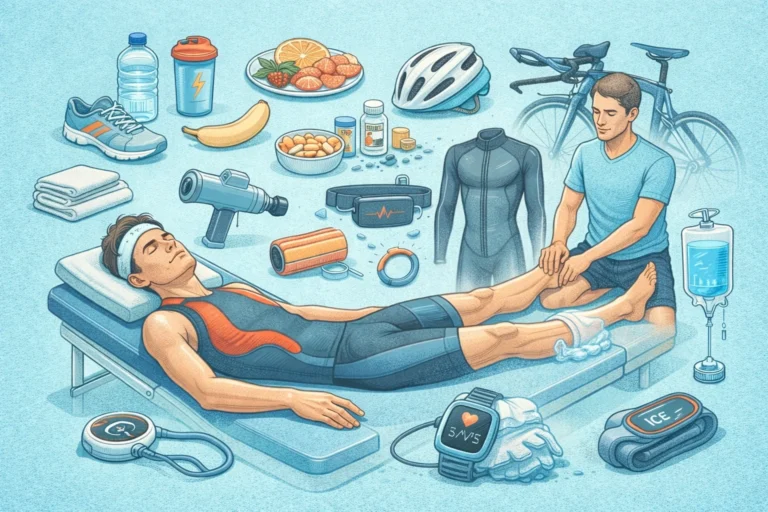
Recovery matters more than many triathletes realize. You can train hard and smart, but without planned recovery you will burn out, stall progress, or pick up injuries. This article explains recovery techniques triathlon athletes use to stay healthy, improve performance, and race ready. Read on for practical steps you can apply today.
Why Recovery Matters for Triathletes
Triathlon mixes three demanding sports. Swim, bike, and run training loads add up fast. Your body needs time to repair muscle, restore energy stores, and adjust to stress. Recovery is part of training, not optional rest time.
Good recovery helps reduce injury risk. When muscles are fresh they move better. Joints feel stable. That lowers the chance of overuse problems. A consistent recovery plan keeps you available for key workouts and races.
Recovery also affects how your body adapts. After a hard session the body repairs and becomes stronger. Those gains happen during rest. Missed or poor recovery means smaller gains over time. The right mix of rest and work produces steady progress.
Finally, recovery supports the mind. Triathlon is mentally demanding. Too much stress without recovery produces low motivation, poor focus, and poor race decisions. Planning recovery helps protect your mental energy.
Core Recovery Techniques Triathlon Athletes Should Know

Below are common, practical recovery techniques triathlon athletes use. I explain what they do and how to use them. Use the techniques that fit your level, goals, and available time.
Next is a clear list of the main recovery methods, followed by details and timing advice. Read each item and think about which ones fit your weekly plan.
- Sleep and planned rest
- Nutrition and hydration
- Active recovery sessions
- Compression and cold therapy
- Self-massage and foam rolling
- Mobility and stretching
- Professional bodywork
- Planned rest days and deload weeks
Each technique has a role. You do not need all of them every day. Combine methods for best results. Below I explain how to use each one and why it matters.
Sleep and Rest
Sleep is the single most powerful recovery technique triathlon athletes have. Deep sleep supports muscle repair, hormonal balance, and memory consolidation for learned motor skills. Aim for consistent sleep times and 7 to 9 hours per night.
Short naps can help after very long days or double sessions. A 20 to 40 minute nap reduces fatigue and restores alertness without making it hard to sleep at night. Use naps on big training days but avoid late afternoon naps that disturb nighttime sleep.
Plan rest days into your schedule. One full rest day per week is common for many triathletes. For higher training loads, schedule easy weeks or deload weeks every 3 to 6 weeks. These planned rests help the body fully recover and adapt.
Sleep routines matter. Turn off screens an hour before bed. Keep the bedroom cool and dark. Small changes yield steady gains in recovery quality and training response.
Nutrition and Hydration
Food and drink are tools for recovery. After intense training the body needs protein for repair and carbohydrates to replace glycogen. A simple post-session plan makes a big difference in how quickly you recover.
A helpful rule of thumb is 20 to 30 grams of quality protein soon after hard sessions, paired with 0.5 to 1.0 grams of carbohydrate per kilogram of body weight for longer sessions. For example, a 70 kg athlete might target 35 to 70 grams of carbs after a long ride, plus 20 to 30 grams of protein.
Hydration also matters. Sweating drains fluid and electrolytes. Drink fluids during and after sessions, and weigh yourself before and after long sessions to estimate fluid losses. Replace about 150 percent of the loss over the next few hours, along with sodium from food or drink.
Don’t ignore daily nutrition. Regular meals with balanced protein, fats, and carbohydrates maintain immune function and support recovery between sessions. Small habits over weeks matter more than one perfect meal.
Active Recovery and Light Movement
Active recovery means easy, low-intensity exercise that increases blood flow without adding fatigue. It helps flush metabolic waste and speeds nutrient delivery to tissues. A short, easy spin or an easy swim on recovery days is common and effective.
Keep intensity very low on active recovery. Heart rate should be well below threshold. The goal is circulation, not training stress. Sessions of 20 to 45 minutes often work best for most athletes.
Walking and gentle mobility work also count as active recovery. For busy athletes, a 30 minute walk after a hard session improves mood and speeds recovery without extra fatigue.
Remember that rest days with no structured movement are also valuable. Use active recovery on the day after moderate sessions, and full rest after your very hard workouts if needed.
Self-Massage, Foam Rolling, and Manual Therapy
Self-massage and foam rolling help reduce muscle tightness and improve range of motion. These methods increase circulation and prepare tissue for training. They can be short and effective when done correctly.
Start with a short warm-up before rolling, especially if muscles are cold. Roll slowly and pause on tender spots for 20 to 30 seconds. Avoid long, painful sessions that increase soreness. Keep sessions to 5 to 15 minutes depending on need.
Professional bodywork, such as sports massage or physiotherapy, adds targeted care. A trained therapist can find patterns that self-care misses. Many athletes schedule bodywork during heavy training phases or before key events.
Combine mobility work with rolling. After foam rolling, add dynamic stretches and movement drills to reinforce improved range. This pairing helps transfer benefits into performance.
Cold and Heat Therapies
Cold water immersion and contrast baths are common tools. Cold baths can reduce inflammation and perceived soreness after very long or intense sessions. Use cold immersion for 5 to 15 minutes at a comfortable but brisk temperature.
Contrast therapy, alternating warm and cold, may help circulation and recovery for some athletes. Start with warm water for 3 to 4 minutes, then cold for 1 minute, and repeat for 10 to 15 minutes. Personal preference and tolerance matter; test these methods in training first.
Heat therapy supports relaxation and increases blood flow. Use heat before light sessions or mobility work to loosen tight tissues. Heat after the initial inflammatory phase can improve comfort and movement.
Avoid routine cold baths immediately after strength training if your goal is to build muscle size and strength. Cold can blunt some adaptation pathways. Use cold strategically around high-volume endurance work or on race days to relieve soreness.
Compression, Recovery Devices, and Tech
Compression garments and pneumatic boots are popular recovery tools. Compression helps venous return and can reduce swelling. Many athletes find compression comfortable after long rides or runs and before sleep.
Pneumatic boots or compression sleeves that cycle pressure can speed feelings of recovery, especially after long hours on the bike. They do not replace sleep or nutrition but can be a useful part of a routine for heavy training weeks.
Other tech, such as wearable recovery lights, electrical stimulation, or percussive massage devices, may help with local soreness and muscle activation. Use evidence and personal testing to decide what fits your budget and schedule.
Remember that gadgets complement basic recovery habits. They are most effective when combined with consistent sleep, nutrition, and planned rest days.
Planned Rest Days and Deload Weeks
Planned rest days and deload weeks are essential recovery techniques triathlon athletes must use. Rest days give your body time to repair, and deload weeks reduce chronic fatigue from repeated training stress.
A common pattern is one easy day per week, with a full rest day every 7 to 10 days. Deload weeks reduce volume and intensity for 5 to 7 days every 3 to 6 weeks, depending on training load and life stress.
Deload weeks can be active with short, easy sessions or full rest depending on how you feel. The goal is to retain movement while reducing stress. Athletes often report fresh legs and better motivation after a smart deload.
Use training metrics like heart rate variability, sleep quality, and session RPE to decide when to deload. If you feel heavy, sluggish, and notice poor sleep, a deload week is likely due.
Mental Recovery and Stress Management
Mental recovery is part of overall recovery. Stress outside training adds to total load. If work, family, or other pressures are high, your body recovers less effectively. Manage non-training stress to get the most from your sessions.
Simple mental recovery habits help. Short mindfulness sessions, breathing exercises, and planned breaks from training keep motivation strong. Time away from structured workouts during an off season or after a big goal helps refresh focus.
Use easy, enjoyable sessions during recovery phases. Do low-pressure activities you enjoy, such as easy swims with friends or a relaxed bike on new roads. That keeps fitness while giving the mind a break.
Monitoring mood and motivation is important. If enthusiasm drops consistently, consider a week of reduced training and increased recovery to restore mental energy.
How to Build a Weekly Recovery Plan
Start by listing your key sessions for the week. Identify hard workouts that demand more recovery. Place easy sessions, active recovery, and rest days around the toughest workouts. A clear weekly plan reduces guesswork and ensures consistent recovery.
Balance intensity. If you have two hard sessions, add at least one easy day or active recovery day between them. For many athletes, a pattern like hard-easy-hard-rest repeats well. Tailor timing to your schedule and events.
Include post-session recovery steps. For example, after long rides plan a recovery snack, a short foam rolling routine, and an easy spin the next day. Put those small items into your calendar so they actually happen.
Track how you feel across the week. Use a simple training diary or an app. Note sleep quality, soreness, and mood. Small adjustments to weekly plans based on this feedback improve long-term consistency and results.
Race Week and Post-Race Recovery
Race week recovery is about sharpening, not resting completely. Reduce volume while keeping some intensity to stay sharp. Short race-pace efforts with low volume keep neuromuscular readiness without excess fatigue.
Focus on sleep and nutrition the days before a race. Drink well and keep meals familiar. Avoid any new recovery gadget or therapy you have not tested before a race. Stick with what works for you.
After the race, prioritize rest and gentle movement. In the first 24 to 48 hours, focus on nutrition, hydration, and sleep. Light walks, gentle cycling, and short swims support circulation without stressing fresh tissues.
A structured return to training reduces re-injury risk. Start with easy aerobic sessions and gradually reintroduce harder efforts over 1 to 3 weeks depending on race distance and individual response.
Preventing Injury Through Recovery
Recovery techniques triathlon athletes use can prevent common injuries like IT band pain, shin splints, and tendon irritation. Consistent recovery reduces tissue overload and supports resilience. Prevention beats long rehab.
Regular mobility work keeps joints moving smoothly. Address muscle imbalances with targeted strength work. Strength training is itself a recovery tool because stronger tissue handles load better.
Listen to warning signs. Persistent soreness, decreased power, or pain that changes your running form need attention. Early intervention with rest, modifying workouts, or seeing a professional prevents small problems from growing.
Include cross-training to reduce repetitive stress. Easy pool swims or gentle cycling replace impact days when needed and maintain fitness while protecting injured tissues.
Practical Weekly Example Using Recovery Techniques Triathlon
Here is a simple weekly template that balances training and recovery. Use this as a starting point and adjust by experience, race goals, and personal life demands. The plan assumes a moderate training block for an age-group athlete.
Monday: Easy spin or swim, mobility work, foam rolling. Keep intensity low and session short. Focus on sleep and nutrition after the weekend build-up.
Tuesday: Quality session, such as intervals on the bike or track. Post-session protein and carbs, short recovery spin afterward, then a nap or quiet evening if possible.
Wednesday: Active recovery session, 30 to 45 minutes, plus mobility and light strength work. Hydrate well and use compression if you feel swollen or heavy.
Thursday: Second quality session, perhaps a long tempo or long swim with speed sets. Add a short cool-down routine and foam rolling to help the next day.
Friday: Easy recovery day. Gentle movement only, short walk, or a relaxed swim. Prioritize sleep and mental rest. Consider a short massage or self-massage if needed.
Saturday: Long ride or brick session. Use nutrition strategies during the session and plan a good recovery snack and compression afterward.
Sunday: Long run or race-specific work depending on the week. Follow with active recovery the next day and an easy evening to prepare for Monday.
triathlon recovery practices and how to choose what fits you
There are many triathlon recovery practices available. You cannot do everything. Choose methods that fit your budget, time, and how your body responds. Start with sleep, nutrition, and one or two physical recovery tools like foam rolling and compression.
Test new methods during training weeks, not right before key races. Keep a simple log of what you try and how you feel. Over time you will identify a reliable routine that supports your training and life demands.
Work with a coach or therapist if you have recurring issues. Professionals can help customize recovery strategies and prevent small problems from becoming setbacks. A coach can also help you plan deloads and recovery timing around important races.
Key Takeaways
Recovery is as important as the training itself. Use recovery techniques triathlon athletes trust, such as sleep, nutrition, active recovery, and planned rest. These methods support repair, adaptation, and performance.
Combine recovery habits into a weekly plan. Place recovery around your hardest sessions, and use deload weeks to reset. Track sleep and mood to help decide when to push and when to rest.
Try practical tools like foam rolling, compression, and cold therapy, but keep the basics strong first. Test new approaches during training and consult professionals for persistent issues.
Make recovery part of your routine. With consistent habits you will train more, race better, and enjoy the sport longer. Start small, be consistent, and adjust based on how you feel and perform.