
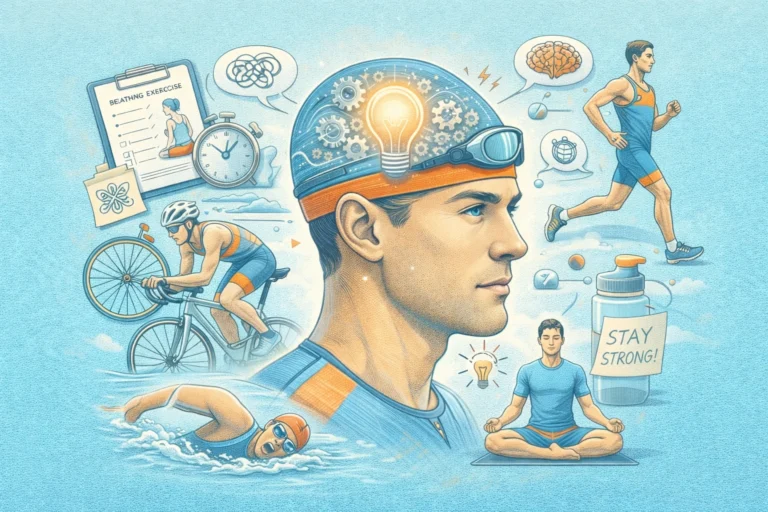
Mental resilience triathlon is the skill that keeps you calm when the swim is choppy, the bike leg goes wrong, or the run gets hard. This article explains what mental resilience means for triathletes, why it matters, and how to train it step by step. You will get practical drills, race-day routines, and recovery ideas that fit into real training plans.
mental resilience triathlon: why mental strength matters
Mental resilience affects every part of a triathlon, from training through to the finish line. It shapes how you handle pain, surprise events, and long hours of training. Strong mental skills help you stick to a plan and make better decisions under stress.
Racing is unpredictable. You can do every session, tune your bike, and sleep well, and still face a mechanical, bad weather, or a sudden stomach issue. Mental resilience triathlon gives you the tools to react calmly, adapt quickly, and keep moving forward. That calm response often makes the difference between finishing strong and losing time.
Coaches now treat mental work as part of the program, not an optional extra. You will find the same focus on mind training in high level teams, age-group groups, and among solo athletes. Training your head is as measurable as training your heart rate, and you can plan it into your week.
Developing this skill also protects your long term enjoyment of the sport. With better mental resilience, you recover emotionally from setbacks faster and avoid burnout. That means you race more often and learn more from each event.
The mental load of training and racing
Training for triathlon is complex. You manage swim, bike, run, strength work, nutrition, and life. That juggling creates mental fatigue that shows up as poor focus, irritability, or slow reactions. Mental resilience triathlon helps you tolerate that load.
Races add stress on top of training. Crowds, traffic, technical courses, and unexpected incidents create pressure. Athletes with a strong triathlon mindset stay present, prioritize what matters, and avoid getting lost in worry. This clarity improves performance.
Pressure also changes how you perceive effort. When your mind is strong, a hard interval feels like progress. When your mind is weak, the same interval feels overwhelming. Building mental resilience shifts your perception so hard work feels doable and purposeful.
Daily habits to build mental resilience
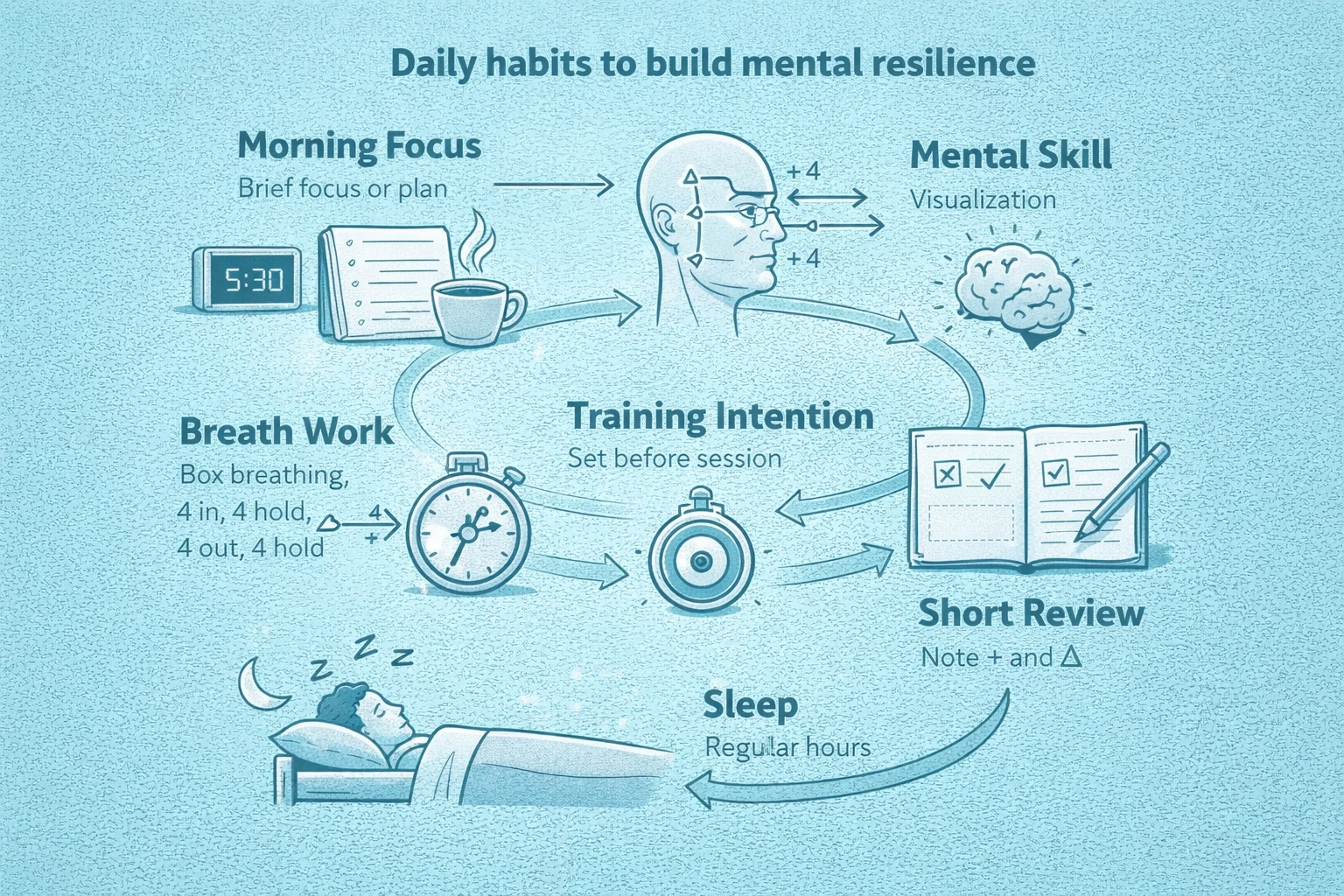
Small habits add up. Mental resilience triathlon is not only built in big sessions or therapy. It grows from daily routines that sharpen focus and calm. These habits fit into morning routines, training days, and recovery periods.
Start by picking two or three habits you can keep for a month. Keep them simple so they stick. Consistency matters more than intensity when you train mental skills. Small wins give you confidence and keep motivation high.
Below are practical habits that many successful athletes use. They are simple to start and easy to measure as part of your weekly plan. Use them with your physical training and adjust over time.
Try these daily habits to build mental endurance and reliability:
Before the list, here is a short lead-in sentence describing what this list shows.
- Brief morning focus, 5 to 10 minutes of breath work or a short plan for the day.
- One skill session per week that is mental only, such as visualization or coping drills.
- Set one training intention each session instead of obsessing over outcomes.
- End training with a short review, noting a positive and one area to improve.
- Regular sleep windows to support recovery and focus on key days.
Mental skills drills you can practice
Practice makes habit. Mental skills drills are short and repeatable. You can do them at home, during warm ups, or after cool downs. The goal is to make calm, focused responses automatic when stress hits.
Pick drills that match your needs. If you struggle with race anxiety, try breathing and pre-race scripts. If you fall apart when something goes wrong, practice coping with small, controlled mistakes during training to build confidence.
Do these drills regularly and track how they feel. Record short notes after practice. Over weeks you will see change and can increase difficulty.
Here are drills to start with and how to use them in a training plan:
Lead-in sentence before the list to explain how the drills map to training weeks.
- Box breathing, 4 counts in, 4 hold, 4 out, 4 hold. Do 3 times before sessions for focus.
- Visualization, 5 minutes imagining a calm, successful race start, transitions, and finish.
- Task-focus, pick one racing task and practice it under mild stress, such as a race pace set with a simulated delay.
- Acceptance practice, name a negative thought and let it pass without judgment, then return to the task.
- Self-talk scripts for pain management, short phrases to use in hard intervals or the late run.
Race-day mental strategies
Race day is where your mental resilience triathlon training pays off. A clear plan helps you manage nerves, unknowns, and the physical pain of the event. Most races have common stress points, and you can prepare responses for each one.
On race morning, keep the routine simple. Your body likes predictability. Use cues that reduce decision fatigue. Simple, practiced steps stop small problems from growing into bigger ones. When you are calm, you think faster and race smarter.
Transitions are also mental moments. A calm mindset in T1 and T2 saves time. Practice transitions with the same focus you use in sessions. That reduces mistakes and keeps heart rate under control before big efforts.
Below are clear race-day strategies that many athletes use to stay calm and decisive under pressure.
Short lead-in sentence describing the list below and how it supports race-day execution.
- Pre-race checklist that covers nutrition, kit, and a one-line race plan to avoid confusion.
- Micro-goals during the race, like hitting steady effort for the next 10 minutes instead of thinking about the whole race.
- Controlled breathing after stressful moments to reset focus and lower heart rate.
- Prepared responses for common problems, like mechanicals or cramps, so you act not panic.
- Post-race reflection that focuses on what worked and one clear improvement for next time.
Pre-race routine checklist
A short pre-race routine reduces randomness. It gives you familiar steps to follow. The routine should cover practical needs and mental readiness. Keep it compact and test it in tune-up races and tough training days.
Write down your checklist and practice it. Use the same order for items so you do not miss anything under pressure. A steady routine leads to steady performance. If something changes, update your checklist and practice the new order.
Make the list easy to read and keep it in your transition bag. On race day, a familiar checklist reduces anxiety and sets your mind on performance. Athletes who use a checklist report fewer forgotten items and less last-minute stress.
Here is a sample checklist you can adapt for your race and level of detail. Use it as a starting point and simplify to what you need.
Lead-in sentence before the sample checklist telling the reader this is a practical template.
- Nutrition plan for pre-race and race fuel, plus backups.
- Gear check, including triathlon gear and spares for quick fixes.
- Warm-up sequence with specific time windows to avoid rushing.
- One-line race plan with pacing zones for each discipline.
- Calm down routine with breathing and a short motivational phrase.
Handling setbacks, mistakes, and injury
Setbacks are part of triathlon. A flat tyre, a missed nutrition plan, or an injury can feel crushing. Mental resilience triathlon teaches you to bounce back and learn from problems. That is what separates athletes who quit from those who return stronger.
When a setback happens, the first step is to slow the emotional reaction. Take a breath, name the issue, and pick one practical action. Naming the issue reduces its emotional power and lets you move to solutions faster.
For bigger issues like injury, balance patience with constructive action. Good rehab is both physical and mental. Accept limits, follow a plan, and keep small goals that fit your recovery stage. That keeps motivation and identity as an athlete intact.
Learning from mistakes keeps your progress steady. A mistake becomes a lesson when you review it calmly and write down a short plan to avoid it next time. That process increases confidence and reduces repeated errors.
triathlon injury prevention and recovery mindset
Injury prevention starts with consistent habits: strength work, sleep, and good load management. Mental resilience helps you stick to the hard but sensible choices that prevent injury. It keeps ego in check when you want to push too far.
If you are injured, your mindset affects recovery speed. A practical, patient approach speeds healing. Maintain small daily goals and celebrate tiny wins. That keeps you engaged and reduces the mental strain of long rehab.
Use recovery time to work on areas that need less physical load, such as triathlon mindset, planning, or technique analysis. Study pacing strategies, watch footage of your swim stroke, or refine transition routines. This keeps progress moving even when the body rests.
Focus on what you can control during recovery: sleep, nutrition, rehab adherence, and small mobility goals. These actions build confidence and preserve your identity as an athlete while your body heals.
Merging mental and physical training
Mental resilience triathlon is strongest when it is integrated into physical work. Pairing a mental skill with a physical session reinforces both. For example, practice acceptance during a hard interval set to make it feel more natural in races.
Plan one mental focus per week, and attach it to a specific workout. That way you see progress in both areas. It also keeps training varied and interesting. Over time this creates a habit of using mental tools without overthinking them.
Coaches can help by adding short mental tasks to written sessions. A coach might add a focus point, a breathing cue, or a coping exercise to the workout notes. This creates structure and accountability for mental training.
Use training logs to record both physical and mental metrics. Note how focused you were, what thoughts came up, and how you rated the session mentally. These notes build a clear record of progress and help refine your plan.
Sleep, recovery, and mental resilience
Sleep is a foundation for both body and mind. Without good sleep, focus drops, emotions are harder to manage, and resilience declines. Prioritize consistent sleep routines as part of mental resilience triathlon training.
Good sleep supports learning of new skills, including mental drills. Your brain consolidates practice overnight. If you do visualization or skill work, the benefits grow when you pair them with good sleep habits.
Track your sleep and link it to how you feel during key workouts. Use that data to adjust training load and recovery. When sleep is poor, pick easier sessions that protect both body and mind. This reduces injury risk and keeps stress low.
Sleep triathlon health is a phrase to remember, because sleep is a core part of long-term performance. Treat it like equipment you maintain, not an afterthought. That practical shift improves training quality across the board.
Tools, resources, and common mistakes
There are many practical tools to help you build mental resilience. Apps, books, coaches, and communities all have value. Pick tools that fit your personality and stick with them long enough to see change.
Be wary of shiny quick fixes. Mental training takes time and discipline. Avoid jumping between many methods without giving each a fair trial. That kind of churn is a common pitfall for eager athletes.
Common mistakes include ignoring mental work, treating it as separate from physical training, and expecting instant results. Instead, plan mental work like any other training block. Track outcomes and adjust slowly.
Below is a short list of tools and mistakes you can start with to make your mental training practical and focused.
Lead-in sentence explaining this list includes both tools and pitfalls to watch for.
- Try short guided breathing or meditation apps for focus and recovery.
- Work with a coach or sport psychologist to build a tailored plan.
- Keep a training log that records both physical and mental notes.
- Common mistake: treating mental drills as optional rather than scheduled work.
- Common mistake: expecting mental breakthroughs without consistent practice.
Also pay attention to gear and practical items that can affect your mental state. Good triathlon gear reduces worry during races and training. Practice triathlon gear maintenance and simple gear troubleshooting so things do not catch you off guard. When your kit works, your mind can focus on performance.
Websites and communities such as triathlonhealth provide useful articles, but read critically. Learn from both successes and triathlonhealth mistakes reported by other athletes. Use real stories to shape your own triathlon health and training choices, and focus on building long-term mental fitness rather than chasing short-term hacks.
Working with others: coaches, teams, and peers
Training with others helps your mental game. Group sessions add social support and real-world stressors that prepare you for race pressure. They also give honest feedback and ideas to improve your triathlon mindset.
A coach can add structure and help you practice mental skills as part of the plan. Coaches can also spot patterns in your training log that you might miss. That outside view is valuable when you face repeated setbacks.
Peers and teammates offer perspective and motivation. Share mental drills with teammates and try them in practice. Group accountability makes it easier to stick to habits that build resilience.
When working with others, communicate openly about your goals and limits. Good teams create a supportive environment that pushes you safely. That balance of challenge and care builds mental strength without risking burnout.
Common team practices that boost resilience
Teams use routines to standardize mental work. This makes mental skill practice part of the training culture, not an optional add-on. Small, repeated team rituals build collective toughness.
Examples include pre-session focus cues, short group visualizations, or post-session reflections. These practices build consistency and normalize the mental side of training. They also create shared language for coping under stress.
Team drills can simulate race stress in a safe way. Practice starts, mass transitions, or bike handling in groups so you learn to remain calm when the stakes are higher. This rehearsal lowers the chance of panic in real races.
Teams also help with triathlon gear checks and triathlon gear maintenance. When everyone looks after their kit, races run smoother and stress drops. That attention to detail supports both physical and mental performance.
Measuring progress and staying motivated
You can measure mental progress with simple metrics. Track how often you used a skill, how you rated focus during sessions, and how you handled setbacks. These notes show progress over months and help you refine training.
Keep motivation by setting short, clear goals. Long-term aims are important, but short goals create daily wins that build confidence. Pair mental goals with physical targets for a complete plan.
Celebrate small steps, such as calmly finishing a hard session or handling a minor race problem. These wins add up and keep you moving forward. Over a season, they compound into real mental resilience.
If motivation dips, reassess your balance of training and life. Adjust weekly load, sleep, and recovery. Use the support of peers or a coach to get back on track without pressure.
Let’s Recap
Mental resilience triathlon is a skill you can train intentionally, like swim technique or bike power. It helps you manage stress, handle surprises, and finish stronger. The work is practical and repeatable, not mystical.
Build daily habits, practice mental drills, and integrate mind work into physical sessions. Use simple race-day routines and a short checklist to reduce uncertainty. If you face setbacks, slow down emotionally and pick one practical action to move forward.
Sleep, recovery, and team support matter. Track your mental progress and avoid quick fixes. Practice consistently, and you will see measurable gains in both performance and enjoyment of the sport.
Start small, pick a couple of drills, and add them to your weekly plan. Over time you will develop the steady focus and calm that make race days feel manageable and satisfying. That is how you build lasting mental resilience for triathlon.