
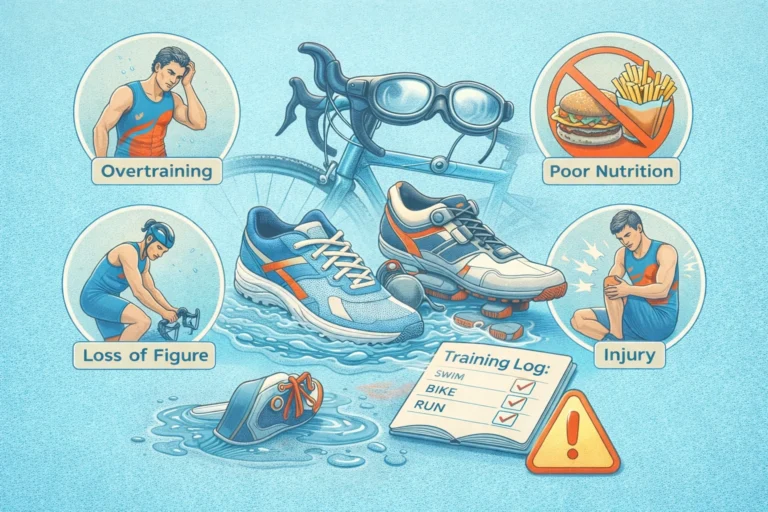
Many triathletes, from beginners to seasoned racers, repeat the same training errors without realizing it. This article on triathlonhealth training mistakes explains the most common pitfalls, why they happen, and clear steps you can take to fix them. Read on to learn practical changes you can make to train smarter, stay healthier, and race better.
Common triathlonhealth training mistakes
Triathletes often make similar errors across all three sports. These mistakes hurt progress and increase injury risk. Knowing the common problems is the first step to stopping them.
Some errors are easy to spot, like skipping long swims or ignoring brick sessions. Other problems hide in small choices, such as tiny but repeated pacing errors on bike intervals. All of these count as triathlonhealth training mistakes because they slow performance and add risk.
Below is a clear list of the most frequent mistakes athletes report. I include the items you will see again and again in club rooms, on social media threads, and at races. Read the list and see which ones match your habits.
Before the list, note that every athlete’s situation is different. Use these items as points for honest self-review, not as guilt triggers. The list that follows is a practical checklist you can use to shape your training review.
- Training too hard for too long, without recovery.
- Focusing on one discipline while neglecting the others.
- Skipping regular technique work, especially for swim and run.
- Poor pacing and inconsistent race simulation sessions.
- Ignoring nutrition, hydration, and fueling during long sessions.
- Using the wrong gear choices for your level or event.
- Not tracking progress with metrics or without simple goals.
Why these mistakes happen
Understanding why mistakes happen helps you stop repeating them. Often the causes are simple: eagerness, time pressure, or not knowing how to plan. The drive to improve can push athletes into too much training too soon, which leads to burnout and injury.
Time constraints are another cause. Many triathletes juggle work and family. When time is tight, it is easy to cut recovery or skip technical sessions. This creates a pattern where you can keep training volume up but lose quality and durability.
Another reason is unclear goals. Without clear short-term goals, training can drift. Athletes who do not track performance markers often repeat sessions that feel useful but do not create improvement. This is a form of triathlonhealth mistakes because it wastes energy and time.
Finally, social pressure and comparison play a role. Watching faster athletes train at high volume can lead you to mimic them without considering personal limits. That path often causes setbacks and lost training time that could have been productive instead.
Fixing your training plan
Fixing a flawed plan starts with a simple review. Check your weekly layout, and ask if each session has a clear purpose. Every swim, bike, or run should aim to improve a specific skill or fitness area. If not, change it.
A clear way to begin is by grouping sessions into focus blocks, such as speed, endurance, and technique. This helps avoid random training that leads to triathlonhealth training mistakes. Small weekly structure changes often produce steady gains without extra hours.
Another core fix is to set measurable targets. Use time, heart rate, power, or perceived effort. Measure progress every three to six weeks. If you do not see gains, change either intensity or recovery, not both at once.
Here is a short list of practical plan fixes to reduce common errors. Read the next paragraph to know what the list covers.
This lead-in highlights simple changes you can make right away. The list below covers session quality, recovery, and balance across sports.
- Replace one low-value session per week with a targeted skill session, such as swim drills or running form work.
- Add one controlled brick session each week, starting short and building time in race position.
- Schedule a full recovery week every 3 to 4 weeks, with reduced volume and intensity.
- Keep a training log with one clear metric for each session: quality, volume, or technique.
Recovery and injury prevention

Recovery is where training turns into fitness. Many triathletes ignore recovery, and it shows in more illnesses, niggles, and broken training blocks. Good recovery helps you train more consistently over months and years.
Recovery includes sleep, nutrition, mobility, and mental rest. Focus on one area at a time. Improving sleep by even 30 minutes per night can be a bigger training boost than squeezing in an extra easy hour on the bike.
Active recovery sessions also have value. Short swims, easy spins, and mobility work help blood flow without high stress. These sessions protect durable tissues such as hips and shoulders and reduce the chance of overuse injuries.
The list below gives simple, practical recovery habits. Read the next paragraph to learn why these items matter and how to use them.
These habits are low-effort but high-value. Adopt one habit per week until they become routine.
- Prioritize 7 to 9 hours of sleep most nights, with a consistent bed and wake time when possible.
- Use a weekly recovery session, such as a 40-minute easy swim or 30-minute easy bike, to promote circulation.
- Include mobility and foam rolling twice weekly, targeting problem areas specific to your sport.
- Plan nutrition around heavy sessions, with protein and carbohydrates within 30 to 60 minutes after hard work.
Technique and skills work
Technique is a low-cost way to gain performance. Small changes in swim stroke, bike position, or running form can save energy and reduce injury risk. Yet many athletes skip drills and live on steady-state sessions instead.
Begin with basics. For swimming, spend part of a session on drills that improve catch and body roll. For cycling, practice riding in your aero position and handling skills. For running, add short drill sets to improve cadence and posture.
Consistency matters for technique. A single drill session does not change form permanently. Repeat short, focused drills at least once per week and reinforce them in warm-ups. This builds motor patterns without adding heavy fatigue.
Below is a short list of skill-focused sessions you can add with low time cost. Read the next paragraph to see how to include them in a typical week.
Add these shorter sessions into warm-ups or as a replacement for one low-value zone 1 session per week. You will keep volume but increase quality.
- Swim: 15 minutes of mixed drills focusing on catch and breathing during the warm-up.
- Bike: 20 minutes of steady time in aero, plus three 1-minute accelerations to practice handling.
- Run: 10 minutes of drills and 6 to 8 strides after an easy run, focusing on turnover and posture.
Gear, nutrition, and race-day errors
Poor gear choice and bad fueling are classic triathlonhealth errors that show up on race day. You can train perfectly but lose big time because of shoes, tires, or a bottle you do not use in training.
Test gear in training at race pace. Never try a new shoe, tire, or aero helmet on race day. If possible, have a race kit trial during some long sessions. That will reduce surprises and build confidence.
Nutrition and hydration also need testing. Use the same gels, bars, and drink mixes in training as you will use on race day. Practice timing and portions so your gut knows what to expect under stress.
The list below covers simple race-day checks you can do in the weeks before an event. Read the next paragraph to learn how to schedule those checks into your taper weeks.
These checks are quick. Add them to the final two weeks of training so you can solve problems early and avoid last-minute stress.
- Try race-day nutrition on a long training day that simulates the race duration and intensity.
- Do a full kit run-through, including wetsuit, bike fit, bottles, and shoes during a brick session.
- Ensure tires and brakes are in good condition, and carry spare tubes and basic tools on key rides.
- Plan aid station stops in advance and practice grabbing bottles under race conditions.
Common mental mistakes and how to handle them
Mental mistakes are a major source of triathlonhealth training mistakes. Overconfidence, fear, and poor race tactics cost time and energy. Training the mind is as important as training the body.
Simple mental work can reduce errors. Practice pacing plans, rehearse transitions, and prepare for common race scenarios. Rehearsal reduces panic and helps you stick to your plan under stress.
Another common issue is negative self-talk. When workouts go badly, many athletes tell themselves they are broken. Instead, treat poor sessions as data. Ask what changed and respond with a small, concrete fix.
Below is a short list of mental strategies you can start using. Read the next paragraph to learn how to put them into practice without extra hours of work.
Use these strategies in short bursts. A five-minute mental check before a key session often works better than long, unfocused reflection.
- Create a simple race plan with pacing and nutrition windows and keep it on a card for race morning.
- Practice a pre-race routine that calms you, such as breathing drills or a warm-up sequence.
- Use positive cue words for focus during hard intervals, and reset after each effort instead of staying in the pain.
Coach or self-coach, when to seek help
Deciding between a coach and self-coaching depends on your goals and resources. Many athletes can progress far with a well-structured self-plan. Others benefit from an outside view to correct persistent triathlonhealth training mistakes.
If you see repeated injury, stagnation, or conflicting advice from peers, a coach can help. A coach provides objective feedback, plans progressions, and adjusts training when life or fitness changes. That saves time and reduces wasted effort.
Cost and fit matter. A coach should match your personality and goals. If you choose self-coaching, use reliable templates, track simple metrics, and ask for occasional expert reviews to avoid repeating avoidable errors.
Below are quick signs that you should consider getting external help. Read the next paragraph to evaluate your own situation honestly.
These signs do not mean you failed. They point to inefficient training that a coach or expert review can correct faster than you may hope to do alone.
- You have recurring injuries or pain that stop training blocks.
- Your performance stalls for several months despite consistent effort.
- You feel unsure how to set priorities or prepare for a specific race distance.
- You want a plan tailored to a busy schedule or specific event demands.
Sample corrective eight-week block
If you find repeated errors, an eight-week corrective block can reset your progress. The block focuses on balance, consistency, and technique while reducing high-stress volume. This helps you rebuild a durable base.
Weeks 1 to 3 emphasize skill and controlled volume, weeks 4 to 6 add targeted intensity, and weeks 7 to 8 taper volume and sharpen race skills. Each week has a clear focus and limits hard sessions to avoid overload.
This sample plan is short on specifics because needs vary, but the structure works for most athletes repairing triathlonhealth mistakes. Use it as a template and adjust durations to match your schedule and base fitness.
Here is a short weekly structure to guide coaches or self-coached athletes. Read the next paragraph to see how to use the items practically during the week.
Use the template as a rhythm, not as a rigid script. Swap sessions when life interrupts, but keep the session purpose intact: skill, quality, or recovery.
- 2 swims per week: one technique-focused session, one steady endurance swim with occasional race-pace sets.
- 2 to 3 bikes per week: one steady aerobic ride, one session with short sweet-spot intervals, one long ride at endurance pace.
- 2 runs per week: one easy run with drills and strides, one quality run with intervals or tempo efforts.
- 1 brick session per week: short to moderate bike followed by a brief run to practice transitions and pacing.
- 1 full rest or active recovery day per week with mobility and light movement.
Training habits to prevent future mistakes
Long-term success depends on habits that keep errors from coming back. Small, repeatable habits create consistent progress. Focus on tracking, reflection, and a simple routine that supports steady gains.
Daily and weekly reviews are powerful. Spend five minutes after key sessions to note what went well and what to change. Over weeks, patterns emerge and you can correct course before small issues become big setbacks.
Equipment and product choices also become habits. Keep a short, tested kit list. If you use triathlonhealth gear, make sure items suit your body and event. That reduces last-minute surprises that cause race-day errors.
Below are a few daily and weekly habits you can start using. Read the next paragraph to see how to fold these into a busy life without adding stress.
Pick one new habit per month and keep it simple. Small changes sustained over months create reliable improvement without burning you out.
- Log every session with one clear metric, such as perceived effort, power, or pace.
- Weekly review: 10 minutes on Sunday to check progress and set one concrete goal for the coming week.
- Pre-race checklist kept in a phone note, reviewed two weeks before any event.
- Quarterly gear review: replace worn items and retest your triathlonhealth gear choices on training rides or swims.
Key Takeaways
Many triathlonhealth training mistakes are avoidable. The common issues are clear: poor recovery, missing skill work, inconsistent pacing, and untested race gear. Addressing these areas reduces injury risk and improves performance.
Fixing training starts with structure and purpose. Make each session count, measure progress, and protect recovery. Small changes, repeated weekly, create lasting gains without more hours on the bike or swim deck.
Use the sample corrective block and the habit lists as practical tools. If problems persist, consider outside help. A coach or an expert review can correct long-term errors faster than trial and error.
Finally, stay curious and patient. Triathlon is a long-term sport. Avoid quick fixes and remember that consistent, smart training beats frantic volume. Keep this guide as a reference to reduce triathlonhealth mistakes and build a training plan that works for your life and goals.