
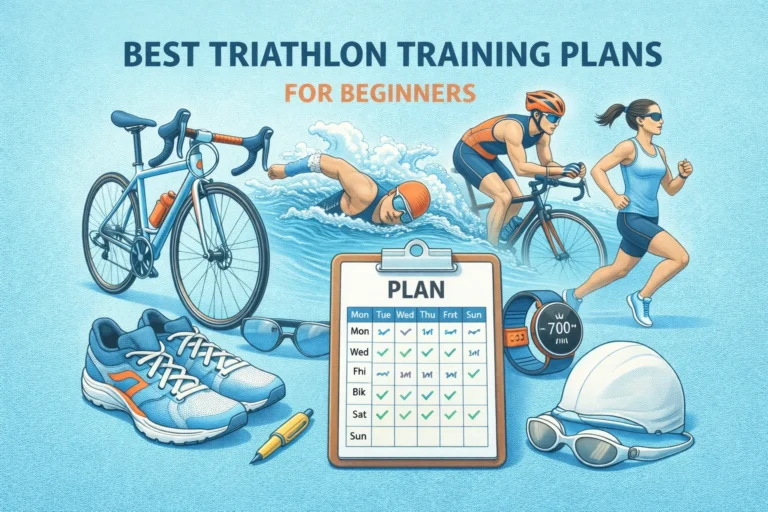
Ready to start triathlon training with confidence? This guide shows the best training plans beginners can follow. You will get clear options, what each plan costs, how long it takes, and who it fits.
Use this article to compare formats and find a plan that matches your time and goals. The target keyword best training plans beginners appears throughout to help you find the right program fast.
Keep reading to see ten vetted choices, plus buying tips and gear suggestions for a smart start.
Why the best training plans beginners work
Good plans save time and reduce guesswork. They give structure so you build fitness step by step. That makes progress steady and sustainable.
Plans set clear workouts for swim, bike and run. They balance hard days and easy days. That balance helps avoid injury and keeps motivation high.
The right plan also matches your life. It fits your hours, your access to pools or roads, and your budget. A plan that fits will keep you training week after week.
How to choose best training plans beginners
Choosing a plan is easier when you compare a few simple factors. Think about time, coaching level, cost and race distance. Use those ideas to filter options quickly.
Fitness level matters. If you are new to structured workouts, pick a gentle plan with clear steps. If you already run or bike, a mixed plan that adds swim work may suit you better.
Here are the main criteria to check before you buy or subscribe to a plan.
Below is a short checklist to help you rate plans at a glance. Read each point and use it when you compare options.
- Time per week: How many hours you need to train.
- Duration: Weeks until race day or a staged goal.
- Coaching: Self-guided, app-based, or coach-led.
- Skill focus: Balanced or swim/bike/run heavy.
- Cost: One-time fee or subscription model.
- Equipment needs: Bike trainer, pool access, open water practice.
Top 10 best training plans beginners
This section lists ten plans I recommend for new triathletes. Each plan is practical and proven. I include who it fits and what to expect weekly.
Many plans are labeled for sprint or Olympic distances. Most are flexible and can scale up. Read the short plan notes for timing and commitment.
Where useful, I mention if a plan pairs well with common gear like a smart trainer or a basic road bike. I also use the exact phrase triathlon training plans in places that fit naturally.
1. Local club coached program
Club programs are low cost and social. You get weekly group swims, rides and runs with an experienced coach. Sessions often include technique work and interval sets.
These programs suit people who learn best in a group. You will share pace groups and get tips from more experienced members. The social side helps you stay on plan.
Expect 6 to 10 hours per week for a sprint plan. Cost is usually a small monthly fee. You may need basic gear and a membership that includes pool access.
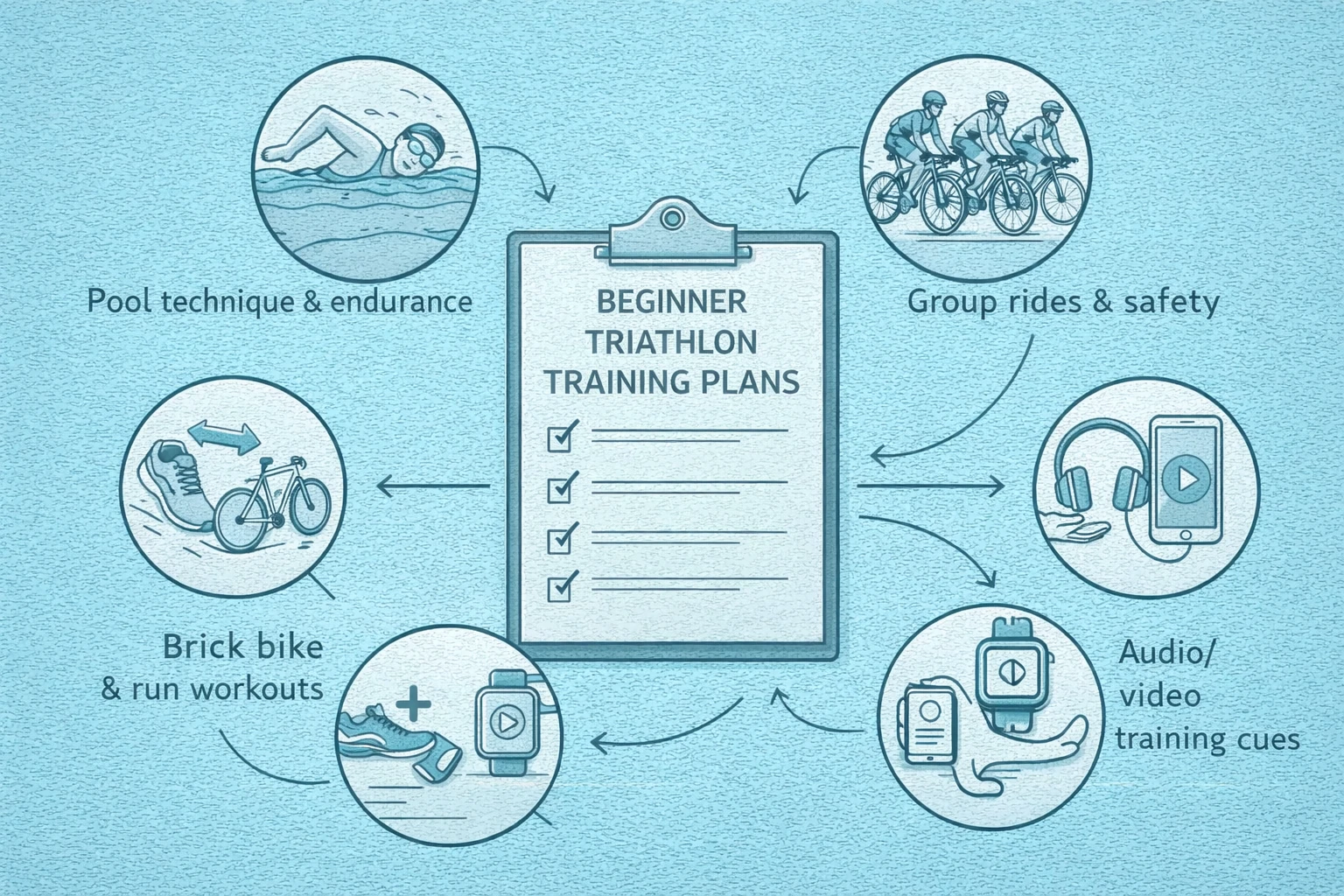
Key features and common session types are shown below.
- Weekly pool sessions focused on technique and endurance.
- Group rides with pacing and safety coaching.
- Brick workouts that link bike and run practice.
2. App-based beginner plan (structured)
App plans give clear day-by-day workouts and track progress. They often offer video drills and automated adjustments. Price varies from free to a subscription.
Apps are flexible and work well if you train alone. They show metrics like pace, power and stroke rate if you use devices. Some apps also include virtual coach notes.
A typical schedule is 5 to 8 hours per week for an entry-level plan. Apps let you pause or shift workouts when life gets busy.
Common app benefits include these points.
- On-demand training with audio or video cues.
- Customizable plans for time and fitness.
- Sync to watches and bike computers for easy tracking.
3. One-on-one coach plan
Personal coaching is the fastest path for many beginners. A coach writes a plan tied to your test results and goals. They adjust the plan as you progress and answer questions.
This option costs more than apps or clubs. But you gain tailored feedback and accountability. A strong coach also helps with race strategy and transitions.
Expect 6 to 12 hours per week depending on goals. Weekly check-ins are common. If budget allows, this is the most personalized choice.
Personal coaching typically offers the following.
- Regular plan updates based on your progress.
- Technique cues and form checks in sessions.
- Race day planning and pacing advice.
4. Free online beginner plans
Many trusted sites host free triathlon plans. These are solid for beginners who want low-cost options. They usually give week-by-week schedules for sprint and Olympic distances.
Free plans are best for self-starters. They can lack personalization and feedback. But they are useful for learning the structure of swim, bike and run training.
Time commitment is often 4 to 8 hours per week. You will need to monitor fatigue and adjust intensity on your own.
Free plans typically include these elements.
- Basic swim sets and progression.
- Sample bike rides with easy to hard days.
- Run workouts that build from steady runs to intervals.
5. Short sprint-focused plan
Sprint plans are ideal for first-time triathletes. They focus on speed and short endurance. Workouts are concise and easier to fit into tight schedules.
These plans are often 8 to 12 weeks. Each week mixes short swim sets, a bike with intensity, and quick runs. Brick sessions are shorter but frequent.
Sprint plans suit people who want a fast, motivating race experience. Weekly time is usually 4 to 6 hours, making this a low-barrier entry to triathlon.
Typical sprint plan highlights include the following.
- Short threshold rides and tempo runs for speed.
- Pool sessions focused on swim efficiency for 200 to 400 meter repeats.
- Short brick workouts to practice transitions.
6. Beginner Olympic-distance plan
Olympic distance requires a bit more base fitness than sprint. Plans are often 12 to 20 weeks and include longer endurance sessions. You will spend more time on the bike and in the pool.
Expect 6 to 10 hours per week. The plan builds stamina while keeping a clear progression. Workouts emphasize pacing for longer efforts.
These plans suit new athletes who want a bigger challenge or a longer race experience. They also teach efficient energy use for longer efforts.
Key elements often include the following points.
- Longer rides with steady-state tempo work.
- Swim sets that increase continuous distance.
- Run sessions that include long runs and tempo efforts.
7. Time-crunched plan
If you have limited time, pick a plan that prioritizes quality over quantity. These plans use short intervals and cross-training to get results fast.
Time-crunched plans focus on high-value sessions: a quality swim, a focused bike, and a short run. They also emphasize recovery and sleep, which matter when time is tight.
Weekly training can be 3 to 5 hours. These plans are smart for busy professionals or parents who still want race-ready fitness.
Common session types in these plans include the items below.
- High-intensity interval training for aerobic and anaerobic gains.
- Short brick sessions to connect disciplines quickly.
- Cross-training like strength or yoga for durability.
8. Triathlon club beginner academy
Many clubs run beginner academies that last 8 to 12 weeks. These programs mix coached sessions with safety workshops and transition practice. They are often led by volunteers or paid coaches.
An academy is ideal if you want guided learning with peer support. You will practice open water swims, group rides and race skills in real settings. This practical focus helps reduce pre-race anxiety.
Expect 5 to 9 hours per week. Costs vary but are typically modest. These programs are great for first-timers who value hands-on learning.
Typical academy offerings include the following items.
- Intro to open water swimming and sighting.
- Group ride etiquette and pacing drills.
- Transition drills to speed race-day flow.
9. Strength-plus-triathlon plan
Some plans combine gym strength work with swim, bike and run sessions. Strength training reduces injury risk and builds power for climbs and faster runs.
These hybrid plans are good for athletes who want long-term durability. The gym sessions are brief and focused. They support better posture, pedal force and running form.
Weekly commitment is 6 to 10 hours including two short strength sessions. This approach pays off with fewer aches and faster recovery.
Gym and strength benefits normally include the list below.
- Core strength to support swim body position and running form.
- Leg strength for stronger pedal stroke and sprinting.
- Mobility work to reduce stiffness and improve technique.
10. Beginner event-specific plan (relay or individual)
Some plans are made for specific event formats, like relay triathlons. They focus on your discipline while keeping other sessions minimal. Relay plans let you concentrate on your leg of the race.
Event-specific plans are helpful if you have one specialty and want to perform well on race day. They keep training focused and efficient. You will still practice transitions and basic race skills.
Typical time is 3 to 8 hours per week depending on role. These plans can substitute for full-distance plans if you are pressed for time.
Event-focused plan points include these highlights.
- Targeted work for your event leg, such as a strong open water swim.
- Short complementary sessions for other disciplines.
- Race simulation sessions to build confidence.
Buying tips and gear for new triathletes
Choosing a plan often means choosing gear too. You do not need top-end items to start. Basic, well-fitting gear is more important than brand names.
Start with a reliable bike, comfortable shoes, and a basic wetsuit if you will do open water. A heart rate monitor or simple bike computer helps but is optional for first races.
Below is a short gear checklist that fits most beginner plans. Read each item and add only what you need right away.
- Road or hybrid bike that fits you well.
- Swim goggles and a comfortable cap.
- A basic wetsuit for cold water races.
- Running shoes that suit your gait and comfort.
- A simple helmet and a pump or toolkit for the bike.
Also consider a training platform or app if you want structured tracking. Many triathletes pair an app plan with a heart rate watch to measure progress. The phrase best training plans beginners and triathlon training plans work well when used with the right gear setup.
Key Takeaways
Choosing among the best training plans beginners means matching plan style to your life. Time, coaching level and budget are the main filters. Pick a plan that you can follow consistently.
Start simple. A club, a reliable app or a free plan can get you to your first finish. If you want faster gains or tailored feedback, invest in a coach or a plan with personalization.
Use this guide to compare options and make a plan choice that fits your schedule and goals. Consistency and smart gear choices will make your first triathlon a great learning and reward experience.