

Bike lubes comparison can change how your bike feels and performs. As a triathlon journalist and expert, I will guide you through clear choices. This article explains types, strengths, weaknesses, and how to pick the best lube for racing and training.
Why bike lube matters
Chain friction costs speed. A dry, gritty chain wastes power with every pedal stroke. Choosing the right lube reduces friction and keeps parts running smoothly. That saves energy and can improve your time on the course.
Maintenance affects safety too. A poorly lubricated drivetrain can wear faster and behave unpredictably. Regular lube helps prevent skipping, chain stretch, and early wear on cassettes and chainrings. It also affects shifting quality on climbs and sprints.
For triathletes, reliability is critical. A good lube choice reduces the chance of mechanical trouble on race day. It also matters when you race in changing conditions, from rainy rides to dusty roads. Picking the right product is part of race preparation and advanced gear maintenance for serious athletes.
Finally, lube choice influences cleaning and service intervals. Some lubes attract dirt and need frequent cleaning. Others last longer between services but may be harder to remove. Knowing these trade-offs helps you plan a bike tune-up schedule that matches your training and racing.
Bike lubes comparison: Types
There are four main types of chain lubricants used by cyclists. Each type offers clear benefits and some limits. Below I explain the main choices and when to use them.
First, wet lubes are thick and stay on the chain in wet weather. They cling to metal and resist wash-off. Wet lubes work well for rainy regions and long, wet training rides. But they attract dirt in dry conditions and may need more frequent cleaning.
Second, dry lubes are thin when applied and dry to a waxy film. They repel dust and grit. Dry lubes are great for dusty or dry roads. The drawback is they wash off quickly in rain and may need frequent reapplication for long rides.
Third, wax-based lubes and wax-infused formulas offer a clean ride feel. Wax builds a low-friction coating that often reduces noise and grime pickup. These can be excellent for triathletes who want low maintenance appearance and steady power delivery. There is also a growing class of ceramic lubes. They add tiny ceramic particles to reduce friction and increase durability. Ceramic lubes can be pricier but can extend service intervals when used properly.
How to choose the right lube
Choosing a lube starts with your typical riding conditions and goals. Think about weather, road type, training volume, and whether you race outdoors. If you ride in mixed conditions, you might need two lubes and swap depending on forecast and race type.
Next, consider maintenance time. Some riders want low-effort care. Wax-based lubes and ceramic options can stretch the time between deep cleans. Other riders prefer the absolute best wet weather protection and are willing to clean more often. Match lube choice to how much time you spend on cleaning and service tasks.
Also consider compatibility with other maintenance tasks. For example, if you are scheduled for a full bike tune-up, you might strip and re-lube with a different product. Products that require stripping must be part of a plan. A clear plan makes service easier and helps you prevent mistakes when switching between wet and dry lubes.
Finally, weigh cost and performance. Higher cost does not always mean better on your roads. Try small bottles first. Note how the chain behaves over several rides. Track wear and noise. This trial approach reduces wasted expense and helps you find the best match for race scenarios and routine rides.
Application and maintenance tips
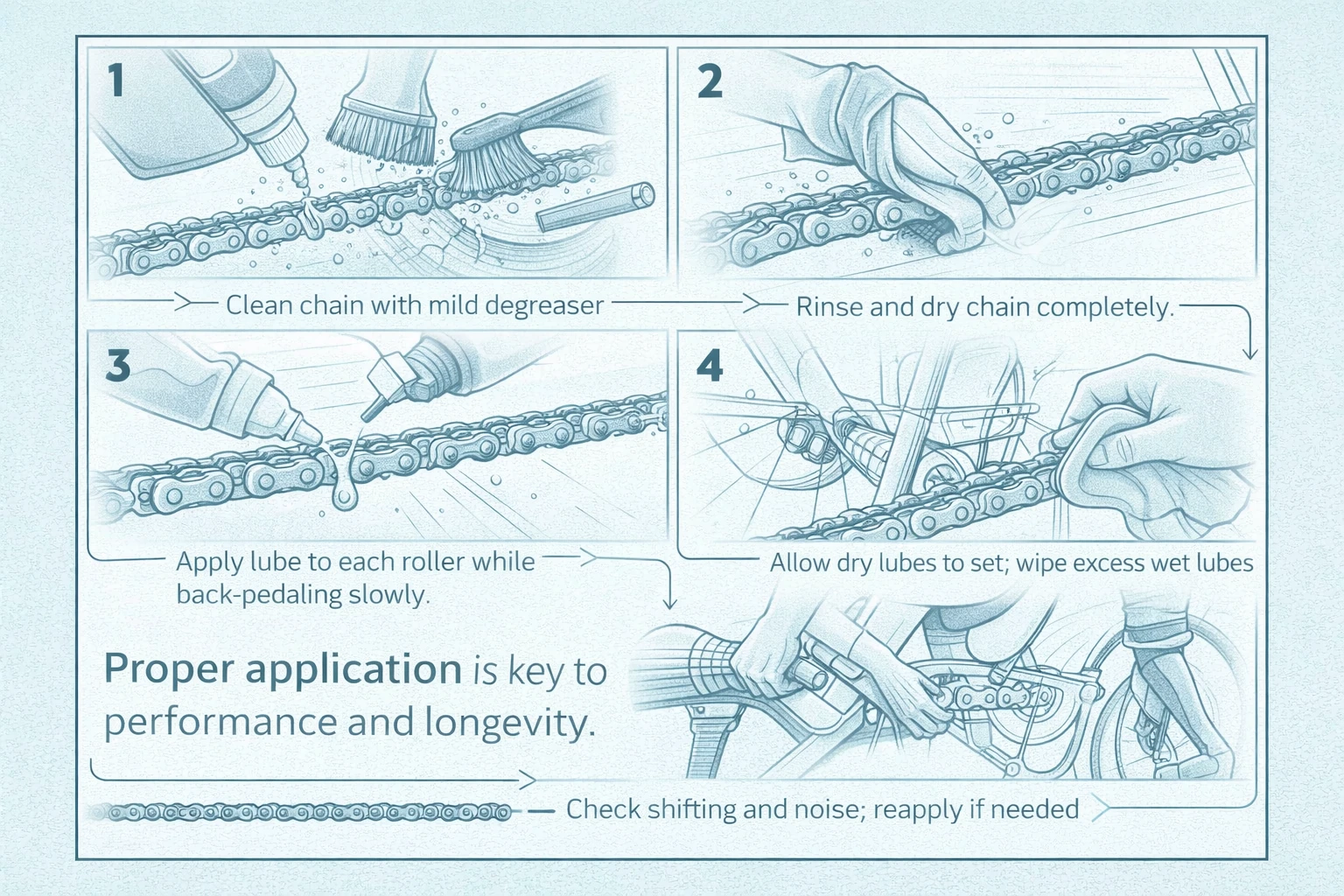
Proper application is as important as product choice. A clean chain receives lube more evenly and retains it better. Start with a careful cleaning when switching lube types. Use an appropriate degreaser and dry the chain before you apply fresh lube.
Apply lube sparingly. A common error is over-applying. Too much lube attracts grime and can slow the chain. Apply a single drop to each chain roller while spinning the cranks. Work the lube into the rollers by back-pedaling a few times, then wipe excess with a clean cloth.
For race prep, apply lube the night before. This lets solvents evaporate and the product settle. For dry lubes, allow time for the coating to dry fully. For wet lubes, wipe off excess to avoid dust pickup while keeping sufficient film for protection. A consistent routine improves reliability and keeps your drivetrain in good shape during heavy training blocks.
Below is a practical maintenance checklist for applying lube and checking the drivetrain. Follow these steps to keep your chain healthy between services.
- Clean the chain with a mild degreaser if it is dirty. Use a brush or cleaning tool to remove grit.
- Rinse and dry the chain completely. Moisture traps grime and reduces lube life.
- Apply the correct amount of lube to each roller while back-pedaling slowly.
- Allow dry lubes to set as directed. Wipe excess from wet lubes to reduce dirt buildup.
- Check shifting and noise after a short ride. Reapply if needed, and schedule full cleaning before long races.
Best uses and product suggestions
Match lube type to intent. For wet conditions and commuting, use a wet lube. It keeps the drivetrain protected during long wet rides. For dry roads and dusty environments, choose a dry or wax-based formula. That limits grime and keeps the drivetrain cleaner.
For training and high-mileage riders, choose a balance of longevity and cleanliness. Ceramic lubes often offer a good compromise. They reduce friction and can last longer between services. But remember that no lube is perfect for every situation. Keep a small bottle of a second type on hand for sudden weather changes.
If you are preparing for a race, test your chosen lube in training. Apply it and ride similar distances and conditions to your event. Note how it performs under load and at race pace. This lets you avoid surprises and helps you plan a precise race-day routine.
Below is a concise list of best-use suggestions to help you pick. Use these as quick rules when buying your next bottle and planning maintenance for events and training sessions.
- Wet lube – Best for rainy weather and long commutes. Use on wet roads where wash-off is likely.
- Dry lube – Best for dry, dusty roads. Reapply often after long rides or if chain noise returns.
- Wax-based lube – Best for clean, low-grime performance and ease of cleaning appearance.
- Ceramic lube – Best for riders seeking low friction and longer service intervals when used correctly.
Key Takeaways
Bike lubes comparison matters for speed, longevity, and reliability. Your choice should reflect where and how you ride. Simple choices can save watts and reduce repair costs. Testing in training gives the clearest guide to what works for you.
Keep a simple service plan. Clean when switching lube types and follow application steps. For triathletes, combine this plan with race preparation. A clean, well-lubed drivetrain contributes to smoother shifts and better power transfer during swim-bike-run transitions.
Remember to balance cost, performance, and maintenance time. Try small bottles first. Track how each product affects chain wear and ride feel. For specific tasks like advanced gear maintenance and pre-race checks, include lube selection in your bike tune-up routine.
Choose the right lube, practice your application routine, and you will enjoy cleaner rides and fewer mechanical surprises. Also keep in mind unusual tasks like wetsuit repair do not affect lube, but a focused race kit and checklist will. Select with care and ride with confidence.