
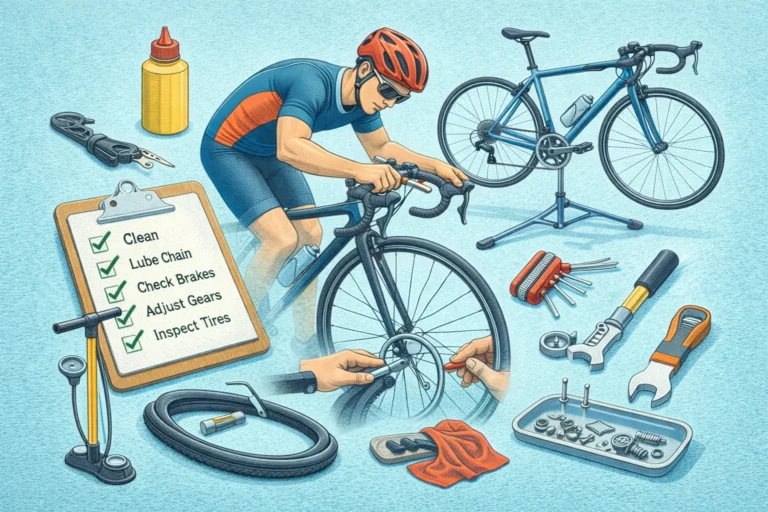
As a triathlon journalist and bike mechanic at heart, I love a well-tuned ride. A smart bike tune-up saves time, cuts frustration, and improves speed and safety. This article explains how to do a bike tune-up like a pro. You will get clear steps, tool lists, and a simple schedule you can follow.
Expect straightforward language, plenty of tips, and an emphasis on practical checks. I write with enthusiasm and clear direction so you can finish your tune-up ready to train or race. Let us get your bike in top shape.
Why a bike tune-up matters
A bike tune-up keeps the machine working efficiently. It reduces wear on parts and makes rides smoother. Small problems fixed early do not become big repairs later. Regular tune-ups also prevent mechanicals during a race or long ride.
As a triathlete, you demand reliability from your bike. A proper tune-up improves braking, shifting, and power transfer. That means better times and more confidence on race day. You will notice a cleaner drivetrain and sharper shifting after a routine service.
Bike tune-ups also increase safety. Worn brake pads or loose bolts can cause crashes. Checking these things before a ride protects you and other riders. A good habit is a quick check before every long training session.
Tools you need

Before you start, gather the right tools. Proper tools make the job faster and prevent damage. Use tools that fit your bike’s parts and avoid makeshift fixes.
Here is a clear list of essential tools you should have for a basic bike tune-up. These items will cover cleaning, adjustments, and common repairs.
- Set of Allen keys (2mm to 8mm)
- Adjustable torque wrench
- Phillips and flat screwdrivers
- Chain tool and quick link pliers
- Bike-specific grease and light oil
- Clean rags and brushes
- Tire levers and floor pump with gauge
- Patch kit or spare tubes
These tools let you do most tune-up tasks at home. If you plan to work on electronic shifting or carbon components, include tools and manuals specific to those parts. For serious upgrades, advanced gear maintenance becomes a useful skill to learn.
Investing in quality tools pays off. They last longer and make adjustments more accurate. A torque wrench prevents over-tightening on carbon and alloy parts.
Step-by-step bike tune-up
This section breaks the tune-up into clear stages. Work methodically and take notes if you want to track wear. Each stage has checks you can do with basic tools.
Start with cleaning. A clean bike shows wear and makes adjustments easier. Work from the top down so dirt does not end up on cleaned parts.
Take your time. Good tune-ups are not rushed. Use each step to learn how your bike feels and sounds. You will build confidence with practice.
Clean and inspect
Cleaning is the first and most important step. Remove visible dirt from the frame, chain, cassette, and derailleurs. Use bike-specific cleaners or mild soap. Avoid high-pressure water near bearings and suspension parts.
After cleaning, inspect for damage. Look for cracks in the frame, worn brake pads, and bent spokes. Check for rust or pitting on bolts. Small issues found here set the agenda for repairs.
Check fasteners and bolts for tightness. Use a torque wrench for stem, seatpost, and crank bolts. Note any looseness for follow-up. Loose parts lead to poor steering or shifting.
Wheels and tires
Start with a visual tire check. Look for cuts, bulges, or embedded glass. Replace tires if the tread or sidewalls are compromised. Inflate tires to the pressure recommended on the sidewall.
Spin each wheel and watch for wobbles. True wheels run straight with minimal side-to-side movement. Small hops or rubs can be adjusted at the spoke nipples with a spoke wrench. If the wheel is badly out of true, take it to a shop.
Check quick releases or thru-axles. They must be secure and aligned correctly. Also inspect rim brake surfaces or rotor condition. Clean rotors with isopropyl alcohol and make sure brake pads are not contaminated with oil.
Drivetrain and chain
The drivetrain needs attention during every tune-up. A clean and lubricated chain shifts better and lasts longer. Use a chain cleaner or degreaser and a brush for the cassette and chainrings.
Measure chain wear with a chain wear tool. Replace the chain before excessive wear damages the cassette or chainrings. A worn drivetrain reduces efficiency and can cause poor shifting when you push hard.
Lubricate the chain sparingly after it dries. Wipe off excess oil so it does not attract dirt. Check the rear derailleur hanger alignment. A bent hanger causes skipping and mis-shifts and is a common race-day problem.
Brakes and shifting
Test brake lever feel and look at pad wear. For rim brakes, pads should contact the rim squarely. For disc brakes, pads should have at least a few millimeters of material. Replace pads if they are thin or contaminated.
Adjust cable tension or hydraulic brake systems as needed. For mechanical brakes, check cable housing for frays and smooth routing. For hydraulic brakes, check fluid levels and consider bleeding if the lever feels spongy.
Shifting adjustments come next. Set the high and low limit screws to prevent the chain from dropping. Use barrel adjusters to fine-tune indexing so each shift is crisp. If shifting remains poor, check cable stretch or worn cables and housing.
Final adjustments and test ride
Recheck headset, bottom bracket, and seat clamp bolts for proper torque. Tighten any loose parts. Small movements at the cockpit or saddle cause big comfort and control issues during long rides.
Set saddle height, fore-aft, and handlebar position for comfort and power. Minor changes in position can reduce fatigue. Record your settings so you can restore them after component swaps.
Finish with a short test ride. Shift through all gears and apply the brakes strongly. Listen for noises, and feel for play or vibration. Make any final small adjustments and then enjoy a longer ride to confirm everything holds up under load.
When to seek professional help
Some issues need a trained mechanic. If you find frame cracks, bent forks, or damaged carbon parts, stop and consult a shop. These problems affect safety and require expert repair. Do not guess on structural fixes.
Suspension servicing, hydraulic system overhaul, and complex electronic shifting diagnostics are best left to pros unless you have proper tools and training. Many races demand reliable systems, so professional help is a wise investment before big events.
If you notice persistent noises, grinding, or shifting problems that do not respond to basic fixes, a professional check will save time and money. Mechanics can spot less obvious wear and provide service history tips for triathletes.
Maintenance plan and schedule
Creating a simple maintenance plan keeps your bike race-ready. Regular checks prevent surprises and maintain performance. Follow a schedule that matches your riding volume and conditions.
Below is an easy schedule that covers race and training needs. Tailor it to your climate, mileage, and how often you train. Wet or muddy riding needs more frequent attention compared to dry roads.
- Before every ride: quick tire, brake, and bolt check
- Weekly: clean chain, inspect tires, and quick wheel spin
- Monthly or every 200-300 miles: deep clean, lube chain, check cable condition
- Every 6 months or 1,000 miles: full tune-up including drivetrain and brake service
Record maintenance in a simple log. Note dates, miles, and parts replaced. This habit helps you track component life and plan replacements before failure. It also makes race prep easier because you know the bike’s service history.
For those who want to go deeper, set aside time for advanced gear maintenance projects. Learning to service hubs, bottom brackets, and headset bearings extends part life and builds useful skills. Start with one task at a time and build confidence.
Key Takeaways
A regular bike tune-up improves safety, performance, and enjoyment on every ride. Clean parts, correct tension, and tight bolts keep the bike working reliably. Small checks before a ride catch issues early and prevent bigger repairs.
Gather essential tools, follow the step-by-step routine, and keep a clear maintenance schedule. When issues are beyond your skill or involve structural parts, seek professional help. With practice, a tune-up becomes quick and satisfying.
Use the steps here to build a habit. Your bike will thank you with smoother shifting, stronger braking, and better power transfer. Ride confident and race-ready after a proper bike tune-up.