
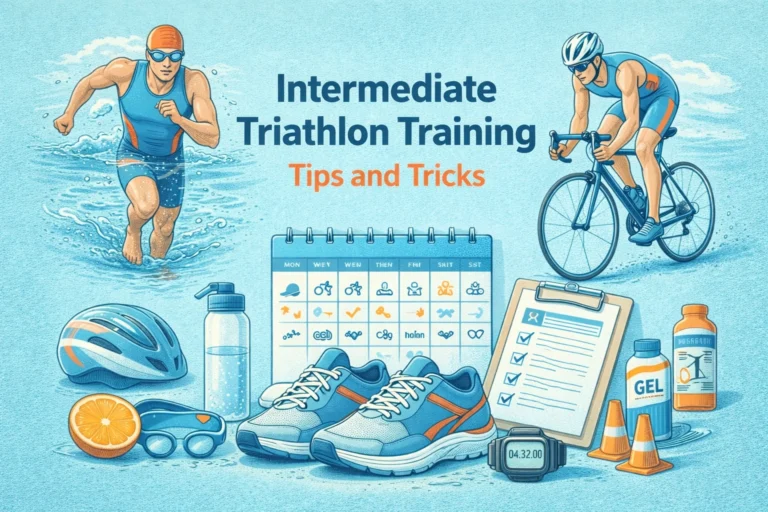
As a triathlon journalist and expert, I love seeing athletes step up their game. This article gives clear intermediate training tips to help you train smarter. Read on for structure, workouts, recovery and testing that fit a busy life.
Intermediate training tips: Structure
Good training starts with a plan. A clear season structure helps you build fitness and avoid injury. I will share ways to set priorities, balance volume and intensity, and track progress. This is practical guidance you can apply now.
First, set a main race target and then work backward. Break the season into blocks: base, build, race, and recovery. Each block has a different focus. That makes training easier to manage.
Second, balance frequency with quality. More hours are not always better. You want focused sessions that match your goals. A few high-quality workouts per week beat random training.
Third, schedule regular rest and easier weeks. Your body needs time to adapt. Plan one easier week every three to four weeks. That simple rule keeps progress steady and reduces burnout.
Swim: Technique and speed
Swimming is technical and often the hardest to improve without focused work. Small changes in technique save energy and make you faster. Use drills to target body position, catch, and rhythm.
Here are practical swim session types to include. Each type works on a specific skill and fitness area. Rotate them across your week to build both speed and endurance.
- Technique sets: short drills with focus on form and breathing.
- Pace intervals: repeat distances at race pace with short rest.
- Endurance swims: longer steady sets to build aerobic base.
- Speed bursts: short all-out efforts with full recovery.
For many intermediate athletes, one focused pool or open-water session a week plus a longer steady swim works well. Add a second swim only if time and recovery allow. Quality beats quantity in the water.
Open-water practice is also important. Practice sighting, mass starts and swimming in waves. These sessions reduce race day nervousness and teach you how to maintain pace with other swimmers around you.
Bike: Threshold and endurance

Cycling is where many races are won or lost. For intermediate athletes, focus on building a strong threshold and steady endurance. That gives you speed and the ability to hold power on race day.
Add one key threshold workout per week. These sessions teach your body to tolerate higher power or pace for longer. They are short, intense, and very effective when done right.
Before a list of example bike sessions, note that you should warm up and cool down. Never start a hard block without preparation. That protects you from injury and helps you get the most from each effort.
- Threshold intervals: 2 to 4 sets of 10 to 20 minutes at threshold with equal rest.
- Sweet spot work: longer efforts at a pace just below threshold for aerobic gain.
- Long endurance rides: steady, lower intensity rides to build base and time in the saddle.
- Short power bursts: 30 second to 2 minute efforts to improve sprint and cadence.
Mix these sessions across weeks. Aim for one high quality ride, one long steady ride, and one recovery or technique ride each week when possible. That pattern produces steady gains.
Run: Build economy and speed
Running after the bike is the core of triathlon pacing. For intermediate athletes, run training should combine base mileage, quality intervals, and brick runs. Bricks prepare you for the change of legs sensation after cycling.
Include one quality session per week. That can be intervals, tempo runs, or cruise intervals. The goal is to raise your sustainable race pace without increasing injury risk.
Always add a paragraph before a list to explain what follows. Below are run session examples that work well for intermediate athletes. Use them based on race distance and current fitness.
- Intervals: 400m to 1600m repeats with controlled recovery for speed and VO2 max.
- Tempo runs: 20 to 40 minutes at comfortably hard pace to raise lactate threshold.
- Long runs: steady aerobic runs to maintain endurance and mental toughness.
- Brick runs: short steady jogs after a bike session to adapt to the bike to run shift.
Progress slowly with run volume and intensity. Add no more than 10 percent per week to reduce injury risk. Strength work and mobility also help keep your legs durable.
Strength, recovery and nutrition
Strength work and recovery are often the overlooked areas that make a big difference. Simple strength sessions improve power and reduce injury. Recovery allows you to train consistently.
Nutrition fuels your training and aids recovery. On longer workouts, practice your race day fueling. Know what works for your stomach and energy needs. That practice is vital to avoid surprises on race day.
Before offering a simple list of key habits, remember that consistency matters more than perfection. Small, steady habits compound over months.
- Strength twice a week: focus on core, single-leg work, and hip strength.
- Sleep: prioritize 7 to 9 hours to support recovery and adaptation.
- Nutrition: aim for balanced meals, and practice race fueling on long sessions.
- Active recovery: easy spins, short swims, or mobility work on easy days.
Use foam rolling and targeted mobility after hard sessions. These tools reduce muscle tightness and help you feel ready for the next workout. Keep strength sessions short and focused to match training time constraints.
Testing and tools
Testing helps you measure progress and set zones for training. Tests can be simple time trials or lab tests for more precision. Pick tests that you can repeat and that match your sport demands.
Tools like a heart rate monitor, power meter, or GPS watch can guide training. You do not need everything. Start with one tool and learn how to use it. That gives data that helps with pacing and recovery.
Below I list practical tests and how often to do them. Testing too often can fatigue you. Aim for key checks every 6 to 12 weeks depending on your plan.
- 20 to 30 minute time trials for bike FTP and run threshold pacing.
- Race-pace swim sets or a timed 400 to 1000 meter swim for swim pace.
- Simple field tests like a 5k run time to track running fitness.
When you collect data, use it to adjust workouts and race goals. For intermediate athletes, modest, steady gains are normal. Avoid chasing sudden jumps in metrics that may indicate overtraining.
Training plans and routine
I often get asked which plan to follow. A good plan matches your available time, race distance and strengths. Study triathlon training plans to find one that fits your life and goals.
Beginners and intermediate athletes have different needs. If you are moving up in volume, compare multiple plans and look for realistic time commitments. Search for best training plans beginners to see simple structures, then scale them with increased intensity and volume.
Before adding a list, here are routine elements you should keep each week. These items form a stable week and help balance training load and recovery.
- One quality swim, bike and run session each.
- One long endurance session, rotated between disciplines.
- Two short strength or mobility sessions per week.
- At least one full rest day or active recovery day.
Use a training diary or app to track sessions, how you felt, and key metrics. That record helps you adjust the plan and notice patterns before they become problems.
Key Takeaways
Intermediate training tips focus on structure, quality sessions, and consistent recovery. Balance makes improvement possible without too much time. Keep your plan simple and goal oriented.
Prioritize one key workout per discipline each week. Use strength work and recovery habits to stay healthy. Test on a regular but not excessive schedule to measure progress.
Practice fuel and race pacing in training. Learn from triathlon training plans and adapt ideas from best training plans beginners when you need simple templates. Make steady, measured progress and enjoy the process.
If you follow these steps, you will see gains and feel more confident on race day. Stay curious, be patient, and keep training with purpose.