
Introduction: Why gear maintenance techniques matter
As a triathlon journalist and long-time practitioner, I’ve learned that consistent gear care separates reliable race day performance from last-minute scrambling. This guide presents clear, professional guidance on gear maintenance techniques you can apply across swim, bike, and run disciplines. Whether you’re training for your first sprint or refining prep for an Ironman, basic maintenance preserves equipment, reduces risk of failure, and protects your investment.
Principles of effective gear maintenance techniques
Good maintenance is systematic, simple, and scheduled. Follow three guiding principles:
- Inspect regularly: Make visual and functional checks after every significant session.
- Clean appropriately: Use the right cleaning methods and products for each type of gear.
- Store smartly: Protect gear from extremes of temperature, moisture, and UV exposure.
These principles form the backbone of all sport equipment care and help you build effective routines of gear maintenance techniques.
Swim gear: wetsuits, goggles, and accessories
Swimming equipment is often exposed to chlorinated pools and open-water contaminants. Simple habits extend service life:
- Rinse immediately: After each open-water or pool session rinse wetsuits and goggles with fresh water to remove salt, sand, and chlorine.
- Dry correctly: Turn wetsuits inside out to dry the interior first, then finish outside-in on a wide, padded hanger away from direct sunlight.
- Protect seals and zippers: Lubricate zipper teeth lightly with a silicone-based lubricant and check zipper pulls for corrosion.
- Goggles care: Avoid wiping anti-fog coatings. Rinse gently and store goggles in a protective case.
Bike maintenance techniques: routine checks and seasonal care
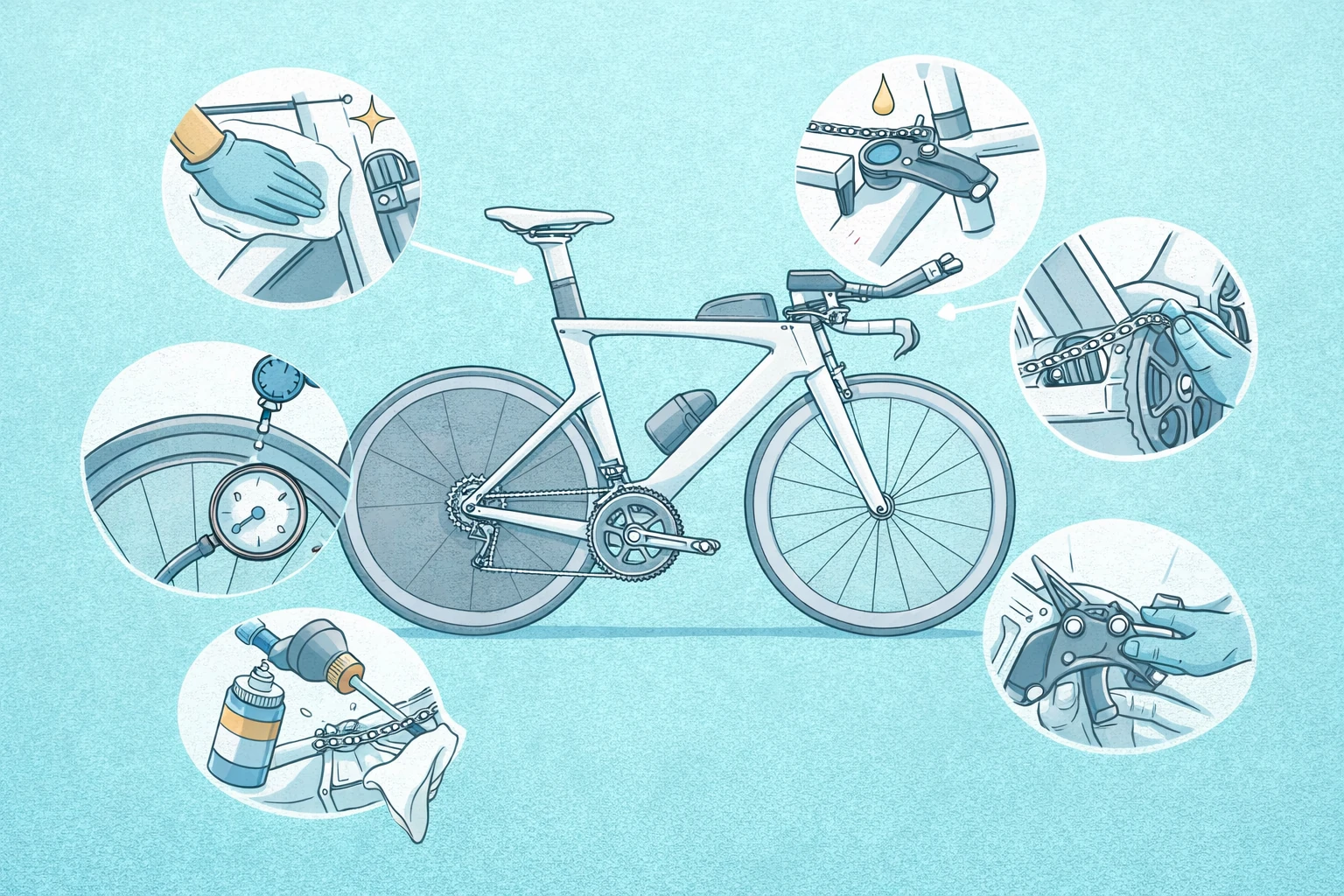
The bike requires the most structured maintenance. Establish short, medium, and long-term tasks.
Short post-ride checks (5–10 minutes)
- Wipe down frame, drivetrain, and brakes to remove grime and prevent corrosion.
- Check tire pressure and inspect for cuts or embedded debris.
- Confirm that quick-releases or thru-axles are secure.
Weekly to monthly tasks
- Lubricate the chain after cleaning; wipe off excess to prevent dust accumulation.
- Inspect brake pads for wear and rim or rotor contamination.
- Check headset and bottom bracket for play or unusual noises.
Seasonal and pre-race maintenance
- Schedule a full drivetrain degrease and tune, including cassette and chainring inspection.
- True wheels and service hubs or bearings if you detect roughness.
- Replace cables or hydraulic fluid as recommended by component manufacturers or if performance degrades.
Document dates and mileage for major services so you can anticipate replacements and avoid last-minute failures on race day.
Run gear: shoes and apparel
Running gear needs different attention. Prevent odor, preserve cushion, and maintain fit:
- Shoe rotation: Rotate between at least two pairs to allow midsole materials to recover between sessions.
- Cleaning: Rinse mud and salt off shoes promptly; air dry away from heaters which can damage foam.
- Inspect midsoles and outsoles: Look for uneven wear patterns that suggest gait issues or the need for replacement.
- Apparel: Launder technical fabrics per manufacturer instructions to maintain moisture-wicking and UV protection.
Tools and supplies for a basic maintenance kit
Keep a compact kit at home and a travel kit for race weeks. Essentials include:
- Degreaser, chain lubricant, bike multi-tool, spare tubes/CO2 or pump
- Microfiber cloths, soft brush, mild soap for wetsuits and apparel
- Basic shoe repair items and a small first-aid kit for blisters and minor injuries
Having the right supplies prevents shortcuts that can damage gear.
Routine schedule template
Use this simple schedule as a starting point and adapt to training volume and conditions:
- After each session: Quick rinse or wipe, visual inspection
- Weekly: Chain lube, shoe airing and clothing wash
- Monthly: Full bike clean, inspect brake pads, check tire wear
- Every 6–12 months: Professional bike tune and deeper wetsuit care or apparel repairs
Common problems and quick fixes
- Sticky chain: Clean with degreaser and relube. If skipping fixes, wear increases and shifting problems arise.
- Goggles fogging: Rinse gently, avoid rubbing anti-fog, and replace if seal integrity is compromised.
- Shoe breakdown: If midsole cushioning collapses, replace the shoe—there’s no reliable home fix for degraded foam.
Where to learn more
For detailed component-level procedures consult manufacturer guides and trusted service centers. If you want an organized reference for caring for all your kit, search or bookmark resources focused on triathlon gear maintenance for discipline-specific checklists and videos.
Conclusion: Make maintenance part of your training
Adopting straightforward gear maintenance techniques is a small time investment that pays huge performance dividends. Regular inspection, appropriate cleaning, and scheduled servicing reduce risk, extend equipment life, and give you confidence on race day. Start with the short post-ride and post-swim checks, build a weekly routine, and schedule seasonal servicing. As a triathlon journalist who’s seen equipment failures shift race outcomes, I can assure you: consistent care is one of the easiest performance gains you can achieve.
Use the checklists here to craft your own maintenance plan, and treat it as seriously as any workout—your gear will thank you, and your race-day stress will drop accordingly.