

I write about triathlon nutrition as a journalist and long-time student of the sport. I want you to get better fuel habits that improve training and race outcomes. This article explains what to eat, when to eat, and how to plan fueling so you can perform your best.
Read on for clear steps, meal ideas, and simple calculations. The focus is practical. You will get actionable advice you can try this week and refine over time.
Triathlon Nutrition Basics
Good performance starts with steady habits. Triathlon nutrition means matching food to the demands of swim, bike, and run. Fueling well is not one trick. It is consistent daily choices plus smart race plans.
First, you must know that energy needs vary by training load. A long training week needs more fuel than a light recovery week. Calories, quality of food, and timing all matter. Keep meals balanced and predictable during training.
Second, a simple rule helps: prioritize carbohydrates for energy, protein for repair, and fats for longer endurance. Hydration ties these pieces together. Learning how each part works helps you make better decisions on training days and race day.
Calculating Energy Needs
Estimating how many calories you need is a key step. Use a basic formula to get a starting point. Adjust as you track weight, energy, and performance.
To estimate daily needs, start with your basal metabolic rate and add activity. A simple method is multiplying body weight by a factor based on training intensity. For light days use 30 calories per kg. For heavy training days use 45 calories per kg. This gives a practical starting estimate for total daily calories.
Monitor results and change the numbers if you feel tired or you lose too much weight. Track how you recover between sessions. Energy needs will change with training blocks and race preparation. Stay flexible and adjust gradually.
Macronutrients for Triathletes
Macronutrients are the building blocks of your fuel. Balance matters. Each macronutrient has a role that supports training, recovery, and race performance.
Below is a simple guide to targets that most triathletes can start with. These numbers are per day and should be adjusted by body size and training demands. Use them as a starting point and tune them over weeks.
- Carbohydrates: 5 to 8 grams per kg on normal training days; 7 to 12 grams per kg on heavy or high-volume days. Carbs fuel high-intensity efforts and long sessions.
- Protein: 1.2 to 1.8 grams per kg. Protein supports repair and adaptation. Aim to spread protein across meals and snacks.
- Fat: 20 to 35 percent of total calories. Fat supports long steady-state training and overall health. Choose unsaturated fats and whole-food sources.
These targets are flexible. A sprinter or short-course athlete may weight carb intake differently than an Ironman athlete. Use food quality and meal timing to meet goals, not just processed bars and gels.
Hydration and Electrolytes
Hydration affects pace, mental clarity, and safety. Fluid needs depend on sweat rate, weather, and effort. Learn your sweat loss so you can replace fluids and electrolytes effectively.
Before listing practical signs and strategies, note that plain water is fine for many sessions under an hour. For longer or hotter sessions, add electrolytes and some carbohydrate to support performance and reduce cramping risk.
Consider these common signs and practical tips to guide fluid and electrolyte choices during training and racing.
- Signs of dehydration: dry mouth, dark urine, dizziness, and heavy fatigue. If you notice these, drink earlier next time and weigh yourself before and after a hard session to measure sweat loss.
- Replace sodium on long or hot sessions. Use sports drinks with electrolytes or add a small salty snack after long workouts. Aim for 300 to 700 mg sodium per hour during long races when you sweat a lot.
- Practice drinking in training. Never test a new hydration plan on race day. Use the same bottles and fluids you will use on race day to avoid surprises.
Race-Day Triathlon Nutrition
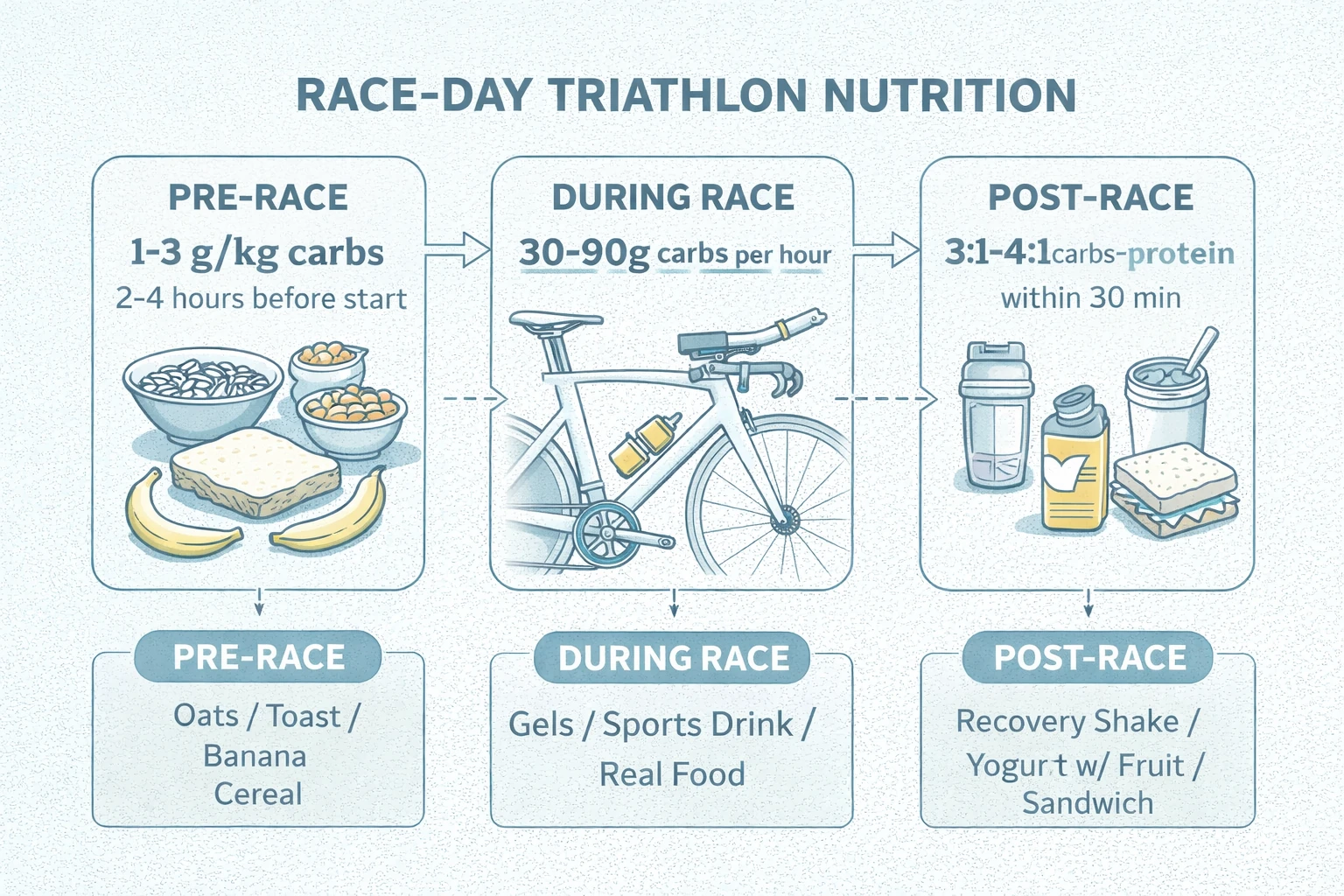
Race day requires a clear, practiced plan. Triathlon nutrition on race day is about timing and predictability. Keep the plan simple and practice it in training weeks leading up to the event.
Before the race, have a familiar breakfast 2 to 4 hours before start. The meal should be higher in carbohydrates and moderate in protein. Avoid heavy fats and large amounts of fiber right before the race to limit stomach issues.
Here is a short checklist of what to carry and how to schedule intake during the race. Use this checklist when you pack transition bags and bottles.
- Pre-race: 1 to 3 grams of carbs per kg body weight in the 2 to 4 hours before the start. Choose easily digested foods like oats, toast, banana, or a small bowl of cereal.
- During the race: aim for 30 to 90 grams of carbohydrate per hour depending on duration and intensity. Use a mix of gels, sports drink, and real food if needed. Start fueling early; do not wait until you feel depleted.
- Post-race: within 30 minutes aim for a 3:1 or 4:1 carb-to-protein ratio to kickstart recovery. A recovery shake, yogurt with fruit, or a sandwich works well.
Practical Meal Plans and Snacks
Practical meal plans take the guesswork out of daily fueling. Below are sample ideas for a training day. These examples show how to place carbs, protein, and fat across meals and snacks.
Before the list, know that portion sizes change with body size and training load. Use the macronutrient targets above to scale meals up or down. These plans are flexible and meant to be adapted.
- Breakfast: bowl of oats with banana, a scoop of yogurt, and a small handful of nuts. This gives slow-release carbs and moderate protein to start the day.
- Mid-morning snack: a piece of fruit and a small protein bar or a boiled egg. Easy fuel between sessions.
- Lunch: rice or pasta bowl with lean protein, vegetables, and olive oil. This supports afternoon training and replenishes glycogen.
- Pre-workout snack: toast with jam or a small smoothie 30 to 60 minutes before a hard session. Keep it small and familiar.
- Post-workout: recovery drink or yogurt with fruit and a sandwich within 30 minutes after the session. Follow with a balanced dinner.
Snacks are not filler. They keep training quality high. Pack portable options that you enjoy so you actually eat them on long days.
Training Timing and Safe Supplements
Timing meals and snacks around sessions changes results. Eat to support the session that follows. After hard workouts, focus on repair and restoration. The right timing keeps training consistent and productive.
Some supplements can help, but they are not magic. Use basics first: good food, adequate sleep, and smart training. Then consider small, evidence-backed aids. Keep any supplement use simple and tested in training only.
Below is a practical list of commonly used supplements that many triathletes consider. Each item has a straightforward use case so you know when it might help.
- Caffeine: can improve focus and power for races and hard sessions. Typical doses are 3 to 6 mg per kg body weight, taken before effort. Test in training to measure tolerance.
- Creatine: supports repeated power and recovery. It is more relevant for track or sprint training blocks but can help with strength work for all athletes.
- Electrolyte powders: useful for long hot sessions where sweat loss is large. Use them to maintain sodium and hydration.
- Protein powder: convenient when whole food is not available. It helps reach protein targets after sessions, especially on the road or between sessions.
Always check with a health professional before starting new supplements, especially if you have medical conditions or use medications. Read labels and choose third-party tested products when possible.
Key Takeaways
Triathlon nutrition is a practical skill you can learn. Start with daily habits: adequate calories, the right mix of carbs, protein, and fats, and good hydration. Practice your race-day plan in training.
Keep plans simple and repeatable. Track how your body responds and adjust gradually. Use the macronutrient targets and sample meal ideas as a template. Test supplements only after you have stable nutrition habits.
As a triathlon journalist and fellow student of the sport, I encourage you to experiment within a safe framework. Make one change at a time, and measure the effect. With consistent practice, your eating will support faster training and better race-day results.