
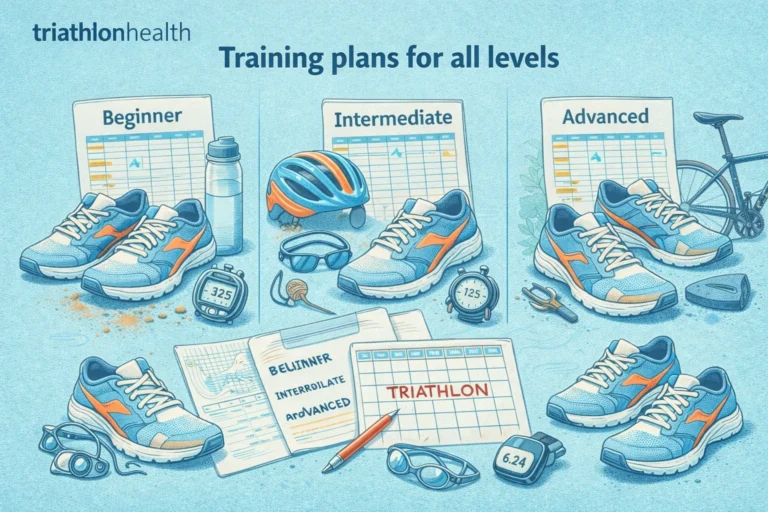
Getting started with triathlon training plans can feel exciting and a bit daunting. This guide shows you clear steps to pick or build a plan, and it gives practical weekly schedules for beginner, intermediate, and advanced athletes. Read on to learn how to train smart, stay healthy, and race stronger.
Why triathlon training plans work
Good triathlon training plans turn scattered workouts into steady progress. They give order to training so you know what to do each day. That makes it easier to improve without guessing.
Plans use the ideas of progressive training and specific practice. You increase load a little at a time. You also practice the three sports in ways that match your race distance.
Plans also protect recovery. Built-in rest days and easier weeks cut the risk of injury and burnout. When you recover, you actually get stronger.
Finally, a plan builds confidence. You see progress week to week. That keeps motivation high and makes race day less stressful.
How to choose the right plan
Choosing the right triathlon training plans starts with honest questions. Ask about your race distance, time available, and past fitness. Also list any injuries or job limits.
Next, match plan length to your schedule. A beginner may need 16 weeks to build safe fitness. An experienced athlete might use a shorter, sharper 8 to 12 week block.
Use a simple test to pick the right intensity. If you can swim, bike, and run continuously for short sessions, you can aim for a moderate plan. If you struggle with one sport, choose a plan that gives more technique and base work.
Consider these key factors before you pick or create a plan.
Below is a clear list of practical items to compare when you choose a plan.
- Race distance and target race date
- Weekly hours you can train
- Experience level in swim, bike, run
- Access to pool, open water, or safe roads
- Recovery needs and injury history
Match these items to the plan you consider. If a plan asks for more time than you have, it will fail. Pick a plan that fits your life.
Beginner triathlon training plan

The beginner plan suits new triathletes or those returning after a break. Focus on building base fitness and mastering basic skills. Plan volume stays low and grows slowly.
In the first weeks, prioritize consistent short sessions. Work on swim technique, steady bike rides, and easy runs. Include one rest day a week for recovery.
Skill work helps a lot early on. Spend time on transitions, simple open-water practice if possible, and basic gear checks. These small steps lower race anxiety.
Here is a sample week for a sprint-distance beginner. This sample gives a balanced mix of skills and easy training.
Use this weekly template as a guide. Adjust time up or down to fit your schedule.
- Monday: Rest or gentle yoga for 20 to 30 minutes
- Tuesday: Swim 20 to 30 minutes focusing on form
- Wednesday: Bike 30 to 45 minutes at an easy pace
- Thursday: Run 20 to 30 minutes easy + 10 minutes strength work
- Friday: Swim 20 minutes drills + some steady efforts
- Saturday: Brick session – Bike 40 minutes then run 10 minutes
- Sunday: Longer easy ride or run, 45 to 60 minutes
Track progress by noting how each session feels. Small steady gains matter. If you feel tired, take an extra easy day.
Intermediate triathlon training plan
Intermediate triathlon training plans work for athletes with base fitness and some race experience. The plan adds speed work and longer sessions. Volume and intensity grow, but recovery remains planned.
Key focuses are threshold rides, interval runs, and structured swim sets. Brick workouts become more regular to train race pacing and transitions.
Weekly training time often ranges from 6 to 10 hours. Strength training and mobility work are included two times a week to prevent injury and improve power.
Below is a sample week for a typical Olympic-distance intermediate athlete. Use it as a template and adjust intensity based on your test results.
This sample shows how to mix hard sessions with recovery sessions so you keep improving safely.
- Monday: Active recovery – easy swim or light stretching, 30 minutes
- Tuesday: Bike intervals – 60 minutes with 4 x 6 minute efforts at threshold
- Wednesday: Run intervals – 45 minutes with 6 x 3 minute hard efforts
- Thursday: Swim technique + 10 x 100m at moderate pace
- Friday: Strength and mobility session, 30 to 40 minutes
- Saturday: Long ride 90 to 120 minutes with steady tempo sections
- Sunday: Brick – Bike 60 minutes easy then run 30 minutes at goal pace
Use a training log to track intensity and fatigue. That helps you adjust rest weeks and avoid overreaching. If performance stalls, reduce load for a week and focus on recovery.
Advanced triathlon training plan
Advanced triathlon training plans suit experienced athletes who race often and want fast results. These plans include high-quality sessions, careful periodization, and targeted recovery.
Training blocks feature focused weeks for speed, threshold, and endurance. Testing and data from power meters or heart rate help fine-tune intensity.
Advanced athletes often include race-specific simulations, multi-hour rides, and tempo runs. Strength work remains part of the plan, but it is more targeted and shorter.
Here is a sample week for an advanced Olympic or half-iron athlete. Note the mix of intensity and recovery to push fitness while reducing injury risk.
Use sessions like these only if you have a solid base and can recover well between hard days.
- Monday: Recovery swim and mobility, 30 to 40 minutes
- Tuesday: VO2 bike session – 90 minutes with 6 x 4 minute VO2 efforts
- Wednesday: Track or hill repeats – 60 minutes with 8 x 2 minute hard efforts
- Thursday: Fast swim set plus technique 45 minutes
- Friday: Strength session focused on power and core, 30 minutes
- Saturday: Long ride 3 to 4 hours with race-pace blocks
- Sunday: Brick – Hard bike 90 minutes then race-pace run 45 minutes
Advanced plans require careful monitoring. Watch for signs of poor sleep, persistent soreness, or declining mood. These can mean you need more rest.
Key training components
All good triathlon training plans include several core parts. Each part plays a role in building overall race fitness and keeping you healthy.
First, aerobic base work. This is steady, easy training that builds endurance. It creates the foundation for harder sessions later on.
Second, quality sessions like intervals and tempo work. Short intense efforts raise your threshold and speed. They are planned and limited so you can recover well afterward.
Below is a concise list of components to include in your weekly plan. Use them in balanced amounts to progress safely.
This list helps you check that your plan is complete and not missing any important parts.
- Aerobic base sessions for swim, bike, and run
- Interval and threshold workouts for speed
- Brick sessions to combine bike and run practice
- Strength and mobility work to prevent injury
- Recovery days and lighter weeks for adaptation
When you mix these components, keep one rule in mind: quality over quantity. Better to do fewer high-quality sessions than many low-value ones. This reduces injury and improves results faster.
triathlon nutrition and recovery
Good triathlon nutrition makes training and racing easier. Fueling well helps sessions feel better and cuts recovery time. Nutrition is not one-size-fits-all, but basic rules help everyone.
Daily meals should focus on balanced carbs, proteins, and fats to support training. Hydration matters too. Simple habits like a protein-rich snack after workouts speed recovery.
Race and long-session fueling matters. Practice eating and drinking during long rides and bricks so your stomach gets used to it. That practice avoids surprises on race day.
Here are practical nutrition and recovery tips to use in training and on race day.
These items are easy to apply and help improve your training quality and race performance.
- Practice sport fueling: try gels, bars, and drinks during long sessions
- Refuel within 30 to 60 minutes after hard workouts with carbs + protein
- Stay hydrated before, during, and after long sessions
- Schedule one full rest day per week and one lighter recovery week every 3 to 4 weeks
- Prioritize sleep: aim for 7 to 9 hours most nights
Also include active recovery and foam rolling after tough sessions. That keeps joints and muscles ready for the next quality workout. If you have questions on specific food plans, seek a coach or sports dietitian for individualized advice.
Key Takeaways
Triathlon training plans help you train with purpose. They guide your workouts, balance stress and rest, and reduce guesswork. A good plan leads to steady gains.
Pick a plan that fits your life and experience. Beginners need slow builds and skill work. Intermediate athletes add structured intensity. Advanced athletes focus on high-quality sessions and careful recovery.
Always include core components: aerobic base, quality sessions, bricks, strength, and recovery. Practice triathlon nutrition during long sessions so race day runs smoothly.
Keep a training log and watch for signs of overtraining. Adjust the plan when needed and be patient. Small, steady progress is the best path to stronger, more confident racing.
Use these triathlon training plans as a framework. Train smart, rest well, and enjoy the progress.