
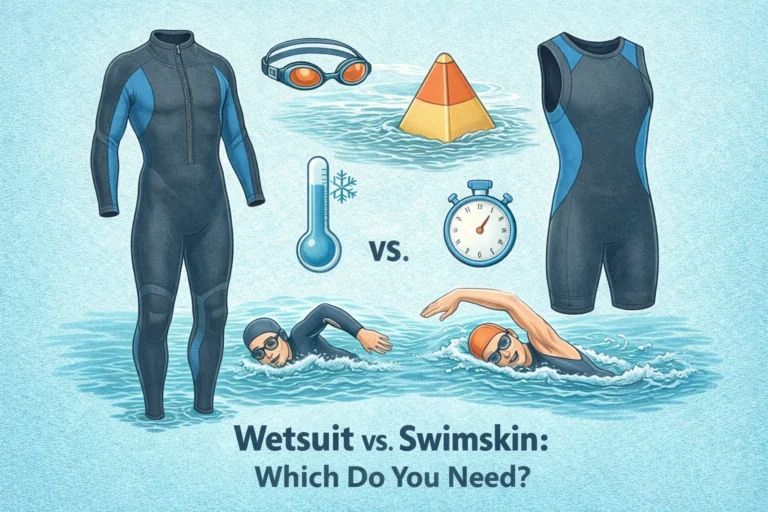
The choice between a wetsuit vs swim skin matters for every triathlete. I write about gear, tests, and race decisions. This article quickly explains the main differences and guides you to the right pick for your next race.
You will get clear advice on speed, warmth, race rules, fit, and how to buy. Read the sections that matter to you and use the checklists to decide with confidence.
Wetsuit vs Swim Skin: Key differences
Wetsuit vs swim skin are two very different tools for open water swimming. One is built to trap air for buoyancy and warmth. The other is made to minimize drag and follow the swimmer’s body shape closely. These two designs change how you swim, how fast you go, and how you feel in the water.
Wetsuits use neoprene panels and sealed seams. They add buoyancy and lift your legs so you can maintain a better body position. Swim skins are ultra-thin and smooth. They reduce surface friction but do not increase buoyancy. Each option changes stroke mechanics and speed in a distinct way.
For many triathletes, the choice is a trade-off. A wetsuit can be a big help for slower swimmers or cold water. A swim skin suits faster swimmers racing in warm water. Knowing how each works is the first step to choosing the right suit for your race goals.
Below I compare performance, warmth, rules, fit, and buying tips. I include checklists and simple tests you can run at the pool and on race day. Use this to match your skill level to the right gear.
Wetsuit vs Swim Skin: Performance, speed and buoyancy
Performance is where many athletes start the decision. Wetsuits add buoyancy and can make your kick and body line more efficient. That often leads to faster swim splits for athletes who need better body position. Swim skins focus on surface speed by cutting drag, especially for strong swimmers who already have good body position.
Buoyancy changes stroke feel. With a wetsuit you may feel higher in the water and use less kick to hold a flat line. That saves energy for the bike and run. With a swim skin you keep your normal body position and stroke. That can help the strongest swimmers who already have a fast cadence and tight technique.
Speed gains depend on swimmer level. A moderately strong swimmer will often see more net benefit from a wetsuit because buoyancy corrects body position problems. An elite or very fast age-group swimmer may gain more from a skin because reduced drag at race pace outweighs the slight lift from a wetsuit.
Here is a short list that shows typical performance effects for each option. Read the list to compare how each piece of kit changes speed and feel.
- Wetsuit: Adds buoyancy, raises hips and legs, can improve body alignment, may slow quick arm turnover slightly.
- Swim skin: Minimizes surface drag, follows body contours closely, best for swimmers with strong technique and high tempo.
- Net effect: Wetsuit helps many average swimmers more. Swim skin helps top swimmers and warm-water races.
Wetsuit vs Swim Skin: Thermal protection and water temps

Temperature matters a lot in the wetsuit vs swim skin choice. Wetsuits offer insulation that keeps your core warmer in cold water. That can prevent shivering and save energy. Swim skins offer no real insulation and are only suitable when race rules or conditions allow it.
If the water is cool and you expect a long time in the swim, a wetsuit is often the safer pick. You stay warmer and maintain stroke efficiency without burning calories to stay warm. In short races or short swims in warm water, a skin may be comfortable and fast.
Race organizers set rules that sometimes require or forbid wetsuits at specific temperatures. Know those rules before you choose. Your comfort on race day should match the likely water temperature and the event regulations.
Below is a simple guideline for temperature choices. Use it as a starting point but always check event rules and personal tolerance.
- Below 16°C (60°F): Wetsuit strongly recommended for most athletes for safety and warmth.
- 16–20°C (60–68°F): Many will benefit from a wetsuit; check rules and personal tolerance.
- Above 20°C (68°F): Swim skin or standard race suit often preferred; wetsuit may be banned depending on local rules.
Wetsuit vs Swim Skin: Race rules and event choices
Knowing event rules is essential. Organizers set limits for wetsuit use based on water temperature. They also define allowed materials and thickness. A rule break can lead to disqualification. Always verify the race handbook before the event.
Some events allow wetsuits but ban certain suits or thicknesses. Others prohibit wetsuits above a temperature threshold. Swim skins are often accepted when wetsuits are not allowed. That can make skins the only legal fast option in warm races.
For triathletes planning to race many events, carry both a wetsuit and a swim skin if you can. That gives flexibility for changing conditions. If you must pick one, let likely race conditions and rule patterns guide you.
Here are the typical rule-driven choices to consider when you plan your race kit for the season.
- Cold-season races: Expect wetsuits to be allowed and often recommended for safety.
- Warm-season or tropical races: Wetsuits may be banned; a swim skin or trisuit is the legal option.
- Championship or draft-legal races: Rules can be stricter; review material and thickness rules carefully.
Wetsuit vs Swim Skin: Fit, comfort, and ease of use
Fit changes comfort and speed. A wetsuit that is too tight restricts stroke and breathing. A loose wetsuit creates drag and may let water flush in. Swim skins need a snug, streamlined fit and must sit smoothly on the skin and suit underneath for best speed.
Entry and exit matter in triathlon transitions. Wetsuits can be harder to remove quickly, especially full suits. Practice stripping and use of a thin suit or a chest zip can save seconds. Swim skins are quick to remove because they are light and thin, though you may need to pull them over a trisuit if allowed.
Comfort is also a training issue. Wetsuits are great for long training swims in cold water and can reduce shoulder fatigue by improving position. Swim skins are better for feel and technique sessions where you want to practice race pace and high turnover.
Below are practical tips for fit and transition that help both pieces of kit work best for you.
- Wetsuit fit tips: Ensure chest and shoulders allow full reach. Legs should fit snugly without cutting off circulation.
- Swim skin fit tips: Try it over your race suit if rules allow. Smooth fabric and correct sizing are key to low drag.
- Transition tips: Practice wetsuit removal with elastic straps or a teammate and rehearse the sequence for skins and suits.
Wetsuit vs Swim Skin: How to choose for your race
Choosing between wetsuit vs swim skin depends on your skill, race distance, water temperature, and how much time you plan to save on the swim. Start with honest self-assessment. If your swim is a weakness, a wetsuit may give the biggest time gain. If you are a strong swimmer and races are warm, a skin may be faster.
Think about the whole race. A wetsuit can save energy that helps on the bike and run. That trade-off often matters more in Olympic and longer distances. In short triathlons, shaving seconds on the swim with a skin can be decisive for top age-groupers.
Also consider your practice time. If you rarely train in a wetsuit, putting one on for race day may change stroke feel and pacing. Practice in both types well before race day so you know how water entry, sighting, and transitions will be affected.
Use this checklist to choose for your next event. Work through each line with your coach or training partner to make the final call.
- Water temperature and event rules
- Your swim speed and body position
- Race distance and time in the water
- Comfort and practice time with each suit
- Transition speed and ease of removal
Wetsuit vs Swim Skin: Care, maintenance, and storage
Both wetsuits and swim skins need care to stay fast. Rinse immediately with fresh water after each use. Wetsuit neoprene breaks down faster when left in salt or chlorinated water. Swim skins can snag and lose smoothness, so handle them gently.
Dry them properly. Turn wetsuits inside out and hang them away from direct sunlight. Swim skins should be dried flat or hung on a soft hanger. Avoid folding wetsuits tightly; that can create permanent creases and weaken seams.
Repair small issues promptly. A small tear in a swim skin or a loose seam on a wetsuit can grow into a race-ending problem. Use manufacturer repair kits or see a specialist if damage is more than minor.
Below is a compact list of care steps to keep your gear race-ready for many seasons.
- Rinse in fresh water right after use.
- Dry away from the sun on a wide hanger or flat surface.
- Store in a cool, dry place without tight folds.
- Repair small tears quickly with proper repair kits.
Wetsuit vs Swim Skin: Buying and testing tips
Buying the right suit starts with a fitting. Try several brands and sizes if possible. Different makers cut neoprene and fabric in different ways. One brand’s size small may fit like another brand’s medium. A test swim with each option is ideal.
Look at seam type, panel layout, and thickness for wetsuits. Thinner neoprene improves flexibility in the shoulders while thicker sections add buoyancy in the torso and legs. For swim skins, check surface finish and stretch. A smooth outer coating reduces drag and feels faster at race pace.
Testing should be specific. Swim some steady laps at race effort in both suits. Note breathing, stroke length, and how comfortable you feel in sighting and turns. Time trials on a straight course help measure real gains. Practice transitions and removal to avoid surprises on race day.
Here is a practical buying checklist you can take to the store or use while shopping online. Use each point to compare models and pick the best match for your needs.
- Fit around shoulders, chest, and ankles.
- Panel layout for buoyancy and flexibility.
- Thickness ratings and where the neoprene is placed.
- Manufacturer reputation for durability and customer service.
- Return policy and exchange options after a test swim.
Key Takeaways
Wetsuit vs swim skin is not a simple faster-or-slower choice. Each has clear strengths. Wetsuits help many athletes by improving body position and warmth. Swim skins reward strong swimmers with less surface drag and better top-end speed in warm water.
Match your choice to water temperature, race rules, swim ability, and transition strategy. Practice in the suit you plan to race. That reduces surprises and helps you maximize performance on race day. Your final pick should balance speed, comfort, and legality for the event.
Use the checklists in this article to make a decision. If you race many events in varied conditions, owning both a wetsuit and a swim skin is a smart long-term option. If you pick one, let water temperature and your swim strength guide the choice.
Train in both suits when possible, time your swims, and make the choice that saves the most time across your whole race. Good gear decisions create confidence, and confidence turns into better race results.