
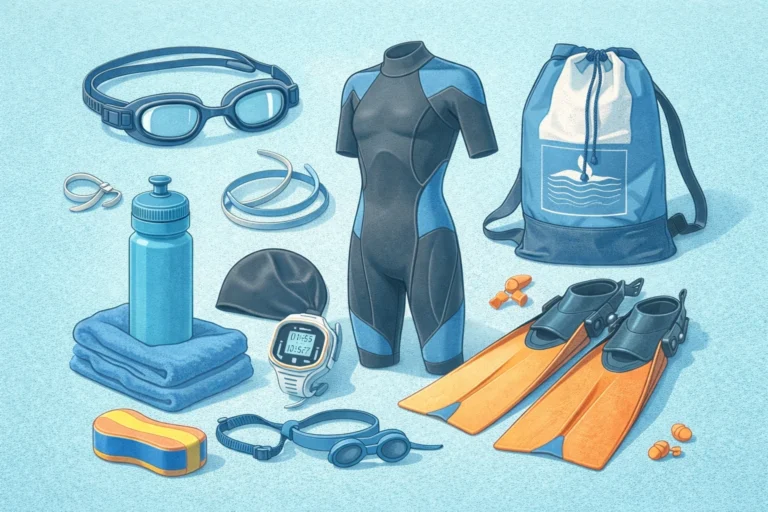
Swimming is the first leg of many triathlons and it sets the tone for the whole race. In this article I explain the most important swim gear essentials triathletes need. You will learn what to buy, how to choose gear, and how to use and care for it. The goal is to make your swim faster, safer, and more comfortable.
My tips are written for busy athletes and new triathletes. I keep the language clear and the steps practical. Expect specific items, short checklists, and advice you can use today. I am a triathlon journalist and coach. I write from experience and testing, and I am excited to help you improve.
This guide focuses on open water swimming for triathlon. The gear choices are about speed, fit, safety, and ease on race day. Read on to learn how the right gear can change your training and racing.
Why swim gear essentials matter
Good gear helps you swim with more comfort and better technique. The right items reduce drag, protect your eyes and skin, and keep you safe in open water. Small changes to equipment often give big results in speed and confidence.
Comfort also matters during training. If goggles fog, if a suit chafes, or if you feel cold, you lose focus. The swim gear essentials I cover reduce those problems. You will waste less energy and swim more efficiently.
Finally, gear affects race flow. Quick transitions, easy on/off, and reliable equipment lower stress. That lets you start the bike fresh. Investing time in learning your gear is a high-value step for any triathlete.
Core swim gear essentials

Before you race, you need a small set of reliable core items. These are the tools you will use nearly every day in training and on race morning. Below I list the items and explain why each one matters.
Choose gear that fits your body, your water temperature, and your race distance. Comfort and fit are more important than brand. I focus on practicality and performance for triathlon situations.
Here are the essential items every triathlete should have. Each item includes a short note about selection and use.
- Wetsuit – For cold or choppy open water, a wetsuit adds buoyancy and warmth. Look for flexibility around the shoulders and a good range of sizes. Practice wetsuit swimming before race day.
- Triathlon-specific swimsuit or swimskin – For warm water or non-wetsuit races, a tri suit or swimskin reduces drag and is quick to remove. These suits balance speed and modesty.
- Goggles – Clear or mirrored lenses depending on light. Fit and seal are critical. Buy two pairs in different tints and test them in open water.
- Swim cap – Race caps are required at most events and help keep hair and goggle straps in place. Use a silicone cap for durability.
- Earplugs and nose clip (optional) – Useful if you tolerate them. They can reduce irritation and breathing disruption for some swimmers.
- Anti-chafe lubricant – Apply to neck, underarms, and anywhere the suit rubs. It prevents raw skin after repeated training sessions.
After you own these basics, you can add specialty items to refine speed and comfort. Practice with every item until it feels normal.
Choosing wetsuits and swim skins
Wetsuit choice is one of the biggest decisions for open water triathletes. A proper fit gives buoyancy and range of motion. A poor fit slows you and can cause shoulder strain. Learn how to compare suits and how the phrase wetsuit vs swim skin matters for race selection.
Start by trying several brands and sizes. Shoulder stretch and torso buoyancy are the two most important fit points. The suit should be snug but not painful. On land it will feel tight. In water you want freedom to rotate and a steady kick.
Consider thickness and panel design. Thicker panels at the legs and hips add buoyancy. Thinner panels around the shoulders allow reach. For warm-water events that ban wetsuits, a swimskin or tri suit gives lower drag. Know the rules of your race and plan accordingly.
Practice swims in the suit or skin you will use on race day. Practice short sprints and sighting in the exact gear. If you test both a wetsuit and a swimskin, compare comfort and speed. The phrase wetsuit vs swim skin helps frame the decision but test both to know what feels fastest for you.
Open water add-ons and safety gear
Open water has risks that pool swimming does not. Add-on items increase visibility, safety, and comfort. They are not always mandatory, but they are smart for training and many races.
Buoys and safety aids are useful tools. A bright swim buoy increases visibility to boats and teammates. A small whistle or safety light can help in low light. Consider local rules and conditions when picking safety gear.
Below is a list of common add-ons and their uses. Use the list as a checklist when you head out for a sea or lake swim.
- Bright swim buoy – Inflatable and attached by a cord, it increases visibility and provides a rest float if you need one.
- Safety whistle – A cheap, light, and audible item to attract attention in an emergency.
- Neoprene cap or full head cover – Extra warmth for cold sessions and reduced heat loss in frigid water.
- GPS watch or swim tracker – Useful for mapping open water distances and pacing. Confirm it works in salt or fresh water.
- Thermal layers for post-swim – A windproof jacket or robe for after the swim prevents hypothermia on cool race mornings.
Use these add-ons based on conditions. For calm, warm water you may need only a cap and goggles. For rough or cold water, add a buoy, a thermal layer, and brighter gear.
Care and maintenance of swim gear
Proper care makes gear last longer and perform better. Wetsuits, goggles, and suits need simple routines to avoid damage and to keep seals and fabrics working. Follow a short maintenance plan after every session.
Rinse gear with fresh water immediately. Salt, sand, and chlorine break down fabrics and seals. A light soap for wetsuits after heavy use helps remove sunscreen and body oils. Avoid machine drying and hot water.
Below is a simple maintenance checklist you can follow after each use. It keeps equipment reliable and race-ready.
- Rinse all gear with fresh water. Shake out excess water from the wetsuit and swimskin.
- Hang wetsuit and suits inside out to dry in shade. Avoid direct sunlight which fades and weakens neoprene and fabric.
- Store goggles in a case to protect the lenses and coating. Do not touch inner anti-fog surfaces.
- Use a mild wetsuit shampoo or soap occasionally to remove oils. Do not use bleach or strong detergents.
- Inspect gear for rips or loose seams and fix small issues before they get worse.
With a short routine you will avoid many common problems. A little care saves money and avoids surprises on race morning.
Practice and race day tips
Gear only works if you know how to use it. Practice transitions, suit removal, and sighting with the exact items you will race with. Repetition builds muscle memory and reduces stress on race day.
Simulate race conditions in training. Swim in similar water and light. Wear the same suit, goggles, and cap. Time yourself on getting out of the water, moving to the transition area, and removing the suit quickly while staying safe.
Below is a practical race-day packing checklist to include with your transition routine. Read it and practice each step so nothing surprises you.
- Race suit or tri suit – Dry and packed along with a backup cap and goggles.
- Wetsuit – If allowed, prepped and coated with lubricant for fast removal.
- Goggle set A and B – One tinted for sun and one clear for low light.
- Anti-chafe, towel, and warm robe – For comfort in transition and after the swim.
- Swim buoy or safety items – If you use them in training, have them on race day as well.
Practice quick suit removal and transitions until you can do them without thinking. Race day nerves will slow you down otherwise. A calm, practiced routine reduces mistakes and improves your finish time.
Key Takeaways
Choosing the right swim gear essentials improves safety, speed, and comfort. Focus on fit and practice. Gear decisions such as wetsuit choice and the use of a swimskin affect buoyancy and drag. Test options like wetsuit vs swim skin in training so you know which feels fastest.
Keep gear simple and reliable. Core items include a wetsuit, a tri suit or swimskin, good goggles, and a swim cap. Add safety items like a buoy and whistle when conditions call for them. Care for your equipment with rinsing, gentle cleaning, and proper storage.
Finally, practice with your equipment often. Race day is not the best time to try new gear. Train in the exact setup you plan to use. With consistent practice and the right gear, your swim leg will become a strong, confident start to every triathlon.