
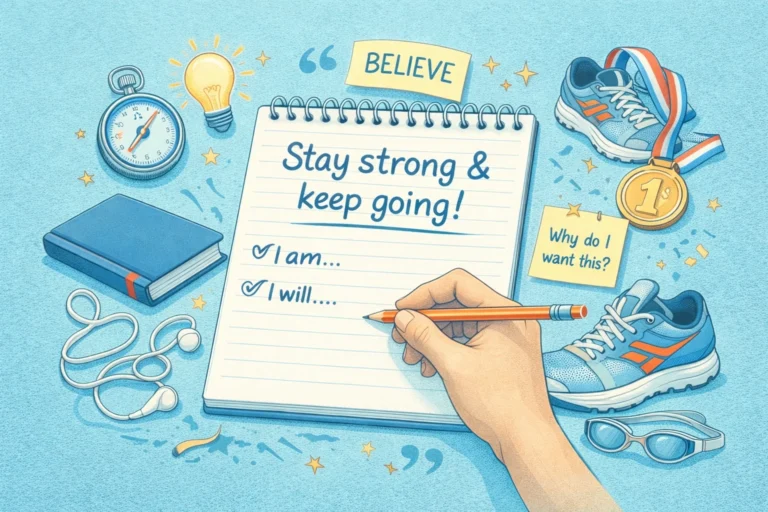
As a triathlon journalist with years covering athletes and races, I know simple words can change how you train and race. This article will show how to create motivational mantra you can use in every swim, bike and run session. You will get clear steps, real examples, and advice to make a mantra stick.
Why a mantra works for athletes
A short, focused phrase guides your mind when training gets hard. Triathlon tests body and mind for hours. A well-chosen mantra brings attention back to what matters. It cuts through fatigue and doubt.
Mantras work because they repeat a single idea. Repetition builds habit. When you practice a mantra, it becomes a mental cue you can trust under pressure. That helps performance when your body starts to protest.
As a triathlon journalist I have watched athletes use mantras to calm nerves before the swim and to push through the last miles of a marathon. The right phrase can turn a negative thought into forward momentum. It gives you a clear, repeatable tool for race day.
Principles to follow when you create motivational mantra
Before you pick words, know what you want the mantra to do. Do you want to calm your breathing, remind yourself of form, or boost courage? Clarity about purpose makes the mantra easier to use. Keep the phrase tied to a single goal.
Make the mantra short and specific. Long sentences are hard to remember when you are gasping for air. Aim for three to five words. Short phrases fit easily into the rhythm of your stroke, pedal or stride. Simplicity wins.
Choose present-tense and positive language. Say what you want, not what you fear. For example, use “steady power” instead of “don’t slow down.” The brain responds faster to positive images and commands.
Keep the mantra personal and believable. It should match your level and style. If a phrase feels false, it will not hold up when you need it. Test a few lines in training and pick one that feels natural.
Step-by-step process to create motivational mantra
Follow these steps to build a mantra that fits your goals and personality. Each step is short and practical so you can try them on the next ride or run. Use the steps in order to move from idea to a usable phrase.
The first step is define the outcome you want. Write one sentence that describes success in a simple way. For example: “Hold smooth cadence at threshold” or “Stay relaxed at the start.” This sentence is your guide.
Next, turn that sentence into a short phrase. Cut words until only the core idea remains. Keep it to three words if you can. Test the phrase while training and adjust for rhythm and tone. You want something you can say quickly and repeatedly.
Finally, practice the mantra in conditions that mimic race day. Use it during hard intervals, long bricks and pre-race nerves. The more you use it, the more automatic it becomes. A practiced mantra will come to you when you need it most.
Practical tips to refine your phrase
After you create a first draft, refine the mantra so it fits your breathing and cadence. A phrase that matches your stroke or pedal rhythm is easier to repeat. Match syllables to motion where possible.
Use sensory words or strong verbs that spark action. Words like “smooth,” “steady,” “push,” and “relax” can trigger physical responses. Keep emotions steady and clear rather than dramatic. Simple action words work best under stress.
Try variations and A/B test them in workouts. Note which phrase helps you hit power or pace targets. Keep a short journal entry after sessions to record how each mantra affected focus and effort. This record helps you choose the best option.
Remove any words that cause doubt or sound grandiose. If a phrase raises questions, it will not help. A good mantra should remove doubt and replace it with a single actionable thought.
Examples of mantras for triathletes
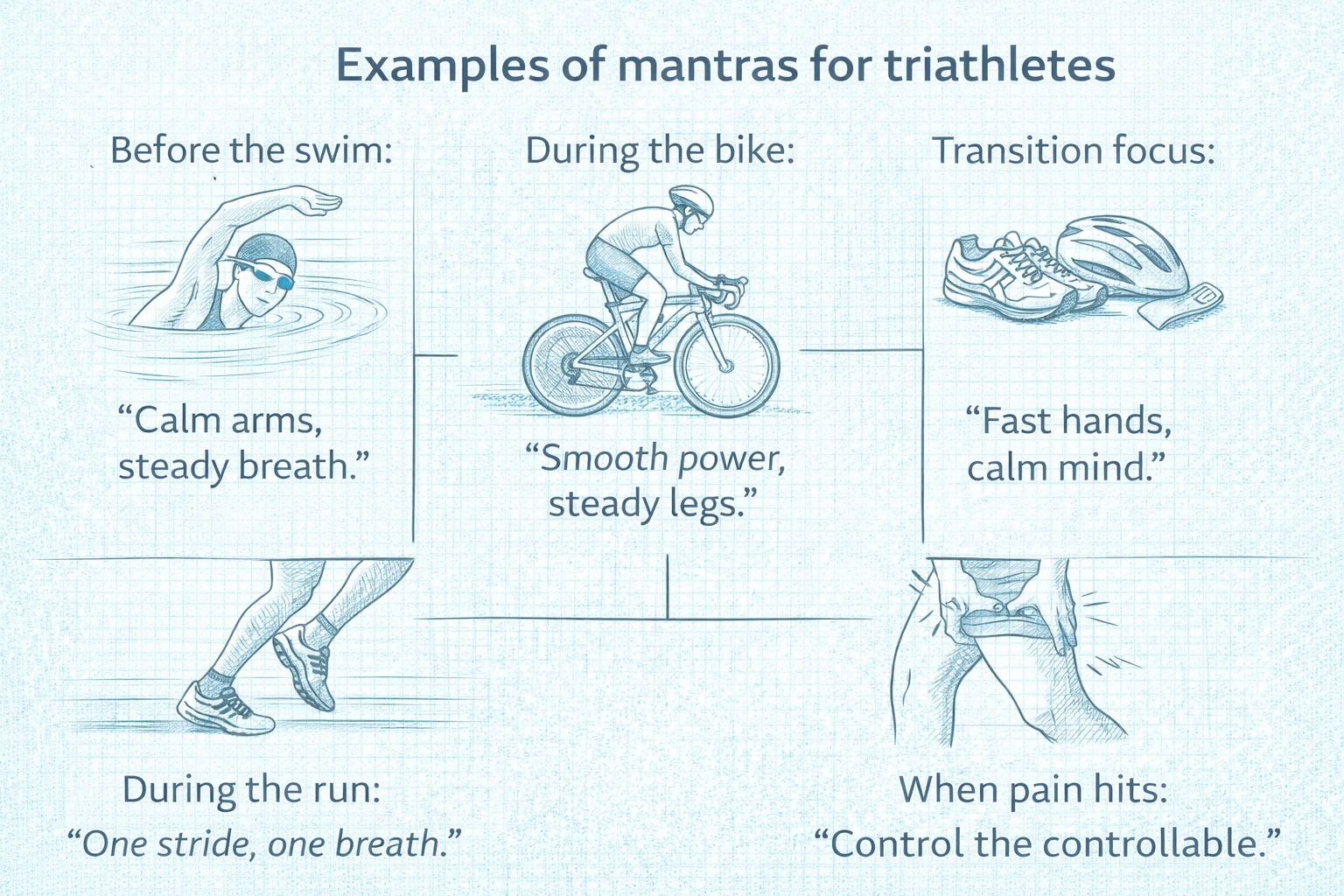
Below are sample mantras tailored to common race and training moments. Each example is short and specific so you can use it immediately. Read them and pick one that matches your needs.
- Before the swim: “Calm arms, steady breath.” Use this to control nerves on the start line and keep stroke smooth.
- During the bike: “Smooth power, steady legs.” This keeps cadence and effort steady on long rides and climbs.
- Transition focus: “Fast hands, calm mind.” Use this to move quickly without panicking in transition.
- During the run: “One stride, one breath.” This helps break the run into small repeatable units and reduces overwhelm.
- When pain hits: “Control the controllable.” Use this to accept discomfort and focus on actions you can manage.
Try these in training and adapt the language until a phrase feels natural and strong. Each mantra can be shortened further if needed for easier repetition.
How to practice and embed your mantra
Practice in low-stress settings first. Say the mantra out loud during warm-ups and steady efforts. Saying it aloud helps you find rhythm and tone. It also makes the phrase easier to recall under stress.
Use the mantra in specific drills and workouts. Assign a mantra to an interval set or a pace segment. Repeat it every time you hit that workout phase. This creates a mental link between the phrase and a physical action.
Visual cues help. Pair the mantra with a physical cue like hands on the bars, a change in gear, or a landmark on the course. The cue triggers the phrase and the phrase guides the action that follows. Practice this pairing until it feels automatic.
Keep a short pre-race routine that includes the mantra. Repeat the phrase during warm-up and the minutes before the start. The routine primes your mind and makes the mantra a trusted tool on race day.
Common mistakes and how to avoid them
Many athletes pick a phrase that sounds inspiring but has no clear use. An inspiring phrase can fail if it is vague. Choose a mantra tied to a specific action or rhythm to get reliable results.
Another mistake is overloading the mantra with too many ideas. A phrase that tries to do everything becomes confusing. Keep the focus narrow. One action per mantra works best.
Some athletes change mantras too often. Frequent changes stop the phrase from sticking. Stick with one tested mantra for several weeks. If it fails after real effort, then try a new one.
Watch for motivation pitfalls such as comparing your mantra to another athlete’s line. Personal context matters. If a phrase worked for someone else but not for you, that is normal. Make your mantra personal and relevant to your race plan.
Using your mantra on race day and under pressure
Race day uses the mantra in short, repeated bursts. Use it at the gun, at key course features, or when effort spikes. Short, timely repetitions work better than long speeches to yourself.
When anxiety rises, drop the mantra into your breathing pattern. Match one or two words to an inhale and exhale. This links focus to breath and helps steady your body quickly.
If you lose concentration, bring the mantra back and focus on form. Ask yourself what one small action the mantra directs you to do right now. Execute that single move. Small wins rebuild confidence during a race.
Practice managing outside noise. Crowd, other athletes and unexpected events can break focus. Use your mantra as a calm center. With practice, the phrase will become the habit you rely on when things get messy.
Key Takeaways
A good mantra is short, positive and tied to a clear action. Keep it simple so you can repeat it easily in the water, on the bike or while running. Test phrases in training before race day.
Practice the mantra with rhythm and cues. Pair words with breathing, pedal stroke or stride. Repetition in realistic conditions builds trust in the phrase so it helps when you need it most.
Beware of motivation pitfalls such as vague statements or copying another athlete. Make the mantra personal, believable and practical. Use one phrase consistently until it becomes an automatic tool.
Use the steps above to create motivational mantra that fits your goals. With practice, a short phrase can change your focus and lift your performance in training and racing.