
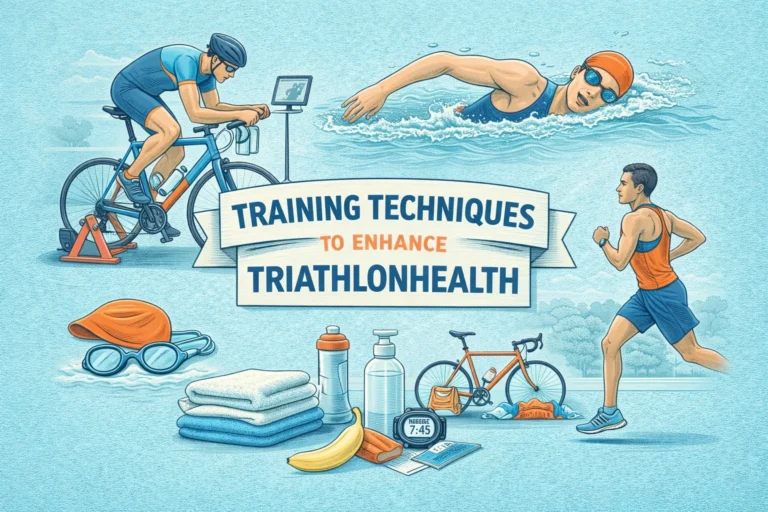
Triathlonhealth training can change how you prepare, race, and recover. This article explains clear methods you can use to improve swim, bike, and run skills, add strength, and plan nutrition and recovery. Read on for specific sessions, weekly plans, and tips you can apply right away.
Why focused triathlonhealth training matters
Focused training gives you skills that matter on race day. When you train with a plan, your body adapts to the intensity and variety triathlon requires. You become faster, more efficient, and less likely to get injured.
Most athletes who improve steadily follow measured steps. These steps include setting goals, tracking progress, and adjusting workouts. That steady work beats random or overly hard sessions done without a plan.
Having purpose in each session lets you target weaknesses. If your swim is weak, sessions that build technique and endurance will help. If you struggle on the bike, specific intervals and long rides can change that.
Finally, focused triathlonhealth training helps you stay motivated. Progress is easier to see, and small wins add up. When training is clear and structured, race day feels much more manageable.
Components of effective triathlonhealth training

A balanced plan covers swim, bike, run, strength, recovery, and nutrition. Each area supports the others. Ignoring one can limit your gains.
Training should build endurance, speed, and efficiency. It should also include rest and recovery. Those rest days let your body repair and grow stronger.
Tools and tests help guide your training. Heart rate, perceived effort, time trials, and power meters give useful feedback. Use that feedback to adjust workouts and keep steady progress.
Below are the main components, with practical ways to train each area and sample workouts you can try.
Swim training for triathlonhealth training
Swimming is often the most technical leg for new triathletes. Technique saves energy and improves speed. A few focused drills each week will bring big returns in efficiency.
Start sessions with drills that work on body position, breathing, and catch. Short, focused intervals help you build speed without fatiguing muscles that are new to the work. Include longer steady swims for endurance.
Open-water practice is essential if you will race outside the pool. Practice sighting, starting in a pack, and swimming in waves or choppy water. These skills reduce anxiety on race morning.
Below are sample swim sessions you can use across a week to balance skill and fitness.
Try these sample swim sessions to build skill and endurance, one after another as you progress.
- Technique day: 10 min warm up, 6 x 50 drill + 6 x 100 moderate, 200 easy cool down.
- Speed day: 10 min warm up, 8 x 50 fast with 30 sec rest, 4 x 100 at race pace, 200 easy cool down.
- Endurance day: 1,500 to 3,000 m steady with small pick-ups every 10 minutes, focus on smooth breathing.
Bike training for triathlonhealth training
Cycling builds endurance and teaches you to hold power for long periods. Work on cadence, pedaling efficiency, and comfort on the aero bars. These small gains save energy for the run.
Include a mix of long rides, tempo efforts, and intervals. Long rides grow aerobic capacity. Tempo rides teach sustained speed. Intervals improve top-end power and recovery between hard efforts.
Practice nutrition and bike handling on longer rides. Practice shifting, cornering, and mounting and dismounting on and off the bike. These skills reduce nervous energy on race day and help you hold higher speeds more comfortably.
Here are three core bike sessions that fit into most training weeks.
Use these sessions to build a strong bike base, then add intensity as you get fitter.
- Long ride: 2 to 5 hours at steady endurance pace, practice eating and drinking every 20 to 30 minutes.
- Tempo ride: 60 to 90 minutes with 3 x 15 minutes at tempo pace, 5 minutes easy between efforts.
- Interval day: 10 min warm up, 5 x 5 minutes at high intensity with 3 minutes easy, 10 min cool down.
Run training for triathlonhealth training
Running after the bike is a skill on its own. Brick sessions, which mix bike and run in the same workout, teach your legs to adapt to the shift in effort. Practice bricks weekly if you can.
Mix easy runs, tempo runs, and interval work. Easy runs build base mileage. Tempo runs improve lactate threshold. Intervals raise speed and VO2 max. All three are useful for triathlon races of any distance.
Footwear, cadence, and posture matter. Aim for a cadence near 170 to 180 steps per minute for many athletes. Shorter, quicker steps often feel easier after a hard bike segment.
Below are sample run sessions and a simple brick session to combine with a bike workout.
Try the following runs, adjusting volume to your fitness and race distance.
- Easy run: 30 to 60 minutes at a conversational pace. Focus on relaxed breathing and smooth form.
- Tempo run: Warm up, 20 to 40 minutes at tempo pace (comfortably hard), cool down.
- Intervals: 6 to 10 x 400 or 800 meters at fast pace with equal or slightly shorter rest.
- Brick: 60 minute bike at moderate pace, then 20 minute run at race pace to get used to the transition.
Strength and mobility for triathlonhealth training
Strength work keeps small muscles strong and reduces injury risk. You do not need heavy lifting for long hours. Short, focused sessions twice a week can be enough.
Focus on core, glutes, hip stability, and shoulder strength. These areas support all three triathlon disciplines. Mobility work for hips, thoracic spine, and shoulders helps maintain good position across long races.
Keep sessions short and consistent. Use compound moves like squats, deadlifts, push-ups, and rows with moderate loads. Add single-leg work and rotational core exercises to address balance and running stability.
Here is a sample strength session you can do in 30 minutes, twice a week, between key workouts.
Follow this session and increase load or reps slowly as you get stronger.
- Warm up: 5 to 7 minutes of light cardio and dynamic stretches.
- Main set: 3 sets of 8 to 12 reps of squats, single-leg Romanian deadlifts, bent-over rows, and push-ups.
- Core and mobility: 3 x 30 seconds plank, 2 x 10 side planks, 5 minutes of hip and thoracic mobility work.
Recovery and sleep in triathlonhealth training
Recovery is where fitness actually improves. Hard workouts break down muscle and energy systems. Sleep and rest rebuild them. Without enough recovery, gains stall and injury risk rises.
Prioritize quality sleep and nutrition after hard sessions. Use active recovery like easy swims or bike spins to keep blood flowing without adding stress. Massage, foam rolling, and light stretching also help sore muscles feel better.
Track how you feel with a brief daily log. Note sleep quality, mood, muscle soreness, and training load. These notes help you decide when to push and when to back off.
Recovery is not optional if you want steady improvement. Treat easy days as important parts of your plan, not days you skip because you feel impatient.
Nutrition and fueling for triathlonhealth training
Nutrition fuels training and recovery. A balanced diet with the right mix of carbs, protein, and fats supports long workouts and helps you recover faster. Practice fueling strategies during training so race-day feeding feels familiar.
Before long workouts, eat carbs that digest well. During long rides or runs, take in 30 to 90 grams of carbs per hour depending on intensity and duration. After sessions, a mix of carbs and protein helps rebuild muscle and refill glycogen.
Hydration matters for performance and safety. Weigh yourself before and after long sessions to estimate fluid loss and replace it accordingly. Use electrolytes when sweating heavily or training in hot weather.
Many athletes find benefit in planning a nutrition strategy that fits their body and race distance. Keep notes on what foods and products work best for you.
triathlonhealth nutrition is a term you can use to find resources and meal ideas that match the training load you are carrying.
Designing a weekly triathlonhealth training plan
A weekly plan balances hard days with easy days and recovery. It rotates focus across swim, bike, and run and adds strength work. A sample week helps you see how sessions fit together.
Start with three quality sessions for your weakest discipline per week, while keeping two or three maintenance sessions for the other sports. Add one or two strength sessions and one full rest day.
Adjust volume based on race distance. Sprint athletes need more speed and intensity with lower volume. Ironman athletes need more long aerobic sessions and careful pacing of intensity.
Below is a sample week for a half-iron distance athlete training about 8 to 10 hours a week. Use it as a template and change times to match your schedule and fitness.
Here is a clear sample week to follow or adapt for your own use.
- Monday: Rest or easy swim 30 minutes plus mobility and strength (30 mins).
- Tuesday: Bike intervals 60 minutes, 5 x 5 min hard with 3 min easy.
- Wednesday: Swim 45 minutes with drills and 4 x 200 at race pace, plus short run 20 minutes easy.
- Thursday: Run tempo 45 minutes, plus strength 30 minutes.
- Friday: Easy bike 60 minutes or rest and mobility work.
- Saturday: Long ride 3 to 4 hours, practice nutrition, short transition run 20 minutes.
- Sunday: Long run 60 to 90 minutes at steady pace, cool down and stretch.
Common mistakes and how to avoid them
One common error is doing too much high-intensity work without enough base endurance. Intensity has value, but it should not replace steady base training when preparing for longer races.
Another issue is neglecting transitions and open-water skills. If you only train in a pool, sudden exposure to open water can cause stress and poor pacing on race day. Practice starts and sighting in open water when possible.
Many athletes skip strength and mobility. This can lead to chronic aches and reduced efficiency. Keep short strength sessions twice a week and daily mobility routines to stay healthy and move better.
Poor fueling strategy is another frequent mistake. Test gels, bars, and drinks during long training sessions. Treat practice like a trial and error period so you know what works on race day.
Gear and tech to support triathlonhealth training
Good gear helps you train smarter and feel more comfortable. You do not need the most expensive items, but the right tools do help you measure progress and reduce stress on race day.
Essentials include a reliable bike that fits well, a good pair of running shoes, a wetsuit if you race in open water, and swim goggles that fit properly. A bike fit can make a huge difference in comfort and power output.
Many athletes also use a heart rate monitor, bike computer, or power meter to track effort. These tools can guide intensity and help you make smart choices during training and racing.
Below is a short gear checklist to help you get started, with items that matter most to performance and comfort.
Use this checklist to pick gear that matches your needs and budget.
- Bike fit and basic maintenance kit (tubes, pump, multi-tool).
- Wetsuit for open water races and training if needed.
- Quality running shoes and spare pair.
- Heart rate strap or optical monitor and a bike computer or watch for pacing.
- Nutrition supplies for training and race day practice: gels, bars, electrolyte drinks.
Measuring progress and adjusting triathlonhealth training
Progress comes from consistent tracking and small adjustments. Use objective and subjective measures together. Objective measures include time trials, power numbers, and pace. Subjective notes include how hard sessions felt and how well you slept.
Set short-term and long-term goals. Short-term goals might be to swim 50 meters faster or hold a tempo pace for longer. Long-term goals could be finishing a specific race distance or hitting a target time.
Use tests every 4 to 8 weeks to see if training is working. Keep these tests simple and repeatable, like a 20-minute bike test or a timed 1,500 meter swim. Use the results to modify training zones and session intensity.
Adjust volume and intensity based on feedback. If you feel beaten down, reduce intensity or add an extra easy day. If your tests show steady improvement, keep the current plan and gradually add load.
Common metrics to track are heart rate, pace, power, sleep quality, and perceived exertion. These form a clear picture of how your body responds to training.
- Use a 20-minute bike test to set power training zones.
- Use a 1,500 meter swim test to set pace targets for swim sessions.
- Track a weekly training log with notes on fatigue, sleep, and mood.
Race-week preparation and tapering
Tapering helps you arrive on race day fresh and fast. Taper length depends on race distance. Short events can use a few days of reduced load, while longer races may need one to three weeks of lower volume.
During taper, keep intensity with short sharp efforts to maintain sharpness. Reduce total volume by cutting down long sessions and keeping quality but shorter repeats. Nutrition remains steady with adequate carbs and hydration.
Practice race transitions and packing during the final week. Lay out your gear and run through the steps so nothing surprises you on race morning. Visualize the race and your plan to build confidence.
Sleep and mental rest are key. Use the reduced training load to focus on sleep quality and light mobility work. Avoid trying new foods or gear in the final days before the race.
Key Takeaways
triathlonhealth training is about balance. Work on swim, bike, and run skills, add strength and mobility, and plan nutrition and recovery. A clear, consistent approach brings steady gains and reduces injury risk.
Use mixed sessions that include technique, intervals, and long aerobic work. Practice transitions and open-water skills if your races require them. Keep weekly plans simple and repeatable.
Track progress with tests and logs. Adjust volume and intensity based on results and how you feel. Recover well with sleep, easy days, and good nutrition so hard work pays off.
Start small, be consistent, and build on clear progress. With focused triathlonhealth training, you can improve your speed, endurance, and enjoyment of the sport. For specific nutrition ideas and meal planning, check resources under triathlonhealth nutrition to find plans that match your training load and goals.
Good luck, enjoy the process, and keep training smart. Consistency wins races over time, and steady, structured work is the best path to better performance.