
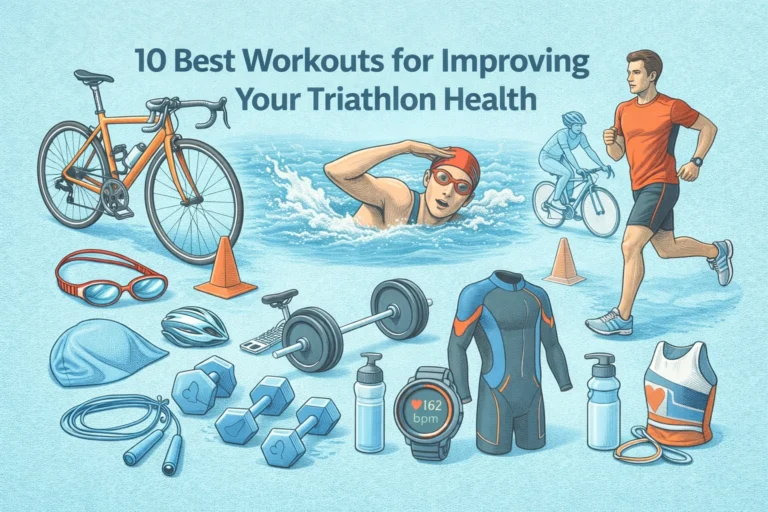
If you want stronger race days and fewer surprises on course, the right workouts matter. This article lists 10 best workouts for improving your workouts triathlonhealth, with clear how-to steps, session plans, and reasons each session helps. Use these sessions on their own or combine them into a weekly plan to build speed, stamina, and confidence.
Why workouts triathlonhealth matter
Training for a triathlon asks you to balance three sports and recover well between sessions. Solid workouts make that balance possible. They give you structure, measurable progress, and a path to race readiness.
Workouts that focus on specific systems let you improve muscles, energy use, and technique. You do not need endless hours. Instead, select sessions that target weak spots and match your race goals. Doing focused work produces more progress than random training.
As an experienced triathlon journalist and coach, I recommend mixing quality and volume sensibly. This keeps you healthy and keeps your training fun. The workouts below are selected to work together and to fit into common weekly plans.
Before each workout, warm up and check your gear. After each session, cool down and use a short recovery routine. These small steps protect performance and reduce injury risk.
Swim endurance workouts triathlonhealth
Swim endurance sessions build steady pace and aerobic capacity. They help you finish the swim leg with energy left for the bike. These workouts are ideal for any triathlete who gets tired late in the swim or loses form after a steady effort.
Focus on long sets with controlled effort. Maintain steady breathing and consistent stroke rate. Pay attention to technique as fatigue builds. Better technique uses less energy and positions you for a stronger bike ride.
Beginners can start with longer intervals and rest between sets. Advanced athletes can push continuous efforts. Either way, aim for time on task more than short sprints during this workout type.
Try this sample set to build endurance:
Warm up, then complete the following steady sets with short rest, finishing with an easy cooldown.
- 400 m easy warm up
- 5 x 400 m at aerobic steady pace, 30 seconds rest
- 200 m drill work focusing on catch and body rotation
- 200 m easy cooldown
Swim speed workouts triathlonhealth
Speed sessions teach your body to move faster at race pace and above, without losing form. These workouts are critical if you need to improve pack position, start faster, or close gaps mid-race.
Quality over quantity is the rule. Shorter, faster repeats with full recovery let you practice fast turnover and strong finishes. Technique and rhythm must remain clean as you push pace.
Include sprint sets, descending ladders, and speed play. On pool days, use tempo pace sets and short all-out repeats. On open water, practice short bursts inside a continuous swim to mirror group surges.
Sample speed session to try:
Warm up, then hit the fast work with full rest so you can keep quality high.
- 300 m warm up with drills
- 6 x 50 m at 95 percent effort, 1:30 rest
- 4 x 100 m at race pace, 45 seconds rest
- 200 m easy cooldown
Bike long endurance workouts triathlonhealth
Long bike rides build base fitness and comfort on the saddle. They teach your body to burn fuel efficiently and to handle hours of steady pedaling. For longer-distance triathlons, these rides are a training staple.
Keep the effort mostly steady and conversational. Use long rides to practice nutrition, pacing, and pacing errors to avoid on race day. Riding at varied intensity for long time helps you learn what works for your body.
Mix terrain and use a variety of cadences. Practice position changes and hydration routines. If you ride on a trainer, include small surges to mimic climbs and accelerations on course.
Sample long ride plan:
Start easy, settle into a steady zone, and finish with a short push to simulate a late race effort.
- 2 to 4 hour ride depending on distance and experience
- Maintain easy to moderate aerobic pace for most of the ride
- Include 3 x 10-minute steady efforts at tempo with 5 minutes easy between
- Finish with 10 to 20 minutes easy spin
Bike threshold workouts triathlonhealth
Threshold sessions help you raise the highest sustainable power or pace you can hold. These sessions are crucial for improving bike split times on flat and rolling courses. They teach the body to sustain harder efforts for longer.
Work at or just below your lactate threshold. Structured intervals of 10 to 20 minutes with short recovery will stress the right systems without excessive risk. Track your heart rate or power to keep the effort consistent.
Doing these sessions once per week yields clear gains in speed and endurance. Pair threshold work with recovery rides to keep fatigue manageable. If you are new to threshold training, start with shorter repeats and build up.
Example threshold workout:
Warm up fully. Focus on smooth power and steady breathing during the main sets.
- 20 minute warm up, easy to moderate
- 3 x 15 minutes at threshold, 8 minutes easy between
- 10 minute cool down
Bike cadence and neuromuscular workouts triathlonhealth

Cadence and neuromuscular drills teach fast leg speed and improve pedal technique. They help on short climbs, pack rides, and technical courses. These sessions also lower muscle strain during long efforts.
Include short, high-cadence efforts, single-leg drills, and quick accelerations. Use a smooth chainring choice and focus on turnover, not pushing harder. These drills improve coordination and smoothness.
Keep sessions short and sharp to avoid overuse. They fit well on easy ride days, or as a warm up prior to harder work. Track cadence with a sensor to measure progress.
Sample cadence session:
Use these drills mid-ride or in a focused 45 to 75 minute workout. Recover well between efforts so neuromuscular quality stays high.
- 10 minute warm up
- 10 x 30 seconds at high cadence (100 to 110 rpm), 90 seconds easy
- 4 x 1 minute single-leg drills per side, 2 minutes easy
- 10 minute cooldown
Run interval workouts triathlonhealth
Run intervals train speed, VO2 max, and turnover. They are the fastest way to improve your race run pace. For triathletes, intervals also teach running on tired legs, which is critical after the bike leg.
Quality and recovery matter most. Short, intense repeats with planned rest let you sustain faster paces and improve recovery between efforts. Workouts can be on track, trail, or treadmill depending on availability.
Mix interval lengths. Short 200 to 400 meter repeats build turnover. Longer 1,000 meter to 3,000 meter repeats build race pace sustainability. Include transitions from cycling to running to simulate race fatigue.
Sample interval workout:
Warm up thoroughly and keep effort honest. Focus on relaxed form at speed and steady breathing between reps.
- 15 minute warm up with strides
- 6 x 800 meters at 5K pace, 2.5 minutes jog recoveries
- 4 x 100 meters strides to practice turnover
- 10 minute cool down
Run tempo and race-pace workouts triathlonhealth
Tempo runs are the best way to raise sustained race pace ability. They teach your body to run efficiently at a challenging but controlled speed. For triathletes, tempo running helps with steady process during the key run portion of races.
Tempo efforts usually last 20 to 40 minutes at a comfortably hard pace. You should be able to speak in short phrases but not hold a full conversation. These runs train useful speed endurance without the stress of intervals.
Include tempo work once per week in a balanced plan. Alternate with interval days and easy recovery runs. Recovery is how gains happen, so do not skip easy runs after hard tempo sessions.
Tempo workout example:
Warm up and then proceed into a steady tempo effort, finishing easy so legs recover.
- 15 minute warm up
- 25 minute tempo at comfortably hard pace
- 10 minute easy cooldown
Brick workouts triathlonhealth
Brick sessions combine bike and run in the same training block. They teach your body to change lines of effort and to manage muscle stiffness after the bike. Bricks reduce the shock of starting the run in a race situation.
Start with short run segments after the bike and lengthen as you adapt. Practice race nutrition and transitions during these workouts. Pay attention to pacing as the run effort often feels different when coming off the bike.
Variety is key. Use easy bricks, tempo bricks, and shorter high-intensity bricks depending on race distance. Include runs that start on the bike at race intensity to simulate real conditions.
Sample brick session:
Use real race gear if possible, including shoes and helmet. Practice a quick transition to improve comfort.
- 60 minute bike at moderate pace
- 5 minute quick transition
- 20 minute run at steady tempo pace
- 10 minute cooldown run or walk
Strength and stability workouts triathlonhealth
Strength work supports all three sports by building durable muscles and joint stability. It reduces injury risk and improves power transfer. For triathletes, efficient strength training can improve swim stroke, pedal force, and running economy.
Keep sessions short and focused. Two full-body strength sessions per week are enough for most athletes. Use compound moves that mimic athletic positions and focus on core, glutes, and posterior chain.
Include mobility work and single-leg exercises to address imbalances. Bodyweight, kettlebell, and light barbell movements all work well. Time under tension matters more than heavy loads for many triathletes.
Sample strength circuit to include twice weekly:
Perform 2 to 4 rounds, rest between circuits, and keep tempo controlled. Finish with mobility drills.
- 8 to 12 goblet squats
- 8 to 12 single-leg Romanian deadlifts per side
- 10 to 15 glute bridges
- 10 to 12 push ups
- 30 second side plank each side
Open water and sighting workouts triathlonhealth
Open water skills are essential for real races. Pool work cannot fully replicate currents, drafting, and sighting. Regular open water sessions reduce swim anxiety and improve efficiency in race conditions.
Practice sighting on every set. Work on cadence and short surges to handle pack movements. Simulate starts and mass group conditions if possible. Use a buoy or landmark to practice straight lines.
Combine technique drills with short high-intensity efforts and steady swims. Make open water sessions a regular part of your training, and you will see faster, calmer race swims.
Sample open water session:
Warm up in the pool or on shore, then use focused sets to practice sighting and pace control during continuous swims.
- 10 minute easy warm up swim
- 5 x 5 minutes continuous open water swim, focus on sighting every 6 to 8 strokes
- 4 x 30 second surges with easy swimming between
- 10 minute easy cooldown
How to schedule these workouts
Planning matters more than random training. Spread hard sessions so you have recovery days or easy workouts between them. A weekly plan should mix swim, bike, run, and strength with one or two key quality sessions.
Begin with your race distance and available training hours. Shorter races need more intensity, while longer races ask for more time on the bike and longer endurance sessions. Balance is the key to steady progress.
Use one day for the long ride, one for a long run if you are training for longer distances, and one day for high-quality swim work. Add brick sessions and strength work on moderate days. Keep at least one full rest day each week.
Here is a simple weekly template you can adapt to your time and race distance. This example fits many athletes and keeps clear priorities in view.
- Monday: Easy swim and strength
- Tuesday: Bike threshold or intervals
- Wednesday: Run intervals or tempo, easy spin later
- Thursday: Swim speed and short brick
- Friday: Recovery ride or rest
- Saturday: Long bike with cadence work
- Sunday: Long run or long swim depending on focus
Key Takeaways
Pick the workouts that match your weak areas and race goals. Use long endurance sessions to build base, threshold sessions to raise sustainable pace, and intervals to sharpen speed. Strength and open water skills protect you and improve efficiency.
Keep recovery in your plan. Hard work requires rest to turn effort into fitness. Two quality sessions per week per sport is a good place to start for many athletes, along with strength twice per week.
Track progress, adjust as you adapt, and practice race fueling and transitions during your sessions. For structured plans and more session examples, consider checking triathlonhealth training resources to find programs that fit your schedule and goals.
Use these 10 workouts to build a training plan that is simple, effective, and sustainable. With consistent practice and smart recovery, you will see measurable gains on race day and enjoy training more along the way.