
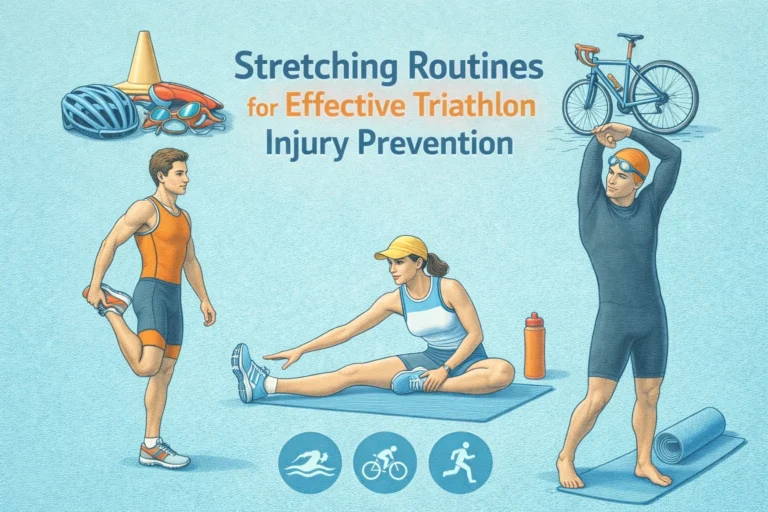
Whether you are training for your first sprint or aiming for an Ironman, stretching triathlon routines can make a big difference. This article explains why stretching matters for triathletes, when to stretch, which movements to use, and how to build clear pre-workout and post-workout plans. Read on for practical, step-by-step routines you can use today.
Why stretching triathlon matters
Stretching has a direct role in keeping triathletes on the road and in the pool. When muscles stay mobile and balanced, joints move with less friction. That reduces the load on tendons and ligaments, and lowers the chance of overuse injuries tied to training volume.
Good stretching habits support range of motion for the swim stroke, powerful pedal strokes, and efficient running form. Each discipline requires different movement patterns, and targeted stretching helps each one feel easier. That means you can train more consistently and race closer to your potential.
Stretching also helps with recovery. Tight muscles hold on to tension after hard sessions. A planned stretching routine promotes blood flow, which can speed cleanup of metabolic byproducts and reduce stiffness the next day. This can help you hit quality workouts without nagging soreness.
Finally, stretching builds body awareness. When you work on mobility, you learn your limits. You notice one hip that moves differently from the other, or a shoulder that is tighter after swim sets. That awareness leads to smarter training and fewer surprises on race day.
How stretching prevents common triathlon injuries
Many triathlon injuries come from repeated patterns, not single events. For example, poor hip mobility can change your running mechanics, stressing the IT band and knees. Regular stretching triathlon routines correct those patterns before they turn into pain.
In the swim, tight shoulders and chest muscles limit reach and cause compensations. Stretching the chest and rotator cuff area improves stroke length and reduces strain on the shoulder joint. That lowers your risk of shoulder tendinopathy and impingement.
On the bike, hamstrings and hip flexors play a big role. When they are stiff, riders chase power with poor posture. Addressing those tight spots with targeted stretches lowers low back pain and helps keep pedaling efficient. That reduces cumulative stress over long rides.
For running, calf and Achilles flexibility is key. Restricted ankle motion increases load on the calf and knee. A consistent stretching triathlon plan that includes calf and ankle work can reduce the chance of Achilles tendinitis and plantar fasciitis. Simple stretching habits can protect you across all three sports.
When to stretch: timing and duration
Knowing when to stretch cuts the risk of doing the wrong thing at the wrong time. A good rule is to use dynamic stretching and warm-ups before hard efforts, and static stretching after workouts when the body is warmer. That matches the science and practical needs of training.
Dynamic warm-ups prepare muscles for explosive motion. Use them for swim starts, brick workouts, intervals on the bike, and tempo runs. They raise heart rate and move joints through full ranges, so you get ready without dulling power. Keep each dynamic movement to 30 to 60 seconds and the entire warm-up to 8 to 15 minutes.
After sessions, static stretches help return muscles to their resting length. Hold each static stretch for 30 to 60 seconds and repeat 2 times for problem areas. Post-session stretching should take 10 to 20 minutes for a thorough routine, but even five focused stretches will help if time is tight.
Include mobility sessions on easy days. These sessions are longer but low intensity, and they let you work on stubborn tight spots. A weekly mobility session of 20 to 40 minutes can produce steady gains and reduce the need for emergency stretching before hard workouts.
Types of stretches and how to use them
Triathletes should use several types of stretching depending on the goal. The main options are dynamic stretching, static stretching, and contract-relax methods such as PNF. Each has a place in a sensible training plan.
Dynamic stretches are active movements that take joints through ranges of motion. They are ideal before workouts because they increase blood flow, warm tissues, and prime the nervous system for action. Examples include leg swings, walking lunges, and arm circles.
Static stretching means holding a muscle in a lengthened position. These are best after training when tissues are warm. Static stretching helps ease tightness and can improve long-term flexibility when performed consistently. Hold each position calmly and breathe through the stretch.
Contract-relax methods, often called PNF, involve contracting a muscle then relaxing it and stretching further. These methods can yield quick gains in range of motion when used correctly, but they require care and are best done after workouts or with a partner or coach to guide proper timing and intensity.
Dynamic stretches to use before sessions
Dynamic moves activate muscles and prime joints without reducing strength. They should feel smooth and controlled, not jerky. Use dynamic stretching right after a short easy warm-up, like 5 minutes of light pedaling or easy jogging.
Good dynamic exercises for triathletes focus on hips, shoulders, and ankles. They should mimic movements you will do in training. For example, leg swings and walking lunges help the run, while shoulder circles and band pull-aparts help the swim.
Start each dynamic movement gently, then increase range and tempo. Keep each drill to 30 to 60 seconds and avoid long holds. The idea is to prepare not to exhaust, so keep effort moderate.
Dynamic work fits well before bricks and interval sessions. It reduces the chance of a muscle strain or pull when you move into high intensity. Consistency with warm-ups pays off across a season.
Static stretches for after workouts
Static stretches help tissues recover and return to balanced length after a session. They are most effective when the body is warm, so do them at the end of a workout or after a short warm shower. Keep breathing steady and avoid bouncing.
Focus on key areas that suffer with triathlon training, such as hip flexors, hamstrings, calves, chest, and the upper back. Hold each stretch for 30 to 60 seconds, and repeat twice for tight spots. Over time, this practice improves resting posture and movement quality.
Static stretching also has a relaxation benefit. When done calmly, it lowers heart rate and can signal the body to shift to recovery mode. This is helpful after long rides or races when you need to reset both body and mind.
Be cautious with long static holds before heavy lifts or short, powerful efforts. Those long holds can reduce short-term power outputs. Use static stretching after, and use dynamic work before hard sessions instead.
Pre-session routine: warm-up and dynamic stretching
A practical pre-session routine mixes some light aerobic work with targeted dynamic moves. The aim is to raise core temp, lubricate joints, and practice the movements you will need in training. Keep the routine short on easy days and longer before intervals or races.
Below is a simple warm-up structure you can adapt. Start with easy movement, add dynamic drills, then finish with short strides or accelerations before high-intensity work. This order builds readiness without wasting energy.
- 3 to 5 minutes easy aerobic movement, such as light jog or easy spin.
- Leg swings front to back, 10 each side.
- Lateral leg swings, 10 each side.
- Walking lunges with rotation, 8 to 10 steps per leg.
- Hip circles or open-close the gate drills, 10 each side.
- Arm circles and band pull-aparts, 10 to 15 reps each.
- 2 to 4 short build-ups or strides of 20 to 30 meters or 10 to 20 seconds light accelerations on the bike.
Use this list as a template for a 10 to 15 minute warm-up sequence you can repeat before workouts. Adjust volume to match intensity of the main session.
After the warm-up, you should feel light, awake, and mobile. If something still feels tight, add a few extra reps of the specific drill that targets that area. The goal is consistent readiness rather than perfection before every session.
Post-session routine: static stretching and recovery
Post-session stretching is about calming the system and focusing on the muscles that worked hardest. This simple routine helps clear tightness and supports recovery between sessions. It is a small time investment with large returns when done often.
Start with a brief cool-down to reduce heart rate and flush blood flow, then move into static stretches. Spend more time on areas that feel tight. Keep breathing slow and steady while holding each stretch.
Below are reliable post-workout stretches for triathletes. Do each one calmly and hold for 30 to 60 seconds. Repeat for problem areas. Use this list as a base and tailor it to your needs.
- Hamstring stretch, seated or standing, 30 to 60 seconds per side.
- Hip flexor stretch with gentle posterior tilt, 30 to 60 seconds per side.
- Quadriceps stretch, standing or kneeling, 30 to 60 seconds per side.
- Calf stretch against a wall, 30 to 60 seconds per side.
- Pectoral stretch in a doorway, 30 to 60 seconds each side.
- Thoracic extension over a foam roller for upper back mobility, 30 to 60 seconds.
The following stretches cover the major muscle groups used in swim, bike, and run. Follow the order to help return the body to neutral alignment.
If you are short on time, pick three key stretches and hold each for 60 seconds. That focused work after every session beats sporadic long sessions that you skip more often. Consistency matters most.
Sample stretching triathlon routines by level

Below are starter plans for each training level. Each plan targets common weak spots and keeps the routines practical. Use these as templates and adjust sets and duration as needed.
Before using the routines, remember to perform a brief warm-up for cold sessions. For hot or immediately post-activity sessions, you can move into static stretches more quickly. The following sections list exercises and a short plan for each level.
Beginner routine
Beginners need simple, consistent stretches that cover major areas without taking too long. Focus on daily habits more than advanced techniques. Over time, these habits pay dividends in training consistency and fewer aches.
Begin with 5 to 10 minutes of light movement, then perform dynamic drills before workouts. Finish with a 10-minute post-session routine. Keep the plan manageable so you will do it most days.
Here is a short beginner sequence for after a workout. Repeat each static stretch twice and hold 30 seconds on the first pass and 45 to 60 seconds on the second pass for tight areas.
- Seated hamstring stretch, 30 to 60 seconds per leg.
- Kneeling hip flexor stretch, 30 to 60 seconds per leg.
- Standing calf stretch on a step, 30 to 60 seconds per leg.
- Doorway chest stretch, 30 to 60 seconds per side.
Use these simple steps 3 to 6 times per week after training. They cover the most common tight spots.
Keep progress steady. If a stretch becomes easier, gradually increase the hold time or add one more repetition. Small increases over weeks lead to real improvement.
Intermediate routine
Intermediate athletes train more often and need targeted mobility to support higher volume. Add PNF-style or progressive contract-relax holds for stubborn tight areas. Include foam rolling as a prep tool for static stretches.
Warm up with 10 minutes including dynamic drills and brief activation work. After workouts, spend 15 to 20 minutes on static stretches and mobility drills. Focus on hip internal rotation, thoracic extension, and ankle dorsiflexion.
The following routine hits those key areas. Use foam rolling for 60 to 90 seconds on calves and quads before stretching if those regions are painfully tight.
- Foam roll calves and quads, 60 to 90 seconds each.
- Piriformis/glute stretch lying, 45 to 60 seconds per side.
- PNF hamstring contract-relax, 2 rounds of 6 to 8 second contraction and 30 to 45 second stretch.
- Thoracic rotation using a foam roller or a seated drill, 45 to 60 seconds total.
- Calf and soleus stretch with bent and straight knee, 30 to 60 seconds each.
Try this plan 4 to 6 times per week depending on training load. Use longer holds for chronic tightness and repeat problem areas twice.
Track what you work on. Note which areas improve and which need more attention. That lets you tailor the plan as your season progresses.
Advanced routine
Advanced triathletes require precision. Tiny asymmetries can create big problems over high weekly volume. Build a deliberate mobility plan that targets sport-specific restrictions and pre-race needs.
Advanced sessions include daily short mobility work plus two longer mobility sessions per week. Use targeted PNF, structured strength-with-stretch combinations, and pre-hab drills to keep tissues resilient. Think quality over quantity and track gains with simple mobility tests.
Below is an advanced-level weekly template you can adapt. It balances pre-session prep, post-session recovery, and focused mobility blocks on easy days. Use 20 to 40 minute blocks for deeper work twice per week.
- Daily dynamic warm-up before each key session, 8 to 12 minutes.
- Post-session static routine with 60 second holds for priority areas, repeat twice.
- Two dedicated mobility sessions per week, 20 to 40 minutes focusing on hips, thoracic spine, and ankle dorsiflexion.
- Weekly movement screen and targeted corrective drills for asymmetries.
These items are for experienced athletes who can tolerate stronger contract-relax work. Adjust hold times and intensities as needed.
Remember to integrate mobility into strength sessions. Strength through full ranges helps make gains durable. The goal is performance that lasts through a long season.
Common mistakes and how to avoid them
Even well-meaning athletes make errors that reduce the benefit of stretching. The most common issues are poor timing, skipping warm-ups, and inconsistent practice. Fixing these keeps your body resilient and reduces injury risk.
Another mistake is using painful intensity. Stretching should be uncomfortable at first but not sharp or damaging. Sharp pain is a warning sign. Back off and choose a gentler angle or seek professional advice if pain persists.
Many athletes also forget to balance sides. Spend equal time on both legs and both shoulders, even if only one side feels tight. That prevents subtle imbalances from growing into bigger problems.
Finally, do not expect instant fixes. Flexibility improves slowly. Stick to short, daily habits and weekly longer sessions. Consistent small steps beat occasional, long sessions.
- Warm up before dynamic work and avoid heavy static holds before power efforts.
- Use gentle intensity, never sharp pain during stretches.
- Work both sides equally and track asymmetries.
- Be consistent, not infrequent.
Review this checklist to avoid common pitfalls and make your stretching triathlon routine more effective.
When to see a professional
Stretching helps many issues, but it is not a cure-all. If pain limits your training, or if a problem persists despite consistent stretching, see a sports physiotherapist, coach, or sports medicine doctor. They can pinpoint structural issues and prescribe a specific plan.
Get professional help if you experience joint swelling, numbness, tingling, or sharp pain. These signs point to nerve involvement or structural damage. Early assessment can prevent small problems from becoming long-term setbacks.
A professional can also help with advanced techniques, like PNF, and provide manual therapy when needed. They can integrate stretching into a broader program that includes strength, neuromuscular work, and load management.
Regular check-ins during a heavy training block are a good idea for age-groupers pushing volume. A short screen and targeted plan every few months can keep you training at high load without breaking down.
Key Takeaways
Stretching triathlon routines are a vital part of smart training. They protect against common swim, bike, and run injuries and support consistent performance. Use dynamic work before sessions and static work after sessions for the best balance.
Make routines short, clear, and consistent. Beginners benefit from simple daily habits. Intermediate and advanced athletes need targeted work and periodic mobility sessions to fix stubborn restrictions. Track what you do and focus on areas that limit your sport movements.
Watch for mistakes like stretching when cold, using painful intensity, and training asymmetrically. Seek professional help for persistent pain or signs of structural problems. A coach or therapist can build a plan that matches your event demands and training load.
Use the sample routines here to craft a plan that fits your schedule. With steady practice, you will see improvements in comfort, training consistency, and race performance. Good stretching habits keep you moving and help you enjoy the sport more often and for longer.