
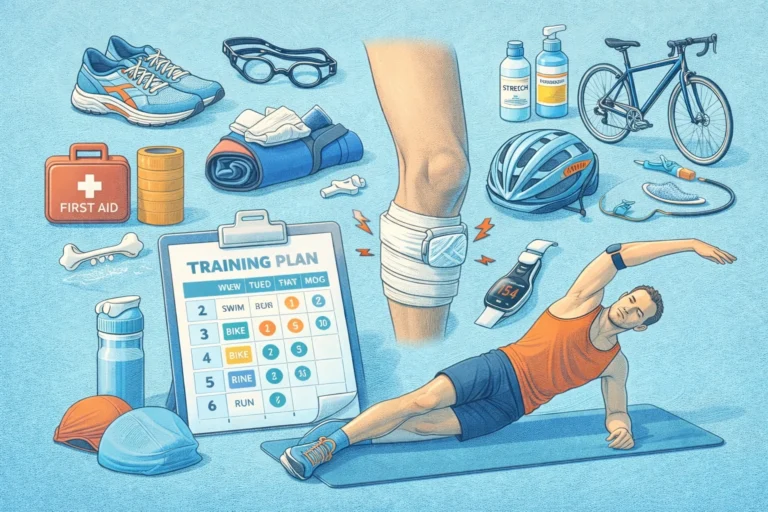
Triathlon injury prevention matters for every athlete who trains for swim, bike, run events. This guide gives clear, practical steps you can use now to reduce pain, avoid overuse problems, and stay consistent with training. You will find technique tips, program design advice, strength moves, recovery plans, gear checks, and mental habits that support staying healthy through a season of training.
Why triathlon injury prevention matters
Staying healthy is the most direct way to improve after months of work. Missing weeks because of injury slows progress and damages confidence. Building a plan to avoid injuries helps you train more consistently, race better, and enjoy the sport longer.
Many injuries begin as small issues that grow over time. A niggle in the knee or a tight hip that is ignored can become a chronic problem. Early action keeps small problems from becoming season-ending ones.
Prevention is not about avoiding hard training. It is about smart, structured training that balances load, recovery, and technique. That balance reduces risk and improves performance.
Every athlete, from beginner to pro, can use simple steps to lower injury risk. The sections below offer practical methods you can apply to your week and your training log.
Common triathlon injuries and warning signs
Triathlon injury prevention starts with knowing what injuries are common and how they begin. The most frequent problems come from running and cycling, plus shoulder issues from the swim. Tendon pain, IT band problems, lower back strain, and calf or Achilles pain show up often.
Watch for warning signs before pain becomes constant. These include soreness that does not improve after rest, stiffness the next day, a loss of strength, or a feeling that technique has changed. These signs tell you to change the session or see a clinician.
If you see swelling, sharp pain, numbness, or a big drop in performance, act fast. Those symptoms need a professional assessment. Early diagnosis shortens recovery.
Below is a short list of the frequent injuries to watch for and brief notes on how they typically present. Read the list, then compare it to your own training symptoms.
This list describes common triathlon injuries and how they often start.
- Runner’s knee (patellofemoral pain), usually worse with hills and long runs.
- Achilles tendinopathy, often starts as morning stiffness and pain with push-off.
- IT band syndrome, pain on the outside of the knee, often after longer rides or runs.
- Lower back pain, can come from bike position or weak core muscles.
- Swimmer’s shoulder, pain in the front or side of the shoulder after heavy swim volume.
Training load and progression for injury reduction
How you increase training load is a major factor in triathlon injury prevention. The body adapts slowly. Too much, too soon causes breakdown. A steady plan keeps you progressing while you stay healthy.
One basic rule is to increase volume by no more than 10 percent per week for any single discipline. That rule is a general guide, not a hard law. Some athletes can tolerate more, others less. Use it to guide weekly changes.
Another useful tool is to cycle intensity and volume within a week and across months. Hard sessions should be followed by easy days. Include recovery weeks every three to six weeks depending on your training phase and race schedule.
Here is a short checklist to review before you increase training load. Read it, then use it to plan the next four weeks of training.
Use this checklist to guide safe progression of training volume and intensity.
- Track weekly volume per discipline and avoid rapid spikes.
- Schedule recovery weeks with reduced volume every 3 to 6 weeks.
- Alternate hard and easy days, and avoid back-to-back high-load sessions in different disciplines when possible.
- Monitor sleep, mood, and motivation as early signs of overtraining.
Swim, bike and run technique tips to cut risk
Technique reduces load on tissues. Better technique makes each session more effective and less risky. Small changes in stroke, pedal stroke, or running form can lower stress on joints and tendons.
For the swim, focus on a balanced rotation, early catch, and a relaxed recovery. Avoid overreaching at the front of the stroke, and keep the shoulder stable on entry and pull. These steps reduce swimmer’s shoulder risk.
On the bike, check saddle height, handlebar reach, and cleat position. A poor fit forces compensations that often show up as knee or lower back pain. Spend time with a bike fit specialist if pain persists.
Running form should be efficient and consistent. Aim for a comfortable cadence, a midfoot landing when possible, and a posture that stays tall. Sudden changes to cadence or stride length can provoke problems, so introduce technique drills gradually.
Strength training and mobility for durable athletes
Strength and mobility work gives the body the capacity to handle training stress. Many injuries are linked to weakness or poor control. Adding two to three strength sessions per week makes a big difference.
Focus on single-leg strength, hip stability, core control, and posterior chain strength. These areas support both run and bike mechanics and reduce load through the knees and lower back. Use resistance that allows 8 to 15 quality reps.
Mobility work keeps joints moving freely and reduces strain during long sessions. Include dynamic mobility before workouts and targeted mobility or stretching after sessions. Simple, consistent practice is more effective than long, occasional sessions.
Below is a simple strength circuit that is effective for triathletes. Read the lead-in sentence, then do the exercises twice per week in 2 to 3 sets for most athletes.
Try this practical strength circuit to build durable muscles and better control.
- Single-leg squats or pistol progressions, 6 to 10 reps per leg.
- Romanian deadlifts or hip hinges, 8 to 12 reps.
- Side-lying clams or banded side steps, 10 to 20 reps per side.
- Plank variations, 30 to 90 seconds depending on level.
- Glute bridges or single-leg bridges, 10 to 15 reps.
Warm-up, cool-down and session structure

Good warm-ups prepare muscle, tendon, and nervous system for work. A proper warm-up reduces injury risk and improves session quality. It should be specific to the session you plan to do.
Start most workouts with 10 to 20 minutes of easy movement, adding dynamic drills that match the main work. For runs, include strides and mobility. For bikes, add short efforts at race cadence. For swims, include drills and progressive pace work.
Cool-down and active recovery help the body return to baseline and reduce stiffness after tough sessions. A light 10 to 15 minute easy spin or jog, followed by mobility and foam rolling, helps tissue recovery.
Below is a simple warm-up routine you can use before runs and bike sessions. Read the short description, then follow the steps to prepare well before quality work.
Use this warm-up routine before key sessions to reduce injury risk and improve readiness.
- 5 to 10 minutes easy aerobic movement, like easy spin or jog.
- Dynamic mobility: leg swings, hip circles, glute activation, 5 reps each.
- Progressive efforts: 4 to 6 x 20-second strides or surges with full recovery.
- Short technical drills: high knees, butt kicks, or cadence drills on the bike.
Recovery, sleep and nutrition to support repair
Recovery is the work that happens between sessions. Good recovery keeps tissues healthy and lowers injury risk. Sleep, nutrition, and active recovery are the pillars of this work.
Sleep affects collagen production and tendon health. Aim for consistent sleep times and 7 to 9 hours per night for most adults. If sleep is poor, your tissues will not tolerate the same training load.
Nutrition matters for repair and inflammation control. Include enough protein each day, prioritize whole foods, and manage meal timing to support tough sessions. Hydration and electrolytes also affect muscle function and recovery.
Active recovery like easy swims, spins, or walks helps circulation and can speed repair. Combine these low-intensity sessions with foam rolling, stretching, or light mobility work to keep tissues supple.
Equipment, triathlon gear maintenance and simple checks
Well-maintained gear reduces injury risk by ensuring equipment works as intended. Poorly fitted shoes, a worn saddle, or cleats in the wrong position force compensations in movement. Regular checks protect your body.
Before long training blocks or races, inspect your triathlon gear and perform basic triathlon gear maintenance to prevent mechanical surprises. Clean your bike, check tire wear, and ensure brakes and shifting are smooth. These steps reduce the chance of urgent problems that push you into unsafe positions or abrupt stops.
Here are simple gear checks to do every week or before long rides and races. Read the short lead-in, then use the checklist to keep equipment safe and functioning well.
Use this weekly gear checklist to avoid mechanical problems and keep your position comfortable.
- Inspect tires for cuts and check tire pressure before each ride.
- Check cleat position and shoe wear, replace when uneven wear appears.
- Review saddle height and handlebar position if you feel new pain.
- Clean and lightly lubricate the chain, and check shifting performance.
- Replace worn swim goggles or goggles with scratched lenses to maintain sight and confidence.
If you face an equipment issue during training, use a calm process to solve it. Learn basic gear troubleshooting for common problems like rubbing brakes or slipping chains. That skill reduces stress and keeps you training safely.
Regular maintenance prevents many of the triathlonhealth mistakes athletes make when they rush gear care. Small, consistent maintenance habits save time and keep training uninterrupted.
Preventing common mistakes in training plans
A few repeated mistakes lead to most injuries. Addressing these common errors is a strong way to improve triathlon injury prevention. Simple habits can remove major risks from your training week.
One common mistake is stacking high-intensity sessions across disciplines without recovery. That fatigue increases tissue stress and lowers movement quality. Spread hard sessions and include full rest or low-load recovery between them.
Another mistake is ignoring niggles until they worsen. Early action, such as modifying session intensity, cross training, or short-term rest, prevents small issues from growing. Use pain as a signal, not a badge of toughness.
Keep a weekly plan that balances load and includes clear zones for intensity. Track symptoms alongside sessions so you can see trends. Addressing patterns early is one of the best tools for long-term health and progress.
Triathlon mindset, mental fitness and habits that protect your body
A practical triathlon mindset helps you accept the need for rest, recovery, and technique work. Mental fitness supports smart decisions and reduces the tendency to push through warning signs. This attitude lowers injury risk over a season.
Daily habits like consistent sleep, planned recovery days, and a simple warm-up routine make you less likely to get hurt. Mental practice includes setting realistic short-term goals and valuing health as part of performance gains.
Use mental training to handle frustration when you must reduce training. Anxiety about losing fitness is normal, but strategic rest often leads to stronger returns. Practice patience and focus on controllable process goals rather than constant volume targets.
Programs that combine physical work with triathlonhealth mental fitness advice help athletes build resilience and avoid destructive behaviors. Coaches who include mental skills training often see fewer interruptions from injury.
What to do when injury happens
No plan makes you immune, and injuries will occur. How you respond when pain appears determines recovery time. Early, measured actions improve outcomes and reduce the chance of re-injury.
First, assess severity. If pain is sharp, sudden, or accompanied by swelling or numbness, seek a professional. For mild to moderate overuse pain, reduce load, substitute low-impact sessions, and add targeted rehab exercises.
Use a phased return once pain diminishes. Start with low-load aerobic work and progress to strength and technique before adding full intensity. Follow consistent benchmarks, like pain-free day-by-day function and ability to perform progressive loading without a return of symptoms.
Working with a physiotherapist or sports medicine clinician speeds recovery and helps you adjust training safely. They provide targeted rehab and a clear progression plan to return to full training without repeating mistakes.
Key Takeaways
Triathlon injury prevention combines smart training, consistent strength work, good technique, and attention to recovery. These elements work together to keep you healthy and moving forward in your season.
Track load, watch warning signs, and act early on niggles. Use progressive training, keep gear in good shape, and include strength and mobility sessions to build tissue capacity. Mental habits that value rest and process goals make the difference in long-term health.
Use the checklists and routines in this guide to create a week-by-week plan that keeps you training and racing. Small, consistent actions matter more than rare, dramatic changes.
Triathlon health requires patience and care. Follow these steps and you will reduce downtime, improve consistency, and enjoy the sport for many seasons to come.