
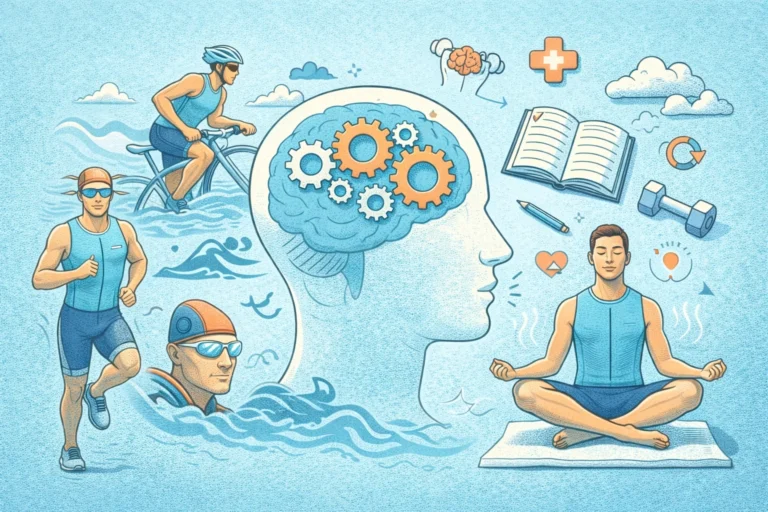
Mental strength wins races as often as physical speed. This article covers triathlonhealth mental fitness with clear steps you can use now. You will learn why mental training matters, what skills to build, daily drills, race-day plans, and how to avoid common errors.
Why triathlonhealth mental fitness matters
Triathlon is a long sport that tests the body and the mind. Training only the body leaves a big gap. Mental toughness helps you push through swimming chop, hard bike climbs, and the final run. It helps you stay calm when plans change on race day.
When athletes add mental training, they report less nervousness and better focus. You do not need fancy equipment to practice mental skills. Small routines before each workout can make a big difference over weeks and months.
The keyword triathlonhealth mental fitness ties together physical work and mental practice. Coaches use this term when they design programs that include breathing, focus work, and visualization. These routines aim to make race stress feel normal, not overwhelming.
Mental fitness also supports daily life. Better focus and stress control help with sleep, recovery, and consistency. That translates to more productive training sessions and fewer missed workouts due to mental fatigue.
Core mental skills for triathletes
There are several mental skills that most triathletes should practice. Each skill targets a different challenge you meet during training and racing. Below I explain the key skills and how they help.
Focus control teaches you where to put your attention. During a race, focus control helps when conditions are noisy or chaotic. You learn to keep attention on process tasks, like cadence or stroke rate, rather than worries.
Emotional regulation helps you handle anger, fear, and extreme tiredness. This skill is useful when race plans break. You can notice the emotion, label it, and use a short routine to calm down. That keeps decision making sharper.
Confidence building includes goal setting and evidence review. You collect small wins during training and then recall them before races. That builds a stable sense of readiness. Confidence helps you stay brave on the start line and during hard efforts.
Building a weekly mental training plan
A weekly plan keeps mental work consistent, like physical training. Start small, then add minutes or complexity as you adapt. Consistency matters more than intensity for mental gains.
Begin with three short sessions each week, 10 to 20 minutes each. One session can focus on breathing and focus, one on visualization, and one on goal review and journaling. Make these sessions as important as easy recovery rides.
Plan sessions to match physical training. Do visualization before key workouts to rehearse race pace and transitions. Use a calm breathing session after a hard workout to aid recovery and mental reset. Tie mental sessions to existing habits so they stick.
Track what you do and how it felt. Keep a short log with two lines: what you practiced and how it changed your session. Review this log weekly to see progress and adjust plans. Small changes compound into measurable mental fitness.
Daily mental drills and exercises

Daily drills teach habits you can use under pressure. You do not need long sessions to improve. Short, regular practice builds the brain pathways you want.
The first drill is breathing practice. Controlled breathing lowers heart rate and calms nerves. Try box breathing: breathe in for four seconds, hold four, out four, hold four. Repeat for five minutes. Do it before sleep, before hard sets, and on race morning.
The second drill is focus intervals. Pick a simple cue, like cadence or stroke count. Set a timer for 5 to 10 minutes and keep attention on that cue. When your mind wanders, note it and return. This trains you to return attention quickly during chaos.
Before listing more drills, here is a short lead-in sentence that explains why the list helps. The next list contains practical exercises you can use in training or at home.
- Mental rehearsal: Close your eyes and imagine a full race sequence, including sounds and feelings. Run through the transitions and final meters.
- Positive cue practice: Create 3 short phrases that calm and focus you, such as “steady power” or “relax shoulders.” Repeat them during tough intervals.
- Acceptance training: Practice noticing discomfort without fighting it. Name sensations and let them be, then return focus to your task.
- Pre-performance routine: Build a 5-step routine you use before key sessions. This might include breathing, a cue, a small stretch, and a goal reminder.
Each drill should be repeated often until it feels automatic. Automatic responses free up mental energy for decision making during races. Keep drills short and linked to workouts to ensure you do them.
Race-day mental strategies
Race day is a test of both planning and flexibility. Good mental strategies help you follow your plan and adjust when needed. The best plans are simple and practiced.
Create a pre-race routine that prepares your body and mind. Start with easy breathing and a short visualization of key moments. Use a one-line cue that centers you. Keep the routine the same across races to build consistency.
During the race, focus on process over outcome. Break the race into clear tasks: swim steady, control watts on the bike, run controlled first 5K. Process focus keeps you engaged with the present and reduces panic about splits or positions.
Before giving a list, I will explain why these strategies are easy to apply. The following list shows practical steps to use during a race.
- Micro-goals: Set small targets that are easy to achieve. For example, reach the next aid station, or hold pace for 10 minutes.
- Reset cue: Choose a short action to reset your mind, like three deep breaths and a cue word.
- Visual anchor: Pick a simple image to recall when stress rises, such as a calm sea or a steady metronome.
- Decision rules: Predefine when you will change pace or nutrition, so you avoid impulsive choices under stress.
Practice these strategies in training so they become familiar. Simulate race stress in workouts, such as by starting a brick after a long ride, and use your race routines in practice to see how they work.
Preparing mentally with your gear
Gear checks reduce anxiety and increase confidence. When equipment works, your mind can focus on effort and tactics. Mental fitness includes reliable pre-race gear routines.
Create a gear checklist and use it every race and hard session. The checklist should include items like wetsuit fit, helmet strap, nutrition, and shoe choice. Run through the same motions each time to build a calm habit.
Regular maintenance prevents last-minute problems. Practice triathlon gear maintenance so items perform as expected. Regular checks also make you more familiar with your equipment, which reduces surprises on race day.
Before a short list, note why simple checks matter. The next list covers key gear tasks you can add to a mental prep routine.
- Pre-race layout: Place gear in order of use on race morning, including numbered bottles or clothing items.
- Quick test runs: Periodically test new setups in training, such as bike fit or shoe changes.
- Nutrition plan visible: Have a clear map of where you will take gels, salt, or liquids during the race.
- Practice transitions: Run mock transitions to make motions automatic and reduce mental load on race day.
When you combine gear checks with mental routines, you lower cognitive load. You can then apply focus to pacing and tactics. This approach also reduces common errors that cause avoidable stress.
Common triathlonhealth mistakes and how to fix them
Even experienced athletes make predictable mental errors. Naming common mistakes helps you spot them in training and fix them quickly. Below I list frequent errors and simple fixes.
One frequent mistake is chasing other athletes at the wrong time. This happens when emotion drives decision making. The fix is a decision rule: commit to pace windows and use micro-goals instead of positions.
Another mistake is skipping mental practice because physical training feels more urgent. Skipping mental work lowers performance under stress. The solution is to schedule short mental sessions like you do easy swims or recovery runs.
Before the list, I will explain why it helps to treat mistakes as learning steps. The next list includes common errors and clear corrections you can apply.
- Over-rehearsing negative outcomes: Stop focusing on worst-case scenarios. Replace them with problem-solving rehearsals where you imagine a minor issue and practice the fix.
- Inconsistent routines: Many athletes change warm-ups often. Keep a core routine and only tweak it with reason.
- Ignoring equipment checks: Gear can fail at bad times. Use a simple pre-race checklist to reduce stress related to gear troubleshooting.
- Relying on untested nutrition: Trying new gels on race day is risky. Test options in training to avoid stomach issues.
Also watch for specific triathlonhealth mistakes tied to preparation and mindset. Learn from each event. When you make a misstep, write down what happened and what you will do differently next time. This turns lapses into progress.
Key Takeaways
Mental training is as practical as a swim set or a bike session. Regular, short practice builds focus, calm, and confidence. Use simple drills each week to form habits that hold up under race pressure.
Link your mental work to physical training. Practice routines during similar workouts so you know how they will feel on race day. Include breathing, visualization, and focus intervals in your plan.
Mix equipment checks with mental prep. Good triathlon gear maintenance and simple gear layouts reduce stress. Treat common errors as learning opportunities and create rules to avoid impulsive choices during races.
Finally, keep a short log of what mental skills you practiced and the outcomes. Over time, you will build a reliable mental toolkit for training and racing. Put triathlonhealth mental fitness at the center of your plan and you will see steady gains in both training quality and race results.