
Active vs passive recovery triathlon is a question many triathletes ask after a hard race or tough training block. This article explains the two approaches, reviews the science, and helps you choose the right option for training days, race day, and equipment purchases. You will find clear plans, product guidance, and practical steps you can use this week to recover smarter and train longer.
What is active vs passive recovery triathlon?
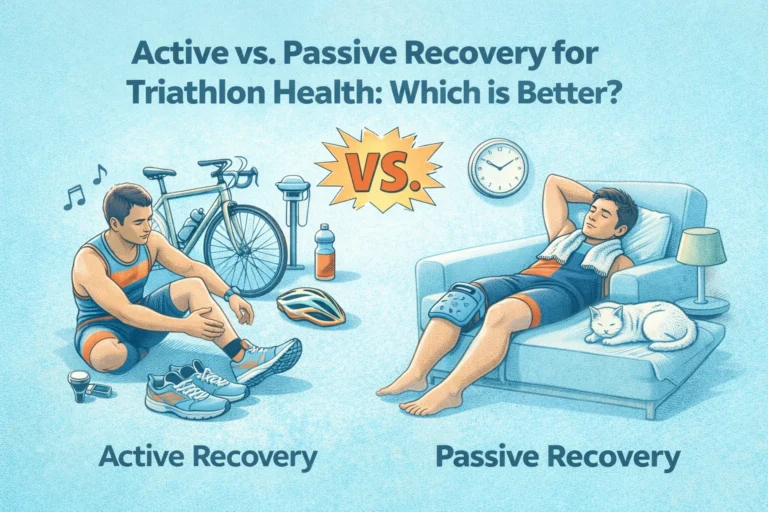
Active recovery means low-intensity movement after hard effort. For a triathlete this can be an easy swim, a short spin on the bike, or a gentle run. The idea is to keep blood flowing, help muscles clear waste products, and maintain mobility without adding stress.
Passive recovery means rest without structured movement. That includes sleep, sitting, lying down, massage, ice baths, or simply taking a day off. Passive recovery focuses on rest, rebuilding tissues, and restoring energy stores.
Both approaches have a place in a triathlete’s week. The choice depends on race distance, training load, injury status, and the goal of the recovery period. Understanding both options helps you plan the week after an interval session, a long ride, or race day.
Benefits of active recovery
Active recovery improves circulation without adding major load. When you keep moving lightly, blood flow helps deliver oxygen and nutrients to tissues. This can reduce muscle soreness and can speed the removal of metabolic by-products that build up during hard efforts.
Active recovery can also preserve movement patterns. For triathletes, keeping swim, bike, or run mechanics fresh with short, easy sessions helps you maintain form. This is useful after long events when muscles feel stiff and coordination is slightly degraded.
Psychologically, active recovery keeps you in the routine of training. A short, easy session can be motivating and prevent the feeling of losing fitness. For athletes who struggle to rest, active recovery offers a controlled way to stay busy while still getting many of the benefits of recovery.
Benefits of passive recovery
Passive recovery gives the nervous system and tissues a full break. After a long race or a very high load week, full rest can help reduce inflammation and allow for deeper tissue repair. Many adaptations to training, such as muscle repair and hormonal recovery, happen during rest and sleep.
Passive recovery can be the best choice when fatigue is high. If an athlete shows poor sleep, persistent soreness, or a drop in motivation, a rest day or two can prevent overtraining. Proper passive recovery lowers injury risk and helps maintain consistent training over months.
Sleep is a key part of passive recovery. Poor or insufficient sleep undermines training gains. Prioritizing sleep and quiet rest periods after a heavy block often gives bigger returns than trying to train through tiredness with light sessions.
Scientific evidence and practical effects
Research shows both active and passive methods can help, but results vary by situation. Short bouts of low-intensity movement can reduce perceived soreness after exercise. However, passive strategies like sleep, nutrition, and cold or compression therapies target repair processes that movement does not address.
Studies on post-exercise cold water immersion, compression garments, and massage show mixed results on long-term performance gains. They often help short-term soreness and perceptions of readiness. The key is matching the right recovery tool to your goal, whether that is quick turnaround for back-to-back sessions or deep repair after a race.
Practical effects are simple to observe. If you feel less stiff and ready to perform the day after easy movement, active recovery worked. If your heart rate variability is low and you need deeper rest, passive recovery and sleep are more useful. Using objective measures like heart rate, sleep quality, and perceived exertion helps guide decisions.
How to choose: active vs passive recovery triathlon
Choosing between active and passive recovery depends on several factors. Think about how hard the prior session was, how soon you must be ready to perform again, and whether you have any injury or illness. The race distance also matters, because recovery needs differ for sprint versus Ironman athletes.
Short intervals or tempo sessions often allow for active recovery the next day. A 20 to 40 minute easy spin or swim can help clear the legs and keep the body moving. For max-effort races or very long rides, passive recovery and sleep are often the better choice for the first 24 to 48 hours.
Use signs to decide. If sleep quality drops, resting mood is low, or soreness is unusual, favor passive recovery. If stiffness is the main issue, active recovery might reduce it. Combining both approaches is common: passive recovery (sleep, nutrition) plus short active sessions to maintain mobility.
Recovery gear and products buying guide
If you plan to invest in recovery gear, choose products that match your goals. Paid tools can speed subjective recovery, help you train more consistently, and improve comfort. Below is a short list of categories and what to look for when buying.
- Compression garments: Compression socks or tights can reduce swelling and improve comfort after long runs and rides. Look for graduated compression and breathable fabric. They are lightweight and easy to use on travel days.
- Foam rollers and massage tools: A medium-density foam roller, lacrosse balls, and a handheld massage gun help restore mobility. Choose a roller size that fits your body and a massage gun with adjustable intensity settings.
- Cold and heat solutions: Ice baths, cold packs, and contrast tubs can help manage inflammation. For heat, consider hot packs and infrared saunas for deeper tissue relaxation. Simpler options like reusable cold packs are budget friendly.
- Compression boots and pneumatic devices: These devices provide peristaltic compression to help fluid return. They are pricier but useful for athletes doing heavy volume or racing multiple events. Check warranty and portability if you travel a lot.
- Recovery footwear and insoles: Supportive shoes for travel days and recovery sandals reduce foot stress. Look for cushioning and arch support if you spend long periods standing after race day.
- Nutrition products: Recovery shakes, electrolyte mixes, and protein powders help refuel and repair. Choose products with a good carb-to-protein ratio for immediate post-exercise recovery.
Before buying, read product specs and try gear where possible. In-store testing or short-term rentals of pricier devices can save money. For many athletes, a good foam roller, compression socks, and quality sleep are the most cost-effective investments.
Sample recovery plans for training and race day

Below are sample plans that blend active and passive methods for common triathlon scenarios. Each plan includes practical timings and product ideas you might buy. These samples help you implement triathlon recovery practices the week after a big effort.
- Plan A, Sprint race or hard interval day: Day 0, race: cool down with 10 to 15 minutes easy spin or jog. Day 1: 20 to 30 minutes easy bike or swim plus foam rolling and compression socks. Day 2: Easy technical session, 40 to 60 minutes, then normal training returns. Use light nutrition immediately after the race and prioritize sleep.
- Plan B, Olympic or half-distance race: Day 0: extended cool down, gentle stretching, and easy walking. Day 1: Active mobility session, foam rolling, short swim or bike for 30 minutes. Day 2: Passive rest window with focused sleep and light walking. Day 3 onward: introduce low-intensity aerobic work and reintroduce structured sessions after 4 to 7 days depending on feel.
- Plan C, Ironman or very long ride: Day 0 to 2: passive recovery focus, sleep, nutrition, minimal walking, and light stretching only. Day 3: short, gentle swim and walking. Day 4 to 7: add short, easy bike sessions and very light runs. Consider compression boots or a professional massage in the first week if budgets allow.
These plans are templates, not rules. Adjust based on your age, fitness, and past recovery history. Track how you feel and use objective measures like resting heart rate and sleep quality to adjust each step.
How to use recovery products wisely
Products do not replace good sleep, nutrition, and training structure. A recovery product should make recovery easier, not be the only strategy. For example, a massage gun can ease soreness but will not replace a night of sleep for muscle repair.
Match products to needs. If you travel for races, recovery footwear and compression socks may be the best purchase. If you have multiple long efforts in a week, a compression boot or cold tub could help. More expensive gadgets work well for heavy competitors, but simpler items often cover most needs.
Set a budget and prioritize items that help you most often. Many athletes benefit most from a consistent sleep routine, targeted nutrition, and a foam roller. If you buy higher-end devices, practice using them well before race day so you know how they affect you.
Common mistakes and myths
One common mistake is overusing active recovery. Some athletes try to do light sessions every day and never allow full rest. That can lead to chronic fatigue. Recovery must include passive elements like sleep and low-stress days to rebuild energy stores fully.
Another myth is that cold baths always speed adaptation. Cold water can reduce soreness, but it may blunt some training adaptations if used immediately after strength sessions. Use cold therapy when you need short-term relief, not as a daily habit unless your goal is quick recovery for racing.
People also assume expensive devices guarantee better results. While some tools help subjectively, the fundamentals of sleep, fueling, and smart training give the biggest returns. Use recovery techniques triathlon as part of a plan rather than rely on a single gadget.
Tracking and measuring recovery
Track simple data to guide your use of active and passive recovery. Resting heart rate, sleep hours, mood, and perceived soreness give clear signals. If these metrics show poor recovery, reduce load and favor passive strategies for a few days.
Technology can help, but it should not replace feel. Wearable devices provide heart rate variability and sleep staging, which can support decisions. Still, subjective measures like motivation and muscle soreness are often the first signs you need more rest.
Keep a short log that records training load, sleep quality, and recovery choices. Over weeks, patterns will show what works for you. This log helps you choose between active recovery and passive recovery on race week and training blocks.
Practical tips for race week
Race week often mixes active and passive recovery. Early in the week, include short, sharp tune-up sessions to keep neuromuscular readiness. Later in the week, reduce volume and increase rest. The final two days often benefit from passive recovery and low-intensity movement only.
Nutrition and sleep are crucial in the last 48 hours. Focus on carbohydrate intake for longer races, and prioritize sleep by creating a consistent bedtime routine. Use compression and easy mobility sessions to reduce stiffness before race day.
Have a simple checklist for gear that aids recovery during travel. Pack compression socks, a foam roller or travel massage ball, and a small cooler for iced recovery drinks if you need them. Planning these items reduces the stress of race week and supports consistent triathlon recovery practices.
Key Takeaways
Active vs passive recovery triathlon has no single right answer. Both methods are tools that work best when used for the right reasons. Active recovery helps circulation and mobility, while passive recovery supports deep rest and tissue repair.
Match your choice to session intensity, time to next event, and how your body feels. Use objective measures like sleep and resting heart rate to guide decisions. Keep recovery product purchases aligned with how often and where you train and race.
Use a mix of recovery techniques triathlon, smart planning, and simple gear to train more consistently and avoid injury. Small, consistent steps in recovery often add up to bigger performance gains than chasing a single expensive product.
Experiment with active and passive methods and use the plans here as a starting point. Over time you will find the balance that helps you train harder, race better, and stay healthy through the season.