
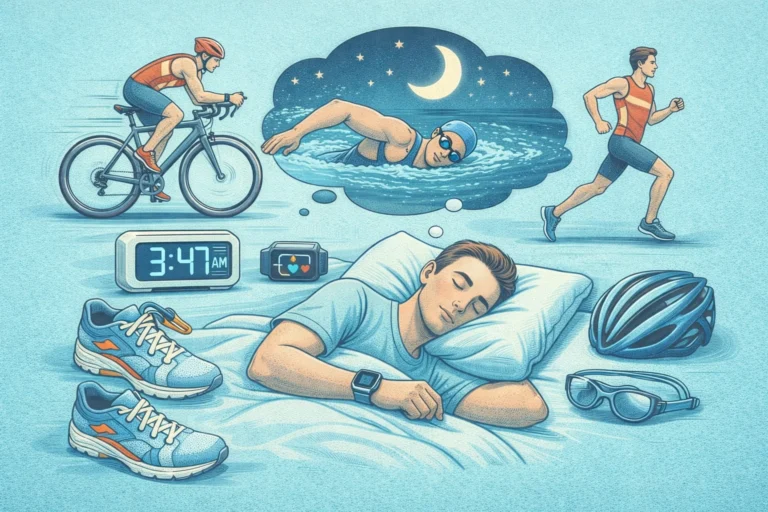
Good sleep is one of the simplest, most powerful ways a triathlete can improve training and race day results. This article explains how sleep impact triathlon performance, what to watch for, and clear steps you can take to sleep better and recover faster. Read on for practical advice you can use this week.
How sleep impact triathlon performance
Sleep affects nearly every system a triathlete relies on. When you sleep well, your body repairs muscle tissue, balances hormones, and consolidates motor learning from swim, bike, and run sessions. Poor sleep slows recovery and makes hard days harder.
A steady pattern of short nights can reduce speed, raise perceived effort, and increase injury risk. Over weeks, this adds up to lost fitness and slower race times. Even one poor night before a hard session can blunt power output and focus.
Quality matters as much as quantity. Deep sleep helps physical recovery. Rapid eye movement sleep helps memory and strategy work. Skipping stages or fragmenting sleep lowers the return on your training investment.
Sleep also affects mental strength. Races require decision making under fatigue, and that skill depends on well-rested brain networks. With better sleep you will likely make fewer tactical mistakes and handle race stress more calmly.
Sleep stages and recovery
Sleep has stages that cycle through the night. Light sleep leads into deep sleep, and later you spend more time in REM sleep. Each stage plays a role. Deep sleep supports muscle repair and growth. REM supports learning and mood.
Deep sleep helps release growth hormone, which aids tissue rebuilding after long rides or hard intervals. If your nights lack deep sleep, you can feel sore for longer and lose small gains from a tough workout.
REM sleep helps store motor skills. If you work on bike handling or swim technique, REM sleep helps the brain file those patterns for easier recall. Poor REM sleep can make technical improvements slower to take hold.
Sleep and aerobic capacity
Aerobic fitness depends on consistent training and good recovery. Sleep affects heart rate variability, resting heart rate, and how your body uses oxygen. Chronic poor sleep impairs VO2 response and slows recovery of stamina after intense sessions.
When sleep is shortened, studies show reduced time to exhaustion and higher perceived effort at given pace. On the bike or the run, this can mean slower splits and more time spent at higher heart rates for the same pace.
Good sleep supports glycogen restoration too. Muscles refill energy stores better when you rest, so the next day you can complete a longer threshold set or hold race pace more comfortably.
Sleep, strength and injury risk
Sleep affects strength and coordination. During deep sleep, protein synthesis increases and muscles repair micro-tears from hard strength work or hill repeats. Poor sleep reduces strength gains and slows repair.
Coordination and reaction time also decline with poor sleep. That makes transitions, technical bike handling, and open-water starts more hazardous. Small mistakes can become injuries when you are tired and less coordinated.
Chronic sleep loss also raises inflammation and can dampen immune function, which increases the chance of illness interrupting training blocks. That adds up to missed sessions and slower fitness growth.
Common sleep problems for triathletes
Triathletes face specific sleep challenges that come from training load, early sessions, travel, and race stress. Knowing the common issues helps you pick the right fixes and avoid quick but ineffective hacks.
Many athletes see fragmented sleep after late intensity sessions or long aerobic days, when core temperature or muscle soreness makes it hard to fall asleep. Others struggle with early morning practices that cut short their sleep window.
Jet lag, sleeping in unfamiliar beds, or sleeping with teammates can also reduce sleep quality when traveling for races. Anxiety before big races can disrupt deep and REM sleep on important nights.
Here are the most common sleep disruptors triathletes report and why they matter.
Read the short list below to spot which of these applies to you, then pick one or two fixes to try for two weeks.
- High training load without planned recovery days, which increases physiological stress and delays sleep onset.
- Early morning sessions that shorten total sleep time over many days.
- Race or performance anxiety that increases nighttime awakenings and reduces deep sleep.
- Travel and time-zone changes that shift circadian rhythms and fragment sleep.
- Caffeine or late snacks that interfere with falling asleep or staying asleep.
- Electronic screens late at night that suppress melatonin and delay sleep timing.
How much sleep do triathletes need?
Most adult athletes do best with 7.5 to 9 hours per night, depending on training intensity and individual needs. Younger athletes and those in heavy training blocks may need more. The right target differs by person, so use how you feel and how you train to refine it.
Consistency matters. A steady bedtime and wake time supports circadian rhythms and improves sleep quality. Fluctuating bedtimes make it harder to get deep and REM sleep on a reliable schedule.
Naps are a useful tool. Short naps can reduce sleep debt and boost alertness without affecting nighttime sleep if timed well. Naps are especially helpful after long rides, when you need extra recovery but cannot extend your night sleep.
Nap strategy for triathletes
Napping can help recover from high volume weeks and prepare you for a race day with poor sleep. Use naps strategically so they support rather than replace good night sleep.
Below are practical nap guidelines that fit a busy training schedule and race week needs. Try a pattern for two weeks and record how it affects energy and training quality.
- Short naps of 10 to 30 minutes can boost alertness and mood without causing grogginess.
- Longer naps of 60 to 90 minutes let you get deep sleep and can help recovery after long workouts, but they may make it harder to fall asleep at night if taken late in the day.
- Schedule naps earlier in the afternoon, ideally between 1 pm and 3 pm, to avoid pushing back your nighttime sleep window.
- Use naps more heavily during heavy training weeks, and reduce them during taper to ensure full nights before racing.
Practical sleep strategies to boost performance

Improving sleep is often about small, consistent changes rather than dramatic fixes. The goal is a repeatable routine that gives you more deep and REM sleep and less fragmented rest. Here are clear steps to start testing this week.
Below is a set of practical actions you can apply to your nightly routine, training schedule, and travel habits. Start with one or two changes and measure the effect on training and mood.
- Set and keep a consistent bedtime and wake time, even on easy days, to strengthen your circadian rhythm.
- Create a pre-sleep routine that includes 30 to 60 minutes of wind-down time with low-light activities, such as reading or gentle stretching.
- Limit caffeine intake to the morning or early afternoon, depending on your sensitivity.
- Make your sleep environment cool, dark, and quiet. Consider blackout curtains, a fan, or earplugs if needed.
- Avoid heavy meals and alcohol close to bedtime, and choose carbs or light protein if you need a small snack before bed.
- Use sleep tracking to spot trends, but pair data with how you feel in training to make practical decisions.
For coaches and athletes, keeping sleep simple and measurable works best. Make changes you can sustain during a full training block, not just the week before a race.
Try these sleep tips triathletes can use: pick one environmental change, one timing rule, and one nutrition rule, then test for two weeks.
Night before race strategies
The night before a race often causes worry and poor sleep. You can reduce risk by planning ahead and keeping the focus on routines you can control. Small habits the day before a race influence sleep quality.
Avoid heavy or unfamiliar meals late in the evening. Eat a familiar dinner with carbohydrates and moderate protein to support glycogen stores without upsetting digestion. Hydrate well but taper fluids before bed to avoid late-night bathroom trips.
Use calming practices if you feel anxious. Simple breathing, reading plain text, or a short guided relaxation can reduce nighttime awakenings. Avoid screens in the hour before bed to keep melatonin levels high.
Here are practical steps to improve pre-race sleep and increase the chance of a solid night.
- Pack and prepare race bags the night before to reduce last-minute stress.
- Plan an early dinner that you know your stomach tolerates well, and avoid spicy or greasy foods.
- Do a short, easy ride or swim earlier in the day to burn extra energy, but avoid late intense sessions that can raise body temperature and arousal.
- Use relaxation tools like slow breathing or progressive muscle relaxation if nerves disrupt your sleep.
Travel and jet lag management
Travel is one of the biggest causes of poor sleep for athletes. Time zone shifts change your internal clock and make night sleep happen at odd times. Planning travel around sleep needs will pay off on race day.
Try to shift sleep times gradually before long flights, and use light exposure timing to adjust more quickly. Arriving early at a race location gives you time to adapt and recover from travel-related sleep loss.
If you must travel close to a race, try to sleep on the plane when it matches your target timezone, and avoid alcohol that disrupts sleep architecture. Use naps on arrival to fill gaps, not as a full replacement for night sleep.
Below are specific strategies to manage jet lag and travel fatigue so you can race closer to your best self.
- Shift bed and wake times by 30 to 60 minutes per day in the direction of your destination, if time allows.
- Use morning light to advance your clock, and evening light to delay it, depending on which way you travel.
- Stay hydrated and choose light, familiar meals during travel to reduce digestive disruption.
- Plan easy training sessions after arrival to aid sleep regulation and reduce stress.
Monitoring sleep and tracking progress
Tracking sleep helps you see patterns and test which changes work. Use simple tools, not obsessively. Metrics help guide decisions about training load and recovery days.
Common metrics include total sleep time, sleep efficiency, wake after sleep onset, and time spent in sleep stages. Heart rate variability and resting heart rate are useful companion data that reflect recovery status.
Subjective measures are just as important. A daily sleep score, mood check, and session readiness rating tell you how sleep actually affects training. Combine objective and subjective data for the best picture.
Below is a practical list of what to watch each week to make actionable decisions about recovery and training.
- Total sleep time, averaged over 7 days, to spot chronic short sleep.
- Sleep consistency, including bedtime and wake time variation.
- Sleep efficiency and fragmentation, to identify restless nights that reduce deep sleep.
- Resting heart rate and heart rate variability trends to detect growing fatigue.
- Subjective readiness and mood rating to link sleep quality to training outcomes.
Sample sleep plan for a weekly training cycle
Having a sample plan helps you put sleep changes into practice. The sample below balances training demands with recovery, using naps and consistent bedtimes to maintain sleep quality across a heavy week.
Adapt the plan to your life. If you work shifts or have family duties, shift bed and wake times in 30 minute blocks until the plan fits. The key is consistency and gradual change.
This example shows how to manage sleep on hard intervals, long aerobic sessions, and a recovery day while keeping sleep debt low.
Read the week example, then use it as a template to make a version that fits your schedule.
- Monday: Easy day, bedtime 10:30 pm, wake 6:30 am, 8 hours. Short evening wind-down routine.
- Tuesday: Interval session in evening, finish 2.5 hours before bed. Bed 11:00 pm, wake 6:30 am. Gentle stretching and low light before bed.
- Wednesday: Long ride day, early wake 5:30 am. Nap 20-30 minutes after lunch. Bed 10:30 pm for recovery sleep.
- Thursday: Strength session in afternoon, bedtime 10:30 pm. Monitor soreness and use foam rolling to aid sleep comfort.
- Friday: Easy day, travel if needed. Keep routine and aim for 8 hours. Short nap if travel reduced night sleep.
- Saturday: Race or long brick. Pre-race night follow pre-race routine, avoid alcohol, calm wind-down. Nap if needed before evening events.
- Sunday: Recovery day, longer night sleep if needed and light aerobic session. Bed 10:30 pm, sleep in as schedule allows up to 9 hours.
Common myths about sleep and performance
Many athletes believe myths about sleep that lead to poor choices. Clearing those myths helps you focus on what actually improves recovery and race day fitness.
One myth is that you can bank sleep by sleeping more only on weekends. While extra sleep helps, it cannot fully replace consistent nightly rest across a training block. Another myth is that alcohol helps you sleep; it may make you fall asleep but fragments deep and REM sleep.
Some athletes think naps will harm nighttime sleep. When timed correctly, naps support recovery and do not prevent good night sleep. Others assume wearables give perfect sleep data; they are useful, but not a substitute for how you feel during training.
Below is a short list of common myths and the simple truth to guide better decisions.
- Myth: One long night can fix a week of poor sleep. Truth: Recovery happens best with consistent nightly sleep and targeted naps when needed.
- Myth: Alcohol is a sleep aid. Truth: Alcohol reduces sleep quality and fragments recovery stages.
- Myth: Wearable data is always accurate. Truth: Use wearables as a trend tool and combine with subjective readiness checks.
- Myth: You can train harder to compensate for poor sleep. Truth: Poor sleep reduces gains and raises injury risk, so training harder often backfires.
Key Takeaways
Sleep is a foundational piece of triathlon performance. It affects recovery, strength, aerobic capacity, and mental clarity. Improving sleep is often the highest-return step an athlete can take outside of consistent training.
Focus on consistent bed and wake times, a calm pre-sleep routine, and strategic naps when needed. Monitor both objective measures and how you feel in training to guide decisions about rest and load.
Travel, race nights, and heavy training weeks need specific plans. Use the strategies above for pre-race nights, jet lag, and a weekly sleep plan. Test one change at a time and track results over two weeks.
Start small, be consistent, and treat sleep like a key training session. Better sleep leads to better workouts, fewer injuries, and faster race days. Try one new habit this week and see how training responds.