
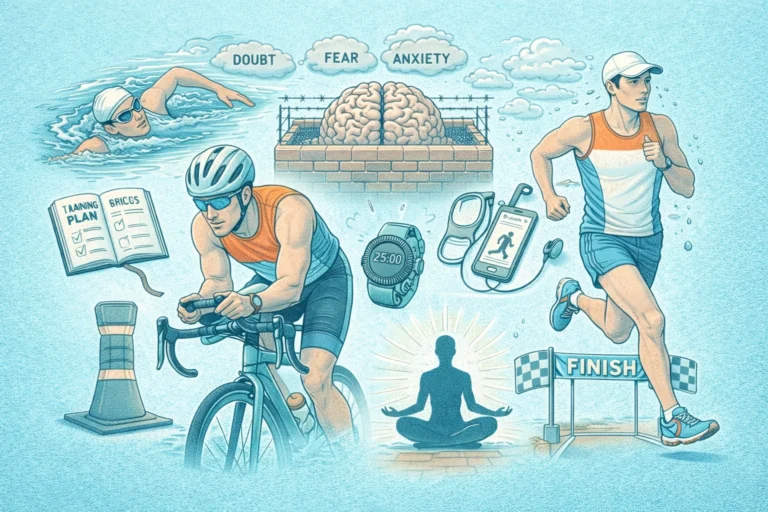
Mental barriers triathlon are real, common, and beatable. Every athlete runs into fear, doubt, or low motivation at some point. This article explains where those barriers come from, how to test them, and which training and mental techniques triathlon athletes can use to push past them. Read on for clear steps you can use in training and on race day.
Why mental barriers matter
Mental barriers affect how you train, how you race, and how long you stick with the sport. They can slow your progress, make workouts feel harder, and cause you to miss key sessions. A gap in mental strength can be the difference between finishing a race strong or tapping out early.
These barriers do not only hit beginners. Even pro triathletes face doubts, fear of failure, or anxiety before big races. The physical training builds the engine, but the mind drives the car. If your mind is unsettled, your body will show it.
Handling these issues gives you steady gains. When you work on mental skills, your training quality improves. You recover better, take smarter risks, and stay consistent. That consistency often leads to personal bests and more satisfying races.
For coaches and training partners, spotting mental barriers early helps with planning. Adjusting volume, adding confidence-building sessions, or tweaking race goals can prevent small issues from becoming major setbacks. Mental strength is a practical part of the training plan.
Common mental barriers in triathlon
Triathlon combines three sports and demands long training blocks. That creates several common mental barriers triathlon athletes face. Knowing the common types helps you recognize them in yourself.
Fear of open water is one frequent barrier. That fear can cause panic in the swim and leave you more tired at T1. Another is pacing anxiety, where athletes are afraid to hold target power or speed and end up going too easy or too hard.
Perfectionism and comparison can also block progress. Watching others on social media or at the pool can lead to unrealistic expectations. This makes training feel like a test instead of steady improvement.
Some athletes struggle with motivation after a bad race or injury. That lack of drive can reduce training quality and lead to longer breaks. If you can name the barrier, you can plan the fix.
Below is a short list of the common barriers to help you spot which ones apply to you. Read it and mark the ones you see often.
Common mental barriers include:
- Open water anxiety
- Race day panic or performance anxiety
- Fear of failure or fear of effort
- Perfectionism and comparison to others
- Motivation lapses after setbacks
How to assess your mental barriers
Assessment starts with honest observation. Keep a training log that records more than times and watts. Note how you felt before, during, and after key sessions. Track sleep, stress, and thoughts that come up during hard efforts.
Also use simple tests to reveal patterns. For example, repeat a hard interval set once a week and compare perceived effort. If effort keeps climbing while power drops, mental fatigue could be driving the decline.
Talk with your coach, training partner, or a sport psychologist if you have one. They can see patterns you miss. Another useful method is a short questionnaire you fill out weekly rating anxiety, motivation, and confidence. Trends matter more than single days.
When you diagnose, separate physical limits from mental limits. If your body is healthy but your times fall short, the gap may be mental. Clear notes make it easier to match the right strategies to the right barrier.
Training strategies to overcome barriers

Training can build mental strength the same way it builds fitness. Small, structured challenges teach your brain that you can handle harder efforts. Start with short, controlled doses and increase them gradually.
One effective method is progressive exposure. Use training to face the fear in safe steps. For open water, start with short swims near shore, then swim a little farther each week. For pacing anxiety, practice holding target power on the bike for short segments and extend those segments over time.
Another strategy is goal setting that focuses on process, not outcome. Instead of setting a single race-time goal, set weekly performance targets for execution. A process goal might be sticking to planned power zones or completing every quality session on your plan.
Here is a clear list of training strategies to try. Read the lead-in paragraph first, then use the list as a checklist when planning sessions.
Try these practical training strategies:
- Progressive exposure: face fears in small, regular steps.
- Process goals: focus on actions rather than finish times.
- Micro-challenges: add short, manageable intensity bursts to build confidence.
- Recovery emphasis: schedule easy weeks and mental rest.
- Simulation sessions: rehearse race transitions, nutrition, and pacing.
Goal setting that works
Good goals are specific, measurable, and under your control. Instead of saying I want to be faster, pick a measurable habit, like complete three tempo bike sessions this week. That gives you a clear action to follow.
Use short time windows. Goals for a week or two are easier to hit and give regular wins. These wins counter negative thinking by proving progress in small doses. Keep a short list of goals and mark them off when you complete them.
Pair goals with rewards that matter to you. Rewards can be small, like a preferred meal or a rest day. The reward reinforces the habit and helps the brain link effort to a positive result. That reduces resistance over time.
Progressive exposure in practice
Design exposure sessions that feel slightly uncomfortable, not overwhelming. If open water scares you, plan five swims that increase distance by 10 percent. If you fear high race power, hold target power for 2 minutes, then 3, then 5 over several weeks.
Keep each step short and consistent. The goal is frequent success. The brain forms new habits faster with steady wins. Track progress and adjust the pace so you build confidence without injury or burnout.
Mental techniques and tools
There are many mental techniques triathlon coaches and psychologists use. These methods are practical, easy to learn, and effective when practiced regularly. They help you control stress and perform under pressure.
This section covers breathing, visualization, self-talk, and focus drills. Each technique needs practice like any skill. Use them in training so they come automatically on race day.
Also remember that mental techniques work best combined with physical training and good recovery. No single tool fixes everything. Use several tools that fit your style and situation to build a personalized toolkit.
Below is a list of proven tools and what they do. Read the short intro first, then test a few to find what helps you most.
Key mental tools include:
- Controlled breathing to lower heart rate and clear thought.
- Visualization to rehearse race scenarios and success.
- Self-talk to shift beliefs and maintain focus.
- Focus cues to anchor attention to the process.
- Routine building to reduce decision stress on race day.
Breathing and relaxation
Simple breathing exercises reduce anxiety quickly. Try a slow 4-6 second inhale and 6-8 second exhale pattern during rest or before a race start. The extended exhale signals the body to calm down.
Pair breathing with a physical anchor, such as tapping a finger or feeling the ground. That creates a reliable cue you can use under stress. Practice in training so it becomes a habit you can call on in races.
Use breathing between repeats or intervals to reset. It helps you avoid letting one hard effort turn into a negative spiral. Over time, you will find your average stress response lowers, which improves recovery and perception of effort.
Visualization
Visualization is mental rehearsal. Picture the swim start, a tricky turn, the moment you feel tired, and how you respond. Include sensory detail, like water temperature or tire noise. The richer the image, the more useful it is.
Spend five to ten minutes after a light session imagining success. Rehearse positive ways to handle setbacks. Repeat the rehearsal before race day. This builds a mental script that guides action when things get hard.
Combine visualization with routine. Visualize your pre-race routine exactly, then follow it on the day. The match between practice and reality reduces surprises, which lowers anxiety.
Self-talk and focus cues
Self-talk is how you speak to yourself during training and racing. Replace negative lines like I cannot with factual, calm cues such as Settle, breathe, hold. Short, concrete cues work best during effort.
Create a small list of focus cues and practice them until they feel natural. Keep them short. Examples include Stay Smooth, Strong Arms, Steady Cadence, or Relax Jaw. Use one cue at a time to avoid overload.
These cues also work as anchors when your mind wanders. They bring attention back to process and away from fear or worry. That keeps your effort controlled and your race plan intact.
When to get professional help
Some mental barriers need extra help. If anxiety or negative thoughts stop you from training, or if panic attacks occur, consult a mental health professional. A sport psychologist can offer targeted tools and a plan tailored to triathlon demands.
For serious sleep loss, depression, or persistent anxiety, a licensed mental health professional is the right choice. These are medical concerns and benefit from careful assessment and treatment. Asking for help is a sign of strength, not weakness.
Teams and coaches should watch for signs that an athlete needs support. Persistent mood changes, withdrawal from teammates, or large drops in training quality are warning signs. Early referral usually leads to better outcomes.
If you are looking for basic sources, start with your coach, a trusted training partner, or a general practitioner who understands sport. They can guide you to a qualified sport psychologist or therapist who works with athletes.
Race day strategies to manage mental barriers
Race day adds pressure that can revive old fears. Preparation reduces that pressure. A clear routine, practiced transitions, and a realistic plan calm the mind and improve decision making on race day.
Start with logistics. Plan arrival times, gear layout, and nutrition down to the small details. The fewer decisions you make on race morning, the less your mind can get stuck in worry. Rehearse this plan in training weeks before the race.
During the race, use short focus windows. Break the course into manageable segments, like 20 to 30 minute blocks, and aim to execute the plan for each block. This reduces the overwhelming feeling of a long event and keeps attention on the process.
Below is a quick race-day checklist to use the day before and the morning of the event. Read the short lead-in sentence, then use the list to guide your setup.
Race day checklist:
- Prepare kit the night before, including spares and nutrition.
- Practice your pre-race breathing and visualization routine.
- Set simple process goals for each race segment.
- Use short focus cues and stick to them, one at a time.
- Keep to planned nutrition and hydration windows.
Building long-term resilience
Long-term mental resilience comes from consistent habits. Make mental skills part of your weekly routine rather than an afterthought. A five-minute mental warm-up before sessions can be very effective.
Track small wins and review them weekly. A short log of what went well reinforces progress and weakens negative stories your mind tells. Over time, the positive record becomes a buffer against setback-driven doubt.
Include variety in training and mix in challenging but fun sessions. Enjoyment is a powerful motivator that protects against burnout. Keep at least one session per week that reminds you why you love the sport.
Finally, invest in community. Training partners, clubs, and coaches provide support, shared experience, and a reality check when your own thoughts run negative. Social contact makes mental barriers easier to overcome.
Key Takeaways
Mental barriers triathlon athletes face are common and treatable. They affect training quality, race performance, and overall sport enjoyment. The first step is honest assessment and tracking to identify the exact barriers you face.
Use structured training strategies like progressive exposure and process goals to build confidence. Practice mental skills such as controlled breathing, visualization, and short self-talk cues in training so they come easily on race day. These are core mental techniques triathlon athletes can use to improve focus and reduce anxiety.
If anxiety or mood issues are severe, seek professional help. A sport psychologist or licensed mental health provider can offer targeted plans for serious concerns. Coaches should watch for warning signs and encourage early referral when needed.
Make mental work part of your routine, reward small wins, and lean on your training community. Over time, you will see better training consistency, smarter race execution, and more enjoyment in the sport. Remember, mental strength grows the same way fitness does, with steady practice and sensible progression.
For more on athletes and the psychological side of triathlon, keep working on the tools outlined here. Use them regularly, adjust to your needs, and celebrate small improvements. Your best races often start in training with small, steady changes to how you think and prepare.