
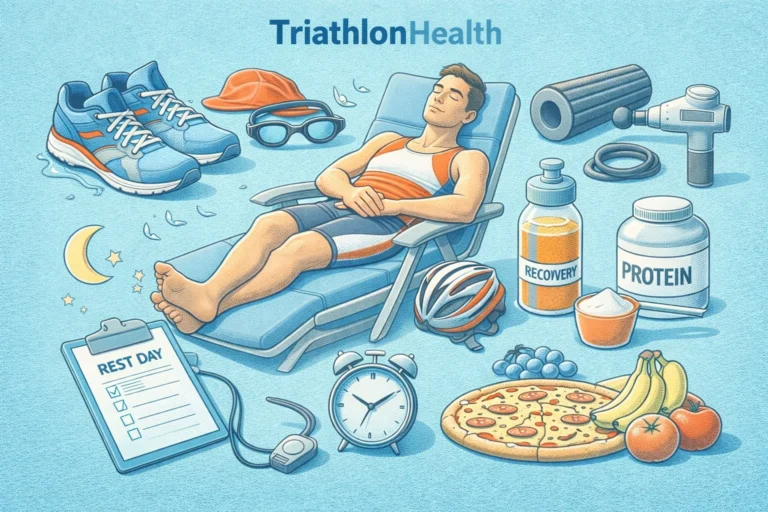
Triathlon recovery matters as much as training. If you train hard and skip recovery, your body will slow your progress. This article explains how triathlon recovery works, which methods help most, and how to plan rest in training and race weeks. You will learn simple steps you can use right away to recover faster and stay healthy.
Why triathlon recovery matters
Recovery is the time your body uses to repair the damage training caused. Muscles rebuild stronger. Energy stores refill. Mental fatigue eases. For triathletes, this process is crucial because training hits three sports, not one. Without proper recovery, small problems grow into big ones.
When recovery is poor, performance drops. You may feel slower on the bike, tired in the pool, or heavy on runs. Over time, poor recovery leads to more illness and a higher risk of injury. That means missed workouts, missed races, and lost progress. Triathlon recovery keeps training effective and safe.
Recovery also affects adaptation. The body needs rest to adapt to training stress. Hard sessions create stress and recovery turns that stress into fitness. If rest is not allowed, those fitness gains do not happen. You need planned recovery days and simpler, shorter weeks to let the body build back stronger.
Finally, mental health is part of recovery too. Racing and training require focus and motivation. Rest days, quality sleep, and social time help you stay motivated. A good triathlon recovery plan supports both body and mind.
How recovery works for triathletes
The body repairs muscle fibers and rebuilds energy after workouts. Sleep is a core part of this. Deep sleep helps release hormones that support tissue repair. Without enough good sleep, your muscles and immune system do not recover well. That makes sleep a top priority for triathlon recovery.
Nutrition fuels repair. Carbohydrates refill glycogen, protein helps rebuild muscle, and fats support cell function. Timing also matters. Eating a meal or snack with both carbs and protein soon after training speeds recovery. Hydration is part of the mix. You lose water and electrolytes during long training. Replacing them helps cells work to repair damage.
Inflammation is a natural response to training stress. A short, controlled inflammatory response helps repair tissue. But chronic inflammation from too much training and too little recovery can slow healing and increase injury risk. Managing training load and using recovery techniques can reduce harmful inflammation while keeping beneficial repair processes active.
Psychological factors shape recovery too. Stress outside training, poor mood, and low motivation can interfere with sleep and appetite. That slows physical recovery. Good planning, social support, and simple relaxation methods help the mind recover. Mental recovery supports the physical side and improves training consistency.
Active vs passive recovery triathlon: when to use each
There are two main recovery paths, active and passive. Active recovery uses low-intensity movement to boost blood flow, reduce stiffness, and speed waste removal from muscles. Passive recovery uses rest, sleep, and low-activity time to let the body repair naturally. Knowing when to use each is key for triathletes.
Active recovery works well after hard sessions when you still feel able to move. A short easy swim, light bike spin, or gentle jog can ease soreness and restore range of motion. Some athletes find that moving helps sleep and mood too. Active recovery often reduces feeling stiff the day after a tough workout.
Passive recovery is best when your body is heavily fatigued, when you are injured, or during key recovery days in a training block. Full rest days, naps, and extra sleep are part of passive recovery. These allow hormones and cells to repair without added stress. Race week often calls for passive recovery to conserve energy.
Below is a short list of practical examples to show both types. Read the list to match each example to your training context.
- Active: 20 to 40 minutes easy bike spin at low cadence or very low heart rate after a hard ride.
- Active: Easy 20-minute pool swim focusing on technique, not intensity, the day after intervals.
- Passive: Full rest day with light walking, stretching, and sleep after a multiple-day training block.
- Passive: Extra night of sleep and reduced training load in the 48 hours before a key race.
Use active recovery most often during training weeks with consistent workload. Use passive recovery during taper, after races, or when feeling unusually tired or sick. Mixing both approaches gives balance and reduces the chance of non-functional overreaching.
Key triathlon recovery practices for training and race week

Some recovery methods work all the time. Others are best for race week or heavy training blocks. Below I outline practices that fit daily routines and those specific to race preparation. Each practice supports the goal of restoring energy, reducing soreness, and protecting health. These items form a core set of triathlon recovery practices any athlete should know.
Daily habits matter most. Sleep seven to nine hours each night when you can. Eat balanced meals with carbs and protein after training. Keep hydration steady. Plan easy sessions after hard days. Manage stress with short breathing breaks or a brief walk. These habits make big gains over weeks.
Race-week practices are focused on conserving energy and sharpening freshness. Reduce overall volume while keeping a bit of intensity to stay sharp. Prioritize sleep and simple meals. Avoid any new recovery treatment the day before the race. Small changes are safer than big ones during race week.
Below is a list of practical daily and race-week recovery practices with short explanations. Read them and pick the ones that fit your schedule and needs.
- Post-workout nutrition: Eat 20 to 30 grams of protein and some carbs within 45 minutes after training to speed muscle repair and glycogen refill.
- Planned rest days: Schedule at least one full rest day per week to prevent chronic fatigue and reduce injury risk.
- Sleep routines: Keep a regular bedtime and wake time, even on weekends, to support recovery hormones.
- Compression and light massage: Use compression garments or a short massage session to reduce muscle soreness after long efforts.
- Race-week taper: Cut volume by 40 to 60 percent in the final week while keeping short, sharp sessions to stay race-ready.
These triathlon recovery practices work across all levels. The exact mix depends on your training load, age, and personal recovery speed. Track how you feel and change practices if they do not help.
Recovery techniques triathlon athletes use
Athletes use a range of recovery techniques to speed repair and reduce soreness. Some are simple, low-cost options like foam rolling and stretching. Others involve gear or sessions, such as compression, cryotherapy, or professional massage. Each technique has pros and cons and fits different budgets and preferences.
Foam rolling and self-massage are low-risk and easy to add to your routine. They help reduce tight spots and improve comfort. Stretching is useful for mobility and calming the nervous system. These methods help many athletes feel better without interfering with training.
Cold-water baths and ice therapy reduce acute inflammation and can shorten muscle soreness after very hard sessions. Use them selectively, not every day, because repeated cold exposure can blunt long-term adaptation. Contrast baths, alternating cold and warm water, can also help circulation without too much stress.
Compression gear can improve comfort and reduce swelling. Evidence on long-term performance gains is mixed, but athletes report feeling fresher after using compression after long events. Sleep and nutrition remain the most powerful tools. Use other techniques to support these two pillars, not to replace them.
Recovery tools and aids: pros and cons
Here I explain common tools and how to weigh their benefits. A good plan uses a few targeted tools that fit your budget and schedule. Avoid buying every new gadget. Instead, try one or two aids at a time and evaluate whether they improve how you feel and recover.
Active recovery devices, like light massage guns, can give quick relief to tight muscles. They work well as part of a short, regular routine. They can be noisy or costly, but many athletes find them worth the cost for quick relief between sessions.
Ice baths and cold therapy can reduce soreness after long, intense training. They work best for short-term relief and after maximal efforts. For athletes focused on long-term adaptation and muscle growth, frequent ice baths might blunt gains. Use them mainly for recovery after races or long training days.
Below is a list of tools with short pros and cons. Use this list to decide what fits your plan and budget.
- Foam roller: Low cost, easy to use, good for muscle tightness. Best for daily maintenance.
- Massage gun: Quick deep-tissue relief, portable. Can be expensive and should be used with care.
- Compression garments: Improve comfort and reduce swelling. Evidence on performance gains is mixed.
- Ice baths: Good for acute soreness after big efforts. Not ideal for daily use if you want maximal adaptation.
- Professional massage: Helps tight muscles and stress. Costs add up, so use as needed during heavy blocks or before races.
Decide based on how your body responds. If a tool helps you sleep better, feel less sore, or train more consistently, it has value. If not, save your money and focus on sleep, food, and smart training plans.
Common recovery mistakes and triathlon injury prevention
Many athletes make the same mistakes that slow recovery. They skip rest days, under-eat, or push through illness. These habits increase injury risk and reduce long-term progress. A few changes can prevent these problems and improve training quality.
Skipping easy days is one common error. Easy days allow systems to recover and adapt. If every day is hard, you accumulate fatigue. Training becomes less effective and injury risk rises. Plan clear easy days and honor them as part of the program, not as optional extras.
Another mistake is poor fueling. Training on low energy or skipping protein after sessions slows repair. It also raises the risk of illness. Aim to eat balanced meals with enough calories to match your workload, and include protein in recovery snacks. This simple step helps both performance and injury prevention.
Below is a list of frequent mistakes and short tips to avoid each one. Read each item and apply the related tip to your routine to lower injury risk and improve recovery.
- Ignoring rest signs: If sleep, mood, or performance drop, reduce volume and sleep more. This prevents bigger breakdowns.
- Poor nutrition: Prioritize post-workout carbs and protein. Small changes in timing and quantity speed repair.
- One-size training: Follow a plan that fits your life and fitness. Too much volume for your current level raises injury risk.
- Neglecting strength work: Strength training builds resilience and reduces common triathlon injuries, especially in the hips and core.
- Chasing every session: Quality over quantity. Do the right work at the right time, not every session at maximum effort.
These tips support triathlon injury prevention by reducing stress and improving resilience. Use them often, especially as your training load increases. Small preventive steps pay off with fewer missed sessions and longer careers.
Designing a recovery plan: sample weekly templates
A recovery plan ties together sleep, nutrition, planned rest, and recovery techniques. Below are simple weekly templates for different phases: an easy week, a build week with planned recovery, and a race week taper. Each template shows how to space hard sessions and recovery days so you can adapt and stay fresh.
Use the easy week when you need to reset after a heavy block. The build week includes one day of active recovery and one passive rest day. The race week favors passive recovery with short, sharp sessions to stay sharp but conserve energy. Adapt volume to your level and the demands of your event.
Here are three sample weekly templates. Use them as starting points. Change durations and intensity to fit your time, fitness, and race goals. These examples include recovery techniques triathlon athletes commonly use within their schedules.
- Easy week: 2 short swims, 2 easy bikes, 2 short runs, 1 strength session, 1 full rest day. Focus on sleep and light nutrition. Add foam rolling on two evenings.
- Build week: 3 quality sessions (one per sport), 2 moderate sessions, 1 active recovery ride or swim of 30 to 45 minutes, 1 passive rest day. Post-hard sessions include a protein-rich snack and 8+ hours of sleep.
- Race week taper: 2 short sharp sessions early in the week, 2 easy swims or spins, 2 passive rest days, light stretching and mobility. Prioritize sleep and keep meals simple and familiar.
These templates show how recovery fits into weekly planning. Use a recovery log or simple training diary to track how you feel and adjust the plan. Plan recovery before you need it, and you will reduce lost sessions and delays in progress.
Measuring recovery and when to see a pro
Measuring recovery helps you make good choices and avoid overtraining. Simple daily checks include how you feel on waking, resting heart rate, and mood. More advanced measures include heart rate variability and sleep tracking. Use what you can consistently and do not overcomplicate the process.
Resting heart rate trends are a useful signal. A higher-than-normal resting heart rate for several days can mean you need more rest. Heart rate variability can show stress balance, but it varies between tools. Use a single method and track trends rather than single readings.
Other signs that you need more recovery include persistent muscle soreness, poor sleep, low motivation, and declining performance. If these signs last a week or more despite simpler recovery steps, see a coach or a medical pro. Early help prevents more serious setbacks.
Below is a short list of signs to check and when to get professional help. These points help you decide when to act and whom to contact for support.
- Acute injury: If pain is sharp, persistent, or limits movement, stop and see a sports physiotherapist or doctor.
- Chronic fatigue: If tiredness and poor performance persist for weeks, consult a coach and a medical professional for tests and plan adjustments.
- Recurring illness: If colds or infections happen often, seek medical advice to check immune function and adjust training loads.
- Unclear pain: If discomfort does not improve with rest and simple care, get an expert assessment to prevent worsening injury.
Work with a coach or physiotherapist to build a recovery plan tailored to your season and body. A pro can help spot early signs and create targeted interventions. This support is especially valuable during high-volume training and as you prepare for important races.
Key Takeaways
Recovery is a central part of performance for every triathlete. It lets your body build fitness and prevents setbacks. Simple habits like sleep, balanced nutrition, and planned rest days form the foundation of any effective plan. Use these basics before adding gadgets or complex treatments.
Mix active and passive recovery based on your training intensity and how you feel. Active recovery helps circulation and mobility. Passive recovery protects deep repair during heavy fatigue or race tapering. Know when to use each type and follow a clear weekly plan.
Track simple recovery measures, such as sleep, mood, and resting heart rate. If signs of poor recovery last more than a week, consult a coach or medical professional. Use triathlon recovery practices that fit your lifestyle, and avoid chasing every new product or trend.
With a clear approach, you will train more consistently, reduce the chance of injury, and perform better on race day. Make recovery a priority and treat rest as part of your training, not a reward. Your body will thank you with better fitness and more race-day speed.