
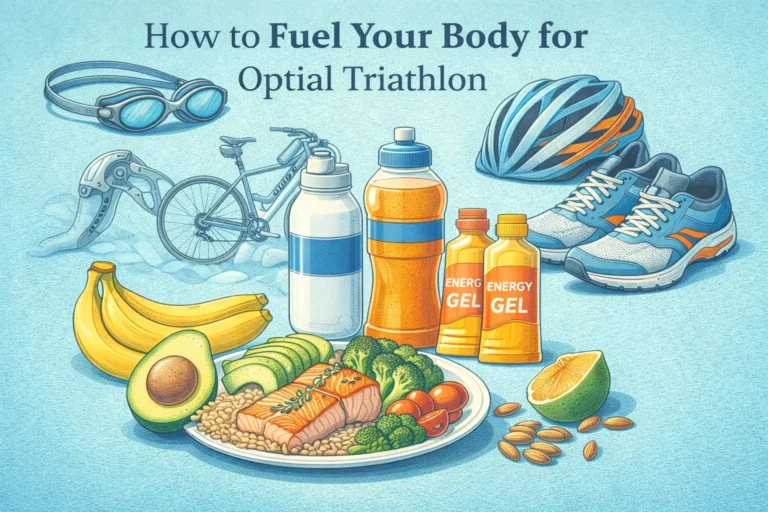
Fueling well changes how you feel on the bike, in the pool, and on the run. This article shows how to fuel triathlonhealth with clear steps, sample plans, and race day tactics. Read on for practical advice from a triathlon journalist who has seen what works in training and racing.
Why fuel triathlonhealth matters
Proper fuel helps your muscles work longer and recover faster. If you ignore nutrition, you can feel weak, cramp, or slow during a race. Fuel choices also affect your mood and focus, which are key on tough race days.
Every triathlete, from beginner to pro, needs a clear plan for energy and hydration. The right fuel supports training gains and helps you hit target paces. It also reduces the chance of a bad day caused by poor nutrition.
Fueling is not only about what you eat on race day. Daily eating and recovery determine how your body adapts to training. Consistency matters. Small habits add up to big performance changes over weeks and months.
Keep the phrase fuel triathlonhealth in mind as a goal. That phrase sums up a simple idea: match your food and fluid to the demands of triathlon training and racing. This article gives step by step tools to do that well.
Calculating energy and macronutrient needs
Begin by estimating how many calories you burn each day. Use your training hours, body weight, and intensity to get a rough number. This estimate helps you set daily targets so you can train hard without losing too much weight or feeling drained.
Carbohydrate is your primary race fuel. Most triathletes need 5 to 8 grams of carbohydrate per kilogram of body weight on regular training days. For very long or very intense training days, aim for 8 to 10 g per kg. Protein helps repair muscle and should be about 1.2 to 1.7 g per kg.
Fat is also important. It supports long steady rides and overall health. Aim for a balance where fats make up about 20 to 35 percent of daily calories. Do not restrict fat too much. It will hurt recovery and may lower training quality.
Finally, adjust targets by feel and progress. If you lose too much weight or feel weak, increase calories by 200 to 400 per day. If you gain unwanted body fat and your power does not improve, cut 200 calories and re-evaluate. Repeat until you find the right balance.
Pre-training and pre-race fueling

What you eat before a session sets the starting fuel level for the workout or race. A good pre-session meal gives steady energy and avoids stomach upset. Timing and the type of food are both important.
For workouts longer than 60 minutes, eat a carbohydrate rich meal two to four hours before start. If you have only 60 minutes or less, choose a small snack that is easy to digest. Practice these timings in training to know what works for you on race day.
Below is a short checklist to help you build a pre-race meal plan. Use it in the days before the race and on race morning to reduce surprises.
Here is a simple pre-race checklist to follow:
- Two to three days out: increase carbohydrate intake moderately, avoid unfamiliar foods.
- Night before: eat a balanced meal with carbs, lean protein, and some vegetables. Avoid heavy sauces and excess fat.
- Race morning: have a familiar carbohydrate rich breakfast two to three hours before start, plus a small snack 30 to 60 minutes before if needed.
- Hydration: start well hydrated. Drink 500 to 750 ml of fluid in the two to three hours before the race, then 200 to 300 ml 20 to 30 minutes before start if you need it.
Practice the foods and drinks you plan to use before races. That removes risk. The right pre-race plan reduces anxiety and helps you focus on execution rather than digestion.
Fueling during training and race day
On long sessions and races, top up carbohydrate and fluids at regular intervals. Most athletes can absorb about 60 grams of carbohydrate per hour from a single source. If you combine carbohydrate types, like glucose and fructose, you can reach 90 grams per hour without gut upset.
Electrolytes matter too. Sweat contains sodium and other minerals. Replacing sodium helps maintain muscle function and reduces cramp risk. Use sports drinks or electrolyte tablets when training in heat or during events that last more than 90 minutes.
Below are practical fueling options to carry on the bike or use at aid stations. These choices work in training and on race day. Pick two or three options that you tolerate well.
Try these on-bike and race fueling options:
- Energy gels, 20 to 30 grams of carbohydrate each, taken with water between gels to help absorption.
- Liquid sports drink that provides 6 to 8 percent carbohydrate, useful for both fuel and electrolytes.
- Chews or blocks, easy to eat and good when you need small amounts frequently.
- Real food like bananas or rice cakes for longer events where variety helps stomach comfort.
Plan a feeding schedule that matches your pace and event length. For example, in a half ironman you might take 30 to 60 grams of carbohydrate per hour, starting early and continuing at even intervals. Practicing this avoids surprises on race day.
Recovery and daily eating habits
What you eat after training fixes gains and reduces soreness. A good recovery meal has carbohydrate to refill glycogen and protein to repair tissue. Aim to eat within 30 to 90 minutes after finishing hard efforts.
Recovery drinks can be useful when you need quick intake. They work well after brick sessions or multiple workouts in a day. Whole food meals are best when time allows. Combine lean protein, starchy carbohydrate, and colorful vegetables for balance.
Here are reliable recovery food examples to use after tough sessions. They are simple, effective, and easy to prepare on training days.
Try these recovery snacks and meals:
- Greek yogurt with fruit and a sprinkle of granola, offering carbs and protein together.
- Turkey sandwich on whole grain bread with salad, a solid meal for afternoon recovery.
- Rice or pasta with grilled chicken and steamed vegetables, ideal after long rides.
- Smoothie with milk or plant milk, banana, protein powder, and spinach, easy to drink on the go.
Consistency matters for recovery as much as for training. Set a simple routine you can follow every day. That helps your body recover faster and makes you stronger over weeks and months.
Practical meal plans and snack ideas
Plan meals for training weeks and race week, then tweak to match how you feel. Keep meals plain and familiar the week before big events. During heavy training blocks, add extra snacks to meet higher calorie needs.
Below are two sample day plans, one for moderate training days and one for heavy days. These plans include foods that many triathletes use, and they highlight common triathlonhealth foods like oats and bananas.
Use these sample day plans as a template and change portions to match your body size and training load.
- Moderate training day: Breakfast of oats with milk, banana, and nuts; mid-morning snack of yogurt and fruit; lunch of chicken and quinoa salad; afternoon snack of rice cake with peanut butter; dinner of salmon, sweet potato, and veg.
- Heavy training day: Breakfast of whole grain toast, eggs, and fruit; pre-ride snack of a small bowl of porridge; during ride: sports drink and gels as planned; post ride: smoothie with protein, then a full dinner of pasta, lean beef or plant protein, and vegetables.
Keep a small rotation of snacks you tolerate during training. Items such as rice cakes, bananas, nut butter packets, and simple energy bars are often reliable. Using familiar items keeps the stomach calm on race morning.
If you want to use the phrase triathlonhealth foods in your notes, make a short list of local grocery items you trust. Keep these foods in your kitchen and practice eating them before long sessions. That reduces risk of stomach issues during races.
Key Takeaways
Fueling affects every part of triathlon performance. From training quality to race-day results, food and fluid choices matter. Make a plan and practice it often so you know what works for your body.
Set daily calorie and macronutrient targets based on training load, then adjust as you monitor weight and performance. Carbohydrate timing is crucial for both workouts and recovery. Protein and fat support repair and long training sessions.
Use simple, repeatable routines for pre-race meals, in-race fueling, and recovery. Test products and timings in training. Aim to include reliable triathlonhealth foods in your routines so you have fewer surprises on race day.
Start small and build consistency. Good fuel habits compound over time and make big differences in performance, health, and enjoyment of the sport. Practice, track, and refine your plan. That is the best way to fuel triathlonhealth for long term success.