
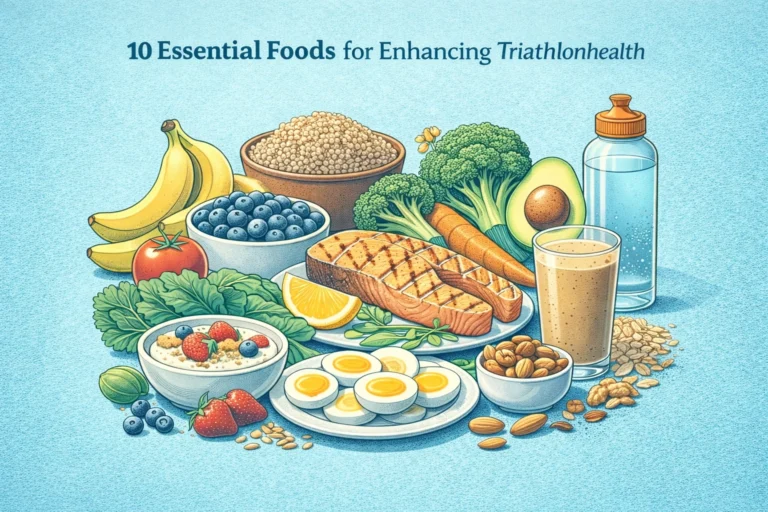
Good fueling can be the difference between a solid race and a breakthrough day. This article lists 10 essential triathlonhealth foods that help training, recovery, and race performance. Read on for clear advice on what to eat, when to eat it, and how to use these foods in real meal plans.
10 Essential Foods for Enhancing triathlonhealth
This section outlines the 10 foods I recommend for triathletes. Each food supports one or more needs: steady energy, muscle repair, immune support, hydration, or quick fuel before a session. I picked options that are easy to buy and prepare, and that fit different budgets and dietary choices.
I will explain how each food helps performance, how to use it in training and on race day, and practical serving sizes. You will find recipes, snack ideas, and timing tips you can use in your weekly plan. The goal is simple, actionable steps to make better food choices.
These foods are not magic by themselves. They work best as part of a consistent training and recovery routine. Use them to build balanced meals that match your training load and goals. Below, each food gets its own short guide and practical tips.
Oats
Oats are a staple for endurance athletes. They provide slow-release carbohydrates, which help keep blood sugar stable during long sessions. The fiber in oats supports digestion, and the small amount of protein helps with recovery.
Use oats for breakfast before morning workouts, or as a pre-race meal three to four hours before a start. Cooked oats are easy to digest when you add milk or a dairy-free alternative. Soak them overnight if you prefer a quick option in the morning.
Oats also pair well with fruit, nuts, and seeds for added vitamins, healthy fats, and protein. That makes them a flexible base for meals that match different training intensities. If you need faster energy, choose a smaller portion with banana and honey.
Simple serving idea: 1 cup cooked oats, 1/2 banana, a handful of berries, and 1 tablespoon of nut butter. This gives both energy and some protein to start your session right.
Bananas
Bananas are the go-to fruit for many triathletes. They are portable, affordable, and rich in carbohydrates and potassium. Potassium helps maintain muscle and nerve function, which can reduce cramping risk during long efforts.
Grab a banana 30 to 60 minutes before a workout for quick carbs that digest easily. They also fit well into recovery snacks with yogurt or a smoothie after training. Ripe bananas are sweeter and easier to digest, making them ideal right before high-intensity sessions.
Bananas pair well with dried fruit, oats, or a small handful of nuts. You can freeze sliced bananas for smoothies that are cool and easy to drink after hot training days. Keep some on hand in your training bag for a reliable mid-ride or mid-run snack.
Serving idea: one banana with a small handful of almonds, or blended with milk and protein powder for a recovery shake.
Lean Chicken or Turkey
Lean poultry is an excellent source of complete protein. Protein supports muscle repair and adaptation after training. It also helps you maintain lean mass while you train, especially during higher volume weeks.
Include lean chicken or turkey at main meals after heavy sessions. Aim for a portion around the size of your palm for most meals. Cook simply by roasting, grilling, or poaching to keep extra fats low if you are focusing on quicker recovery without digestion issues.
Cold sliced turkey or chicken makes a quick sandwich or salad topping. Use whole-grain bread or quinoa for added carbohydrates. If you prefer plant-based options, choose firm tofu or tempeh to replace poultry while keeping a similar protein profile.
Meal idea: grilled chicken breast with sweet potato and steamed greens. This is a balanced plate for recovery days and supports glycogen replenishment and muscle repair.
Sweet Potatoes
Sweet potatoes are a powerful carbohydrate source with added vitamins and minerals. They provide beta-carotene, potassium, and complex carbs that help restore glycogen after long workouts. Their fiber content aids digestion when eaten in reasonable amounts.
Use sweet potatoes as a main carb at lunch or dinner after long rides or runs. They work well mashed, baked, or roasted. Combine them with a protein source and vegetables to build a recovery meal that fuels your next session.
Sweet potatoes also make a good pre-race dinner when paired with a lean protein and a simple salad. Keep portion sizes moderate the night before a race to avoid feeling heavy. For a morning race, a small sweet potato with eggs or yogurt three to four hours before the start can be ideal.
Serving idea: one medium roasted sweet potato with turkey and a side of steamed broccoli for a nutrient-dense recovery dinner.
Salmon
Fatty fish like salmon provide high-quality protein and omega-3 fats. Omega-3s have anti-inflammatory properties that can help recovery and reduce muscle soreness over time. They also support overall cardiovascular health.
Include salmon in your meals two or three times per week. Bake, grill, or steam it. Avoid heavy sauces that add extra fat right before a hard session. A salmon dinner after a long training day can support repair and keep inflammation in check.
If you do not eat fish, consider algae-based omega-3 supplements after discussing with your coach or a nutrition professional. Plant-based athletes can pair beans and seeds for protein and include walnuts or flaxseed for omega-3s in their diets.
Simple plate: salmon fillet, quinoa, and a mixed green salad with olive oil. This provides protein, healthy fats, and carbs for steady recovery.
Greek Yogurt
Greek yogurt is rich in protein and easier to digest for many athletes than larger meat meals. It also contains probiotics which can support gut health and immune function. Maintaining a healthy gut helps you absorb nutrients and stay well during heavy training.
Use Greek yogurt as a snack or part of a recovery meal. Mix it with fruit and a small handful of granola or oats after a session. For dairy-free needs, choose a high-protein plant yogurt fortified with calcium and probiotics.
Greek yogurt is also good for quick pre-workout snacks for lower intensity sessions. Keep portions moderate before high-intensity work to avoid feeling heavy. It is versatile and can replace heavier desserts while still supporting recovery.
Serving idea: 3/4 cup Greek yogurt with berries, a teaspoon of honey, and 1 tablespoon of chia seeds.
Quinoa
Quinoa is a complete plant protein, meaning it supplies all essential amino acids. It also provides complex carbohydrates and fiber, which help with steady energy release. This makes it ideal for vegetarian or mixed diets in triathlon training.
Use quinoa in salads, bowls, or as a side with protein and vegetables. It cooks quickly and stores well in the fridge for meal prep. Quinoa is especially useful on training days when you need a filling but balanced meal.
Combine quinoa with beans, roasted vegetables, and a drizzle of olive oil for a nutrient-rich plate. On long training days, add avocado or a small handful of nuts for extra calories and healthy fats that help with longer sessions.
Serving idea: quinoa bowl with black beans, roasted sweet potato, greens, and a lemon-tahini dressing for a portable, energy-dense meal.
Eggs
Eggs are one of the most efficient sources of high-quality protein. They also contain vitamins like B12 and minerals that support energy metabolism. Many athletes use eggs for breakfast because they are quick to prepare and pair well with carbohydrates.
Have eggs with whole-grain toast and fruit for a balanced pre-workout meal. For evening recovery, eggs with a side of vegetables and a small potato help restore glycogen and support repair. Switch between whole eggs and egg whites to manage calorie needs.
If you are training early, boil eggs the night before for a grab-and-go option. Hard-boiled eggs with a banana make a classic and effective pre-session snack. For plant-based athletes, focus on combining other proteins in meals to meet amino acid needs.
Serving idea: two eggs scrambled with spinach and a slice of whole-grain toast for a quick, balanced start to the day.
Spinach and Leafy Greens
Leafy greens are nutrient-dense with vitamins, minerals, and antioxidants. They provide iron, calcium, and vitamin C, which support oxygen transport and bone health. Greens also help the body handle increased training stress.
Add a generous portion of greens to your lunch and dinner. Use them raw in salads or lightly sauté them with garlic and olive oil. Smoothies with a handful of spinach are another easy way to add greens without bulk, especially before or after workouts.
Pair greens with vitamin C sources like citrus or bell peppers to help iron absorption, especially for plant-based athletes. Try different greens to keep meals interesting, such as kale, arugula, or chard, which have slightly different textures and flavors.
Serving idea: large mixed-green salad with quinoa, cherry tomatoes, avocado, and a grilled chicken or tempeh topping for a complete meal.
Nuts and Seeds
Nuts and seeds offer concentrated calories, healthy fats, and some protein. They support long training days when you need compact sources of energy. They also add texture and flavor to meals and snacks, helping with overall calorie intake.
Include nuts and seeds as snacks between sessions or add them to yogurt, salads, and oats. Almonds, walnuts, chia, and flaxseed are all useful. Use small portions as they are calorie-dense, but very effective for hunger control and energy support.
If you have nut allergies, use seed blends or sunflower butter for similar benefits. Seeds like pumpkin or hemp add minerals and additional protein to bowls and smoothies. Keep portions around a small handful to avoid feeling heavy before workouts.
Serving idea: trail mix with almonds, walnuts, pumpkin seeds, dried fruit, and a few dark chocolate chips for a high-energy snack during long sessions.
How to Combine These Foods Into a Weekly Plan
Putting these foods into a weekly plan helps you get the right mix of carbs, protein, and fats for training and recovery. A simple pattern is to focus on carbs before and during long sessions, then on protein and carbs right after to repair and refill reserves.
Below is a sample structure you can adapt to your schedule, training load, and taste. It balances the main food groups and repeats key items like oats, sweet potatoes, salmon, and quinoa to keep shopping simple and meal prep efficient.
Use the sample plan as a template. Change portion sizes for your needs. Add snacks like bananas, Greek yogurt, nuts, or rice cakes during high-volume days to avoid energy dips.
Sample weekly plan:
- Monday: Easy swim. Breakfast of oats with banana and almond butter. Lunch: quinoa salad with chicken and greens. Dinner: salmon, sweet potato, and steamed vegetables.
- Tuesday: Interval run. Pre-workout snack: banana. Post-workout: Greek yogurt with berries. Dinner: turkey tacos with spinach and black beans.
- Wednesday: Long bike. Breakfast: oatmeal and a small smoothie. During ride: bananas and a small pack of trail mix. Post-ride: chicken, rice, and broccoli.
- Thursday: Strength session. Breakfast: eggs and whole-grain toast. Lunch: quinoa bowl with roasted vegetables. Snack: nuts and dried fruit.
- Friday: Moderate swim. Lunch: salad with salmon. Dinner: pasta with lean turkey and a side of greens.
- Saturday: Long brick session. Pre-ride meal: sweet potato and eggs three hours before. On the road: gels, bananas, or energy bars. Post-session: large recovery meal with quinoa, chicken, and avocado.
- Sunday: Active recovery. Breakfast: Greek yogurt with fruit and seeds. Light lunch: vegetable soup and toast. Dinner: salmon or tofu with mixed greens.
Timing and Portion Guidance for Training and Race Day

Timing matters as much as food choice. Match what and when you eat to your session length and intensity. For easy sessions, a light meal or snack is enough. For long or hard sessions, you need more carbs before and during exercise.
Here are practical timing rules to use. Adjust them based on your digestion and personal comfort. Try everything in training before race day so you know how your body reacts. These rules are simple to follow and help avoid stomach trouble during key sessions.
Guidelines:
- Large meals: eat them three to four hours before a hard or long session. Choose carbs and protein, like sweet potato and chicken.
- Small meals and snacks: eat them 60 to 90 minutes before moderate efforts. A banana or piece of toast with peanut butter works well.
- During long sessions: use easy-to-digest carbs such as bananas, energy gels, or compact bars every 45 to 60 minutes depending on intensity.
- After sessions: try to eat protein and carbs within 30 to 90 minutes to start recovery. Greek yogurt with fruit, or a quinoa bowl with chicken, are good choices.
Supplements and When to Consider Them
Whole foods should be the foundation of any triathlete’s diet. But supplements can fill gaps or provide convenience. Use them carefully and test during training. Talk to a sports dietitian if you are unsure about doses or interactions.
Common supplements for triathletes include whey or plant protein, omega-3s, vitamin D, iron for athletes with low stores, and electrolytes for long workouts. Each has a role, but they do not replace balanced meals.
Electrolyte products are useful on hot days and during very long sessions. Protein powders help meet daily protein targets when whole food is not available. Choose reputable brands and always check third-party testing if you compete at a high level.
Keep a log of what works best for you. Record how you feel during and after sessions, and adjust timing or products as needed. Supplements should simplify recovery and training, not complicate them.
Key Takeaways
Eating the right mix of foods supports training, recovery, and race performance. The 10 essential triathlonhealth foods in this article cover carbohydrates, protein, healthy fats, and micronutrients that athletes need. Use them regularly in meals and snacks.
Practice your fueling strategy during training so you know what works. Time meals and snacks to match session intensity and length. Keep portions sensible before workouts and focus on recovery meals with both carbs and protein after hard efforts.
Meal planning and simple prep can make your weeks much easier. Cook larger batches of quinoa, roast sweet potatoes, and keep hard-boiled eggs and bananas ready. Small habits like these make consistent fueling possible, even on busy days.
Start by picking two or three of the foods from this list and adding them to your next week of meals. Test timing around your workouts and adjust based on how you feel. Over time, you will know the mix that best supports your training and race goals.