
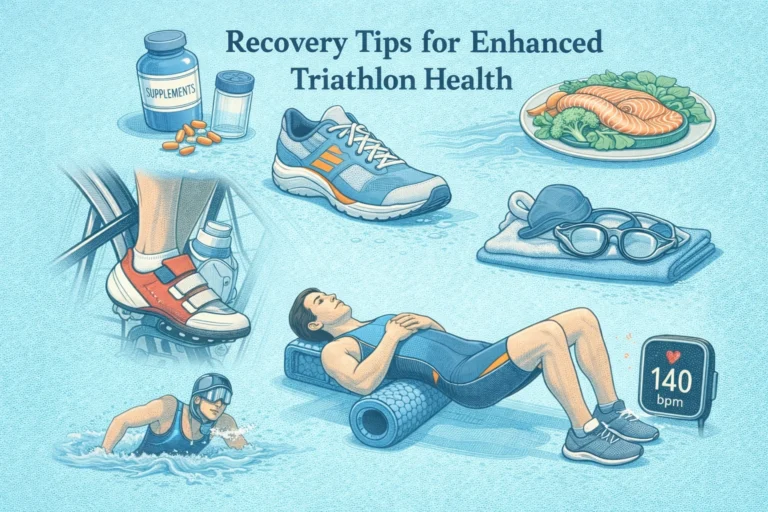
Recovery decides how quickly you will improve, how often you can train, and how long you can stay healthy. This guide on triathlonhealth recovery lays out simple, practical steps you can use after tough workouts, between heavy weeks, and during race season. Read on for clear, pro-tested advice that you can start using today.
Why triathlonhealth recovery matters
Recovery is not optional for athletes who want steady progress. Every swim, bike, and run session breaks down muscle and stresses nervous and immune systems. Without good recovery, gains stall and injuries rise.
For triathletes, recovery must cover three sports and the transitions between them. That can mean more fatigue than for single-sport athletes, and more need for careful planning. Good triathlonhealth recovery protects your training plan and keeps you available for key sessions.
Recovery also shapes how hard you should train next. A well-recovered athlete can handle a big session and adapt. A poorly recovered athlete risks poor form, slow times, and long-term setbacks. Treat recovery as training, not optional rest.
Core principles of triathlonhealth recovery
These principles guide everything you do after training or racing. They are simple, and they apply to all levels of triathletes. Keep them in mind when you plan your week and when you choose recovery methods.
First, repair what training broke. That means fueling, sleeping, and moving well. Second, reduce stress load from life and training, so your body can rebuild. Third, use progressive loading: mix push days with real recovery days so you get fitter without breaking down.
Finally, measure and adjust. Recovery is not one-size-fits-all. Track how you feel, how you sleep, and how your performance changes. Use that feedback to make small changes to volume, intensity, and recovery tools.
Sleep and its role in triathlonhealth recovery
Sleep is the foundation of recovery for endurance athletes. Growth hormone and other repair processes are strongest when you get deep, consistent sleep. Poor sleep limits adaptation no matter how well you eat or stretch.
Aim for 7 to 9 hours nightly as a baseline, with extra sleep after very hard training or during training blocks. Short naps can help on long training days or when travel disrupts nighttime sleep. Prioritize sleep hygiene like a set bedtime, cool room temperature, and no screens right before bed.
If you travel often, build a simple routine to cue sleep even on the road. Bring earplugs, an eye mask, and try to keep meal timing steady. Good sleep equals faster recovery and better training quality.
Nutrition for repair and adaptation
Food supplies the raw materials for muscle repair and immune recovery. The right balance of protein, carbohydrates, and fats helps you recover faster and be ready for the next session. Timing matters as well as totals.
Aim to eat a recovery snack or meal within 30 to 90 minutes after long or intense sessions. Combine carbohydrates to refill glycogen and protein to rebuild muscle. A rough target is 20 to 40 grams of protein and 0.5 to 1.2 grams of carbs per kilogram of body weight depending on session intensity and duration.
Daily totals matter too. On heavy training days increase carbs to support session quality. On rest days reduce total calories slightly if needed, but keep enough protein to support repair. Hydration ties into nutrition, so replace fluids and electrolytes after long sessions.
Active recovery and movement
Active recovery uses light movement to speed blood flow, reduce stiffness, and help nervous system balance. Done right, it helps clear metabolic waste and lowers muscle soreness. Done wrong, it becomes another stressful session.
Options include easy spins on the bike, short easy runs, gentle swims, or mobility work. Keep intensity very low, heart rate low, and focus on good technique. Sessions of 20 to 45 minutes often work best on recovery days.
Active recovery also includes walking, light yoga, and daily mobility routines. Include foam rolling or simple self-massage to reduce tight spots. These practices support recovery without adding heavy stress.
Immediate post-workout triathlonhealth recovery steps
How you finish a session sets the tone for the next 24 hours. A few reliable steps help your body begin repair right away. These steps are easy to add and return big benefits for training quality.
Start with a proper cooldown to lower heart rate, flush metabolites, and reduce stiffness. Follow with a targeted recovery snack to refill energy stores and supply protein for repair. Finish with basic self-care like changing out of wet clothing, gentle mobility, and hydration.
Consistency matters. Use a simple sequence after every key workout so your body and routine adapt. That produces better recovery habits and faster return to peak performance.
Below is a practical post-workout checklist you can follow after hard sessions or long workouts. Each item supports a different part of recovery, from fueling to sleep quality.
Before the checklist, read this short explanation. The list organizes steps into what to do immediately, during the next hour, and over the next few hours. Stick to the immediate steps first, then complete the rest when time allows.
- Immediate cooldown: 8 to 15 minutes easy movement, light stretching, and breathing focus to calm the nervous system.
- Refuel: Snack with carbs and 20 to 40 g protein within 30 to 90 minutes after the session.
- Hydrate: Replace sweat losses with water and electrolytes based on duration and heat.
- Change and compress: Remove wet clothing, use light compression on legs if you respond well to it.
- Active recovery: Easy spin or walk later in the day to promote circulation if soreness is present.
- Sleep prep: Favor calming activities in the evening, and aim for good sleep timing.
Designing weekly triathlonhealth recovery plans

Weekly planning balances stress and recovery so you get fitter without burnout. Structure matters more than fancy tools. A simple plan that alternates hard and easy days wins over random heavy loading.
Start with a peak week volume and then build in an easy week or active recovery week every three to four weeks. Use intensity blocks of one to two weeks followed by a lighter week to allow adaptation. This pattern keeps fitness rising while letting tissues repair.
Customize plans to your experience, age, and life stress. Younger athletes can often handle more volume. Older athletes or those with busy jobs may need more frequent easy weeks. Listen to sleep, mood, and performance as you adjust the plan.
Below is a sample weekly layout you can adapt. Before the list, consider this: the sample assumes a base level of fitness and is meant for a typical age-group athlete training for an Olympic or half-Iron distance event.
- Monday: Easy recovery spin or swim, mobility, total 30 to 60 minutes.
- Tuesday: Quality bike intervals or swim sets, focused intensity, total 60 to 90 minutes.
- Wednesday: Moderate run with technique work, easy strength session, total 45 to 75 minutes.
- Thursday: Brick session, shorter intensity on bike followed by short run, total 60 to 100 minutes.
- Friday: Long swim or easy active recovery day, mobility and foam rolling, 30 to 60 minutes.
- Saturday: Long ride or race pace effort, including nutrition practice, 2 to 5 hours depending on target distance.
- Sunday: Long run or recovery run, easy pace with focus on form, 60 to 120 minutes.
Strength, mobility, and triathlonhealth recovery
Strength and mobility work support recovery by improving muscle balance and reducing injury risk. They also help with force production and efficient movement across all three disciplines. Small, consistent sessions work best.
Include two to three short strength sessions per week. Focus on compound moves for hip and core strength, and single-leg exercises for balance. Keep sessions 20 to 40 minutes and match intensity to your endurance sessions that week.
Mobility should be daily or near daily. Simple routines that open hips, shoulders, and thoracic spine improve breathing and stroke mechanics. Mobility also helps you relax muscles and recover faster after long efforts.
Tools and gear that help triathlonhealth recovery
Some tools are worth their cost because they speed recovery and reduce soreness. Others are nice to have but offer small gains. Choose tools that match your needs and budget, and use them consistently to see benefits.
Common useful items include foam rollers, massage balls, a recovery pump or compression sleeves, a quality pillow for sleep, and a proper bike fit to reduce chronic stress. Cold and heat options can help manage acute soreness and inflammation.
Recovery boots or compression devices can speed fluid movement after long rides or races. Many athletes find short sessions with these devices help leg feeling return faster. Test gear during training weeks so you know what works before race day.
Here is a short list of recommended recovery gear with a brief note on why each helps. Read the lead-in paragraph first. These items are practical, not flashy, and they help consistent recovery.
- Foam roller, and massage balls: Self-myofascial release to ease tight spots and improve mobility.
- Compression socks or sleeves: Improve circulation and reduce swelling after long efforts.
- Recovery boots: Pneumatic compression for faster fluid clearance after high-volume blocks.
- Cold pack or ice bath setup: Short cold exposure can reduce acute inflammation postrace or after threshold sessions.
- Quality sleep setup: Good pillow, blackout curtains, and a sleep routine improve recovery capacity.
Monitoring recovery and adjusting training
Monitoring is how you turn feelings into better training decisions. Simple daily checks can catch problems before they become injuries or illness. Use both objective and subjective measures for best results.
Subjective measures include perceived fatigue, mood, sleep quality, and muscle soreness. Objective measures can include resting heart rate, heart rate variability, and training power or pace trends. Combine them to make balanced choices.
If subjective fatigue is high and objective markers show strain, reduce session intensity or take an extra rest day. Progress requires regular small steps up in stress, then enough recovery to adapt. If you skip recovery, those small steps become setbacks.
Signs you need extra triathlonhealth recovery
Recognizing when to back off avoids larger problems later. Several signs indicate you need more recovery. Take them seriously and act promptly to prevent longer downtime.
Look for persistent heavy legs, poor sleep, increased resting heart rate, loss of appetite, and poor mood. Also watch for stalled improvements despite consistent training. Those are red flags that recovery is insufficient.
On the practical side, add an extra easy day, swap a hard session for an aerobic one, or reduce volume for a week. Sometimes a full rest day with good sleep and nutrition is the fastest way back to form.
Recovery strategies for race week and race day
Race week recovery has a different focus than regular training weeks. The goal is freshness, confidence, and sharpness, not building fitness. Tapering and recovery choices aim to reduce fatigue while keeping the body ready to perform.
Reduce volume by 40 to 60 percent in the final week for most athletes, depending on race length and training history. Keep intensity but cut interval length and total sets. Use shorter sessions that include race-pace efforts to prime the nervous system without causing excess soreness.
Dial in nutrition and hydration early in the week, and practice race-day fueling during long workouts in training blocks so nothing is new on race day. Prioritize sleep and avoid new therapies the day before the race, as you don’t want surprises.
On race morning follow a tried and tested warm-up routine. After the race, use gentle cooldown, immediate hydration, and a recovery snack. The first 24 hours after the race are critical for muscle repair and immune support.
Common triathlonhealth recovery mistakes and how to avoid them
Mistakes often come from good intentions. Overusing a single recovery tool, ignoring sleep, or adding too much easy volume can all slow recovery. Knowing common traps helps you avoid them and stay on track.
One frequent error is treating recovery like a one-off event rather than a daily habit. Recovery needs small consistent actions: good sleep, regular fueling, and planned easy days. Another error is over-relying on cold or compression for chronic soreness. These can help short term, but underlying load still needs to be managed.
Many athletes also confuse soreness with training need. Soreness alone is not a reason to push harder. Use objective signs and a coach or training partner to help decide when to rest. Finally, skipping mobility and strength work because you are tired creates a negative cycle that hurts performance over time.
Below are common mistakes with clear fixes. Read the short lead-in paragraph, then use the list to spot and correct habits that may be holding you back.
- Ignoring sleep, fix: Make sleep a priority, set a bedtime routine, and take short naps after very long sessions.
- Adding random easy miles instead of true rest, fix: Schedule active recovery or full rest days and stick to them.
- Using cold or compression as a band-aid, fix: Address the training load that created the soreness in the first place.
- Skipping strength work, fix: Short, consistent sessions twice weekly protect against injury and speed recovery.
- Overcomplicating recovery, fix: Focus on sleep, nutrition, and consistent low-intensity movement first.
How to adapt recovery to your life and goals
Recovery must fit your life. Work, family, travel, and stress change how much rest you can take. The goal is realistic consistency, not perfection. Make a plan that you can maintain and refine.
If time is limited, choose the highest-return recovery habits: prioritize sleep, schedule a post-session snack, and include short mobility work each day. Use travel strategies like packing a sleep kit and planning easy movement on long travel days.
For masters athletes or those returning from injury, recovery needs more focus. Reduce session volume, include longer warm-ups, and increase rest between hard sessions. Small changes can produce big returns in training quality.
Practical daily checklist for triathlonhealth recovery
Use this simple checklist every day to keep recovery consistent. It covers sleep, nutrition, movement, and small habits that add up to better training. Read the short explanation first, then follow the daily items.
The checklist is meant to be practical and fast. Check a few items each day and keep notes for patterns. Over weeks you will see how small consistent actions improve your training and race readiness.
- Sleep goal: 7 to 9 hours, with a consistent bedtime window.
- Post-session refuel: 20 to 40 g protein plus carbs, within 30 to 90 minutes after hard work.
- Hydration: Drink fluids throughout the day, and replace electrolytes after long or hot sessions.
- Active recovery: 20 to 45 minutes easy movement on recovery days.
- Strength or mobility: 20 to 40 minutes, two to three times weekly.
- Self-check: Rate fatigue and mood each morning, and adjust training if needed.
Key Takeaways
triathlonhealth recovery is the engine that turns hard work into real fitness gains. Treat recovery like a crucial part of your training plan, not an afterthought. Small, consistent habits create durable performance improvements.
Focus on sleep, timely nutrition, and smart weekly structure. Use active recovery, short strength sessions, and selective tools to accelerate repair. Monitor how you feel and make adjustments based on data and common sense.
During race week, shift priority to freshness and confidence. After races, use careful cooldown and targeted recovery to protect your training continuity. Avoid common mistakes like ignoring sleep and using recovery tools as a band-aid for overtraining.
Make a simple plan you can follow. Stick to your checklist, track your responses, and adapt. With consistent attention to triathlonhealth recovery you will recover faster, train smarter, and race stronger.