
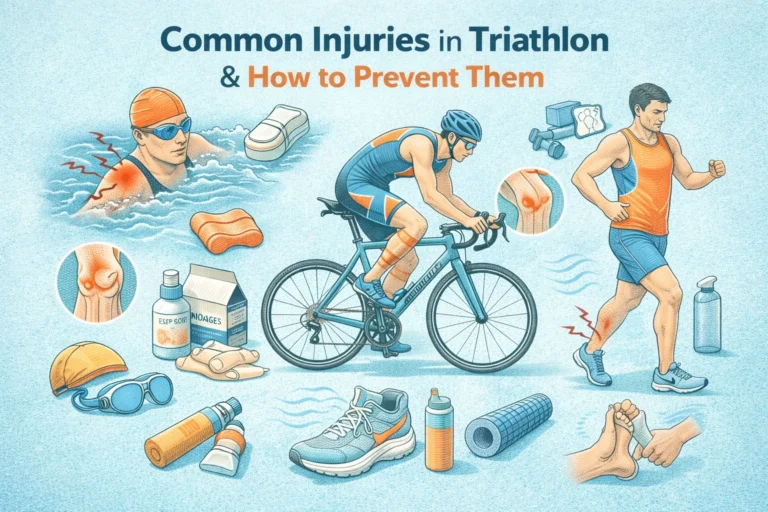
Triathlon training asks a lot from your body. This article covers triathlonhealth common injuries, why they happen, and what you can do to lower the risk. I write as a triathlon journalist with years of experience following pros and coaching age-group athletes. My aim is simple: give clear, practical steps you can apply to stay healthy and train smarter.
You will find clear descriptions of common problems in the swim, bike, and run, plus easy prevention methods you can use right away. I will include strength moves, warm-up routines, and signs that mean you should see a clinician. Read on for a full guide that keeps the language plain and the advice realistic.
This is for every triathlete, from first-timers to veterans who want to train consistent miles without setbacks. I will spell out simple habits and training choices that reduce injury time, and help you return to training faster when problems do occur.
triathlonhealth common injuries: Overview
Triathletes face injuries that come from three different sports plus the transitions between them. This mix makes some injuries more likely than in single-sport athletes. Overuse, poor technique, and sudden spikes in training load are the usual causes.
Some injuries are acute, such as a crash on the bike or a slip in the pool. Other injuries develop slowly over weeks or months. When an injury starts, pain often appears where one sport stresses the body most, like the shoulders for swimmers or the knees for runners.
Understanding the patterns of triathlon injuries lets you match prevention steps to the real risks you face. The goal is to reduce time lost to injury while keeping progress steady. Below I break down the main injury types and give practical prevention strategies for each.
Keep in mind that what works best will depend on your history, training age, and goals. Use these sections to build a routine that fits your calendar and your body.
Swimming-related injuries
Swim training puts repeated stress on the shoulders, neck, and upper back. The most common swim problem is shoulder pain from too much volume or poor stroke mechanics. Swimmers who push high yardage without recovery often see tendon irritation in the rotator cuff.
Another swim issue is neck strain from poor breathing or head position. Swimmers who lift the head too much or breathe unevenly create extra tension in the neck and upper traps. That can cause pain that carries over into bike and run sessions.
Shoulder tendonitis, labral irritation, and impingement are common swim diagnoses. Many of these respond well to targeted strengthening, technique corrections, and sensible volume progressions. Fixing stroke faults and adding rotator cuff work can make a big difference.
Bike-related injuries
Bike injuries usually involve the lower back, hips, knees, and neck. Poor bike fit, weak core muscles, and long saddle time without variation lead to pain. Many cyclists tolerate short rides fine but develop symptoms when volume ramps up quickly.
Knee pain is a frequent complaint. It often stems from saddle height, cleat position, or cadence that does not match the rider’s strength. Both underuse and overuse can trigger knee problems, so balance is key.
Lower back pain on the bike may come from a weak core, an aggressive aero position, or a combination of both. Improving hip mobility, sitting posture, and core endurance can reduce back strain and improve comfort on long rides.
Run-related injuries
Running places intense, repeated loads on the lower limb. The list of common run injuries includes plantar fasciitis, Achilles tendon problems, iliotibial band syndrome, shin splints, and stress fractures. These often appear when run load increases too fast or when footwear and surface are not suited to the athlete.
Many run injuries are tied to weak or poorly coordinated muscles in the hips and feet. Weak glutes can change knee tracking, while weak intrinsic foot muscles can alter foot mechanics. The result is higher stress on tendons and bones.
Fatigue plays a large role in running injuries. When form breaks down late in a workout or race, small loading mistakes repeat and build into a painful problem. Managing fatigue and training load helps limit these risks.
Overuse and mixed-mode injuries
Triathletes often face injuries that result from the combination of sports. Overuse injuries affect soft tissues and bones when recovery does not match workload. Examples include stress reactions in the tibia, reactive tendons, and chronic low back pain.
Transition training can expose weak links. For example, if cycling sessions are heavy without enough run-specific work, the legs may not adapt to the impact of running. That mismatch often leads to trouble when training mixes intensities rapidly.
Addressing overuse requires attention to load, sleep, nutrition, and recovery days. Small changes in training plan and simple strength work can prevent many of these common triathlon problems.
Prevention strategies

Preventing triathlon injuries is about three things: sensible training, strength and mobility, and good equipment and fit. Each area reduces stress on the tissues most likely to fail under repeated load. Combining these strategies gives the best protection.
Below I outline key prevention areas and share practical steps you can use immediately. Every section includes simple exercises and checklists you can add to your weekly routine. These habits protect your body and help you train more consistently.
Implement these ideas in small steps. Making one change at a time is easier to track and less likely to disrupt your training. Start with warm-ups, add two strength sessions per week, and review bike fit to see big gains in comfort and durability.
Consistency beats intensity when the goal is injury prevention. Regular, manageable loads plus recovery will keep you on the start line more often than short bursts of intense training that end in setbacks.
Warm-up, mobility, and prehab
A smart warm-up prepares joints, ramps blood flow, and primes the nervous system for effort. It should be specific to the session. For swims, include shoulder mobility and light band work. For bikes, add hip openers and short accelerations. For runs, do leg swings and quick drills that simulate running rhythm.
Mobility work protects the joints that get repeated stress. Tight hips force compensations at the back and knees. Tight calves increase strain on the Achilles and plantar fascia. Spending a few minutes on mobility each day pays off in lower injury risk.
Below is a short list of mobility and prehab moves to use before or after sessions. Use them regularly, not just when pain appears.
Try these mobility moves:
- Thoracic rotations and cat-cow for upper back mobility.
- Hip flexor stretches and glute activation drills for hip range.
- Calf stretching and ankle circles to preserve ankle motion.
- Band pull-aparts and external rotation for rotator cuff health.
- Short single-leg balance holds to improve knee stability.
Strength training for durability
Strength work is a major defense against many triathlon injuries. It builds resilience in tendons and muscles and improves movement control. For triathletes, prioritize the posterior chain, core, and single-leg strength.
Keep sessions simple and focused. Two full-body strength sessions per week, each 20 to 40 minutes, are enough for most athletes. The goal is control, not maximum load. Use exercises that translate to sport movements, such as single-leg deadlifts and step-ups.
Below is a practical strength list you can cycle through. Do 2 to 4 sets of 6 to 12 reps, with a focus on clean technique and controlled tempo.
Recommended strength exercises:
- Single-leg Romanian deadlifts to build hamstring and glute control.
- Step-ups or split squats for knee and hip stability.
- Glute bridges and hip thrusts to strengthen the posterior chain.
- Planks, side planks, and dead bugs for core endurance.
- Band-resisted lateral walks for hip abductor strength.
Training load and recovery management
One of the most common causes of triathlon injury is training spikes. Sudden jumps in volume or intensity stress tissues that have not adapted yet. A steady, structured plan reduces this risk dramatically.
Use simple rules to control load. Increase volume by no more than 10 percent per week as a general guide. Schedule easy weeks every three to four weeks to allow recovery and adaptation. Track how you feel and adjust based on fatigue rather than strictly on planned numbers.
Recovery matters as much as the sessions. Sleep, nutrition, and adequate rest days are part of injury prevention. Treat recovery as a training block that supports the hard work you put in on key sessions.
Technique, bike fit, and equipment
Technique matters across all three sports. Small form faults repeated thousands of times lead to big problems. Working with a coach or a clinician to correct recurring faults will reduce injury risk and improve speed.
Bike fit is a common fix for many problems. A poor position changes force distribution and creates hotspots of pain. Check saddle height, reach, and cleat alignment. Even minor changes can remove knee pain and lower back strain.
Equipment choices also matter. Shoes with proper support for your foot type, a saddle that fits your sit bones, and a wetsuit that does not restrict shoulder motion can help prevent overuse problems. Replace worn running shoes before they stop providing support.
Before lists about bike fit or gear, remember that small adjustments can have large benefits. Use the checklist below to review your bike setup and shoe choices.
Bike and gear checklist:
- Saddle height and fore-aft position set for a slight knee bend at bottom of pedal stroke.
- Cleat position centered under the ball of the foot, with slight fore-aft tweaks for comfort.
- Handlebar reach that allows a safe neck angle and relaxed shoulders.
- Running shoes matched to pronation and training surface, rotated every 300 to 500 miles.
- Wetsuit fit that allows full shoulder rotation without excessive compression.
Treating injuries and returning to training
When an injury does occur, the right early steps can shorten recovery and limit long-term effects. Start by assessing severity, managing pain, and preserving movement. Avoid total rest unless a clinician recommends it.
Use a graded approach to return to training. Keep the initial aim on pain-free movement, then slowly reintroduce load with a plan tied to specific milestones, such as pain levels during and after sessions. This gradual return reduces the risk of re-injury.
Below I outline immediate care steps and a staged rehab approach to regain fitness safely. These steps assume the injury is not a surgical emergency or a fracture. If you suspect a major injury, seek professional care quickly.
Immediate care and acute management
Right after an injury, control swelling and pain while keeping some movement. For soft tissue injuries, short periods of relative rest combined with gentle mobility work usually help. Avoid aggressive stretching into sharp pain.
Ice, compression, and elevation can reduce swelling in the first 48 to 72 hours for many injuries. Medication for pain control may be useful under advice from a clinician. The goal is comfort enough to move without forcing tissue into painful positions.
If pain persists or worsens despite conservative measures, seek an assessment. Early imaging or clinical review can catch problems that need targeted treatment, such as a tendon tear or a stress fracture.
Rehab planning and progressive loading
Rehabilitation should focus on restoring strength, range, and function specific to your sport demands. Work with a physiotherapist or a qualified coach to design a staged plan. The plan should include clear markers for progression, such as increased walk time, higher loads, or faster paces without pain.
Progression follows three simple principles: do not increase load too fast, monitor pain during and after activity, and return to sport-specific drills only after base strength and mobility are restored. This staged approach protects healing tissues while rebuilding capacity.
Below is a basic staged return to training checklist you can discuss with your clinician or coach. Apply caution and adapt to your personal recovery pace.
Return to training stages:
- Stage 1: Pain-free basic movements and low-load strength work.
- Stage 2: Increase strength and add low-impact cardio, such as easy cycling or swimming.
- Stage 3: Progress intensity with run-walk sessions or controlled tempo work on the bike.
- Stage 4: Full sessions and race-specific efforts once strength and sport drills are pain-free.
When to see a professional
Consult a sports clinician if pain limits daily activity, if numbness or tingling occurs, or if symptoms persist beyond a week with no clear improvement. Certain conditions, like suspected stress fractures or nerve compression, need early assessment to avoid worsening damage.
A physiotherapist, sports physician, or orthopedic clinician can provide diagnosis, imaging if needed, and a rehab plan. They can also advise on return-to-sport criteria tailored to your event and goals. Getting expert input can reduce guesswork and speed recovery.
Use clinical advice to adjust your training load and prevent recurrence. A short period of guided rehab often prevents months of disrupted training later.
Training tips to reduce risk
Small training decisions add up over a season. The most injury-resistant athletes follow a few simple habits: plan gradual load increases, include strength and mobility, and listen to how their body responds. Making these habits routine prevents most common setbacks.
Vary intensities and include low-impact cross-training when needed. On high-volume weeks, swap one run for a swim or an easy bike to reduce impact while retaining aerobic work. This strategy keeps fitness high without overloading bones and tendons.
Keep a training log that notes perceived effort and pain. This makes it easier to spot trends that precede injury. If a session leaves you unusually sore or you see lingering stiffness, reduce load the next few days rather than pushing through.
The big picture
Triathlon training is a long-term game. Protecting your body through smart training, proper strength, and correct equipment will pay off with fewer lost weeks and better race performances. Most triathlon injuries are preventable with consistent, small steps.
Focus on habits you can maintain over months and years, not quick fixes. Regular warm-up routines, twice-weekly strength sessions, and a sensible plan for load progression add up to durable performance. These habits keep you training and racing with confidence.
If injuries happen, respond with calm assessment, sensible acute care, and a staged progression back to full training. Use the checklists and routines above to shape your plan. Protecting your body keeps the sport enjoyable and sustainable over the long run.
triathlonhealth common injuries are a real challenge, but they do not need to be a career limiter. With the right approach, you can reduce risk and stay on track for your next race.
Author note: The advice here is general. If you have a specific pain pattern, consult a clinician for a tailored plan. A short professional consult often saves weeks of downtime and gets you back to training faster.