
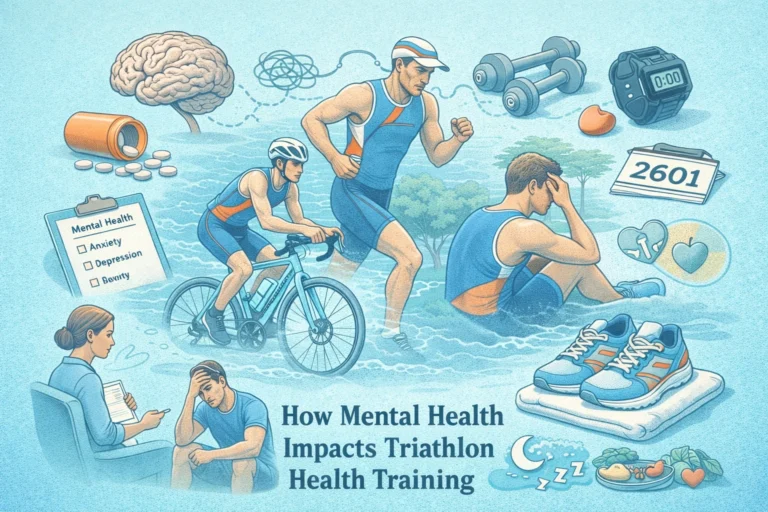
Mental health triathlonhealth matters to every athlete who trains for swim, bike, and run. As a triathlon journalist and coach, I have seen how mood, stress, and mental energy shape workouts, races, and long-term progress. This article explains how mental health affects training, offers practical ways to protect it, and shows when to get professional help.
Why mental health triathlonhealth matters for training
Mental health affects daily choices that shape training. Simple things like getting out of bed, making time for a long ride, or saying no to a risky workout often depend on mood and motivation. When mental health suffers, athletes miss sessions, rush training, or push too hard without proper recovery.
Physical fitness is visible on a race day. Mental fitness is usually invisible, but it shows up in consistency and response to setbacks. A focused athlete can follow a plan for months. One who struggles with anxiety or depression can lose months of training with no change in physical ability. That difference matters for both age-groupers and pros.
Triathlon training is complex and time consuming. Athletes juggle work, family, travel, and social life. Mental health triathlonhealth is the factor that helps an athlete manage those demands. Good mental health supports planning, sleep, nutrition, and recovery. Poor mental health can make all those elements harder.
Finally, mental health affects how athletes respond to pain and fatigue. Pain thresholds, tolerance for discomfort, and the ability to accept a slower day are all connected to mental state. Managing these responses influences how safely and effectively an athlete trains.
How mental health triathlonhealth affects specific training areas
Mental health shapes parts of training that matter most for performance. It changes how athletes approach long sessions, interval work, and race simulations. When mental health is strong, sessions are productive. When it is weak, the same session may become risky or pointless.
Here are the main training areas mental health affects, with short explanations for each.
The following list breaks down those areas and what to watch for before, during, and after training.
- Consistency: Mental health influences how reliably athletes complete planned workouts. Depression, low motivation, and burnout reduce consistency, which slows progress.
- Intensity control: Anxiety and stress can push athletes to overdo high intensity work or, conversely, to avoid it. Both outcomes undermine periodization and recovery.
- Recovery quality: Sleep, appetite, and stress hormones are tied to mental health. Poor mental health reduces restorative sleep and increases injury risk.
- Decision making: Choices about race tactics, equipment, and tapering depend on clear thinking. Cognitive load and stress can impair judgment during high pressure moments.
- Motivation and goal setting: Mental health affects short-term drive and long-term planning. If mental energy is low, goals can feel unreachable and training plans get shelved.
Each of these factors interacts. If motivation drops, consistency drops. If consistency drops, perceived fitness drops, which can further harm mental health. That feedback loop can be hard to break without a clear plan.
Common mental health challenges triathletes face
Triathletes experience a mix of pressures that raise mental health risks. Training time, performance expectations, body image concerns, and social comparison are common triggers. Awareness of these challenges helps athletes and coaches plan better support.
Here are the most frequent mental health issues I see among triathletes at all levels.
Read the list below to recognize signs and patterns in yourself or teammates. Early recognition makes a big difference in how quickly you can act.
- Burnout: Long periods of hard training with little mental rest lead to exhaustion and loss of enjoyment. Burnout can make athletes quit or drop training suddenly.
- Anxiety: Race anxiety and general anxiety show up as poor sleep, racing heart, or obsessive worry about workouts and nutrition.
- Depression: Persistent low mood, lack of interest in activities, and reduced energy can undermine training and life outside sport.
- Disordered eating: Pressure to hit a weight or percent body fat can cause unhealthy eating patterns, which hurts performance and recovery.
- Perfectionism: High self-demand can lead to overtraining, fear of failure, and cycles of intense training followed by mental collapse.
Triathletes often face more than one of these problems at the same time. For example, perfectionism may lead to burnout, which then increases anxiety. When issues overlap, recovery plans must address each part.
Protecting mental health triathlonhealth during training

Good mental health practices are as concrete as a training block. They include daily habits, planning rules, and specific recovery techniques. These practices help sustain performance and reduce the risk of long breaks from training.
Start with clear, simple routines. Regular wake and sleep times, consistent meals, and fixed training windows reduce decision fatigue. Routines free up mental energy for focused workouts and better recovery.
Use the following checklist to build a basic mental health routine around training. Each item can be adjusted for your schedule and goals.
- Sleep hygiene: Aim for consistent sleep times, avoid blue light before bed, and prioritize 7 to 9 hours of sleep most nights.
- Structured rest days: Plan at least one full rest day per week and active recovery during heavy blocks to reduce burnout risk.
- Realistic goal setting: Break big goals into monthly and weekly milestones, and celebrate small wins to maintain motivation.
- Social support: Keep training social when possible. Group swims, bike rides, or running clubs offer motivation and reduce isolation.
- Mind skills: Practice simple breathing, imagery, or short mindfulness sessions to manage stress and race nerves.
Coaches and athletes should create a plan that includes mental training as a scheduled part of the week. Treat these sessions like intervals or strength work. Consistent, small practice builds mental resilience over time.
Coaching and team approaches for mental health triathlonhealth
Coaches play a key role in protecting athlete mental health. Good coaches look beyond training loads to see how athletes cope with pressure and setbacks. They design programs that balance challenge with recovery and that adjust to life changes.
Teams and clubs can create cultures that normalize mental health care. Open conversations, access to resources, and simple check-ins help athletes feel safe asking for help. That environment reduces stigma and speeds recovery.
Below are practical coaching steps that support mental health in a team or individual setting.
- Regular check-ins: Short weekly chats about stress, sleep, and mood help spot problems early. Use simple scales or questions to make this a habit.
- Flexible plans: Build contingency days and alternate sessions so athletes can swap workouts without guilt when life gets busy.
- Education: Teach basics of sleep, nutrition, and stress management to athletes and partners who support them.
- Referral pathways: Have a clear plan to refer athletes to counselors, sports psychologists, or medical professionals when needed.
- Recovery-first phases: Use planned low-intensity blocks after major races or training cycles to restore mental energy.
Coaches who prioritize mental health often see better long-term progress. Athletes perform more consistently and are less likely to suffer long-term setbacks from burnout or injury.
When to seek professional help for mental health triathlonhealth
Knowing when to get outside help is vital. Some issues respond well to changes in routine or coaching. Others need professional care from a counselor, therapist, or medical professional. Do not delay if problems persist or get worse.
Think of professional help as part of a complete training toolbox. Just like you see a physiotherapist for recurring pain, you should see a mental health professional for persistent mood or anxiety problems. Early care often shortens recovery and improves training outcomes.
Here are common signs that professional support is needed. If you notice several of these for more than two weeks, reach out to a professional.
- Persistent feelings of sadness or hopelessness that do not improve with rest or time off.
- Constant anxiety that interferes with sleep, appetite, or daily function.
- Loss of interest in activities you used to enjoy, including training and social life.
- Unexplained changes in weight or persistent disordered eating behaviors.
- Thoughts of self-harm or not wanting to be alive, or extreme risk-taking behavior during training.
If any of the signs feel urgent or dangerous, seek immediate medical attention or emergency services. For non-urgent concerns, ask a coach, primary care provider, or trusted teammate for help finding a qualified mental health professional.
Training adjustments to support mental health triathlonhealth
Small training changes can support recovery without derailing fitness. Modify volume, intensity, or frequency to reduce mental strain. The goal is to maintain a sense of progress while protecting mental energy.
When adjusting training, communicate goals clearly. Replace guilt with a plan. That mental shift helps athletes accept changes and stay engaged with the process.
Here are practical training adjustments that help when mental health is fragile.
- Reduce volume, keep purpose: Shorten long workouts but keep a clear training stimulus so the session still feels useful.
- Swap hard sessions for quality without stress: Replace a long tempo session with shorter, focused intervals to keep intensity but reduce time commitment.
- Add skill work: Use low-intensity sessions for technical drills, social rides, or skills that boost confidence without high stress.
- Use micro-goals: Set daily or weekly targets that are easy to hit. Micro-goals restore a sense of achievement and keep motivation steady.
- Plan deliberate recovery weeks: Schedule recovery blocks with lighter training and intentional mental rest, not just physical rest.
These adjustments preserve the athlete identity. Maintaining connection to training matters for both performance and mental health. It keeps athletes feeling like themselves while they recover.
Key Takeaways
mental health triathlonhealth is as crucial as physical fitness for long-term progress. It affects daily training choices, consistency, recovery, and how athletes respond to pressure. Paying attention to mental health helps athletes train smarter and race better.
Practical steps include sleep hygiene, scheduled recovery, social support, and routine mental skills practice. Coaches should use regular check-ins, flexible plans, and clear referral paths to support athletes. Small changes can have big effects on both mood and performance.
When signs like persistent sadness, anxiety, or disordered eating appear, seek professional support. Early action shortens recovery and protects training. Treat mental health care like any other part of a high-performance plan.
As a triathlon journalist and coach, I encourage athletes to make mental health triathlonhealth part of their weekly routine. Protecting your mental energy will keep you consistent, reduce injury risk, and help you enjoy the sport for years to come.