
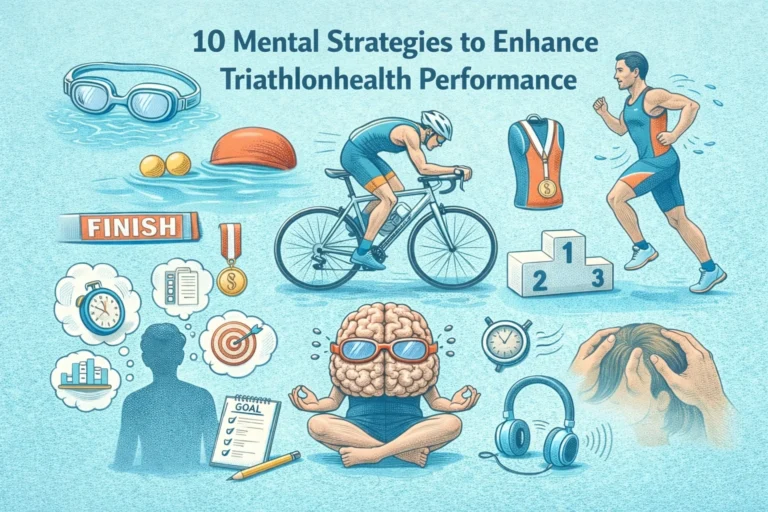
Racing a triathlon is as much a mental task as it is physical. You can put in hours on the bike and in the pool, but mental edge often decides who executes and who struggles. This article focuses on clear, practical triathlonhealth performance strategies you can use right away to sharpen focus, reduce race anxiety, and perform more consistently.
Read on for ten mental strategies that work for beginners and experienced athletes. Each section gives simple explanations, reasons these strategies matter, and concrete steps you can apply in training and on race day. Expect exercises you can practice in short sessions and habits that pay off over seasons.
1. Goal Setting and Process Goals for triathlonhealth performance strategies
Setting goals helps your brain organize effort. Many athletes fixate on finish times. That is valid, but process goals control what you do day to day. A focus on process reduces pressure and improves consistency.
Process goals are tightly tied to action. They might name the number of intervals, the pacing for a ride, or nutrition checkpoints during a long session. These goals create reliable cues your brain can follow under fatigue.
Below are specific process goals to try in training and racing. These will make your larger race goals feel achievable and keep your attention where it helps most.
Use these process goal examples to shape your sessions and race plan.
- Swim: 5 x 200 at steady pace with 20 seconds rest, focus on cadence and sighting each rep.
- Bike: Hold target power for 3 blocks of 20 minutes, practice fueling at minute 10 and 30 of each block.
- Run: Break a 10K into 2K segments, check form and breathing at each segment marker.
- Nutrition: Take a gel every 30 to 40 minutes during rides over 90 minutes.
After you try these, write a short note about what worked. Adjust the next session based on a clear, simple observation.
2. Build a Pre-Race Routine
A consistent pre-race routine calms nerves and frees mental energy for performance. Routines package familiar actions, which the brain interprets as safe and predictable. That lowers stress hormones and improves focus.
Your routine should include movement, mental checks, and a nutrition plan. Practice it in training. Doing it only on race day increases the chance of forgetting steps and rising anxiety.
Below are elements to include. Think of each item as a checkbox in your routine, not a long to-do list. Keep it compact so you can repeat it even under pressure.
- Wake-up timing and breakfast type, practiced at least three times before a race.
- Warm-up sequence for swim, bike, and run, with specific timing for each movement.
- Mental cue: a short phrase or image you repeat to settle focus, practiced during warm-ups.
- Gear checklist: one quick scan pattern to confirm key items like race belt, nutrition, and bike tires.
Rehearse this routine in smaller events or in high-pressure tempo sessions. The more you repeat it, the more automatic and calming it becomes.
3. Use Positive Self-Talk and Cognitive Shifts

The phrases you use in your head shape how you feel and act. Negative or fatalistic thinking uses up attention and drains energy. Positive self-talk builds confidence and narrows focus to useful tasks.
Self-talk should be specific and actionable. Instead of saying, I am tired, try, Strong form for the next 60 seconds. The second phrase gives the brain a clear action and short time frame to manage, which reduces overwhelm.
Here are practical prompts you can practice. Use them in training when fatigue begins. Over time they will appear automatically in races and during hard intervals.
- Process prompt: “Next 2 minutes, strong cadence.”
- Form prompt: “Elbows in, hip forward.”
- Reassurance prompt: “I prepared for this, one rep at a time.”
- Focus prompt: “Check breath, check pace.”
Write two or three prompts on a small card and put it in your transition bag. Review them before high-intensity work and before race starts.
4. Manage Race Nerves with Simple Breathing and Anchors
Nerves are normal, but unmanaged nerves reduce performance. Breathing techniques lower heart rate and improve clarity. Anchors are short sensory cues that bring attention back to the present moment.
Start by practicing a few breathing patterns in calm sessions. Match them to effort levels. When you face race stress, a practiced breath pattern is a fast way to regain control. Anchors can be a tactile cue or a small phrase that you touch or say to center yourself.
Below are breathing exercises and anchor ideas to try. Pick one or two so you can learn them well before race day.
- Box breathing: inhale 4, hold 4, exhale 4, hold 4. Use this before swim starts to calm heart rate.
- Counted exhale: inhale 3, exhale 5 to lower sympathetic drive before key efforts.
- Anchor touch: press two fingers to thumb and say your cue word, use it during transitions to reset focus.
- Visual anchor: pick a fixed point on the shore or sky to return attention during tense moments.
Practice these in training and short pre-race situations. The exercises become fast tools that you can deploy without thinking.
5. Improve Focus with Mindfulness Training for triathlonhealth performance strategies
Mindfulness trains attention and reduces internal chatter. It does not remove emotion, but it teaches you to notice feelings without reacting to them. That creates steadiness under pressure.
You do not need long meditation sessions. Short practices of five to ten minutes, done regularly, give measurable benefits. The goal is to sharpen attention and learn to return to the present when the mind wanders.
Here are simple mindfulness drills that fit an athlete schedule. Treat them like skill practice, not relaxation alone. The point is to build attention strength for long efforts and chaotic race environments.
- Breath focus: count breaths up to ten, restart when distracted, five minutes daily.
- Body scan: notice tension from feet to head, release each area, ten minutes after a hard session.
- Open awareness: sit outside and note three sounds, three smells, three sensations, three times: increases situational awareness.
- Focused practice on the bike: count pedal strokes in blocks of 20 to train selective attention.
Add these sessions into recovery days. Over weeks you will notice less rumination and better focus during long efforts.
6. Break the Race into Manageable Segments
Large goals can overwhelm. Breaking a race into smaller pieces makes each moment manageable. Your brain can handle small tasks repeatedly; it struggles with open-ended pressure.
Segment planning also helps with pacing and decision points. You can assign different strategies to each segment, such as fueling in the first bike block and pacing on the second, then focusing on form for the run opening.
Below are ways to segment a race. Use distance, landmarks, or time blocks that match your training. The exact method is less important than the habit of short focus windows.
- Swim: break into sighting sets or stroke-count blocks, focus on technique for each block.
- Bike: use 20-minute blocks with fueling and mental checks at the end of each block.
- Run: divide into short repeats, for example, 5K as five 1K tasks with form checks.
- Transitions: treat them as mini-races with a simple three-step checklist each time.
Practice race segmentation in long bricks. The brain learns to move attention from one small task to the next automatically.
7. Build Resilience with Controlled Exposure to Stress
Resilience grows when you face controlled stress that slightly exceeds your comfort zone. Training should include sessions that simulate race discomfort in a safe way. This trains the mind to tolerate and perform under strain.
Structured exposure means planning hard intervals, heat sessions, or nutrition challenges in training. These sessions teach you how your body and brain respond, and they let you test coping strategies before race day.
Below are examples of controlled stress sessions and guidance for using them. Use them with a gradual approach so you do not overreach and cause burnout.
- Heat acclimation: short rides in warm conditions, with hydration checks and cooling strategies practiced.
- Night or early morning sessions: simulate race timing to build tolerance for early starts.
- Nutrition trials: practice new foods or supplements in training blocks, not for the first time on race day.
- High-intensity blocks: repeat hard intervals at race pace to learn how breathing, thought patterns, and pacing interact.
Keep notes after each session on what worked and how your head reacted. This data helps refine your plan and increases confidence.
8. Sleep, Recovery, and Mental Habits for triathlonhealth performance strategies
Good recovery is a mental strategy as much as a physical one. Poor sleep and chronic stress reduce motivation and decision-making. Sleep routines and recovery habits protect your mental edge on race day.
Create a simple sleep routine and stick to it. Avoid heavy screens before bed, keep caffeine earlier in the day, and use consistent timing. These actions improve sleep quality and cognitive function during key sessions.
Here are practical sleep and recovery habits to adopt. Small changes compound and improve focus, mood, and decision-making over weeks.
- Bedtime routine: dim lights and do a quiet activity 30 minutes before bed to cue sleep.
- Consistent wake time: keeps circadian rhythm steady and improves morning readiness.
- Active recovery: light swims or walks the day after hard sessions to speed mental reset.
- Nap strategy: short naps of 20 to 30 minutes after long training days to restore alertness.
Track your sleep for a few weeks. If mood or focus suffer, adjust routines and rest more in the days leading up to major events.
9. Fueling and Hydration Cues to Support Mental Performance
Fuel and hydration affect attention, decision-making, and mood. Low blood sugar leads to poor choices and negative self-talk. Reliable fueling becomes a mental tool because it reduces surprise and keeps performance predictable.
Create simple cues that remind you to take calories and fluids. Practice these cues until they become automatic. On race day, they help you avoid energy gaps and keep your brain working at its best.
Below are fueling cues and strategies. Use amounts you have practiced and adjust by sweat rate, weather, and race demands.
- Time-based cues: eat a gel every 30 to 45 minutes during long efforts as practiced in training.
- Location-based cues: take a sip or a gel at every aid station or every second lap marker.
- Symptom cues: if you feel shaky or foggy, use a practiced quick snack and monitor recovery.
- Pre-race checks: confirm your fuel in transition with a short list so you do not forget essentials.
Fuel cues reduce mental load. They move energy management from a decision into a habit you perform automatically.
10. Maintain Long-Term Motivation and Consistency
Long-term motivation keeps training steady across seasons. Motivation often fades when immediate results slow. Building a clear long-term plan with short wins keeps attention and enthusiasm high.
Set season objectives with monthly and weekly milestones. Celebrate small wins and review your plan regularly. That keeps training purposeful and reduces the risk of random, ineffective effort.
Below are practical steps to maintain motivation and consistency. These methods help you stay on track without burning out or chasing quick fixes.
- Monthly goals: pick one specific skill or fitness target each month and measure progress.
- Weekly wins: list three things you did well each week, even small details like successful nutrition or a focused session.
- Training blocks: use focused blocks of work and recovery to prevent fatigue and keep progress steady.
- Social accountability: train with a group or coach regularly to stay committed and get feedback.
Track progress with a simple log. When motivation dips, review recent wins and remember why you started. Small steps add up to big improvements.
Let’s Recap
Mental training is not separate from physical training. The strategies above are practical methods you can add to training time. They build focus, reduce anxiety, and create reliable race execution. Use process goals, routines, and small habits to keep your brain working for you.
Practice these tools often. Short, consistent practice produces more mental fitness than rare, long sessions. The mental gains show up in better pacing, cleaner transitions, and steadier performance under pressure.
Start with one or two strategies that fit your current goals. Track how they change your training and racing. Over time, these triathlonhealth performance strategies will feel natural and give you an important edge on race day.
Good luck on your next session and race. Be patient, be consistent, and keep practicing the mental skills that make your training work on the day that matters most.