
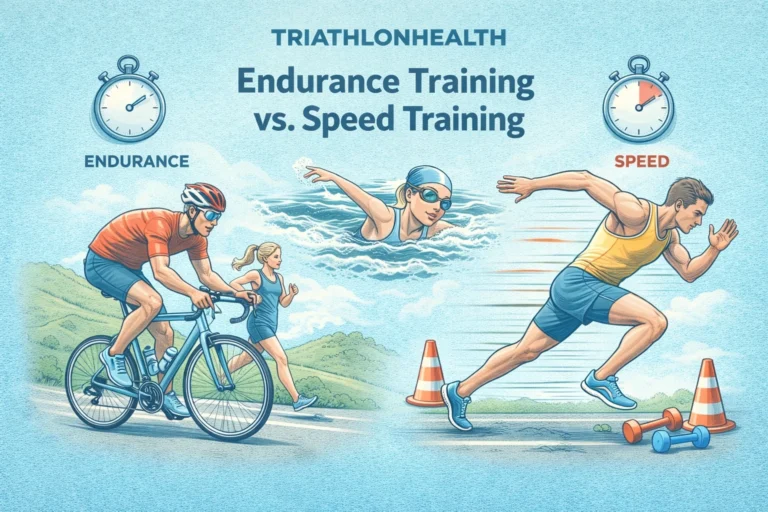
Choosing between endurance and speed training can feel hard. This article on endurance vs speed training triathlonhealth explains the differences, when to focus on each, sample workouts, and what gear to buy. I will guide you step by step in plain, clear language so you can make smart training and purchase choices for your triathlon goals.
endurance vs speed training triathlonhealth
Endurance and speed training both matter in triathlon. They target different systems in the body and need different sessions, recovery, and gear. On race day, the right balance can mean a faster finish time and less fatigue.
Many athletes ask which one matters more. The simple answer is that both matter, but one will take priority depending on your race distance and your current strengths. For long course triathletes, endurance tends to dominate. For short course and sprint racers, speed and power are more important.
In this section I will give a high level view of each approach. That will help you pick the best path for training, and decide which products to invest in. We will also cover how to blend both types into a season and what workouts to use.
Knowing the difference helps when you shop for gear too. If you choose endurance training, you might favor comfort and battery life in a watch. If you choose speed work, you may pick items that track power and deliver fast feedback. Keep reading to match training to tools and plans.
Endurance training
Endurance training builds the body’s ability to work for long periods. It increases oxygen use, strengthens slow twitch muscle fibers, and improves fat burning. These changes let you sustain steady power or pace for miles.
Typical endurance sessions are long, steady efforts at a comfortable level. They might include long swims, steady bike hours, or extended easy runs. These sessions teach your body to be efficient and to tolerate time on the move.
Endurance also means doing many hours per week without going too hard. That helps your tendons, ligaments, and aerobic pathways adapt. It also increases training volume safely when you progress gradually.
For gear, endurance athletes often value comfort, stability, and battery life. A stable bike, padded shoes for long runs, and a watch with long battery life are typical buys. Those choices support long sessions and recovery tracking.
Speed training
Speed training develops fast muscle fibers, neuromuscular control, and the ability to produce high power for short times. It is key for sprint finishes and short races where intensity decides outcomes.
Speed sessions are short and sharp. Examples are intervals, sprints, tempo repeats, and hill work. These sessions stress the body in a different way than endurance work. They require more recovery between efforts.
Speed work improves cadence, turnover, and top-end effort. It also raises lactate tolerance and improves how you handle surges during racing. Done right, speed training raises your race pace without adding too much volume.
When you do speed sessions you will want precise measurement tools. A good GPS watch, a power meter for the bike, and light, responsive shoes matter for these workouts. That helps you track progress and hit targets session to session.
Physiology and energy systems
Understanding the physiology helps you design better training. Endurance and speed training tap different energy systems. Endurance relies more on aerobic pathways and fat oxidation. Speed uses anaerobic systems and fast glycolysis.
Aerobic work increases mitochondria, capillary density, and the heart’s stroke volume. Over time, your body becomes more efficient at using oxygen. That means you can hold a faster pace with less effort on long efforts.
Anaerobic and neuromuscular work improves power and sprint ability. It increases your ability to tolerate lactate and to recruit fast-twitch muscle fibers. That gives you the ability to surge, sprint, and maintain high speeds briefly.
Both systems influence each other. A strong aerobic base helps you recover from hard speed sessions. The right mix makes you both durable and fast. The key is timing intensity and recovery so you do not overtrain.
When to prioritize each
Choice depends on race distance, current fitness, and time available. If you train for a half or full Ironman, build a solid endurance base first. If your goal is a sprint or Olympic distance race, prioritize speed and power sooner.
You should also pick emphasis based on weakness. If you can hold pace but struggle with surges or finishing speed, increase speed work. If you fade late in long races, shift toward more endurance volume and pacing practice.
Time of year matters. Many triathletes use off-season months for base endurance and early season months to add speed. Closer to target races, reduce volume and increase race-pace intensity to sharpen fitness.
Personal factors matter too. Age, injury history, and work life shape what you can do. Older athletes may find they need more recovery. Busy athletes might get better gains from focused, high-quality speed sessions instead of many long hours.
How to combine both
Combining endurance and speed is about structure. Use phases that focus on one quality while keeping the other. A typical season moves from base endurance, to strength and speed, to race-specific sharpening, and then recovery.
Weekly balance also works. You can do one or two hard speed sessions per week, and place easy endurance sessions on other days. That keeps fitness broad without overwhelming recovery capacity. The distribution depends on your goals and training age.
Recovery and nutrition are essential when combining both. Speed sessions need longer recovery blocks. Make sure easy days are truly easy. Fuel well for hard sessions and manage sleep to get real gains from both types of training.
Use data to guide balance. Heart rate, power, and perceived effort help you track training load. If fatigue climbs, reduce intensity or volume. Small changes to load are safer and more effective than big swings.
Periodization example
Here is a simple periodization plan you can adapt. I present it as a clear example you can tweak for a sprint, Olympic, or long course race. This model keeps both endurance and speed in view.
Phase 1 is base endurance, four to eight weeks long. Emphasize steady aerobic sessions, skill work, and light strength training. Keep intensity low and volume rising slowly to build a solid foundation.
Phase 2 shifts to strength and speed, three to six weeks. Add hill repeats, tempo intervals, and threshold work. Keep one or two long endurance sessions each week so the base does not erode. Strength sessions in the gym should support power without heavy fatigue.
Phase 3 is race-specific sharpening, two to four weeks. Move intensity to race pace and shorter, sharper efforts. Taper volume in the final week to allow fresh legs on race day. After the race, plan an active recovery block before the next cycle.
Sample workouts and programs

Below are clear sample workouts you can use for both endurance and speed. I include swim, bike, and run examples and a short weekly plan you can adapt. These are practical choices for athletes who want to buy gear and find programs that match their goals.
Start with swim workouts for endurance and speed. For endurance, do continuous 30 to 45 minute swims with steady pace. For speed, add sets of 8 to 12×50 meters at high effort with full rest between repeats.
On the bike, an endurance ride can be 2 to 4 hours at a steady aerobic pace for long course training. For speed, try interval work such as 6 to 8×4 minutes at high power with equal rest. These bike sessions help both aerobic base and the ability to hold higher race power.
For running, long slow distance runs build endurance. For speed, do track or tempo repeats, such as 10×400 meters at race pace or faster with short rest. Combine running strides and form drills on easy days.
Here is a simple weekly plan you can adapt. This plan mixes endurance and speed in a balanced way. It can fit athletes training 6 to 10 hours per week who want both durability and faster race pace.
- Monday: Easy swim and core work, 45 to 60 minutes total.
- Tuesday: Bike intervals, 60 to 90 minutes with 4 to 6 hard intervals.
- Wednesday: Easy run, 45 minutes, plus drills and strides.
- Thursday: Speed swim session and strength training, 60 minutes.
- Friday: Rest or active recovery with easy mobility work.
- Saturday: Long endurance ride or brick session, 2 to 4 hours.
- Sunday: Long run or race-pace effort, 60 to 90 minutes.
These workouts can be called best triathlonhealth workouts when you adapt them to your level. If you want more structure, look for a triathlonhealth training plan that matches your race distance and time available. A plan will give you daily details and progression so you buy the right gear and follow a proven schedule.
Gear and product choices
Gear choices can support either endurance or speed goals. The right gear helps you train smarter and race faster. I will cover watches, bikes, trainers, shoes, and swim tools with simple buying advice.
For data-driven speed work, a GPS watch with fast, accurate metrics and a cycling power meter are helpful. These tools give precise feedback on intervals so you can hit targets and track improvements over time.
For endurance training, comfort and reliability matter. A bike with a stable fit, a trainer that runs quietly for long sessions, and shoes with reliable cushioning help you log hours without excess fatigue or injury risk. Battery life in watches and headlamps for early rides also matters.
If you shop, consider where you will spend most of your time. If you want speed, invest in a light pair of racing shoes and a power meter. If you want endurance, choose a comfortable bike fit, supportive shoes, and a watch with long battery life and simple navigation.
Monitoring progress and pacing
Tracking progress prevents wasted time and bad buys. Use simple metrics like pace, heart rate, and power. These tell you if endurance work is improving steady-state fitness and if speed sessions are raising your top power and tolerance to intensity.
Regular testing helps. A 20 minute FTP test on the bike or a threshold run test tells you where to set intervals. For swimming, timed sets over 400 or 1000 meters show changes. Tests give you clear benchmarks so you know if a program or gear choice helps.
When you use tools, set realistic targets and avoid chasing small numbers. Trends over weeks and months show true improvement. Log sessions and how you feel. If measures improve while fatigue is stable, training is working.
Adjust pacing plans for race day. Use data from training to set realistic splits. Practice pacing often so your body learns how to hold target effort across swim, bike, and run without burning out. Good pacing is especially valuable in longer events.
Key Takeaways
Endurance vs speed training triathlonhealth is about goals and timing. Endurance builds the ability to last long, while speed builds the ability to go fast. Your race distance and personal strengths decide which to emphasize.
Plan your season in phases and mix weekly sessions to protect recovery. Use periodization to focus on base, then add speed and race-specific work. Track progress with simple tests and metrics so you can adjust the plan and your gear choices.
Pick gear that matches your training focus. For speed buy precise measurement tools and light, responsive gear. For endurance pick comfort, battery life, and stability. If you want a balanced approach, choose versatile gear that supports both types of training.
Finally, consider following a triathlonhealth training plan or testing the best triathlonhealth workouts to get structured guidance. A clear plan, paired with the right tools, helps you make confident purchases and consistent training progress.