
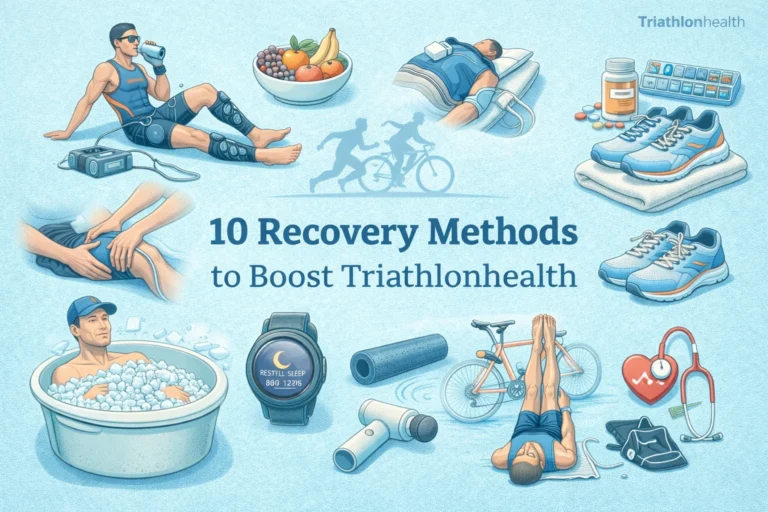
Recovery is as important as training for any triathlete. You can train hard, but if you ignore recovery, gains stall and injury risk rises. This article explains 10 triathlonhealth recovery methods you can use right away, with clear steps and realistic expectations.
10 triathlonhealth recovery methods
Recovery helps you adapt to training. These methods cover short-term fixes and long-term habits that support health and performance. Each method has a clear purpose, practical steps, and common mistakes to avoid.
We will explain each method in plain language, and give tips for triathletes at every level. Use these methods together, and track what works for you. The keyword triathlonhealth recovery methods guides the structure and keeps the focus on practical recovery for racers and age-groupers.
Below is a quick list of the 10 methods. Read the short list first to get an overview, then read the detailed sections that follow. The list names the methods and helps you decide what to try next.
Here are the methods you will get in detail:
- Active recovery
- Sleep optimization
- Nutrition and hydration
- Compression and cold therapy
- Massage and myofascial release
- Mobility and stretching
- Technique and low-impact cross-training
- Periodization and scheduled rest weeks
- Mental recovery and stress management
- Monitoring and recovery tools (HRV, tracking, wearables)
Active recovery
Active recovery means moving lightly on easy days. Instead of complete rest, you do short, low-intensity sessions that increase blood flow without adding stress. For triathletes, a 20 to 40 minute easy bike or swim works well after a hard workout.
Active recovery helps clear metabolic byproducts and reduces tightness. Keep intensity very low. Use perceived effort or heart rate zones if you track them. The goal is to feel refreshed, not fatigued.
Try short sessions within 24 hours after a key workout, and again the next day if you still feel sore. Pair active recovery with easy stretching or a short mobility routine to further help tissue recovery.
Avoid heavy intervals or long rides on active recovery days. If you are injured or extremely tired, full rest can be better. Use active recovery as a tool to maintain movement while promoting healing.
Sleep optimization
Sleep is the single most powerful recovery tool. Most triathletes need seven to nine hours of good sleep each night. Quality matters as much as quantity. Deep sleep stages are when your body repairs muscle and consolidates skill learning.
Create a consistent sleep schedule. Go to bed and wake up at similar times, even on weekends. Reduce screen use 30 to 60 minutes before bed and make your bedroom dark, cool, and quiet. Good sleep hygiene helps you fall asleep faster and improves sleep depth.
If you struggle with sleep after late workouts, shift harder sessions earlier. Consider short naps of 20 to 40 minutes the day after a very hard session. Naps can reduce fatigue without disrupting night sleep when timed correctly.
Track how you feel during the day as a check on sleep quality. If you are tired despite enough time in bed, test changes like blackout curtains, white noise, or a consistent wind-down routine to improve rest and recovery.
Nutrition and hydration
What you eat and drink drives recovery. After long or intense sessions, you must replace glycogen, provide protein for repair, and restore fluids and electrolytes. Plan recovery meals and snacks to match workout demands.
A simple guideline is to take in carbohydrate and protein within 30 to 60 minutes after hard efforts. A 3:1 or 4:1 carb to protein ratio works well for glycogen refilling and muscle repair. For example, a banana and yogurt, a sandwich, or a recovery drink fit this window.
Hydration matters for performance and recovery. Drink to replace sweat losses and include some electrolytes if you sweat heavily or train in heat. Small sips during recovery and a larger rehydration plan over several hours stabilize body systems and reduce cramping risk.
On rest days, keep food quality high. Focus on whole grains, lean proteins, healthy fats, and fruits and vegetables. Micronutrients like iron and vitamin D affect recovery, so check labs if you are chronically tired or not improving.
Compression and cold therapy
Compression garments and cold treatments are practical tools for acute recovery. Compression socks or tights can reduce swelling and improve comfort after long sessions. Cold water immersion or ice baths can reduce soreness after very intense efforts.
Compression is easy to use after long rides or runs, and many athletes find it helps travel recovery as well. Tight but comfortable compression garments worn for a few hours can speed perceived recovery and reduce fluid buildup in legs.
Cold therapy works best immediately after high-intensity or long workouts. A 10 to 15 minute cold soak can lower tissue temperature and reduce inflammation. Do not overdo it; excessive cold after strength training may blunt adaptation if used too often.
Contrast baths or alternating hot and cold can help circulation. If you have circulation issues or conditions like Raynaud’s, check with a clinician before using extreme cold. Use these methods sparingly and as part of a broader recovery plan.
Massage and myofascial release
Hands-on massage and self-massage techniques help reduce muscle tightness and speed recovery. A professional sports massage targets tight areas, improves circulation, and helps you sleep better. Myofascial release through foam rolling or a massage gun can offer daily relief.
Use foam rolling on large muscle groups after training or the next day. Keep pressure moderate and avoid rolling directly over painful injuries. For persistent tight spots, a focused session with a therapist can identify trigger points and release tension safely.
A short 10 to 20 minute rolling session fits well into a recovery routine. Follow rolling with gentle movement to maintain range of motion. Massage often helps relaxed breathing and better sleep, which then improves overall recovery.
Set realistic expectations. Massage helps feel better and can support recovery, but it is not a cure for deep structural issues. Combine self-release with mobility work, sleep, and nutrition for best results.
Mobility and stretching
Mobility work preserves joint range and reduces injury risk. While static stretching has a place, focus on dynamic mobility and strength through range. Short daily routines that target hips, shoulders, and ankles prevent stiffness from high volumes of swim, bike, and run.
Start training days with a brief dynamic warm-up and end easy days with mobility exercises. PNF stretching and active isolated stretches improve flexibility without reducing power. Keep sessions short and consistent for steady gains.
Include specific mobility drills relevant to triathlon positions. Hip mobility helps running and cycling; thoracic mobility helps swim technique and breathing. Regular practice, even five to ten minutes daily, keeps joints healthy and movement efficient.
If a joint or muscle is persistently tight, a physical therapist can create a targeted plan. Mobility complements strength training and recovery; it reduces overload and helps you stay consistent in training.
Technique and low-impact cross-training
Technique work and low-impact cross-training reduce stress while maintaining fitness. Swim technique drills, easy aqua jogging, and elliptical sessions can keep your aerobic base without the pounding of long runs. These methods fit into recovery weeks or after a tough race.
Refining technique makes each stroke, pedal stroke, or step more efficient. Efficient movement lowers energy cost and reduces the risk of injury. Use technical sessions at low intensity to focus on form without adding fatigue.
Cross-training on low-impact machines preserves cardiovascular fitness and can help injured athletes maintain conditioning. Keep duration moderate and intensity low during recovery phases so you do not hinder healing.
Integrate technique sessions into regular training rather than tacking them onto already hard days. A short, focused technical swim or run drill session can give you gains in efficiency while aiding recovery.
Periodization and scheduled rest weeks
Smart planning prevents burnout. Periodization means varying intensity and volume across weeks and months. A regular schedule of easier weeks and planned rest reduces the accumulation of fatigue and improves long-term gains.
Plan a recovery week every three to six weeks depending on your training load and life stress. During recovery weeks, reduce volume and intensity by 30 to 60 percent, prioritize sleep, and use recovery tools more deliberately.
Tapering before a race is a focused form of periodization. A short, well-structured taper can increase speed and freshness. Similarly, include a longer off-season break for mental and physical regeneration after the racing season.
Periodization also provides a framework to use the other triathlonhealth recovery methods. Scheduled rest weeks let you test therapies like cold baths, massage, and nutrition changes while minimizing interference with hard training.
Mental recovery and stress management
Mental recovery is often overlooked. Stress from work, family, or travel affects sleep, appetite, and hormone balance, and it reduces the benefit of physical recovery methods. Use simple practices to reduce mental load and recover mentally between sessions.
Techniques like mindfulness, breathing exercises, and short relaxation routines help reduce sympathetic nervous system activity. A five to ten minute breathing break after a workout can improve mood and sleep. Mindfulness before bed often improves sleep onset and quality.
Make time for hobbies and social time away from training. Mental rest includes detaching from goals and results for short periods. Enjoying non-training activities refreshes motivation and keeps long-term training sustainable.
If anxiety or chronic stress affects your sleep or performance, consider talking to a coach or mental skills professional. Mental recovery is a part of a full recovery plan and interacts with sleep, nutrition, and physical rest.
Monitoring and recovery tools (HRV, tracking, wearables)
Measure recovery with simple tools so you can adjust training. Heart rate variability, resting heart rate, sleep tracking, and training load metrics give objective signals of readiness. Use data to guide easy days and key workouts.
Heart rate variability is a popular measure of autonomic balance. High HRV often means you are recovered and ready for intensity. Low HRV can indicate accumulated fatigue or illness. Use daily trends instead of single readings to make training decisions.
Training platforms and wearable devices track load and recovery metrics. Use them to notice patterns: long travel, work stress, and consecutive hard sessions often show up before symptoms. Adjust training load when metrics show fatigue, not after you feel breakdown.
Combine monitoring with subjective checks. Simple questions about mood, muscle soreness, and sleep quality are powerful when paired with data. The best approach blends numbers and how you feel for smarter recovery planning. Also, pay attention to triathlonhealth recovery scorecards if your coach uses one.
Key Takeaways

Recovery is a multi-part process that needs planning and daily attention. Use active recovery, sleep, good nutrition, and mobility as the base, and layer targeted methods like cold therapy, massage, and monitoring on top. The combination delivers consistent improvements in health and performance.
Try one or two methods at a time, and track how they affect your energy and training quality. Not every method works equally well for every athlete. Personalize your plan and keep notes on what improves your sessions and what does not.
Make recovery part of the training plan, not an afterthought. Schedule rest weeks, use data to guide decisions, and treat mental rest as seriously as physical rest. Over time, these practices make you faster, more durable, and more consistent on race day.
The set of triathlonhealth recovery methods in this article gives practical steps you can apply this week. Start small, keep it consistent, and adjust based on how you feel and the results you see in training.