
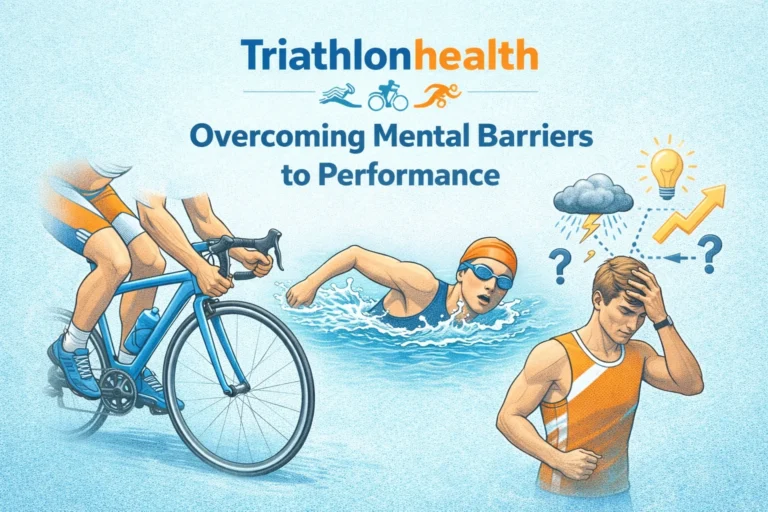
Triathlon pushes body and mind. Many athletes focus on swim, bike, run, and gear. They forget the quiet limits inside the head. This article shows how to start overcoming mental barriers triathlonhealth, why those barriers matter, and practical steps you can use in training and on race day.
I write as a triathlon journalist and coach who has worked with pros and age-groupers. I will explain mental tools in clear language, show drills you can practice, and share ways to measure progress. Read on to get concrete, usable methods that fit your schedule and ability.
Overcoming mental barriers triathlonhealth
Mental barriers are the thoughts and feelings that stop you from performing at your best. They can be fear, doubt, or a habit of negative self-talk. For a triathlete, these barriers can affect pacing, transitions, and how you handle pain during long efforts.
Recognizing a barrier is the first step in overcoming it. Some athletes know exactly when a thought shows up, like panic on the swim or the voice that says you cannot hold the pace. Others feel only a drop in effort or a rise in tension. Either way, awareness gives you a point to act from.
Working on the mind is not soft or optional. Coaches and athletes who accept mental training often see clear gains. The skill to cope with discomfort and to stay focused under stress transfers directly to race results and daily training quality.
The phrase psychology triathlonhealth describes how mental work connects to sport performance. That link is practical, not abstract. We will cover simple practices you can use today to reduce fear, increase focus, and build confidence.
Common mental barriers
Before picking tools, you need to know the common barriers triathletes face. Below I list the issues I see most often and how they show up in training and races. Read this list and mark the ones that match your experience.
- Fear of open water, shown as hesitation at the start or avoiding sighting practice.
- Negative self-talk, like saying you are too slow or not fit enough.
- Pacing anxiety, where you go out too hard or hold back too much out of worry.
- Performance perfectionism, causing stress over small mistakes like a poor transition or nutrition slip.
- Catastrophic thinking, where one setback feels like total failure and ends the race mentally.
- Boredom or loss of motivation in long base periods, reducing training quality.
Each barrier has a feel and a trigger. For example, fear of open water often appears near the start buoy, not during a steady effort. Negative self-talk might appear after a hard set or a mechanical issue. Naming the trigger narrows where to practice.
Once you know which barriers affect you, you can pick drills and strategies that match. Some tools focus on short-term fixes for race day, like cue words and routines. Others build long-term resilience, like mental skills training and controlled exposure to stressors.
Many athletes find one or two barriers cause most of their trouble. Treat the main barrier first, then add work on secondary issues. This keeps the plan simple and fast to apply in training blocks.
How the mind affects performance
The brain controls effort, attention, and decision-making. When your mind is calm and directed, you sustain power and make smart choices about pacing and nutrition. When the mind is noisy, you waste energy and may make errors that cost time.
Physiological stress follows mental stress. Anxiety can raise heart rate and breathing for a given power output. That means you will feel harder effort at the same pace. Learning to control the mental response lowers the physical cost, so you can swim, bike, and run more efficiently.
Mental health triathlonhealth is part of athlete care, like sleep and recovery. Poor sleep, unresolved stress, or low mood all change how the brain handles race pressure. Addressing these areas often improves motivation and training tolerance.
Small mental wins compound. A calm start, a confident transition, and a steady middle section add up to a stronger finish. Your mind sets your race from the first step, so training it pays off in measurable seconds and minutes.
Daily practices to train the mind
Consistent daily work changes how your mind responds under pressure. Use short, specific practices you can repeat in training and life. The goal is to make calm focus the default under stress.
Below is a list of daily practices that many athletes can add with little time cost. Each practice builds a skill like focus, emotional control, or clear thinking under fatigue.
- Breathing drills, such as 4-6 breath cycles for two minutes, to lower arousal and steady the heart rate.
- Mindful presence during easy sessions, paying attention to stroke or pedal feel without judgment.
- Short visualization, picturing the swim start, the first transition, or a strong finish for five minutes each day.
- Self-talk scripts, rehearsing specific cue words you will use in training and race, like “smooth” or “strong.”
- Goal review, noting one focused objective each day to guide practice and reduce scatter.
Practice builds habit. If you spend five minutes each day on a short visualization and two minutes on breathing, you will see change in a few weeks. Small repeated habits reshape responses during high stress.
Goal setting triathlonhealth is a practical tool I recommend. Set clear training goals, then list the mental skills needed to reach them. For example, a time goal for a half distance may need pacing discipline, confidence in nutrition, and a plan for handling mid-race doubts.
Keep practice simple and measurable. Track the days you complete your mental work. That tracking itself builds confidence and routine, which reduces anxiety during key races.
Race day strategies
A race plan that includes mental steps reduces surprises. Before the event, write a short script for likely trouble spots. That script is a tool you can use on race day to stay calm and focused.
Use a short warm-up that includes mental cues. In the minutes before the swim, calmly repeat your cue words and run a brief visualization of the start. On the bike, plan to check pace at specific moments rather than every minute, to avoid panic when numbers fluctuate.
Below is a clear list of race day strategies to keep you steady and focused. Each item is easy to apply and can be practiced in simulation sessions before race day.
- Pre-race routine, including breathing, a brief warm-up, and cue words to anchor focus.
- Segment the race into small parts, such as “first 10 minutes,” “next hour,” and “final push,” to reduce overwhelm.
- Use fixed checks, like nutrition at set times, rather than waiting for feeling hungry, to avoid doubt.
- Implement a fallback plan for common issues, such as a missed bottle or a crowded swim, so you have steps ready instead of reacting emotionally.
- Have one or two strong race mantras that match your training, and practice them aloud during hard efforts.
Simulate stress in training. Practice transitions with a crowd or do a mock swim start to build familiarity. The more you face small stresses in training, the less they surprise you on race day. That familiarity reduces fear and makes clear reactions more automatic.
When a race goes off-plan, slow your breathing, use a cue word, and reset one small item at a time. Breaking the task into immediate actions keeps you out of catastrophic thinking and back into control.
Working with coaches and professionals
Coaches, sports psychologists, and experienced athletes can speed progress. A coach can add mental tasks into your training schedule, while a psychologist can teach techniques for deep-seated fears or chronic anxiety.
Many triathletes start with a coach for pacing and skills, then add short sessions with a psychologist for focused mental work. That combination works because the coach ensures your body is prepared while the psychologist tunes your mental responses.
When looking for help, ask about track record and the methods used. Practical, evidence-based approaches like exposure work, cognitive reframing, and goal setting often produce faster gains than vague advice. If you want a starting phrase to discuss with professionals, mention the term mental health triathlonhealth to connect your sport needs with care.
Working with others also adds accountability. A coach will keep you on task with mental drills, and a peer or training group provides social support. Both reduce isolation and increase the chance you will follow through on mental practices.
Tools and drills to practice

Here are practical tools and drills you can schedule into your week. Each one targets a specific barrier and has a clear outcome you can measure. Try one or two of these for a block of four to six weeks and measure change.
Below I list drills with a short explanation and how often to do them. These drills mix mental and physical stress to make your reactions more reliable during races.
- Open water exposure, 30 to 45 minutes twice per week, working on sighting, starts, and close-contact swims to reduce panic.
- Negative split tempo sets, practicing steady increase of effort in the second half to train pacing confidence and pain tolerance.
- Transition pressure drills, doing solo mock transitions under time pressure to lower errors and build focus under fatigue.
- Controlled failure sessions, where you intentionally add a small error, such as a missed gel, and practice the reset steps to avoid catastrophic thinking.
- Visualization with sensory detail, five minutes after training, imagining the race site, crowd noise, and the feel of effort to make the scene familiar.
Each drill should have a short debrief after the session. Write one sentence on what worked and one sentence on what to try next. This quick review keeps the training focused and creates a growth habit.
Pair drills with physical training. For example, add a breathing drill after an easy recovery ride, or do a short visualization before an interval day. Pairing makes mental skills part of your routine, not an extra chore.
Use simple metrics to measure progress, like fewer instances of negative self-talk, steadier heart rate for a given pace, or improved split times in specific segments. The metrics help you see that mental work produces real fitness improvements.
Measuring progress and staying motivated
Set clear, small goals for mental work, and track them like you would intervals or nutrition. Measurement keeps you honest and shows progress over time, which builds confidence.
Use a simple log with dates and brief notes. Record the mental practice, what you felt, and one quick takeaway. Over weeks, these notes show patterns and improvement. You can also add objective data, such as heart rate variability or consistency of pace, to confirm changes.
Motivation may dip during long training blocks. To stay on track, use short cycles, such as three-week focuses with one clear mental skill per cycle. This keeps the work fresh and creates regular wins to celebrate.
Peer support helps. Share goals with a coach or training buddy, so you have someone to check in with. That social pressure increases follow-through and provides perspective when setbacks happen.
Key Takeaways
Overcoming mental barriers triathlonhealth starts with naming the barriers you face and adding small, consistent practices. Short daily work and targeted drills in training build the mental habits that support better race performance.
Use simple tools like breathing, visualization, and cue words, and pair them with physical training. Practice race day scripts and simulate stress in training to reduce surprises. Track your work with a short log to measure progress and keep motivation high.
Seek help when needed from coaches or sports professionals, and be specific about the skills you want to build. Remember that mental training is a routine skill, like swim technique or bike handling, and it improves with steady practice.
Start with one small mental habit this week, track it for three weeks, and judge the effect on your training. That single step will move you closer to overcoming mental barriers triathlonhealth and to stronger, more consistent race days.