
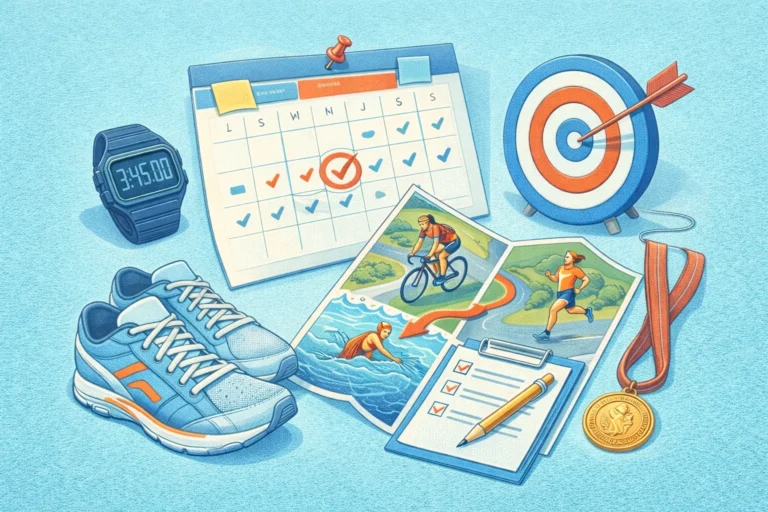
Goal setting triathlonhealth can change how you train and race. If you want clearer progress, less doubt, and smarter races, goals give you a plan. This article explains why goals matter, how to set them, and how to turn them into steady gains on swim, bike, and run.
Why goal setting triathlonhealth matters
Setting goals gives your training a direction. Without a target, you may work hard but not move toward what matters. Goals help you prioritize sessions, choose races, and decide when to rest.
Clear goals make practice more meaningful. A focused interval has value when it connects to a goal. When you know the end point, you can judge whether a session was useful or wasted time.
Goals also guide choices outside training. Nutrition, sleep, equipment, and travel all respond to a race plan. If you are heading toward a long-distance race, your choices will differ from a short, fast event.
Finally, goals shape motivation on tough days. Training is full of setbacks, and a clear, honest goal helps you keep perspective. When you fall short, a good goal system helps you recover and adapt without losing enthusiasm.
Types of goals to use in triathlonhealth
Before you write goals, know the common types. Each type plays a role in a season. Mixing them gives steady progress and keeps training varied.
Outcome goals focus on final results. They might be finishing a race, placing in your age group, or hitting a time. Outcome goals matter, but they depend on many factors beyond your control.
Performance goals are about measurable outputs you can control more directly. Examples include target race time for each discipline or a target power on the bike. Performance goals help shape specific workouts and pacing plans.
Process goals focus on actions you can control every day. They include weekly training hours, hydration targets, or executing a warm-up plan before hard sessions. Process goals give immediate feedback and reduce pressure.
How to set SMART goals for triathlonhealth
SMART is a durable method for goal setting triathlonhealth. Use it to make goals clear, practical, and testable. A SMART goal is Specific, Measurable, Achievable, Relevant, and Time-bound.
Specific goals remove guesswork. Instead of saying I want to get faster, say I want to swim 1,500 meters in 20 minutes or bike at an average power of 210 watts for a 40-kilometer time trial. Specific goals tell you what to measure.
Measurable goals give you data to track. Record times, power, heart rate, and perceived effort. Use that data each week to see real progress. Without measurement, claims of improvement remain opinions.
Time-bound goals keep you honest. Place the goal in a season or a race date. A clear deadline helps you structure blocks of training and decide when you need intensity or rest.
Turning goals into a season plan
A season plan translates big goals into blocks of training and race choices. Start with your priority race and work backward, defining build, peak, and recovery phases. Each block should match a portion of your goal.
Map out base, build, and race prep phases. Base work develops aerobic fitness and skills. Build work adds intensity and race-specific sessions. Race prep smooths form and sharpens pacing and nutrition.
Include smaller target races that serve as checks. They let you test pacing, gear, and race-day routines before the main event. These tune-up races are also opportunities to adjust goals if performance differs from expectations.
Make recovery and flexibility part of the plan. Goals that ignore rest lead to burnout. A season plan that adds scheduled recovery weeks and allows adjustments will keep you fit and motivated long term.
Weekly and daily goal setting for steady progress
Break season goals into weekly and daily pieces. Weekly targets might be total training time, a key hard session, and a recovery threshold. Daily goals guide the session and your habits for the day.
Each week pick one or two focus points. They can be technique, pacing, or a strength target. Focusing on too many things at once dilutes effort. Clear weekly focus helps training feel purposeful and manageable.
Use daily goals to direct effort and recovery. A daily goal might be completing a threshold bike session, doing core work after a swim, or getting eight hours of sleep. These small wins add up across weeks.
Track completed sessions and short notes on how they felt. A training log with simple comments helps you spot trends. When you review monthly, the log shows whether you are moving toward your season goal.
Measuring progress and adjusting goals
Regular measurement keeps goals honest. Use tests like a 20-minute bike power test, a 1,000-meter swim time trial, or a 5-kilometer run to check progress. Repeat them every 4 to 8 weeks to see trends.
When tests show steady gains, keep the plan but keep challenging yourself. If progress stalls, dig into causes. Load, recovery, nutrition, or stress can be the issue. Use the data to adjust training, not to blame yourself.
Adjust goals when life or fitness changes. Goals are tools, not rules. If injury, work demands, or family needs change your routine, set a realistic new target. Aim for a goal that motivates while fitting your current situation.
Use small, incremental changes when you reframe goals. Moving a race goal by a few minutes or shifting to a different target race keeps momentum. Big swings in expectations often create stress and poor decisions.
Mental skills and wellbeing in goal setting triathlonhealth
Goals are not just physical. Mental skill matters. Confidence, focus, and the ability to handle pressure influence whether training turns into performance. Plan mental training alongside physical work.
Practice routines for race day. Simple routines for pre-race warm-up, transitions, and fueling cut down anxiety. Repeating these routines in training builds habit and trust for race day.
Pay attention to mental health triathlonhealth as you set goals. Stress, mood, and sleep influence how your body adapts. If training harms your mental state, adjust goals or load so you can enjoy sport and life together.
Work on short confidence builders. Completing a challenging session, hitting a small pacing target, or mastering a transition technique all boost belief. Confidence makes it easier to chase bigger goals with calm energy.
Goal setting triathlonhealth for age-groupers and professionals
Age-group athletes and professionals use the same goal frameworks, but their specifics differ. Pros often focus on marginal gains and finely tuned schedules. Age-groupers need balance with work and family.
For age-groupers, prioritize consistency and smart targets. Aim for realistic race goals that fit your available time. Use process goals to manage life and training without stress.
Pros must refine small gains and manage recovery aggressively. Their goals often involve fractional improvements in power, swim speed, or transition time. The structure is tighter and recovery matters more.
Both groups benefit from clear communication with coaches, partners, and family. Shared expectations make it easier to follow a plan. When everyone understands the goal, the athlete gets the support they need.
Common mistakes in goal setting and how to avoid them
Many triathletes fall into predictable traps when they set goals. Recognizing those mistakes helps you avoid wasted effort and burnout. Below are common faults and practical fixes.
Here are common mistakes to watch for:
- Setting only outcome goals, which can leave you without daily direction.
- Making goals too vague, so you cannot measure progress.
- Ignoring recovery, which leads to slow progress and injury.
- Changing goals too often, which prevents long-term adaptation.
- Relying only on numbers and ignoring how you feel physically and mentally.
Fix these mistakes by creating a balanced goal set. Start with one outcome goal, two performance goals, and several process goals. That mix gives you targets at different time scales.
Keep a simple review habit. Each week check one measurement and one subjective item, like sleep quality. Use both to decide whether to keep the plan or adapt it.
Tools, templates, and checklists for goal setting triathlonhealth

Using tools makes goal setting and tracking easier. A simple training log, a spreadsheet for tests, and a calendar for race blocks are often enough. Choose tools you will use consistently.
Below is a practical checklist you can use to set and track a goal. Read it, copy it into a notebook, and use it each season.
- Define your main outcome goal and a clear deadline.
- Choose two performance goals that support the outcome goal.
- List weekly process goals, such as key sessions and recovery targets.
- Schedule base, build, and taper phases on a calendar.
- Pick measurable tests and schedule them every 4 to 8 weeks.
- Record simple daily notes: session completed, energy, sleep, and mood.
- Plan contingency steps: how you will adjust for illness, travel, or missed weeks.
Many apps and simple spreadsheets can store this checklist and record progress. The best tool is the one you use regularly, not the most complex software available.
Also consider adding a one-page race plan linked to your goal. Write your pacing plan, nutrition, and transitions on one page. Carry it to race week and practice it in training so you can trust it on race day.
How coaches and teams can help with goal setting
A coach helps translate goals into training plans and keeps you honest. They bring experience to set realistic targets and notice when you need rest. Coaches also help adjust plans when results differ from expectation.
Working with training partners provides accountability. Group sessions push effort, while partners offer feedback on form and pacing. A team can also help keep morale high across a long season.
When you work with a coach, be clear about your aims, time availability, and limits. Honest information helps the coach write a practical plan that matches your life outside training.
If you do not have a coach, use proven templates and keep a close log. Seek occasional professional reviews, and adjust plans based on data and how you feel. Practical outside feedback helps you stay realistic.
Maintaining motivation and adapting long term
Motivation ebbs and flows over a season. Good goals are flexible enough to keep you engaged when life gets busy. Change the scale, not the direction, when motivation dips.
Small, regular wins help maintain drive. Celebrate completing a hard session, executing a race plan in training, or hitting a small time target. These moments add up and keep training enjoyable.
Plan long-term cycles to avoid burnout. A season of focused work followed by a deliberate off-season keeps the body and mind fresh. Use the off-season to set new goals and explore other activities.
Revisit your goals each season. Compare the prior season’s data and adjust targets based on what worked. Goal setting is an iterative process that gets better with thoughtful review and patience.
Key Takeaways
Goal setting triathlonhealth helps you turn effort into progress. Use a mix of outcome, performance, and process goals so you have direction at every time scale. Specific, measurable, and time-bound goals make training meaningful.
Break season goals into blocks and weekly focuses. Track tests and simple daily notes so you can measure progress. Adjust goals when life or fitness changes rather than forcing a plan that no longer fits.
Include mental skills and pay attention to mental health triathlonhealth as you plan. Confidence, routine, and a calm approach to setbacks all improve performance. Treat mental work as part of the training plan.
Finally, use simple tools and reviews. A clear checklist, regular tests, and honest weekly reviews keep hard work on target. Good goals make training more rewarding and help you reach the races you care about.