
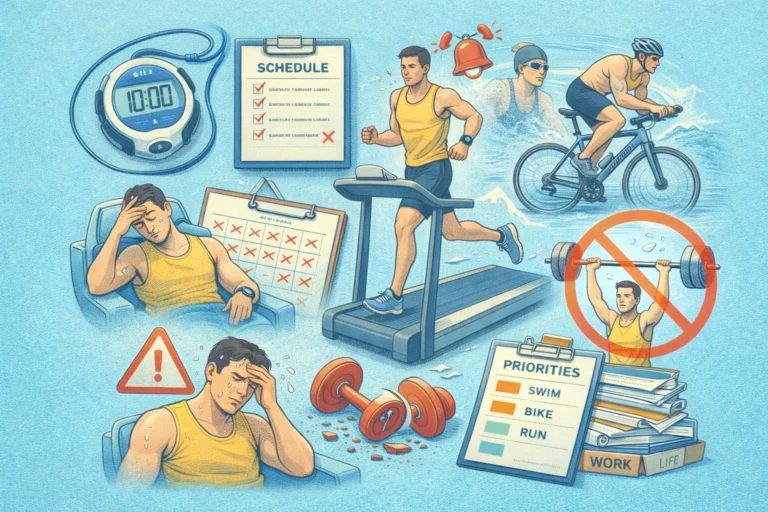
If your training plan stumbles, race day will feel harder than it should. This article looks at common workout schedule mistakes triathlonhealth athletes make, why they matter, and how to fix them. You will get clear, practical steps to make your weekly plan smarter and safer so you can train more consistently and perform better.
Top workout schedule mistakes triathlonhealth athletes make
Many triathletes repeat the same errors in their weekly plans. They pile on sessions, forget recovery, or fail to match workouts to race goals. These are not secrets. They are patterns that slow progress.
Here I list the most common problems I see. Each item behaves like a speed bump. Alone they are small, but together they can ruin a season. Recognizing them is the first step toward change.
Below is a practical list you can use to audit your current plan. Read each item, then match it against your week. That quick check often finds the biggest, easiest fixes.
As you read, remember the phrase triathlonhealth training mistakes. Use it as a reminder to watch for these habits in your own plan.
Before the list, note that the order below is not a ranking. All are important, and many happen at once.
Common schedule issues include:
- Too many high-intensity sessions without recovery.
- No clear build and taper structure, or no periodization.
- Unbalanced focus on one discipline at the cost of others.
- Training load spikes and inconsistent weekly volume.
- Poor control of session pacing and intensity.
Mistake 1: Too much hard work, not enough recovery
Many athletes think more hard sessions equals faster gains. That idea sounds logical, but body systems need time to rebuild. Without rest, fitness stalls and injury risk rises. This is one of the top workout schedule mistakes triathlonhealth athletes fall into.
High intensity is powerful, but it is also costly. When you do two or three intense sessions in a row, you reduce the quality of each session. Recovery days and easy weeks are not optional. They are part of the training effect.
Watch for signs that tell you recovery is missing. These include poor sleep, persistent soreness, slow workouts, mood swings, and small aches that do not disappear. If these signs appear, your plan likely needs more low-intensity time.
To correct this error, add clear recovery days and an easy week every three to four weeks. Use the scale of training stress: if you had a high-stress day, follow it with an easy day or rest. That pattern keeps hard sessions effective and lowers injury risk.
Mistake 2: Poor session balance across swim, bike, run
Triathlon training needs balance. Many athletes love one discipline and neglect the others. That produces gaps in fitness and can hurt race day. Uneven focus is a classic workout schedule mistake triathlonhealth readers should check for.
Balance means planning sessions so each sport gets attention in the week. It also means adding quality work in the weaker discipline. Small, consistent efforts in a weak area beat occasional long sessions that cause fatigue.
One common example is heavy bike focus in winter, then a rushed run build before race season. That jump creates injury risk because the body did not adapt to the run load. A steady build across disciplines prevents that problem.
Fixes include scheduled technique sessions, short focused intervals in the weak sport, and cross-training that keeps fitness while lowering injury load. These moves create a more even and robust athlete.
Mistake 3: Skipping periodization and planning
Training without a plan is like setting off on a bike ride without a map. You may enjoy the ride, but you might not reach an important goal. Skipping periodization is a frequent triathlonhealth training mistakes example I see from athletes who train by feel only.
Periodization breaks the season into phases: base, build, peak, and recovery. Each phase has a purpose and specific targets. Without this, sessions become random and the athlete often peaks at the wrong time.
Many amateur plans try to cram race-specific work into too short a time. That leads to training spikes and plateau. The safe path is to plan progression in volume and intensity, then test and adjust.
To fix this, set a simple periodized plan: base for longer aerobic work, build for specific speed and threshold, and taper for freshness. Keep the plan flexible. Use weekly check-ins and adjust based on how your body responds.
Mistake 4: One-size-fits-all plans and ignoring specificity
Following a generic plan from social media or a friend can waste time. Every athlete responds differently to training load. One plan does not suit all. This is a common workout schedule mistakes triathlonhealth readers must avoid.
Specificity is about training for your race. Are you targeting a sprint, Olympic, half-Ironman, or Ironman? Each distance needs different sessions. For example, long steady endurance sessions suit long-distance athletes more than short race pace repeats.
Evaluate your plan by matching sessions to race demands. If your plan has too many short, intense intervals but your race requires long steady power, change it. Simple changes often have big impact.
If you are unsure of what is specific for your goal, keep a training log and measure progress. Compare sessions to race demands and tune the weekly mix accordingly. That approach keeps the plan useful and race-relevant.
Mistake 5: Poor intensity control and session structure
Intensity control is one of the finer skills in triathlon training. Mismanaged intensity leads to wasted time and energy. The phrase training intensity triathlonhealth often comes up when I coach athletes on how to pace their sessions.
Many athletes confuse effort with effect. A long, hard, unstructured ride may feel productive but can be low in training value. Structured intervals, with clear targets and recovery, produce better aerobic or threshold gains.
Here are signs your intensity control is off: you are constantly exhausted after sessions, your heart rate drifts up over time, or you cannot repeat quality intervals. If these are present, your session structure needs tightening.
To fix this, use simple metrics: perceived exertion, heart rate zones, or power if you have a power meter. Structure intervals with specific targets and rest. Then track how often you hit the targets and adjust the load slowly.
Other common errors: volume spikes, neglected technique, and poor nutrition timing
Beyond the main mistakes, several smaller errors add up. Volume spikes, where weekly load jumps suddenly, create injury risk. Neglecting technique and drills in swim, bike, or run slows efficiency. Poor timing of nutrition around key sessions reduces training quality.
These issues are often easy to fix. Keep weekly volume changes under 10 to 20 percent. Add short technique sessions and drills twice a week. Plan pre-session and post-session nutrition to match session intensity and duration.
Below is a short list of quick checks you can perform on your plan this week. Use these checks after you read the previous sections to make a simple, effective audit.
- Compare weekly volume to the prior week to spot spikes.
- Mark your hard sessions and follow each with an easy day.
- Schedule at least one technique session per discipline weekly.
- Plan a recovery week every three to four weeks.
- Track basic metrics: sleep, mood, resting heart rate, soreness.
How to fix your schedule: practical steps
Fixing a flawed plan requires a method, not random changes. Start with a simple audit and then put small changes in place. That steady approach gives consistent progress without shocking the body.
Here is a clear sequence to repair your schedule. Follow each step and give yourself at least two to four weeks to feel the effect. Small changes accumulate into big gains.
Read the short list below and then apply one item per week. Don’t try to fix everything at once. That is how new mistakes happen.
- Audit your weekly load for spikes and balance across sports.
- Set clear priorities for the season and build a simple periodized plan.
- Schedule recovery days, easy weeks, and monitor adaptation.
- Introduce structured sessions with clear intensity targets.
- Track simple metrics to guide adjustments: sleep, RPE, HR, training stress.
After you apply these steps, re-evaluate. Look for better quality in hard sessions and easier recovery. If quality improves, you are on the right track. If not, reduce load or add more recovery and then progress more slowly.
Sample week for balanced training

A concrete example helps most athletes. Below is a balanced sample week for an athlete training for an Olympic distance race. Adjust volume and intensity to fit your level and race distance. This week avoids the common workout schedule mistakes triathlonhealth athletes make by balancing quality, volume, and recovery.
Read the sample week and compare it to your usual plan. Look for places you either overload or skip the weak discipline. Many gains come from small, consistent changes week to week.
This sample is conservative in intensity but consistent in purpose. The layout keeps hard sessions separated and adds two easy days that allow adaptation. Use it as a template, not a fixed rule.
- Monday: Easy swim 30 to 45 minutes with technique focus, plus light mobility work. A true recovery day to reset after weekend work.
- Tuesday: Bike intervals 60 to 90 minutes with 4 to 6 x 5 minutes at threshold and equal recovery. Short run off the bike 15 to 20 minutes easy.
- Wednesday: Moderate run 45 to 60 minutes with 6 to 8 strides, or a tempo block if building run fitness. Add strength session focused on glutes and core.
- Thursday: Swim session with speed sets, 45 to 60 minutes. Easy bike 30 to 45 minutes for aerobic spin if needed.
- Friday: Rest or very easy active recovery, short mobility and a 20 to 30 minute easy bike or jog if needed.
- Saturday: Long bike 2 to 3 hours at steady endurance pace, include race simulations or group efforts if appropriate.
- Sunday: Long run or brick session, 60 to 90 minutes run or 45 to 60 minute run off a shorter bike, keep intensity mostly aerobic.
Adjust duration and intensity by your experience level and upcoming race. Newer athletes should reduce volume. Experienced athletes can raise time and include more race-specific intervals. The key is progression and keeping hard sessions spaced out.
Tracking, adjustments, and avoiding repeating errors
Good plans need feedback. Tracking simple measures tells you if a plan is working or if the same mistakes repeat. The goal is to train with intention, not just habit.
Basic metrics matter. Sleep, resting heart rate, training perceived exertion, and missed sessions give a clear picture. Track them in a training log and review weekly. That small habit prevents many triathlonhealth training mistakes.
Here is a short list of useful metrics and how to use them. Read each item and make one small rule for yourself, such as a rest day if resting heart rate rises by 6 beats per minute over baseline.
- Resting heart rate: rising trends often indicate fatigue or illness.
- Sleep quality and duration: poor sleep reduces training tolerance.
- Session RPE (rate of perceived exertion): helps adjust daily load without tech.
- Training consistency: missed sessions signal plan overload or poor recovery.
- Subjective mood and soreness: early signs of overreach or injury risk.
Make a small rule set from these metrics. Examples: keep weekly load increases under 15 percent, take an extra rest day when RHR rises 5 beats, or schedule a low-intensity week after three weeks of higher load. Simple rules are easier to follow than vague intentions.
How coaches and partners help prevent mistakes
No one needs to do everything alone. A coach, training group, or trusted partner brings perspective. They help spot blind spots and keep progression sensible. Coaching reduces the chance of repeating triathlonhealth training mistakes.
Coaches add structure and an outside check on load. Training partners add accountability and can help pace efforts during group sessions. Both are practical tools for better planning and execution.
When you work with someone, set clear short-term goals and an easy way to communicate changes. Weekly check-ins that last 10 minutes are often enough. They create a feedback loop that prevents small problems from becoming big ones.
If a coach is not an option, join a club or online group that values structure and recovery. Peer feedback and shared pacing strategies help many athletes stay on track and avoid common errors.
Key Takeaways
Most athletes can fix their plan with small changes. The main issues are poor recovery, unbalanced sessions, missing periodization, and weak intensity control. Spot these problems and act early to protect your season.
Use the sample week, the audit list, and the tracking metrics to guide adjustments. Keep changes slow and measured. Progress that builds over months is more reliable than quick gains that break you down.
Remember the phrases workout schedule mistakes triathlonhealth, triathlonhealth training mistakes, and training intensity triathlonhealth as mental checks when you plan. Use simple rules for recovery and intensity, and your training will become more consistent and productive.
Start today: review your week, find one mistake from this article in your plan, and fix it. Small steps create lasting progress. Good training is steady, sensible, and focused on the long term. Enjoy the process and keep improving.