
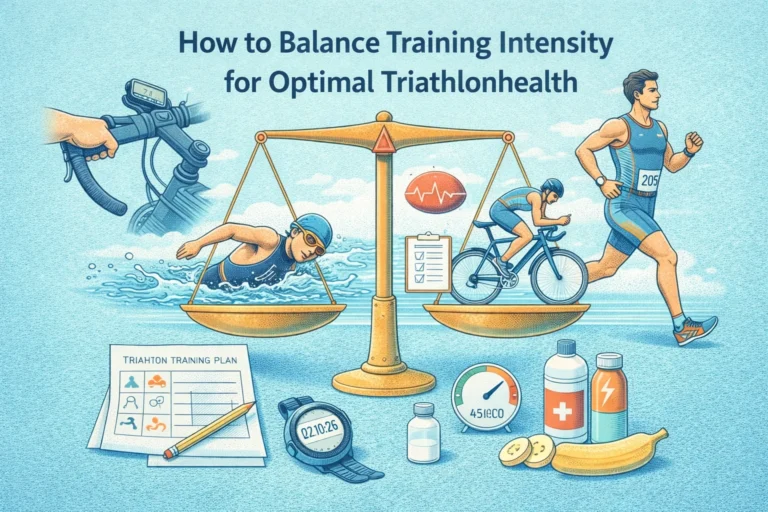
Balancing training intensity triathlonhealth is one of the most important skills a triathlete can learn. Whether you are new to the sport or a seasoned racer, the right intensity keeps fitness climbing without breaking your body. This article explains how to measure, plan, and adjust intensity so you train smarter, recover better, and race with confidence.
Why training intensity triathlonhealth matters
Training intensity controls the signals your body receives. When you hit the right intensity, you force adaptations like stronger aerobic capacity, faster lactate clearance, and better mental tolerance for discomfort. When you train too hard too often, you raise the risk of illness, injury, and stagnation. When you train too easy, gains slow or stop.
For triathletes, balance is more complex than for single-sport athletes. You have three disciplines to manage and different energy systems to train. Intensity in one sport can affect recovery and performance in the others. That makes planning and measurement essential for steady progress.
Coaches and experienced athletes treat intensity as a dial, not a switch. You turn it up for key workouts and down for recovery weeks. The most successful athletes map intensity across swim, bike, and run so hard days and easy days fit together and add up to a strong season.
In this section we frame the problem so you understand why the rest of the article matters. You will learn practical ways to find, track, and adjust intensity. Use these ideas to build training that improves fitness while protecting health.
How intensity affects swim, bike, run
Intensity shows up differently in each discipline. Swimming often spikes heart rate without the same muscle damage you see on the run. Cycling allows steady, measurable power and long tempo efforts. Running produces high impact and requires longer recovery after intense sessions. Understanding these differences helps you plan workouts that fit together.
Swim intensity typically focuses on technique and speed intervals. Short, fast sets teach pace and efficiency, while longer threshold sets build aerobic strength. Because swimming is low impact, you can often tolerate higher training volumes, but poor technique at high intensity can cause fatigue that affects other sessions.
On the bike, intensity can be measured by power or perceived exertion. Steady threshold rides and sweet spot intervals build sustained power. Hard efforts on hills or in tempo blocks increase your ability to hold race pace. The bike is forgiving for long steady work but heavy intensity must be balanced to avoid carryover fatigue to key runs.
Running intensity is the most recovery demanding. Fast intervals, hill repeats, and tempo runs create structural stress on muscles and tendons. Those workouts improve speed and economy, but they require careful spacing, good warm-ups, and thorough recovery. Mixing run intensity poorly with bike load is a common mistake.
Understanding intensity zones
Intensity zones simplify training. They give you a common language to plan workouts, compare sessions, and control stress. Most systems use five zones that range from easy aerobic work to maximal efforts. Using zones helps you place each workout on the calendar with clear purpose.
Zone 1 and 2 are easy to moderate efforts where you build base fitness and recover. These zones are the foundation for endurance, capillary growth, and fat metabolism. They are also where the highest training volume should live for most athletes. Long rides and relaxed runs sit here.
Zone 3 and 4 push your body toward threshold. Zone 3 is steady but effortful, while Zone 4 targets near-threshold intensity that raises lactate tolerance. These zones improve pace sustainability and aerobic power. They should be structured and limited so they do not interfere with recovery.
Zone 5 and all-out efforts build speed and neuromuscular power. Short intervals and race-pace repeats fall into this range. These sessions give you top-end speed and the ability to respond to race surges, but they produce the most fatigue and should be used sparingly and with adequate recovery.
Measuring intensity: tools and metrics
To balance training intensity you need reliable measures. There are several tools you can use to track effort and progress. Choosing the right mix depends on your budget, experience, and discipline focus.
Before a list, note that each tool has strengths and limits. Heart rate is easy and cheap but lags during short intervals. Power is instant and precise on the bike but not common for swim or run. Rate of perceived exertion, or RPE, is flexible and works across disciplines but needs practice to use consistently.
- Heart rate, good for steady-state and base training, shows cardiovascular load. Use zones tied to lactate threshold or functional threshold heart rate for best results.
- Power (cycling), the most direct metric for bike intensity, allows precise target work and tracking of improvements. Training stress numbers based on power help quantify load.
- Pace and pace-based metrics (running), useful for track and tempo runs. Pacing with GPS is helpful, but cadence and ground contact metrics can also refine intensity control.
- Perceived exertion (RPE), simple and versatile, works across all three sports. RPE is best when combined with objective data to avoid bias.
- Session RPE and training load, multiply session duration by RPE to estimate stress. This helps compare different workouts and balance weekly load.
Use a combination of these tools to cross-check intensity. For example, match heart rate to power and RPE on bike intervals. If numbers contradict, investigate fatigue, hydration, or poor sleep before changing training plans.
Balancing intensity with volume and recovery
Intensity is only one part of the training equation. Volume and recovery complete the picture. The right balance produces growth. The wrong mix leads to overtraining or wasted time. Aim to pair harder sessions with easier days and regular recovery weeks.
Start by scheduling one or two high-quality intensity sessions per discipline each week, then support them with easy aerobic work. This approach keeps stress targeted and allows you to maintain skill and endurance. Hard sessions drive improvement; easy sessions build the base that makes those hard sessions productive.
Recovery matters as much as intensity. Sleep, nutrition, active recovery, and light days all help your body process the stress of training. Without recovery you will not convert hard work into fitness. Plan recovery into your week with clear easy days and a lower-volume week every three to four weeks.
Another tool is training load monitoring. Track weekly hours, session RPE, and any physiological markers like resting heart rate or sleep quality. Patterns of increasing load without adequate recovery indicate the need to reduce intensity or volume before injury or illness occurs.
Weekly and phase planning
Balance works at two scales, weekly and seasonal. Weekly planning places the right intensities near each other. Phase planning sets the broader progression across base, build, and race phases. Both matter for long-term gains and race readiness.
In a typical week, place your hardest session mid-week and allow recovery after. For example, do a hard bike interval session followed by an easy swim and a short steady run the next day. Keep the day before a hard track or race-specific session easy so quality is high when it matters.
Over a season, use base weeks with mostly Zone 1 and 2 work to build volume. Then add threshold and race-pace sessions in a build phase. Race-specific intensity peaks a few weeks before your target events, when you taper volume and focus on sharpening. Each phase must allow for recovery weeks to consolidate gains.
Keep the weekly plan flexible. Life, travel, and fatigue sometimes force changes. Use the planned intensity as a guideline, not an iron rule. If a hard session feels flat, switch to an easy day and move the workout to the next good day. Holding quality matters more than stubbornly completing a preset schedule.
Common training intensity mistakes
Many athletes make similar errors when they manage intensity. These mistakes slow progress and increase injury risk. Recognizing common patterns helps you avoid them and keep training on track.
One frequent error is too much high-intensity work with too little base. Athletes chase quick gains and end up tired and stuck. Another is using heart rate alone for short intervals, which can misrepresent effort due to lag. Some athletes ignore easy days and treat most sessions as if they were key workouts.
Below is a list of common mistakes and how to fix them. Read each item and consider which ones apply to your training. Honest review is the fastest path to better balance.
- Overloading intensity: Too many hard sessions in a week. Fix by limiting high-intensity work to specific days and adding more easy aerobic sessions.
- Poor sequencing: Hard bike and hard run back-to-back without recovery. Fix by spacing key workouts and using easy cross-training between them.
- Neglecting sleep and nutrition: Results in poor recovery and stalled progress. Fix by prioritizing sleep and fueling before and after hard sessions.
- Ignoring objective data: Relying only on feeling can mask mounting fatigue. Fix by tracking heart rate, power, pace, and session RPE to monitor load.
- One-size-fits-all plans: Copying other athletes without personalization. Fix by adjusting intensity and volume to your history, injury background, and time available.
When you notice patterns of poor performance or persistent fatigue, consult a coach or reassess your plan. Many athletes find that small changes in intensity distribution make large performance differences. Also review common pitfalls listed under triathlonhealth training mistakes for practical fixes that match the site style and advice.
Practical workouts and examples

Seeing intensity in action makes planning easier. Below are practical workout examples for each discipline. Each example includes the purpose, an intensity target, and recovery recommendations. Use these as templates and adapt them to your fitness level.
Remember to warm up thoroughly before hard efforts and to cool down after. Warm-ups prepare your heart and muscles, reducing injury risk. Cool-downs aid recovery and help clear metabolic byproducts from hard sessions.
- Swim tempo set: 20-minute continuous build at steady pace, targeting Zone 3, followed by 6 x 50m fast with full recovery. Purpose: improve aerobic threshold and speed. Recovery: easy swim or rest the next day.
- Bike threshold session: 2 x 20 minutes at threshold power with 10 minutes easy between sets. Purpose: raise FTP and pacing. Recovery: easy 1-hour ride the next day at Zone 1-2.
- Run interval session: 6 x 1 km at 5K pace with 2-3 minute jog recovery. Purpose: speed and lactate tolerance. Recovery: easy run or complete rest the next day depending on intensity.
- Brick session: 60-minute steady bike at Zone 2 with 20-minute run at race pace immediately after. Purpose: practice bike-to-run transition and race pacing. Recovery: light swim or rest the next day.
Use these workouts as building blocks. Combine them into a weekly plan that balances effort and recovery. As you track response, adjust intervals, durations, and frequency to match your goals and available time.
Monitoring progress and adjusting
Effective training includes regular checks. Monitor performance tests, subjective measures, and training load. These checks tell you if your intensity plan is working or needs change. Regular evaluation prevents long-term mistakes.
Common monitoring tools include time trials, FTP or threshold tests, resting heart rate, sleep quality, and mood. Perform a simple test every 4 to 6 weeks to measure improvement. Track trends rather than single days to see real change.
If progress stalls, adjust one variable at a time. Reduce intensity, increase easy volume, or add an extra recovery day. Small, consistent changes are safer and more effective than large swings. If you experience persistent pain or illness, reduce load and consult a medical professional or coach.
Keep a training diary. Note how workouts felt, sleep duration, nutrition, and any soreness. This record helps you find patterns. Many athletes spot issues early when they review a week or month of entries and correlate them with performance.
Key Takeaways
Balancing training intensity triathlonhealth means matching hard work with easy work and recovery. Use intensity zones and objective tools like heart rate and power to guide sessions. Plan your week and season so key workouts have time to work and you do not accumulate unnecessary fatigue.
Focus on quality over quantity for hard sessions and protect them with easy days. Track training load, sleep, and mood to spot problems early. Use simple tests every few weeks to measure progress and adjust your plan as needed.
Avoid common mistakes like too much high intensity, poor sequencing, and skimping on recovery. Learn from your data and make small changes that add up over months. With steady, balanced work you will improve performance while staying healthy and ready for race day.
Use the ideas here to create a realistic plan that fits your life. Keep measuring, stay flexible, and prioritize recovery. That approach will keep you improving and enjoying the sport for the long term.