
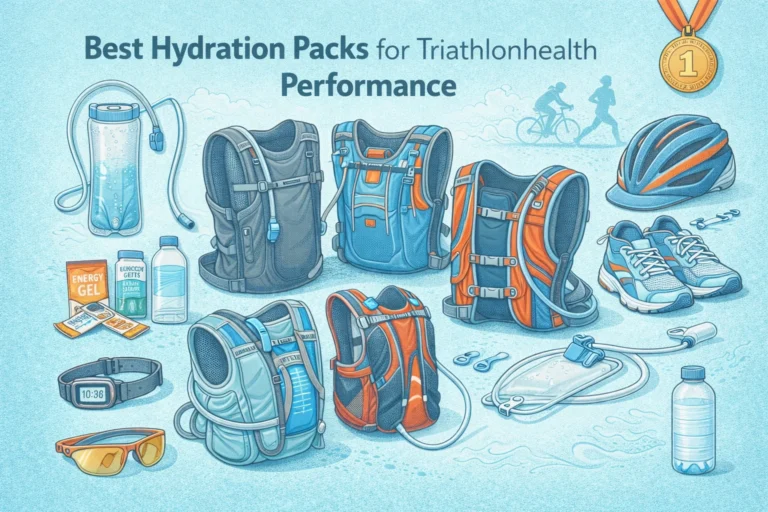
Hydration makes or breaks a long training session or a race. This guide focuses on hydration packs triathlonhealth athletes trust, and it helps you pick the right pack for training and race day. Read on for clear, practical advice, honest product picks, and easy care tips.
Why hydration packs matter for triathlonhealth athletes
Hydration affects energy, focus, and recovery. For triathletes, drinking the right amount at the right time keeps power steady and can prevent cramps and fatigue. Hydration packs offer hands-free drinking, more fluid capacity than bottles, and a secure fit while you train.
Many triathletes mix water and electrolyte drinks. Hydration packs let you carry larger volumes and switch fluids without stopping. That makes them useful for long bike workouts, long runs, and open-water training sessions where aid stations are limited.
Packs also free up bottle cages for aero hydration or tools. For athletes who do brick sessions or simulation rides, having a pack means fewer stops and more consistent intensity. The comfort of a good pack reduces distractions so you can focus on pacing and form.
Finally, hydration packs can carry small essentials like gels, a phone, and a spare tube. That helps athletes who train on remote roads or trails where access to help is limited. A well-chosen pack combines fluid storage and useful cargo space without adding bounce.
How hydration packs compare to bottles for triathlonhealth use
Many triathletes still use aero bottles on the bike. But packs have key benefits that matter for multisport athletes. Packs provide steady hydration on runs and rides where hand access to bottles is awkward or disruptive.
Packs can hold cold or warm fluids longer when they have insulated tubes and bladders. That is useful for hot-weather training and long events. Packs also free your frame for race-specific setups on your bike, like aero bottles for time trial positioning.
On the run, a pack can reduce the need to grab cups at aid stations. This saves time and keeps your focus steady. Packs are especially useful for training that simulates longer race conditions or multi-hour sessions.
That said, packs add weight and must fit without chafing. Choose a pack that balances fluid capacity with secure fit and minimal movement. A well-fitting pack should feel like part of your body, not an extra load.
Top hydration packs triathlonhealth performance picks

Below are packs selected for racing and training. Each pick targets a need: low weight, high capacity, or trail durability. Read the short review for what makes each pack worth considering for triathlonhealth athletes.
These options suit different budgets and race formats. Some work best on long bike rides and runs. Others are built for trail cross-training. The aim is to help you find a pack that fits your training plan and race demands.
Before the list, note that fit and comfort matter more than features. A light pack that chafes will slow you down. Pick a pack that sits snugly against your back, has an adjustable harness, and keeps fluid in easy reach.
1. Lightweight speed pack for race simulations
This pack is built for speed. It has low profile straps and a slim bladder to keep weight close to the body. The design reduces bounce and stays stable at race pace.
It offers a small pocket for essentials like gels and a key. The tube clips close to the shoulder for easy sipping without breaking stride. For triathlonhealth athletes doing high-intensity bricks, this pack is a solid choice.
The bladder is easy to fill and clean. If you value low weight and clean lines, this is a top pick. It is not the best for very long days when you need 2 liters or more, but for most sessions it hits the sweet spot.
2. High-capacity training pack
This option holds 2 to 3 liters and has room for tools and extra layers. It is built for long training sessions and back-to-back days when you need more supplies. The straps are padded for comfort on long rides.
The pack includes multiple pockets for nutrition, a pump, and a phone. Hydration packs triathlonhealth users choose for long rides often favor this kind. It fits well for rides where aid stations are far apart or uncertain.
On the downside, a larger pack can be warmer on hot days. But if your priority is capacity and a stable carry while keeping bottles free on the frame, this is a reliable choice.
3. Trail-ready pack for cross-training
Trail runs and off-road sessions need a different set of features. This pack has reinforced fabric, a secure harness system, and pockets designed for trail essentials. It is rugged and stays put on rough terrain.
It has quick-access pockets on the straps for energy gels and a bite valve that is easy to open while moving. Triathlonhealth athletes who include trail work in their prep like this pick for technical training days.
The pack often includes a separate compartment for a hydration bladder and a tool sleeve. If your training includes mixed terrain, a trail-ready pack can also double as a race-day option in cross triathlons.
4. Budget-friendly everyday pack
You do not need to spend a lot to get solid performance. This entry-level pack gives reliable carry and a simple harness. The bladder is easy to replace and the straps are adjustable to fit most bodies.
It works well for daily training and as a backup pack. For athletes on a budget, this pack covers the basics: stable carry, decent capacity, and easy cleaning. It is a practical choice for growing athletes or club members.
Expect less refined fit and fewer pockets than higher-end models. Yet, for many riders and runners, it delivers the hydration performance needed for steady training blocks.
5. Race-legal aero pack for time trials and long courses
This pack is designed to work with aero positions. It sits low on the back and has a flat profile so it does not disrupt airflow. It is popular among triathletes who need hydration but do not want a bulky rear setup.
It focuses on minimal bulk and quick access. The bite valve is routed to the side where you can sip without changing your position. It keeps weight low for better handling and comfort on the bike.
Because of the low volume, it is best for shorter races or when you can refill en route. It is a good complement to aero bottles and fits riders who value speed and low drag.
How to choose a hydration pack for triathlonhealth needs
Choosing the right pack depends on your sport focus, session length, and body shape. Think about how you train and race. If most of your work is long rides then a larger pack could be better. If you need minimal drag, a low-profile pack will be best.
Consider climate. In hot conditions look for insulated tubes and a bladder that keeps drinks cool. For cold weather, choose a pack with better insulation or the option to carry warm fluids. The pack should match your usual training routes and support how often you can stop to refill.
Also think about storage. Do you carry tools, layers, or a phone? Packs with multiple pockets and dedicated sleeves keep items from rattling. A pack with modular pockets makes it easier to tailor the carry to your session.
Finally, test the fit. Try a few models with weight in the bladder. Move your arms, run, and simulate race movements. A pack that palpably moves will cause chafe and distraction. Choose a model that stays put and feels balanced.
Fit and comfort tips for hydration packs triathlonhealth athletes
Fit affects comfort and performance. A good fit prevents chafe and reduces energy loss. Look for adjustable sternum straps and an adjustable lower strap to keep the pack close to your back.
Try the pack with the bladder half full and then full. That shows how the weight shifts while you move. A stable pack should not bounce or slide. Padding should not press hard on sensitive points like the spine or shoulders.
Check strap material. Breathable fabrics keep you cooler and reduce rubbing. Seam placement matters. Rounded and covered seams are less likely to irritate during long runs or rides.
Also test wearing the pack over the clothing you will use in races. Race suits and skinsuits are different from training kits, so a pack that fits over a jersey may feel different over a tight race suit. Do a dress rehearsal before race day.
Maintenance and cleaning routines for long pack life
Regular cleaning prevents mold and keeps the system tasting fresh. After each ride, rinse the bladder and tube with clean water and let them dry open. This reduces the chance of bacteria growth and odor buildup in the reservoir.
For deeper cleaning, use a mild cleaning tablet or a mix of baking soda and water. Scrub the bladder with a soft brush designed for reservoirs. Detach the tube and bite valve for separate cleaning, and let everything air dry completely before storage.
Check seals and valves after a season of use. Replace any parts that show wear. A worn valve can leak or affect flow. Keep a spare bite valve in your toolkit so you can swap it quickly if needed.
Store bladders empty and open. This keeps the interior dry and prevents musty smells. If you only use your pack in race season, clean and dry it before storing to avoid surprises when you bring it back into use.
Race day tips for using hydration packs triathlonhealth style
On race day, practice your pack use during training. Know where you will keep gels and how you will access the valve while moving. Practice ensures fast, confident sips without breaking rhythm or position.
Plan your fluid strategy ahead of time. Fill the bladder with the right mix of water and electrolyte based on race length and expected weather. Mark how much you drink on training rides so you can time refills during the race if needed.
Keep the tube clipped where you can reach it easily without disrupting position. Use bite-valve covers to reduce contamination and use insulated sleeves if you expect high temperatures. Small steps prevent big problems when the stakes are high.
On transitions, learn a quick way to stow or refit the pack if your race includes a run and bike combination that requires changing setups. A smooth transition saves time and helps maintain focus on the race effort.
Common problems and fixes with hydration packs
Leaks and odors are common issues. Check for cracks in the bladder and replace the tube if it becomes brittle. Cleaning regularly solves most odor problems, and replacing small parts prevents leaks that might wet your kit.
Chafing can come from poor strap fit or sharp seams. Use anti-chafe balm in sensitive areas and adjust straps to reduce friction. If the pack still rubs, try a different model with softer fabric and rounder seams.
Flow problems usually come from kinks in the tube or a blocked valve. Keep the tube routed without sharp bends, and check the valve for salt or debris. Carry a small tool to clear the valve if needed while training or racing.
Weight balance issues feel like the pack pulls to one side. Repack smaller items to even the load and adjust straps to center the pack. A small reorganization often fixes balance problems without changing the pack.
Budget options and high-end choices for hydration packs triathlonhealth athletes
There is a choice for every wallet. Budget packs often give basic function and decent durability for training. High-end packs offer lighter weight, better fit systems, and refined features like magnetic tube anchors and insulated bladders.
If you train a lot, investing in a mid- to high-level pack can pay off with better comfort and fewer issues. For casual use, a simpler pack will do. Think about how many hours you spend in the saddle each week and choose accordingly.
Features to prioritize include harness adjustability, bladder shape, and the quality of the bite valve. These parts affect daily comfort more than paint or brand badges. Choose what solves your pain points first.
Remember that new parts like a quality bite valve or an upgraded tube can improve an older pack. You do not always need a full replacement if the harness and body are in good shape.
Accessories and add-ons triathlonhealth athletes use
Small accessories can change how useful a pack is. Tube insulation, spare bladders, and protective covers are common items athletes add. These bits often extend pack life and improve comfort in different conditions.
Some athletes prefer magnetic tube clips for quick access. Others add small pockets for race nutrition or a pump sleeve for longer rides. Consider what you always carry and ask if the accessory makes access or storage easier.
Brand-specific add-ons can help, but generic pieces often work fine. If you want to try accessories, start with an insulated sleeve and a spare valve. They often have the biggest impact on day-to-day use.
triathlonhealth watch selection and triathlonhealth innovative accessories are useful phrases to remember when you pair packs with other gear. Think about how your pack will work with your watch, phone, or other kit before you commit to a model.
Where to test and buy hydration packs
Try packs at local stores or demo events. You want to feel the harness and test movement. A store fit session helps you avoid returns and gives real feedback on how a pack performs when worn for 30 to 60 minutes.
When buying online, read return policies carefully. That gives you a safety net if the fit is off. Check reviews from athletes with a similar build and training style to yours, and pay attention to comments about long-term durability and comfort.
Buy spare parts like valves and bladders from the manufacturer if possible. That keeps your pack working longer and avoids the need to replace the whole unit when one part fails. A supply of spare parts is a small investment for long-term use.
Key Takeaways
Hydration packs triathlonhealth athletes trust provide steady access to fluids, free up frame space, and add storage for long sessions. Choosing the right pack comes down to capacity, fit, and the type of training you do.
Test fit before you buy and practice using the pack in training. Clean the bladder and tube regularly, and keep spare parts on hand to avoid mid-season failures. Small adjustments to fit and packing can solve most common problems.
For race day, plan your fluid mix and clip the tube where it is easy to reach. Use packs that match your race length and climate, and balance weight with stability. A well-chosen pack helps you focus on pacing and performance rather than on thirst.
Use the information here to compare options, try packs in real conditions, and pick a model that feels like part of your body. The right hydration pack will support safe performance and give you fewer worries during long training days and races.