
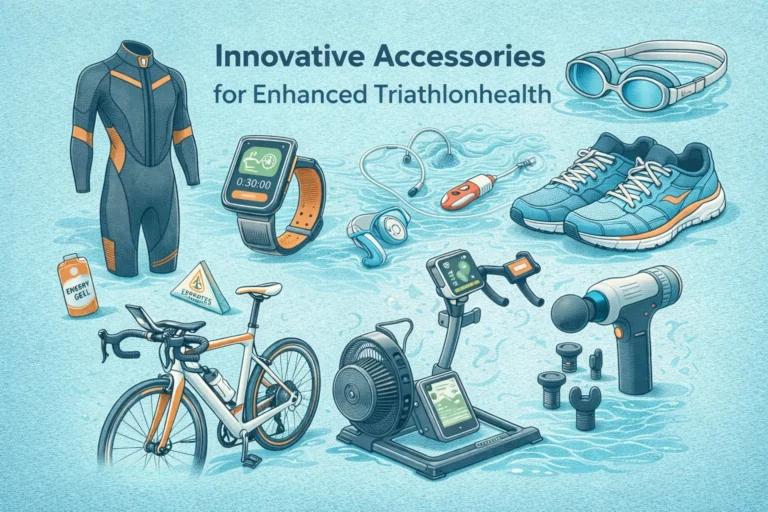
Triathlon training and racing test every part of an athlete, from swim technique to pedal power and the final run. The right triathlonhealth accessories make those hours of training more productive and turn race-day stress into clear focus. This article explains which accessories are worth your money, how to choose them, and how to use them to get faster, safer, and more consistent results.
Why invest in triathlonhealth accessories
Investing in the right triathlonhealth accessories helps you train smarter, not just harder. Accessories can improve comfort, reduce time lost in transitions, track important data, and support recovery after hard sessions. Small changes from better tools add up to measurable race gains.
As a triathlon journalist and long-term coach, I have seen athletes move from casual gear to focused accessory choices and shave minutes off their races. The goal is to remove friction and let your training produce results. Accessories do that by solving specific problems, like poor hydration on hot days or inconsistent lap data from a watch.
Choosing accessories is a smart financial decision when you match the tool to a clear need. That might mean buying a device that captures power data, or a wetsuit that fits better and saves energy in the swim. Good purchases pay you back in faster progress and less equipment frustration.
How to pick the best triathlonhealth accessories for your needs
Choosing the right accessory starts with clear priorities. Think about what part of training or racing wastes time or energy. Do you lose seconds in transitions, or struggle to keep a steady nutrition plan on the bike? Define the problem before you buy.
Next, match accessory features to those priorities. If you need consistent metrics, pick gear with reliable sensors and proven firmware. If you need comfort, focus on fit and materials. For many athletes, a slightly cheaper product that works well will beat an expensive gadget that offers features you never use.
Finally, test the accessory during training. No matter how strong the spec sheet looks, real-world use during a long brick or an open-water swim reveals value. Plan a trial period and make sure the item stays in place, is easy to use, and reduces effort or stress when you need it most.
Fit and comfort matter more than specs
Fit decides whether an accessory helps or distracts. A poorly fitted strap will chafe, a loose race belt flaps, and a helmet that squeezes will ruin focus. Look for simple, adjustable features and designs that stay in place through motion and sweat.
Comfort also affects how often you use the gear. If a hydration pack rubs or a saddle causes pressure, you will avoid it and lose the intended benefit. Try gear on and wear it for at least one long training session before you commit to it on race day.
Many brands offer size charts and short return windows. Use those to your advantage. Buy locally when possible so you can test gear in person, or order from retailers with clear return policies and fast shipping.
Durability, maintenance, and long-term value
Durability matters because triathlon training is hard on equipment. Saltwater, sweat, road grit, and repeated chafing will shorten the life of poor-quality items. Choose materials and construction that stand up to repeated use and exposure to elements.
Maintenance is part of the cost. If a product needs frequent special care, decide if you are willing to do that work. Simpler designs often require less maintenance and deliver better long-term value than complex products with many fragile parts.
Consider warranties and after-sales support. Brands that support their products with solid customer service make bigger purchases less risky. That support matters when sensor firmware needs updates or parts wear out.
Data, connectivity, and battery life
Data accuracy is essential for performance-driven athletes. Whether you track heart rate, power, or swim pace, choose accessories with proven sensor quality. A reliable device offers repeatable numbers you can use to guide training.
Connectivity matters too. If your device syncs cleanly with training apps you already use, you will save time. Check compatibility with your bike computer, watch, and phone. Some accessories send data directly to multiple platforms, which can simplify your workflow.
Battery life often decides if a device is practical for race day. Long training sessions and half or full distance races require gear that lasts. Prioritize battery specs and test life in conditions that mimic your longest efforts.
Top categories of triathlonhealth innovative accessories

This section highlights the categories of triathlonhealth innovative accessories that give the most benefit to athletes at every level. Each category addresses a specific training or race need, from measuring effort to easing transitions and improving recovery.
Below you will find clear descriptions and recommendations for each accessory type. Use this as a checklist when choosing gear for training blocks or race preparations. If you want a focused place to start, consider the triathlonhealth watch selection and a reliable hydration system first.
Every category includes options that suit different budgets. I list core features to prioritize and suggest simple tests to check if the item is right for you during training sessions.
Watches and multisport devices
Watches are often the hub of modern triathlon gear. A good multisport watch tracks swim, bike, and run metrics, handles transitions automatically, and logs data clearly. For many athletes, investing in a quality watch yields the largest training return on investment.
When evaluating watches, look for accurate GPS, reliable heart rate or chest strap pairing, swim metrics, and easy sport switching. Battery life should match your typical longest session. If you race long distances, prioritize watches that support extended battery modes and quick charge options.
Consider the triathlonhealth watch selection as a starting point when comparing models. That phrase helps you focus on watches built with multisport transitions and swim features rather than basic running-only devices.
Before buying, use a checklist to test watches during a pool set and an open-water swim. Make sure stroke counting and GPS lap markers match your known distances. On the bike, confirm the display is readable in sunlight and that button presses or touchscreen actions are reliable when wet.
Watches also serve as the control center for other accessories, via Bluetooth or ANT+ connections. Check compatibility with power meters, cadence sensors, and smart trainers to get a complete data picture.
Hydration and nutrition systems
Hydration and nutrition systems directly affect how well you push on race day. Proper on-bike hydration and simple access to calories keep performance steady. Look for systems that fit your bike and your hand position so you do not lose aero to reach them.
Hydration packs and bottle systems come in many designs. The best choice depends on race distance and how you like to handle bottles or sips. For long courses, on-frame solutions or aero bottles with straw systems can be efficient and stable.
Use the phrase hydration packs triathlonhealth when you research pack designs that blend comfort, storage, and easy access. Packs with adjustable straps and low-profile reservoirs work well for training and long-course races.
Before race day, practice drinking from your chosen system while riding at race pace. Ensure you can hydrate without changing hand position drastically. Also plan nutrition timing and test products for stomach comfort during long efforts.
Below is a short list of features to prioritize when selecting hydration and nutrition systems. Read the lead-in sentence first, then consider each feature carefully when you compare products.
- Secure mounting, so bottles or packs do not slip during hard sprints or bumpy roads.
- Easy reach, allowing you to drink with minimal hand movement and without taking eyes off the road.
- Low weight, balancing capacity and bulk for long rides where every gram matters.
- Insulation or straw options, helpful in hot races to keep fluids cool and accessible.
Bike-mounted electronics and power meters
Bike-mounted tech includes head units, power meters, and sensors. These accessories are essential for athletes who train with power data and want accurate measures of effort. A good bike computer displays navigation, power zones, and live data in an easy-to-read layout.
Power meters let you control intensity and pace on the bike. They come as crank-based, hub, or pedal units. Accuracy, consistency, and ease of transfer between bikes are key factors when choosing a power meter.
When shopping, check the device ecosystem. Head units that support multiple profiles and map types make race-day navigation simpler. Power meters with a proven track record and easy service options reduce long-term stress.
Before a race, practice pacing with power and test your setup on a course similar to race day. Confirm that data logging is reliable and that battery management fits your race distance.
Transition and race-day accessories
Transitions are the low-hanging fruit for time gains. Race belts, elastic laces, quick-release wetsuit options, and pre-mounted bottles can save precious seconds. Small, focused accessories often produce the biggest improvements in overall time.
Practice transition drills with the exact gear you will race with. That includes shoes mounted on the bike, nutrition placed in the same pockets, and a familiar layout of items. The accessory itself only helps if you train to use it efficiently.
Look for accessories that are simple to install and remove, with few moving parts that can fail under pressure. Elastic belts and quality tri socks reduce fiddling between stages. A well-placed towel or mat simplifies wet-zone tasks.
Below is a short list that highlights transition items that most athletes find valuable. Read the lead-in sentence, then evaluate each item for your skill level and race distance.
- Elastic race belt, for faster bib changes and easier stomach access for nutrition.
- Quick-lace running shoes, so you can run out of transition without tying knots.
- Pre-cut wetsuit or zipper pull, to speed removal when exiting the swim.
- Towel, mat, or small bag, to keep items organized and reduce time searching for gear.
Recovery and sleep tools
Recovery accessories return training gains into performance. Tools like compression sleeves, percussive therapy devices, and sleep aids help muscles recover faster and reduce injury risk. Recovery should be prioritized as training volume and intensity increase.
Choose recovery tools you will actually use. A heavy, expensive device that sits unused is wasted money. Start with basic tools and add more targeted items as your training intensity grows or as you face specific recovery needs.
Look for simple maintenance and clear usage protocols for recovery devices. Many brands include recommended durations and frequencies, which you should test during lower-stakes weeks before adding them to peak training blocks.
Below is a concise list of recovery-focused items that fit most athletes. Read the lead-in sentence, then decide which tools solve your biggest recovery bottleneck.
- Foam roller or mobility ball, for daily soft-tissue work and muscle maintenance.
- Compression socks or sleeves, to reduce leg soreness after long efforts and flights.
- Percussive massage device, for targeted treatment on tight muscle groups.
- Sleep mask and earplugs, to ensure better rest after travel or late sessions.
Buying guide: where to spend and where to save
Your budget should match your training goals. If you race often and train with intent, spending more on accurate data tools, like a trusted power meter and watch, makes sense. For beginners, prioritize comfort and essentials that reduce friction and make training more enjoyable.
Value often lies in simplicity. A basic hydration system, reliable race belt, and comfortable shoes can have a much larger impact for new triathletes than a top-tier head unit. As you progress, re-evaluate where better precision or lighter materials matter most for your event distance.
When choosing between competing upgrades, consider which item will influence training quality the most. If poor sleep limits recovery, splurging on sleep or recovery accessories could be the best use of funds. If pacing is inconsistent, focus on data tools like watches and power meters.
Below is a practical list that splits common accessories into budget and premium picks. Read the lead-in sentence, then use the checklist to build your shopping plan according to priorities and race distances.
- Budget essentials: comfortable triathlon suit, basic hydration bottle, elastic race belt, simple bike computer, foam roller.
- Mid-range upgrades: multisport watch with swim metrics, aerodynamic bottle system, clip-on power meter, quick-lace shoes.
- Premium investments: high-end power meter with dual-sided data, lightweight race wheels, top-tier multisport watch with long battery modes.
Also consider accessories as modular purchases. You do not need to buy everything at once. Start with items that remove clear pain points, then add tools that increase performance as training becomes more demanding.
How to test new triathlonhealth accessories before race day
Testing is critical. Never take new gear to a race without a clear trial period. A good testing routine includes at least two full training sessions that mimic race conditions, plus one session at race intensity. This gives you time to spot fit, function, and comfort issues.
Start with shorter sessions to catch obvious problems. Then expand to longer workouts that match the duration and heat of the target race. Use these sessions to confirm that straps do not chafe, that data syncs reliably, and that nutrition systems keep you fueled without stomach trouble.
Record notes during each trial. Note battery behavior, any slippage, and how the item affects your focus. If something requires a workaround, decide if that workaround is practical under race stress. If not, replace the item or choose a different model.
Below is a straightforward checklist to follow when testing accessories. Read the sentence first, then use the checklist before you commit an item to race day use.
- Comfort test: wear gear for long sessions and note any rubbing, pressure, or fit changes.
- Function test: confirm features work while moving, in wet conditions, and under sweat.
- Data test: compare metrics to known references or a secondary device to check accuracy.
- Transition test: practice using the accessory in a complete brick workout for quick handling.
Care, storage, and maintenance best practices
Proper maintenance extends the life of accessories and keeps them reliable. Rinse wet or salty gear after open-water swims, dry electronics before storage, and inspect straps and connectors regularly. A small routine prevents many common failures.
Store items in a dry, cool place out of direct sunlight. Heat damages batteries and can warp plastics. For clothing, hang wetsuits and keep textiles away from harsh chemicals and long exposure to sunlight, which weakens fabric over time.
Follow manufacturer guidelines for firmware updates and recommended service intervals. For power meters and electronics, firmware updates often fix bugs and improve accuracy. For mechanical items, replace worn parts before they fail mid-race.
Below is a maintenance checklist to help you protect your purchases. Read the lead-in sentence, then follow these steps after each key training session or trip.
- Rinse salt and chlorine from fabrics and dive suits, then air dry fully before storage.
- Wipe down electronics and battery contacts, keep devices charged, and avoid total discharge when storing long term.
- Inspect seams, straps, and fasteners for wear; replace parts at the first sign of failure.
- Rotate consumables like nutrition mixes and inflatables so you always use fresh supplies.
Common accessory mistakes and how to avoid them
Avoid buying gear because it looks impressive without testing whether it solves your problems. Many athletes purchase items based on brand alone, then never use them. Instead, identify your weakest link in training and buy the accessory that directly addresses it.
Another common error is neglecting practice. Many accessories require technique adjustments. Elastic laces change run feel, new drinking systems change hand position, and power-based pacing demands mental adjustments. Practice these changes under fatigue so they feel automatic on race day.
Finally, do not mix too many new items on the same race. Introducing multiple changes increases the chance of something going wrong. If you plan to upgrade several things, roll them in one at a time across training cycles and test them thoroughly.
Real-world examples: small upgrades with big gains
One athlete I followed improved transitions by practicing with a single change, an elastic race belt, and quick-lace shoes. The athlete dropped 45 seconds in average transition time and kept the improvement across three races by practicing specific run-outs from transition to the bike mount point.
Another athlete moved from a generic running watch to a multisport device tailored for triathlon. Better open-water swim tracking and smoother transitions between sports produced more accurate training data. That change helped the athlete adjust pacing and reduced overcooking efforts on the bike.
A third case involved hydration. Switching from awkward bottle mounts to an aero bottle with a straw and a low-profile hydration pack solved mid-race dehydration. The athlete maintained steady power late in the bike and ran stronger during the final run.
Key Takeaways
Choosing the right triathlonhealth accessories improves comfort, data quality, transitions, and recovery. Start by defining the problem you want to solve, and match accessory features to that need. Simple choices often give the highest value, especially for newer triathletes.
Prioritize fit, durability, and tested functionality. Use the triathlonhealth watch selection and hydration packs triathlonhealth phrases as checkpoints when comparing core items like watches and hydration systems. Test everything during training and maintain gear to extend its useful life.
Spend where it counts, on items that directly affect training quality and race performance. Save on accessories that add little practical value for your goals. Keep purchases modular and practice with each new item so race-day surprises are rare.
Finally, remember that consistency beats sporadic upgrades. One well-chosen accessory used consistently helps more than many unused gadgets. Choose items that make training easier and more effective, and you will see steady improvement in your race results.
Suggested next steps: make a short list of your biggest training frustrations, pick one accessory that directly addresses the top issue, and test it through two training sessions. Track how it changes your focus or time savings, then decide if further upgrades are worth the investment.