
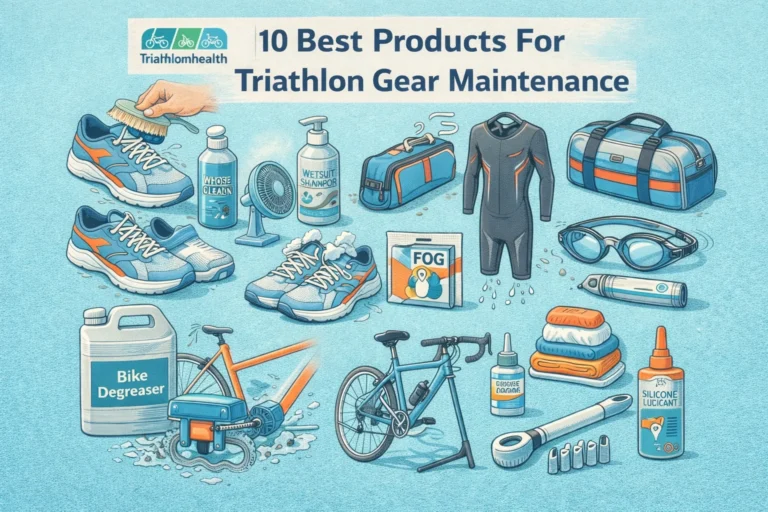
Triathlon racing is as much about preparation as it is about stamina. Keeping your bike, wetsuit, and transition gear in top shape can shave minutes off race day and save you money over time. This guide lists the best triathlon maintenance products and explains why each one earns a spot in a serious athlete’s toolkit.
Why maintenance matters
Proper care keeps your equipment safe and fast. A clean, well-lubricated bike shifts smoothly and wastes less energy. A well-kept wetsuit fits better and lasts longer. That makes every training session and race more efficient and less stressful.
Maintenance also prevents small problems from becoming big ones. A loose bolt, a neglected chain, or a torn seam can cost you time or end a race early. Spending a little time and money on upkeep prevents costly repairs and improves safety.
Regular maintenance improves performance. A bike that benefits from regular bike tune-up work will feel sharper on climbs and faster on flats. A suit that has been cared for will keep its buoyancy and fit. Those small gains add up on race day.
As a triathlon journalist and mechanic, I see the difference between riders who maintain gear and those who do not. Care pays off. Use the right products and make maintenance part of your routine to protect your investment and boost confidence before each race.
How we tested and chose
We focused on products that are proven, easy to use, and effective across conditions. Products had to be suitable for athletes who train hard and also for racers who travel. Durability mattered as much as performance.
Real-world testing included road miles, pool and open-water sessions, and repeated travel packing. We judged each product on cleaning power, longevity, ease of use, and value. Practicality for race-week and transition area care was a must.
For bike items we compared real outcomes in a typical bike tune-up: shifting precision, drivetrain life, and braking feel. For wetsuits we checked flexibility, seam strength, and scent control. For tools we looked at portability and multi-function use for race-day repairs.
We prioritized items that suit both beginners and experienced racers. The goal was to recommend a compact, smart kit of the best triathlon maintenance products that covers common needs and offers peace of mind on race day.
Top 10 best triathlon maintenance products

Below is a focused list of the best triathlon maintenance products. Each product is chosen for a specific task and tested in real training and racing conditions. Before the list, note that these picks cover cleaning, lubrication, minor repairs, and protection for bike and swim gear.
Use this list to build a maintenance kit you can carry to races and use at home. Each item is described with why it matters, how to use it, and who will benefit most from it.
For clarity we grouped items by function: cleaning and care, lubrication and tune-up, repair and protection. That helps you assemble a compact, effective kit without duplication.
Read each entry and match it to your routine. Together these items form a solid foundation for advanced gear maintenance when you need reliability in training or race settings.
- 1. Chain lube (wet and dry options)
Why: A good chain lube reduces wear, improves shifting, and protects against rust. You need a wet lube for rainy or muddy training and a dry or wax formula for dry, dusty conditions. A reliable chain lube choice makes a huge difference in drivetrain life.
How to use: Clean the chain first, apply a small drop per link, let it set, then wipe off excess. Regular application keeps the drivetrain quiet and efficient.
Who it’s for: All triathletes. If you travel to wet races, keep a wet formula. For faster, dry rides, choose a dry lube.
- 2. Bike degreaser and cleaner
Why: Removing old lubricant, grime, and road grit prevents premature wear. A quality degreaser cleans the chainrings, cassette, and chain without damaging components. Clean bikes shift better and look sharp when you rack them in transition.
How to use: Apply to the drivetrain with a brush, let it work briefly, then rinse or wipe. Repeat if needed before re-lubing. Regular cleaning is a key part of a thorough bike tune-up.
Who it’s for: Cyclists who ride often or in varying conditions. Also useful before a race day inspection.
- 3. Multi-tool with chain tool
Why: A compact multi-tool can handle most roadside or transition repairs. A chain tool and Allen keys let you fix flats, adjust derailleurs, and tighten bolts. This reduces the chance of a mechanical ending your race early.
How to use: Keep it in a saddle bag or transition kit. Practice basic fixes at home so you can act quickly under pressure. A light, strong tool pays off in stressful moments.
Who it’s for: Any racer who wants to be prepared. Especially helpful for long courses where assistance is far away.
- 4. Tire repair kit and mini-pump/CO2 inflator
Why: Flats happen. A compact repair kit with patches, tire levers, and a pump or CO2 inflator gets you back on the road. Speed matters in triathlon, so tools that are lightweight and fast to use are best.
How to use: Carry the kit in a race-ready bag. Learn to swap or patch a tube quickly. Check inflator compatibility with your valve type beforehand.
Who it’s for: All triathletes. Critical for training rides and race day plans.
- 5. Chain cleaner tool
Why: A hand-held chain cleaner speeds up deep cleaning and uses less mess. It scrubs the chain while you pedal and isolates the drivetrain so you can work fast between sessions or before a race.
How to use: Fill with cleaner, clamp around the chain, and pedal backward. Rinse and re-lube. It’s faster than individual brushes and effective for routine maintenance.
Who it’s for: Riders who clean at home or service bikes between workouts. Good for athletes who want efficient, repeatable cleaning.
- 6. Wetsuit shampoo and deodorizer
Why: Wetsuits trap salt, chlorine, and odors. A dedicated shampoo cleans seams and neoprene gently and prevents material loss. Keeping a suit clean improves fit and comfort on race day.
How to use: Wash after each open-water session or race. Rinse thoroughly and air dry away from direct sun. Proper care extends suit life and keeps it race-ready.
Who it’s for: Swimmers who use their wetsuit often or travel for races. Essential for triathletes who want long-lasting neoprene performance.
- 7. Neoprene repair kit
Why: Tears and small punctures happen. A neoprene repair kit lets you fix a suit quickly and avoid last-minute kit problems. It keeps your wetsuit usable and prevents water entry that affects buoyancy.
How to use: Clean the area, apply adhesive or patch as instructed, and allow cure time. Carry small patches for quick fixes if you travel with a spare suit.
Who it’s for: Frequent open-water racers and travelers. It’s a must for anyone who races often in tight wetsuits and wants confidence in wetsuit repair on the road.
- 8. Frame and component protectant
Why: A light protectant repels water and dust and reduces corrosion. It keeps bearings and exposed metal parts working smoothly. For carbon frames, use products formulated for composite materials.
How to use: Wipe on after cleaning and drying. Buff off excess. Use sparingly around brakes and rotors to avoid contamination.
Who it’s for: Racers storing bikes outdoors or traveling frequently. Good for maintaining resale value and performance.
- 9. Compact torque wrench
Why: Correct torque on bolts protects parts and reduces failures. Over-tightening can damage carbon components, while under-tightening can cause parts to slip. A small torque wrench is essential for safe assembly.
How to use: Set the recommended torque for stems, seatposts, and pedals. Check specs from component manufacturers. Carry a travel-size model for pre-race checks.
Who it’s for: Serious athletes with carbon bikes or those who service their own equipment. Great for travel days and pit checks.
- 10. Chainstay and frame protection tape
Why: Tape protects paint and prevents rub damage from chains and cables. It is cheap insurance against cosmetic and structural wear. Easy to apply and replace, protection tape keeps your bike looking race-ready.
How to use: Clean surfaces, cut to size, and apply smoothly to chainstay and vulnerable frame areas. Replace when edges peel to maintain full coverage.
Who it’s for: Travelers, commuters, and anyone who racks their bike frequently. A small investment that saves repairs and keeps components quiet.
How to use and store your kit
Making a habit of maintenance is simple and effective. Build a small routine: a quick chain wipe after wet rides, a gentle wetsuit wash after open-water swims, and a weekly visual check of bolts and tires. Regular small steps stop big failures.
Store products in a single, portable bag. Use labeled compartments for lubricants, tools, and first-aid items. A compact kit helps you perform a quick bike tune-up at home or a quick check in the transition area before a race.
For long trips, carry travel-sized cleaners, a mini-pump or CO2 inflator, and the essential tools. Keep adhesive and the neoprene repair kit in your luggage. This approach supports advanced gear maintenance even when you are away from your workshop.
Document what you do. Keep a simple log of major services and part replacements. That record helps you track wear and plan replacements. It also helps you stay calm when you spot an issue close to race day.
Choosing the right products for you
Know your conditions and pick products that match them. If you race in salty, coastal water, prioritize wetsuit care and corrosion-resistant lubes. If you ride in dusty, dry climates, emphasize dry chain lubricants and filters for tools.
Budget matters. You can build a sensible kit without buying top-tier items for every category. Start with lube, a degreaser, a multi-tool, and a repair kit. Add specialty items like a torque wrench or frame protectant as you progress.
Learn how the products work. Simple practice sessions with your tools and cleaners save time and stress later. Practice a bike tune-up routine and a wetsuit repair patch at home so you are confident when it matters most.
Finally, tailor your kit to your travel style. If you fly often, keep liquids within airline rules and pick compact, reliable items. If you drive to races, you can carry larger containers and more tools for in-depth maintenance.
Key Takeaways
Maintenance is part of performance. Investing in the best triathlon maintenance products pays off with reliability, performance, and fewer race-day surprises. Care extends the life of gear and improves confidence on race day.
Start with core items: chain lube, degreaser, a multi-tool, and a tire repair kit. Add wetsuit shampoo and a neoprene repair kit for swim-focused care. Include a compact torque wrench and frame protection for higher-end bikes.
Make maintenance routine and pack smart for travel. A compact kit supports advanced gear maintenance on the road and helps you perform a quick bike tune-up before races. Simple habits keep gear ready and lower stress during competition.
Use this list of the best triathlon maintenance products as a practical checklist. Match items to your conditions, practice repairs at home, and keep care simple. A well-maintained kit means more consistent training, better race-day performance, and longer gear life.