
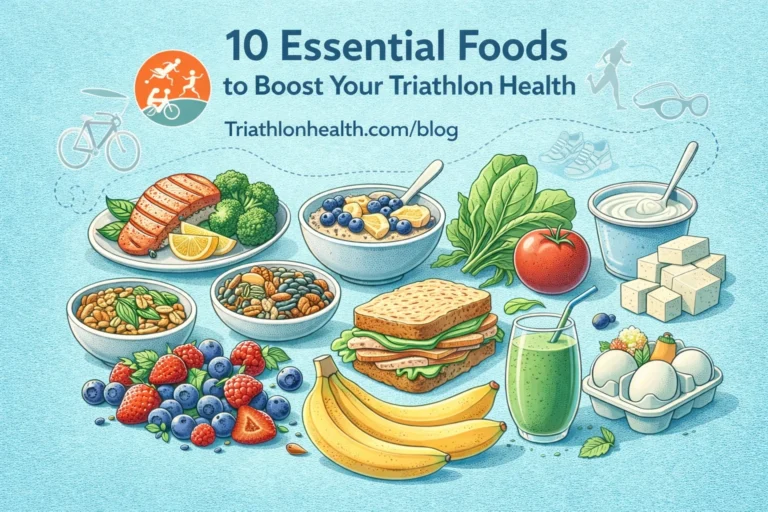
Good nutrition makes hard training work. As a triathlon journalist and long-time coach, I see how the right triathlon foods change recovery, power, and consistency. This article lists ten essential foods, explains how to use them in training and racing, and helps you pick products and snacks that match your goals. You will get clear, simple guidance you can use right away.
Why triathlon foods matter
Food is fuel and building blocks. Athletes need calories, protein, fats, and the right vitamins and minerals to train day after day. Choosing the right triathlon foods helps you recover faster, keep energy steady, and reduce injury risk. It also supports immune health during heavy training blocks.
Triathletes balance three sports, which stresses different systems. Swim, bike, and run demand carbohydrates for endurance, protein for repair, and healthy fats for long efforts and hormone balance. The foods you pick shape how well those systems perform and how quickly you bounce back between sessions.
Beyond macronutrients, timing and food form matter. Whole foods, real-food snacks, and well-chosen sports products play different roles. The right mix on training days, rest days, and race weeks changes how you feel and how fast you adapt. That is why picking the right triathlon foods is both practical and strategic.
10 Essential triathlon foods

Below are ten foods that appear in many pro and age-group athletes’ plans. Each item covers fuel, recovery, or immune support. I will explain what each food does and how to use it before, during, and after sessions.
Here is a focused list of those essential items. Read the short notes that follow each entry so you can match the food to training type and shopping choices.
- Oats — A steady source of carbs, fiber, and a small amount of protein. Great for long rides and morning sessions.
- Bananas — Quick carbs with potassium. Easy to digest before or during training, and cheap.
- Lean poultry and fish — High-quality protein for repair, and fish adds omega-3 fats for inflammation control.
- Sweet potatoes — Dense carbohydrate source, plus vitamins A and C, and a good option for dinner on heavy days.
- Eggs — Complete protein with important nutrients like choline. Versatile for any meal.
- Greek yogurt — Protein-rich, with live cultures that help gut health. Mix with fruit or oats.
- Mixed nuts and seeds — Healthy fats, protein, and micronutrients. Use small portions to add calories without spikes.
- Beetroot — Natural nitrate source that can support blood flow and effort at threshold if used correctly.
- Whole grain bread or rice — Simple, reliable carbs to top up glycogen before long sessions or races.
- Sport nutrition products (bars, gels, hydration mixes) — Designed for quick energy and electrolytes on long sessions and race day.
Each food has a place. Oats and sweet potatoes are for base meals and long rides. Bananas and gels are for on-bike energy. Lean proteins and yogurt matter for recovery. Beetroot and nuts target specific needs like blood flow and calorie density. Combining these foods across the week gives you a balanced intake.
How to use triathlon foods in training
Training nutrition is about matching fuel to the session. Short, high-intensity work favors quick carbs and some protein before or after. Long steady sessions require more total calories and often a mix of carbs and fats. Planning meals around sessions keeps energy steady and recovery fast.
Start small when testing new foods. Try the same snack you will use on race day during long training sessions first. That prevents surprises, like stomach upset, on race day. Keep notes in a training log so you can repeat what worked and discard what did not.
Use whole foods most days and sport products for long rides, brick sessions, and races. For example, eat oats and eggs before a morning long ride, and carry gels or a bars pack for during the ride. After the session, aim for 20 to 30 grams of protein and some carbs within 45 minutes to start repair and glycogen rebuilding.
Triathlon foods for race day
Race day nutrition is a plan, not improvisation. You want foods that are familiar, easy to digest, and reliable. That means practicing race menus in training. Use the foods that gave you good results in long training sessions for your pre-race breakfast and on-course fuel.
Start the race with a carbohydrate-rich breakfast that you tolerate well, such as oats with banana and a bit of yogurt, or toast with honey and an egg. Keep the meal 2 to 3 hours before race start when possible. If you need a smaller option, a banana and a small sports drink 60 to 90 minutes before the start can work.
During the race, follow a simple schedule. For Olympic and longer events, aim for regular, small intakes of carbs every 20 to 45 minutes depending on intensity. Use gels, chews, or compact bars that you have practiced with. For hydration, count electrolytes and milliliters per hour so you replace losses without overdrinking.
Meal timing and portion guidance
Timing matters as much as food choice. Pre-session meals should be high in carbs and moderate in protein, low in fiber for sessions under 90 minutes to reduce stomach trouble. Post-session meals need protein for muscle repair and carbs for glycogen replacement.
Portions match session length and intensity. A 60-minute moderate session might need a small snack before and a balanced meal after. A 3-hour ride needs a larger carbohydrate intake during and a recovery meal with around 0.3 grams of protein per kilogram of body weight within an hour after the effort.
On heavy training days, increase total daily calories and focus on nutrient-dense choices like sweet potatoes, lean proteins, and nuts. On rest days, reduce total carbs slightly but keep protein steady to support repair. Monitor body weight, performance, and recovery as practical signs your timing and portions are right.
Hydration, electrolytes, and sport products
Hydration supports performance and recovery. Water covers many needs, but when sessions exceed 60 minutes or temperatures climb, add electrolytes and carbohydrates. Sports drinks, electrolyte tablets, and specific hydration mixes make this easy to control during long efforts.
Choose products based on sweat rate and taste tolerance. Some athletes prefer lower sugar concentrations to prevent gut issues, others need denser mixes for long events. Test different brands and concentrations in training to find the right match. Bring copies of the mixes or pre-measured sachets to avoid race-day confusion.
Sports gels, chews, and bars are practical triathlon foods on race day. They are compact, fast, and designed to be eaten on the bike or run. Pick a limited set of flavors and types you tolerate well. Carry enough calories for the distance plus a small reserve for unpredictable delays or higher-than-expected effort.
Supplements and targeted foods
Supplements can help fill gaps, but they do not replace whole foods. Common choices for triathletes include whey or plant protein for quick recovery, omega-3s for inflammation control, and vitamin D for bone and immune health. Use supplements that match a specific need verified by testing or symptoms.
Beetroot juice or concentrate is a targeted food that some athletes use to support blood flow and efficiency at threshold. Caffeine is another widely used ergogenic aid to boost focus and power when used within safety limits. Test both on training days to confirm benefit and tolerance.
Probiotics and fermented foods can help athletes who struggle with gut issues during long events. If you have chronic stomach problems when training or racing, a sports dietitian or medical professional is a better guide than random online advice. Use clinical testing where needed to match supplements to proven needs.
Shopping and choosing products for triathlon foods
Buying the right items is part of race prep. Look for whole, minimally processed foods in the supermarket for daily meals. For on-course products, buy from reputable brands and test several types before settling on one. Check ingredient lists to avoid surprises like high fiber or unfamiliar additives near race time.
When choosing sport products, pay attention to calories per serving and carbohydrate type. Some gels are mostly glucose, others use a mix of glucose and fructose, which can increase total absorption and reduce stomach stress. Consider flavor variety but do not introduce a brand new product on race day.
Budget and convenience matter too. Bulk oats, frozen fruit, and standard rice are cost-effective and reliable. For travel or races, pre-pack portioned snacks and sachets to reduce decision fatigue. A small kit of backup items helps you handle unexpected course issues without losing focus.
Common mistakes and how to avoid them
One common mistake is changing too much for race day. New foods, new gels, or a different breakfast can cause stomach problems. Keep your race menu consistent with what you used in long training sessions. Practice tastes as well as timing so you know what your gut tolerates.
Another mistake is overloading on protein or fat before events, which slows digestion and can make you feel heavy. Save denser meals for recovery and heavier training days. For pre-event meals choose clean carbs and moderate protein, low fiber for short pre-race windows.
Skipping hydration planning is a third frequent error. Not all courses have reliable feed stations, and not all aid stations have the electrolyte mix you prefer. Carry backups, and practice drinking while you ride or run at race pace so the habit is automatic on race day.
Practical meal ideas and snack templates
Practical, repeatable meals simplify nutrition. For breakfast before long morning sessions, try oats cooked with milk or water, a mashed banana, and a spoon of nut butter. This gives steady carbs, a bit of protein, and easy digestion. Adjust portions by training length.
For a quick recovery meal after a session, consider Greek yogurt mixed with fruit and a scoop of whey or plant protein. Add a handful of oats or a slice of whole grain bread for carbs. This meal is quick to prepare, portable, and effective at rebuilding energy stores.
On the bike, a common template is to take 30 to 60 grams of carbs per hour for moderate efforts and up to 90 grams per hour for very long or very intense rides, using a mix of gels and a drink. Practice these ratios and product choices to find what your stomach accepts.
Key Takeaways
Triathlon foods shape performance and recovery. Choose a mix of whole foods and tested sport products. Focus on oats, bananas, lean proteins, sweet potatoes, eggs, yogurt, nuts, beetroot, whole grains, and proven sports nutrition items so you have the tools to fuel every session and race.
Practice your plan in training, measure portions by session length and intensity, and keep products simple on race day. Hydration and electrolytes should match sweat losses and effort duration, and supplements should only fill clear needs.
Start small, test often, and build a dependable routine. With consistent choices and practical shopping, your food plan will help you train harder, recover faster, and perform better on race day. Use these guidelines and the list of triathlon foods to create a plan that fits your schedule, taste, and goals.