
Starting triathlon training is exciting, but many new athletes face the same stumbling blocks. This article outlines the top beginner triathlonhealth mistakes and gives clear, practical steps to fix them. Read on to learn how to build better habits, avoid common setbacks, and improve your race day experience.
Beginner triathlonhealth mistakes to avoid
Many beginners make similar errors that slow progress and add stress. These mistakes can cause injury, poor race results, and frustration with training. Recognizing the common pitfalls helps you focus on what matters most: consistent, smart practice.
Some errors are technical, like poor swim form or a bad bike fit. Others are the result of planning choices, such as skipping recovery or under-fueling on long sessions. All of them are fixable with targeted adjustments and simple habits.
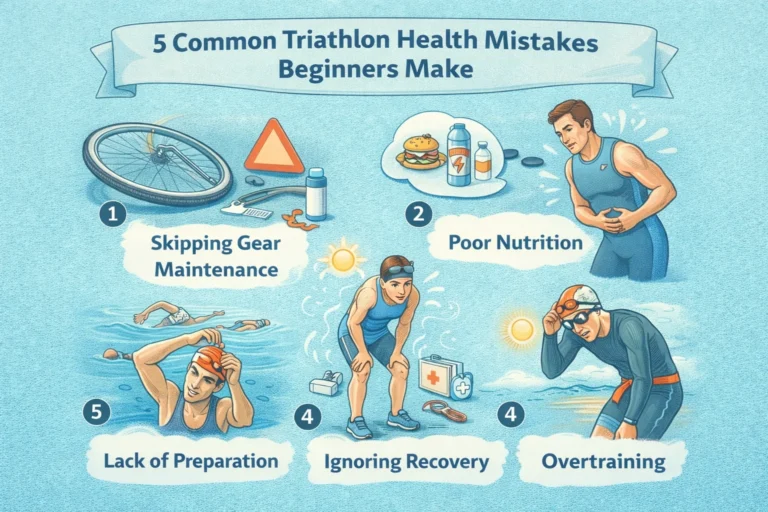
This section gives an overview of the five most frequent mistakes new triathletes make. Each following section will cover one mistake in detail, explain why it happens, what the consequences are, and how to correct it with clear steps you can apply right away.
Keep a notebook or training app open as you read. Note the areas where you see your own training reflected. Small changes, done consistently, lead to big gains over months. This article focuses on practical solutions you can use from your next session onward.
Skipping swim basics
Many beginners underestimate how much technique matters in the swim. You can train for hours and still be slow if your stroke is inefficient. Swimming uses different muscles and breathing patterns than running or cycling, and beginners often try to force pace without mastering fundamentals.
Poor swim technique leads to fatigue, panic in open water, and big time losses on race day. Beginners sometimes skip lane drills or avoid coached sessions because they feel awkward in the water. That discomfort is normal, but skipping basics prolongs the learning curve and makes training less enjoyable.
To fix this, prioritize skill work. Break sessions into short drill sets and easy swims that focus on body position, balance, and breathing. Aim for regular, short technique sessions rather than rare, long ones. Even two 30 minute technical swims per week can produce visible gains.
Below is a short list of drills and practice tips to build a solid foundation in the pool and the open water. Use these drills with a focus on relaxed breathing and steady rhythm, not speed, until the movements feel natural.
Try this pool drill list to improve balance and stroke:
- Catch-up drill, to improve hand entry and timing.
- Single arm drill, to work shoulder rotation and breathing on each side.
- Paddles-free easy lengths, to keep stroke smooth and prevent over-reliance on gear.
- Kickboard sets, to build a steady kick and improve body position.
- Open water sighting practice, to simulate race conditions with short sighting reps.
Training too hard, too soon
New athletes are often eager to improve quickly, so they increase volume and intensity too fast. That approach causes burnout and injury. Building fitness takes time and steady progression. Rapid jumps in load are the most common cause of overuse injuries in triathlon training.
Training too hard can also harm motivation. When workouts are always painful and recovery is poor, many beginners step back or stop training altogether. Consistency is more valuable than occasional extreme sessions. A measured plan leads to steady improvement and a better race experience.
To avoid this mistake, use a clear training plan with gradual increases. Aim for a weekly volume increase of 5 to 10 percent and include planned recovery weeks every three to four weeks. Track how you feel and adjust if fatigue accumulates. Rest is part of training, not a failure.
Here are practical steps to keep your training sustainable. Use these as part of your weekly routine and adjust as you gain experience and fitness.
- Follow a structured plan, that matches your current fitness and time availability.
- Include rest days, and treat them as essential recovery rather than optional breaks.
- Use easy sessions, as part of the plan to build aerobic base without adding stress.
- Schedule a recovery week, every 3 to 4 weeks to let adaptations consolidate.
- Pay attention to sleep and stress, both affect recovery and performance.
Poor fueling and nutrition
Nutrition mistakes are common and often overlooked by beginners. Many athletes do not practice their race fueling in training. That leads to stomach trouble, energy crashes, or slow race splits. Fueling is not one-size-fits-all, so testing what works is essential.
Another frequent error is underestimating daily nutrition needs. Training increases calorie demand and recovery requires protein, carbohydrates, and micronutrients. Skipping meals or relying on convenience foods can stall progress and reduce training quality.
Fixing nutrition starts with simple, repeatable routines. Plan pre-workout meals that are easy to digest, use familiar race fuel during long sessions, and aim for balanced meals that include protein after key workouts. Hydration matters too, and electrolyte loss should be addressed on hot or long sessions.
Below is a practical list to guide race-day and training nutrition. Use it as a checklist during long training sessions and events. Test each item in training so you know what your body tolerates on race day.
- Pre-workout fuel, light carbs 60 to 90 minutes before long or intense sessions.
- On-bike calories, aim for 30 to 60 grams of carbohydrate per hour for shorter events, more for longer races, and practice specific gels or bars in training.
- Post-workout recovery, include a source of protein with carbs within 30 to 60 minutes after key workouts.
- Hydration, drink small amounts often and use electrolytes for sessions over an hour or in heat.
- Race simulation, rehearse your race nutrition plan in at least two long brick sessions before race day.
Poor bike fit and gear choices
Many beginners buy a race-style bike or choose gear based on looks rather than fit and comfort. An ill-fitting bike wastes energy and can cause back, neck, or knee pain. Good performance starts with a bike that fits your body and your goals, not just the most expensive parts.
Beginners also make gear mistakes like using worn shoes, a non-aero helmet that does not fit, or clipless pedals they do not practice with. These issues create inefficiency and increase the chance of a mechanical or handling problem on race day.
The cure is to invest time and a small budget into proper setup and practice. A professional bike fit helps find a comfortable, efficient position. Practice mounts, dismounts, and quick shoe changes in training until the movements are smooth. Check equipment regularly for wear and tear.
Here are key gear and fit checks you should make part of your routine. Do these checks before race day and after any long training block. Each one is practical and time efficient.
- Get a bike fit, a basic professional fit reduces pain and improves power transfer.
- Test pedals and shoes, practice clipping and unclipping in calm conditions until muscle memory is reliable.
- Check tires and brakes, replace worn tires and keep brake pads and cables in good condition.
- Use a helmet that fits, comfort keeps you focused and reduces neck strain during long rides.
- Organize race gear, set up a transition area and practice quick changes to build speed and confidence.
Neglecting transitions and race practice
Beginners often train swim, bike, and run separately, then expect transitions to be simple on race day. Transitions are a skill. Poor transitions cost time and add stress, especially in sprint and Olympic distances where seconds matter. Practicing transitions reduces errors and builds calmness on race morning.
Another common oversight is not practicing in race conditions. Training only on controlled routes and quiet pools leaves athletes unprepared for group starts, drafting, and crowded runs. Familiarity with race scenarios reduces panic and helps you execute your plan.
Fix this by rehearsing transitions weekly and doing at least a few sessions that mimic race pressure. Practice swim exits, quick bike mounts, racked bike dismounts, and shoe changes. Do short brick workouts that follow a swim with a bike and a run to get your legs used to the shift.
Here are practical transition and race-simulation steps. Introduce them gradually, so they become smooth parts of your race routine rather than a source of stress.
- Weekly transition practice, set up a mock transition area and run through the full sequence.
- Brick sessions, include short bricks each week and a few longer ones that mirror race pacing.
- Open water group sessions, practice starts and sighting with others to build confidence outside the pool.
- Race rehearsal, do a half-race simulation including pre-race routine and nutrition at least once before your target event.
- Checklist rehearsals, run through your morning and transition checklist to prevent forgotten items on race day.
Putting it together: simple weekly framework

Beginners benefit from a clear, manageable weekly plan that balances skill, volume, and recovery. The framework below is a template you can adapt to your schedule and target distance. The aim is to keep training simple, consistent, and focused on steady progress.
Use the plan to structure your week and avoid the extremes of either undertraining or overtraining. Include one or two technique sessions, two quality sessions that build fitness, and at least two recovery or easy days. A single long or race-specific session each week helps you practice fueling and pacing.
Below is a sample week for a beginner training for a sprint or Olympic triathlon. Adjust session length to match your time and fitness. The list is a guide, not a strict rule. The goal is repetition and steady build over weeks and months.
Sample weekly template for a beginner triathlete:
- Monday, easy swim focusing on drills and technique, 30 to 45 minutes.
- Tuesday, bike intervals or tempo ride with a short run off the bike, total 60 to 90 minutes.
- Wednesday, easy run or active recovery including mobility and core work, 30 to 45 minutes.
- Thursday, swim build with intervals and some sighting practice, 40 to 60 minutes.
- Friday, rest or active recovery with light stretching and short walk or easy spin.
- Saturday, long bike or group ride that includes race pace efforts and nutrition practice, 90 minutes or more.
- Sunday, long run or a long brick session, 45 to 75 minutes, depending on race distance.
Monitoring progress and avoiding setbacks
Tracking your training helps spot patterns that lead to mistakes. Keep a simple log of workouts, sleep, mood, and any aches. That information allows you to see early signs of overload, poor fueling, or equipment trouble. A log is the best tool for consistent improvement.
If pain or persistent fatigue appears, address it quickly. See a coach, physio, or experienced mentor for a short assessment. Early intervention is far easier than recovering from a more serious injury later. Adjust your plan for a few days and focus on easy movement if issues appear.
Also, review your race-day routine in training. That includes gear layout, nutritional timing, and warm-up. Practice keeps transitions and fueling predictable. When you rehearse race details, you reduce anxiety and make better decisions during the event.
Finally, remember that mistakes are part of learning. Track triathlonhealth errors as data, not failure. When you note an error, write down why it happened and what you changed. This habit turns setbacks into fast gains and builds confidence for future races.
Key Takeaways
New triathletes face a predictable set of beginner triathlonhealth mistakes. These include skipping swim basics, training too hard too soon, poor nutrition, bad gear and fit, and neglecting transitions. Each mistake can be corrected with clear, repeatable steps.
Start by adding small practices to your routine. Commit to weekly technique swims, a sensible training plan, race nutrition tests, a bike fit, and regular transition drills. Small, consistent actions reduce the chance of injury and improve race day performance.
Keep a training log and track issues. When you identify triathlonhealth errors, treat them as information. Adjust your plan, test changes in training, and repeat what works. That approach builds sustainable fitness and better race results.
Finally, be patient and persistent. Triathlon rewards steady progress and smart habits. Use the tips here to avoid common pitfalls and enjoy the process of getting faster and more confident on race day.