
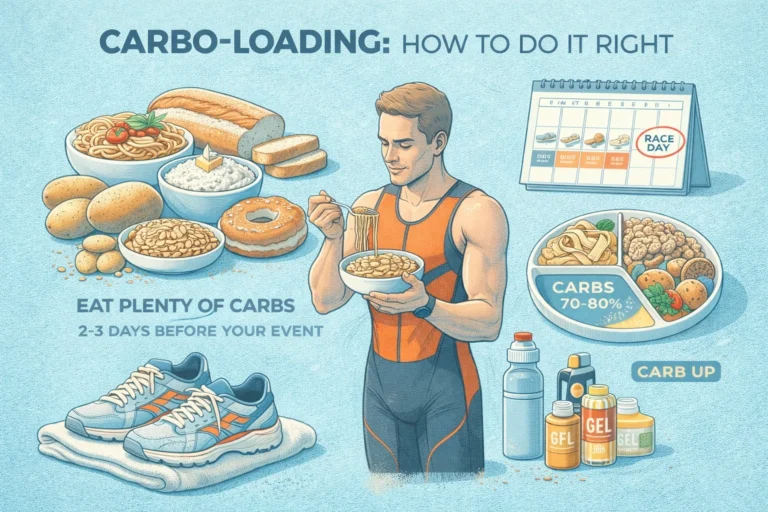
Carbo-loading tips matter for any athlete racing long or hard. This guide explains why carbo-loading works and how to plan it for best results. You will get clear steps, food ideas, and simple rules to follow before big events.
As a triathlon journalist and expert I bring real experience and plain advice. This article focuses on practical steps you can use now to improve your race. Read on to learn smart, safe carbo-loading tips that match your training and goals.
Carbo-loading tips: Why it works
Carbo-loading fills muscle and liver with glycogen. Glycogen is the stored form of carbohydrate the body uses for hard exercise. When stores are high, you can keep a strong pace longer and feel fresher late in a race.
The basic idea is simple: increase carbohydrate intake while keeping exercise light in the days before race day. That lets muscles store more fuel without emptying it with long training sessions. Many athletes find a clear boost in endurance and power when they do this right.
Carbo-loading is not magic. It is a planned change in diet and training. When done well, it improves race performance. When done poorly, it can cause stomach problems or weight gain from excess food. Use the steps below to avoid common problems.
When to start carbo-loading
Start your carbo-loading plan about 48 to 72 hours before a long race. This gives muscles time to increase glycogen stores. For most triathletes that means beginning two to three days before race morning.
If your event is short, like a fast 5K or short-distance tri, full carbo-loading is not needed. For races longer than 90 minutes, a proper carbo-loading window helps most. Tailor timing to your event length and personal experience.
Also consider how your training schedule fits. Cut volume but keep short, easy intensity sessions during the carbo-loading window. Rest too much and you might feel stiff. Keep movement and light workouts to signal muscles to store more glycogen.
How to carbo-load: a simple plan

Below is a clear, step-by-step approach you can use. It covers the two to three days before the race and race morning. Follow it but adapt for your needs and past experience.
The plan focuses on increasing carb intake while reducing training volume. It also gives rough portion guidance and shows what to avoid. Think of it as a simple framework, not a strict rule book.
Practice this plan in a tune-up event or a long training day. Testing helps you learn how your gut reacts and how much food you need. Use trial runs to refine timing and portions for race day.
Phase 1: Two to three days before the race
In this phase increase carbohydrate to about 7 to 10 grams per kilogram of body weight per day, depending on the race. That number sounds precise, but a practical way is to fill most meals with carb-rich foods and keep proteins and fats modest.
Cut training volume to about 30 to 50 percent of normal. Keep short rides or runs that include a few short efforts to keep legs feeling alive. Avoid long hard sessions that use up glycogen stores you are trying to build.
Drink regularly and monitor your appetite. Your body may feel heavier as stores fill with water too. This is normal. Try on your race kit in training so you are comfortable with how your body feels when you are fuller.
Phase 2: The day before the race
Eat a high-carbohydrate, low-fiber day before race morning. Choose familiar foods that sit well in your stomach. Pasta, rice, bread, pancakes, potatoes, and fruit are all good choices for many athletes.
Avoid very high fat or very high fiber meals in the evening. These can slow digestion and cause stomach upset on race morning. Keep protein moderate and timing regular to avoid big blood sugar swings.
Keep training minimal. Do a short spin or jog with a few faster efforts to stay sharp. Focus on rest, sleep, and mental preparation. Hydrate steadily across the day and include sodium if you know you sweat heavily.
Race morning and last fuel
On race morning eat 2 to 4 hours before the start depending on what you tolerate. Aim for 1 to 3 grams of carbohydrate per kilogram of body weight in the pre-race meal. Keep protein small and fat low. Test these amounts in training.
If you need a small boost closer to race start use a 20 to 60 gram carbohydrate snack 30 to 60 minutes prior. That can come from sports drinks, gels, a banana, or a small bagel. Keep it simple and tried before race day.
Plan race fueling based on race duration and intensity. For events longer than 90 minutes use 30 to 60 grams of carbohydrate per hour during exercise. For very long or high intensity efforts aim toward the higher end. Practice fueling so you know what works for your gut.
What to eat: foods and portions
Choosing the right foods makes carbo-loading practical. Use familiar items you eat in training. Balance meals so you get carbs without too much fat or fiber that can slow digestion.
Below is a sample list of carb-rich foods that work well for most people. These items are easy to digest and fit into most meal plans. Read the short notes so you can match foods to your taste and tolerance.
- White rice: Easy to digest and fits many meals. Good for dinner with lean protein.
- Pasta: A classic pre-race choice. Keep sauces light and avoid heavy creams.
- Bread and bagels: Good for breakfasts and snacks. Top with jam or honey, not too much peanut butter.
- Oats: Choose rolled oats or quick-cook for breakfast. Avoid high fiber add-ons if you are sensitive.
- Bananas and cooked fruit: Gentle on the stomach and provide quick carbs.
- Potatoes: Boiled or mashed potatoes are high in carbs and low in fiber when peeled.
- Sports drinks and juices: Useful for quick carbohydrate and fluid intake during the day.
Portion guidance helps you hit carb targets. A simple approach is to make carbs the biggest part of each meal. Fill half your plate with carbs, a quarter with lean protein, and a small quarter with vegetables. Adjust amounts by appetite and body weight.
Common mistakes and how to avoid them
There are clear errors athletes make when carbo-loading. Avoid these to keep your plan safe and effective. Here are the typical mistakes and simple fixes that save race day stress.
Before each list we give an explanation so you know why these points matter. Read the note, then check the list for practical steps to correct each mistake.
- Changing foods at the last minute: Stick to what you know works in training. Try new foods only well before race week.
- Eating too much fat or fiber: These slow digestion and can cause stomach upset. Keep fats and fiber lower in the two days before the race.
- Overeating empty calories: Candy and sweets give carbs but can spike blood sugar and then crash. Prefer whole carbs with steady energy release.
- Neglecting hydration: Carbohydrate storage needs water. If you do not drink enough you may feel sluggish even with full glycogen stores.
- Skipping practice: If you have not tested your carbo plan in training, race day is a bad time to experiment. Practice in long workouts to find what works.
Addressing these issues is straightforward. Use tried foods, keep fats and fiber moderate, hydrate, and practice fueling in training. These steps cut risk and build confidence for race day.
Hydration and electrolytes
Hydration is part of carbo-loading. Glycogen binds water, so stored carbs increase fluid needs. Planning fluids helps you avoid cramps and poor performance from low blood volume.
Use plain water and sports drinks to balance fluid and carbohydrate. Sports drinks can help you eat carbs without heavy food intake and add sodium that helps fluid retention. Consider individual sweat rates when deciding how much to drink.
Below is a short list of simple hydration tips to follow during your carbo-loading window. Read the lead paragraph then use the list to guide your plan.
- Drink regularly: Take small sips throughout the day rather than few large drinks.
- Include sodium: Add salty snacks or use a sports drink to maintain electrolyte balance.
- Avoid alcohol: Alcohol can dehydrate and reduce sleep quality, which hurts recovery.
- Check urine color: Pale yellow usually means good hydration. Dark urine often signals a need for more fluids.
Hydration matters on race morning too. Aim to be well hydrated but not overfull. Practice race morning drinking so you know how much your stomach will tolerate during warm-up and early race miles.
Practice and testing
Practice your carbo-loading plan in at least one long training session before race day. Use the same foods, timing, and fluids you will use on race day. This reveals any gut issues and allows tweaks.
Keep a short log of what you ate, the timing, and how you felt in training. Note when energy felt steady and when cramps or nausea appeared. Small changes often fix big problems.
Testing also helps you learn pace and fueling needs. If you find energy fades at a certain hour, adjust mid-race fueling up or use slightly higher carb intake in the day before. Practice makes your plan reliable and reduces race anxiety.
Key Takeaways
Carbo-loading tips can make a real difference in longer races when done correctly. Start 48 to 72 hours before the event, increase carbs, reduce training volume, and keep foods familiar. These simple steps help you reach peak glycogen stores.
Plan meals, hydrate well, and practice the plan in training. Pay attention to how your body responds and make small, tested changes. Use sports drinks and easy carbs on race morning to keep energy steady during the event.
Finally, remember that nutrition fits your whole season. Learn basic triathlon nutrition and apply smart fueling to key workouts. Use these carbo-loading tips along with fuel body triathlons methods, nutrition tips triathletes value, and solid hydration strategies triathlon to race with confidence and energy.