
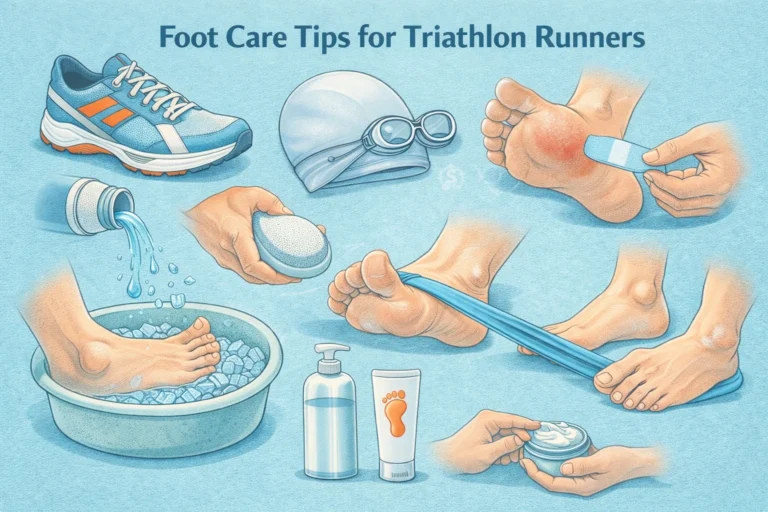
As a triathlon journalist and foot care expert I love helping athletes keep their feet strong and healthy. This article explains clear, practical steps for foot care triathlon. You will learn how to pick shoes, prevent blisters, care for nails, and prepare feet for race day. Read on to get simple routines you can use today.
Feet take a lot of wear in triathlon training and racing. Proper care stops pain and improves performance. I write from experience and from talking with coaches, podiatrists, and pro triathletes. The tips are easy to follow and work at all levels.
Throughout the article I focus on routines you can add to your weekly plan. Small habits make big differences. If you keep these steps consistent, your feet will feel better and you will run faster with less risk.
Footwear for foot care triathlon
Choosing the right shoes is the first step in any foot care triathlon plan. Shoes affect alignment, comfort, and injury risk. A good shoe fits your foot shape and supports your training type. Think of shoes as a daily tool for foot health.
Before you buy, test shoes with the socks and insoles you use for training. Feet swell during long runs and after the bike. Leave about a thumb width of space in the toe box. That space helps prevent black toenails and rubbing. If your toes feel pinched, try a different model or size.
For a quick selection checklist, use the short guide below. Read it before a fitting to make choices faster and more accurate.
Here are key shoe features to check:
- Fit: Heel snug, midfoot secure, toe box roomy enough for toes to splay.
- Cushion: Match cushion to your run distance and preference. More miles need more cushion.
- Stability: Use stability features only if you need them. Do not overload neutral runners with heavy support.
- Weight: Lightweight shoes can improve speed but may reduce protection on long runs.
- Breathability: Mesh uppers dry faster after the swim and open-air rides.
Toe and nail care
Toenails are often the cause of pain and lost training days. A simple nail routine prevents most problems. Keep nails short, even, and clean. That cuts the chance of bruises and infections.
Cut nails after a warm shower or bath. The nail is softer then and less likely to split. Cut straight across and file sharp corners gently. Avoid cutting too close to the skin. Let a small white edge remain to stop ingrowth.
Before races, inspect nails weekly. Remove loose or lifting nails early. If a nail is painful, treat it rather than ignore it. An infected or damaged nail can slow your whole training plan.
Follow this step-by-step nail care list to stay on track:
- Trim nails straight across with clean clippers.
- File edges smooth to reduce snagging.
- Use antiseptic on any cuts or raised areas to prevent infection.
- Watch for signs of fungal infection: thick, yellow or crumbly nails need treatment.
- If a nail is severely damaged, see a podiatrist before long events.
Skin care and blister prevention
Blisters are more than a nuisance; they can end a race. Prevention is the goal. You can avoid most blisters with consistent habits and quick responses during training.
Start with clean, dry feet. Moisture increases friction. Use moisture-wicking socks and consider powders in wet conditions. Apply lubricant to hot spots during long workouts to lower friction on skin that starts rubbing.
If you feel a hot spot, act fast. Stop and apply tape or a blister pad. This short step often prevents full blisters. Carry small blister supplies on long training runs and rides so you can fix issues early.
Use the list below for blister prevention tools and steps to carry during long sessions.
- Socks: Use moisture-wicking, seamless socks designed for distance running.
- Tape and blister pads: Use friction tape, second-skin pads, or Compeed for hotspots.
- Lubricant: Apply anti-chafe balm on known trouble spots before long sessions.
- Powders: Use foot powder to reduce moisture when running in humid or rainy conditions.
- Change socks: For ultra distances, plan sock changes in feed zones to stay dry.
Socks and insoles
Socks and insoles are a simple and cost-effective way to improve foot care triathlon. The right sock reduces friction and controls moisture. The right insole can change pressure points and make shoes fit better.
Choose socks with flat seams and smooth toe boxes. Synthetic blends dry faster than cotton and cut blister risk. Use a slightly thicker sock if your shoes have extra space to avoid slippage. For cold weather, choose warmer technical socks that still manage moisture.
Insoles can help pain from overuse, plantar issues, or high-impact running. A thin performance insole improves fit and adds heel cushioning. Custom orthotics are a step up for chronic problems and should be fitted by a specialist.
Before buying insoles, test them in training runs. Use this quick list to compare options:
- Thin performance insoles: add comfort and correct minor gaps.
- Cushion insoles: best for high-mileage days and recovery runs.
- Support insoles: for mild arch support and alignment help.
- Custom orthotics: for chronic pain or structural issues—get professional fitting.
- Swap and test: rotate insoles between runs to see how feet respond.
Training, recovery and foot strength

Strong feet handle load better. Add simple foot exercises to your program. These improve balance, lower injury risk, and help your run form. Practice them two to three times a week.
Include mobility work after rides and swims. Tight calves and stiff ankles change how your foot strikes. Gentle mobility reduces strain and helps toes move properly. Stretching and foam rolling are simple tools you can use daily.
Recovery matters as much as hard training. Rest days and easy runs let the tissues repair. If you feel persistent foot pain, reduce load and check form. Quick changes in training volume often cause foot injuries more than steady increases.
Try these practical foot-strength exercises as part of your routine:
- Toe raises and heel drops: 3 sets of 10-15 to build calf and foot strength.
- Short foot exercise: pull the arch up without curling toes to strengthen intrinsic muscles.
- Single-leg balance: hold for 30-60 seconds, add movement to progress.
- Towel curls: pick up a towel with toes for 2-3 sets to enhance toe strength.
- Calf and ankle mobility drills: slow, controlled motions for 1-2 minutes each side.
Race day tips for foot care triathlon
Race day is not the time to experiment. Use shoes, socks, and insoles that you trained in. A race plan for foot care helps you avoid surprises. Pack a small foot kit for the transition area and aid stations.
Before the start, dry your feet and apply any blister prevention products you usually use. Tape known hot spots. Keep nails trimmed and clean. If you change shoes from the bike to the run, make sure the fit is the same or slightly roomier to allow for swelling.
During the run, monitor your feet for hotspots. Stop briefly to apply a pad or change socks if needed. A short delay early is better than a long stop later. Post-race, clean and dry your feet, treat any blisters, and rest to help healing.
Use this race-day checklist to prepare your kit and actions:
- Training shoes and a spare pair if weather conditions change.
- Socks you used in long runs and blister pads for emergencies.
- Small roll of friction tape and a tube of lubricant.
- Basic first aid: antiseptic wipes and bandages for cuts.
- Post-race recovery: compression socks and a plan for foot icing if needed.
Key Takeaways
Foot care triathlon is about steady habits. Choose the right shoes, keep nails trimmed, prevent blisters, and build foot strength. A small routine each week protects your feet and improves performance. Consistency beats quick fixes.
Test shoes and socks during training. Fix hot spots early. Use simple exercises to strengthen the foot. Rest and recovery are part of any solid foot care plan. If pain persists, consult a podiatrist or sports medicine professional.
Follow these steps and your feet will thank you on race day. Healthy feet mean sharper training and a better race. Keep a compact foot kit in your transition bag and make foot care a regular part of your triathlon routine.