
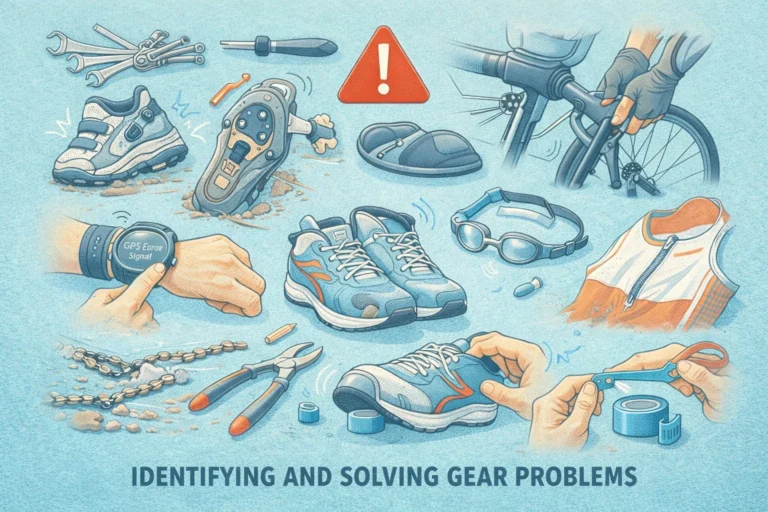
Gear issue solutions matter every time you train or race. I write from the field as a triathlon journalist who cares about reliable gear. This article shows clear steps to find problems, fix them, and keep gear working through big training blocks and race day.
Expect simple checks you can do at home and clear signals for when to get help. The tips work for bikes, running gear, wetsuits, and transition equipment. Read on to learn practical fixes and build confidence in your gear.
Common Gear Issue Solutions
Triathletes face similar gear problems over and over. Parts wear out, cables stretch, shoes lose grip, and wetsuits pick up tears. If you know the common patterns, you can solve small problems fast and avoid them on race day.
Start by listing the symptoms: noise, slipping, poor fit, or slow response. Each symptom points to likely causes. When you spot a pattern, you can apply targeted gear issue solutions and reduce time in the repair zone.
Below are the issues I see most often and how to think about them. Use these points to guide quick checks before a hard session or a race. A steady pre-ride and pre-run routine will catch many problems before they affect performance.
Before the list, read this short lead-in so the items make sense. This list highlights common problems and what to look for first.
- Chain noise or skipping: Often caused by wear, poor adjustment, or a dirty chain.
- Poor shifting: Could be cable stretch, derailleur misalignment, or cassette wear.
- Shoes peeling or sole detachment: Look for glue failure or worn stitching.
- Wetsuit chafing or leaks: Check seams, zipper, and cut for fit issues.
- Broken goggles strap or fogging: Test fit and anti-fog, and carry a spare strap.
- Transition kit failures: Missing Velcro or broken clips often mean rust or wear.
Diagnosing Gear Issue Solutions
Diagnosing is about the right questions and simple tests. Start with calm observation. Listen to your gear. Feel how it reacts. A short, clear test can reveal the issue quickly.
Begin with basic checks and move to more detailed ones. For bikes, ride a short loop and shift through all gears. For shoes, walk and run a short distance. For wetsuits, put it on and move your arms to check seams and range of motion. These steps form the core of practical gear troubleshooting.
When you run these checks, write down what you notice. A log helps you see patterns. If a noise appears only when climbing, the problem points to chain or cassette. If a shoe slips only on long runs, the fit or insole might be the cause. Clear notes make later fixes faster.
Before using a list of diagnostic steps, read this lead-in sentence. This set guides you from quick checks to more detailed inspections.
- Visual inspection: Look for cracks, frays, corrosion, and loose bolts.
- Functional test: Use a controlled short ride or run to test performance.
- Swap test: Replace a part with a spare to see if the issue follows the part.
- Tightness check: Ensure bolts and fasteners are at correct torque, but avoid over-tightening.
- Cleaning check: Clean the part and test again; grime can hide real problems.
Bike Gear Fixes

Bikes are the backbone of triathlon equipment and often cause the most stress. The good news is many bike problems have straightforward solutions. A little maintenance goes a long way toward keeping your bike shifting smoothly and running reliably.
Start with the drivetrain. Clean and lubricate the chain regularly. Replace worn chainrings, chain, and cassette as a matched set when wear is high. If shifting feels rough, check cable tension and derailleur alignment. Small cable adjustments often fix common problems.
Brakes and wheels need regular checks too. Inspect brake pads for wear and the rim or rotor for damage. True your wheels if you feel wobble. Loose spokes change wheel tension and can cause handling issues. Tighten bolts to recommended torque and check quick-release skewers or thru-axles before each ride.
Before the list, read this lead-in sentence that explains what to do for quick bike fixes. These steps help you perform effective gear issue solutions on the road or at the shop.
- Lubricate chain after cleaning. Use the right lube for conditions and wipe excess to avoid grime buildup.
- Adjust cable tension with the barrel adjuster to fine-tune shifting.
- Replace worn parts: chain, cassette, and chainrings in matched intervals.
- Check brake pad alignment and replace if less than 1.5 mm of material remains.
- Inspect tires for cuts and wear. Carry a spare tube, patch kit, and a pump or CO2 inflator.
Running and Transition Gear Fixes
Running gear and transition items often get less attention but still cause race-day issues. Shoes, socks, laces, and transition bags all need checks. Fit matters more than brand when it comes to comfort over distance.
For shoes, check the sole, midsole, and upper for wear. Rotate shoes between sessions to let cushioning recover. Replace shoes when cushioning and support fade. A simple insole swap sometimes fixes hot spots and improves fit for long runs.
Transition gear like race belts, goggles, and wetsuits need small fixes that save big time. Repair small wetsuit tears with neoprene glue. Use silicone tape on straps and Velcro to restore hold. Keep a tiny repair kit for race day so minor failures do not ruin your performance.
Before the list, read this lead-in sentence. This list covers quick fixes for running and transition gear that you can do yourself.
- Laces: Replace worn laces and consider elastic laces for faster transitions.
- Insoles: Swap insoles to manage fit and comfort while preserving shoe life.
- Wetsuit care: Rinse salt off and dry flat. Patch small tears with neoprene adhesive.
- Goggles: Anti-fog treatments and properly fitting seals reduce water leaks and fogging.
- Transition kit: Repair or replace Velcro and clips. Pack spares for race day.
Preventive Maintenance
Preventive maintenance is the best gear issue solution. A short routine after each session keeps parts functioning and reduces surprises. Spend time on cleaning, inspection, and small adjustments to stay ahead of breakdowns.
Create a weekly checklist that fits your training. For bikes, that might include drivetrain cleaning, checking tire pressure, and inspecting cables. For running gear, include shoe rotation and quick shoe inspections. For transition kit, check straps, zippers, and fasteners.
Seasonal checks are also important. Before a busy training block, do a full bike tune, replace worn tires, and refresh suspension if your bike has it. Replace swim gear that is more than a few seasons old if it shows signs of wear. These steps keep your gear reliable and save money over time.
Before the list, read this lead-in sentence. The following preventive actions are simple but effective for long term reliability.
- Daily: Quick visual check and tire pressure before rides.
- Weekly: Clean drivetrain, inspect brake pads, and check bolts.
- Monthly: Full gear inspection, replace small worn parts and test everything.
- Seasonally: Professional tune or deep service for bike and replace heavily used gear.
- Race week: Test everything exactly as you will use it on race day and pack spares.
When to Seek Professional Help
Some problems need a trained technician. If you feel out of your depth, bring your gear to a pro. This saves time and avoids mistakes that could make the issue worse. Professionals can handle complex adjustments and safety-critical repairs.
Know when to see the shop. Do it when safety is at stake like faulty brakes, cracked frames, or severe wheel damage. Also consult a pro for precise tuning of shifting systems and when noises persist despite basic fixes. A trained eye can find issues you might miss.
Keep a good relationship with a local bike mechanic or sports repair shop. They can give advice tailored to triathlon gear and offer quick turnarounds before big events. Build this relationship in low-stress times so they help quickly in race season.
Before the list, read this lead-in sentence. Use these signs to decide when to hand gear to a pro for safe and effective repairs.
- Visible frame cracks or structural damage to equipment.
- Persistent noises after basic maintenance and troubleshooting.
- Brake failure or significant rotor and pad damage.
- Complex electronic shifting issues that need diagnostics.
- Major wetsuit or shoe structural damage that affects fit and safety.
Key Takeaways
Gear issue solutions are about steady checks, fast fixes, and smart prevention. Get into simple routines and you will see fewer surprises. Regular care frees you to focus on training and racing with more confidence.
Use the diagnostic steps and quick fixes in this guide to handle most problems at home. Keep clear notes and a small repair kit for training and race day. These small habits prevent many last minute headaches.
When the problem goes beyond your skill, see a pro. Save complex or safety-related repairs for trained technicians. A reliable support network around your gear makes a big difference on race day.
Practice these methods and they will become second nature. Good gear care helps you train more, race better, and enjoy the sport. Keep practicing gear troubleshooting and apply these gear issue solutions to stay race ready.