
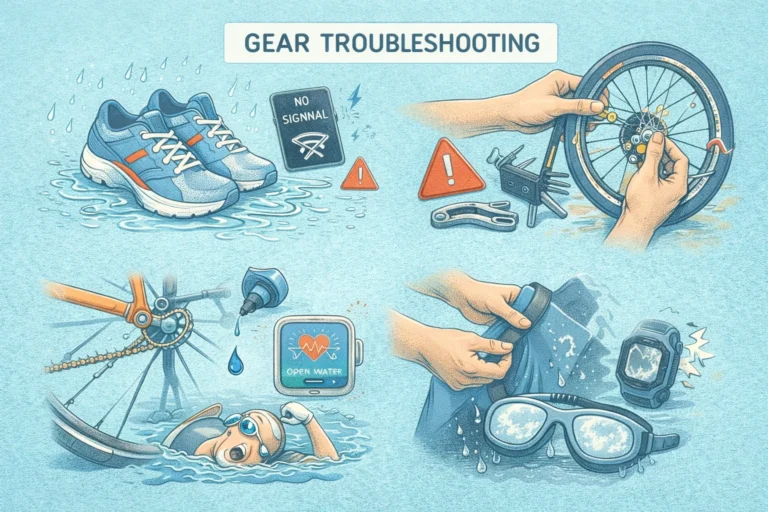
Fixing problems fast matters. This guide on gear troubleshooting helps triathletes diagnose and repair common faults in bikes, wetsuits, shoes, and transition gear. You will get clear steps, simple checks, and routine ideas that save time and stress before training or race day.
As a triathlon journalist and expert, I bring hands-on tips and straightforward language. Read on to learn how to spot issues early, perform basic fixes, and keep gear ready. The focus is practical. You will learn what to check, what to carry, and when to see a pro.
Bike gear troubleshooting
Bikes are the most complex part of triathlon gear troubleshooting. Small problems on the bike can cost time or cause a DNF. Knowing the common failures and fast fixes gives confidence. Start with routine checks and then use targeted steps when something behaves oddly.
Begin each ride with a quick walk-around. Check tire pressure, brake feel, and shifting. A soft tire, a sticky brake, or a skipping chain often has a simple cause. Regular attention prevents many issues from growing into race day failures.
When a problem appears on the road, know how to isolate it. Noise from the drivetrain is different from rattles in the frame. Poor shifting could be cable tension or a bent hanger. Work through symptoms one at a time rather than changing many parts at once.
Below are key checks and simple fixes to carry out before a long ride or race.
Start with these quick checks and fixes:
- Check tire pressure with a gauge and inflate to recommended PSI. Low pressure often feels slow or causes pinch flats.
- Inspect brake pads for wear and alignment. Adjust pad position so it contacts the rim evenly and does not rub when released.
- Test shifting while stationary. If gears skip, try shifting while pedaling lightly and then adjust barrel adjuster a quarter turn at a time.
- Look at the chain for stiff links. Apply a drop of lube and flex stiff links until they move smoothly.
- Check for loose bolts on stem, saddle, and crank. Use a torque chart when possible and avoid over-tightening.
Swim gear troubleshooting
Swim problems can ruin a race quickly. Wetsuit pinch points, goggles that fog or leak, and swim skin tears are common. Address these issues with a calm plan and a few simple fixes. Keep swim gear in a dry, ventilated area to prevent damage between sessions.
Test goggles for fit before race morning. Press the lens gently against your eye socket to test suction and fit. If goggles leak or fog, try different seals, anti-fog treatments, or a different strap setup. A broken strap is an easy swap if you carry a spare.
Wetsuit troubles include seams rubbing, zip failure, and trapped water affecting buoyancy or comfort. Rinse wetsuits in fresh water after use and inspect zips carefully. A sticky zip can often be freed by applying a small amount of soap or dedicated zipper lubricant and working the slider back and forth gently.
Here is a short list of practical swim fixes to carry in your kit bag. These help in warmups or transition areas.
- Carry a spare pair of goggles and a small strip of duct tape for emergency repairs.
- Bring a thin, quick-drying towel to help adjust wetsuit fit and remove excess water from zips.
- Use a small tube of fabric glue or neoprene repair strips for tiny wetsuit tears; larger damage needs professional repair.
- Keep anti-fog drops or a mild soap solution to reduce goggle fog before warmup.
Run gear troubleshooting
Run gear issues often start small and grow into big problems on the course. Shoe fit, blister hotspots, and loose laces are the usual suspects. Address these in training so race day surprises are rare. Proper triathlon gear maintenance matters for shoes in particular.
Always check shoe soles and upper seams for wear. A worn outsole can change how your foot lands. That affects comfort and speed. Replace shoes based on miles and the way they feel, not only on looks. Rotate shoes in training to extend life.
Carry simple blister care and lacing tricks to handle problems during a race. Elastic laces and a small roll of tape in your transition bag solve many issues fast. Practice these quick fixes in brick sessions so you can apply them without stress when it counts.
Below are practical run fixes and items to include with your race kit.
- Use anti-chafe balm and moleskin for known hotspots. Apply before long runs and carry a small patch for race day.
- Bring a spare pair of shoelaces and a tiny roll of athletic tape for emergency fixes.
- Consider elastic laces for faster transitions and consistent tension across the foot.
- Keep insoles checked. A worn or misaligned insole can change feel and cause pain over time.
Transition and pre-race checks
Transition areas can be chaotic. A calm checklist removes stress and speeds your flow. Pre-race checks focus on functionality, not perfection. Confirm each piece of gear serves its purpose and is easy to reach.
Lay out gear in the same order every race. Practice the motion sequence in training with a mock transition. Muscle memory prevents fumbling and saves time. Simple actions, repeated, reduce mistakes when nerves are high.
On race morning, do a step-by-step check of critical items. Tires, brakes, fuel, nutrition, and clothing belong on this list. Keep a small repair kit near your bike to handle flats or minor mechanicals quickly.
Here is a compact pre-race checklist to run through before you head to the start line.
- Check tire pressure and quick-release skewers. Inflate if needed and secure skewers tightly.
- Confirm brakes and shifting are working under light load. Spin wheels and shift through gears while stationary if possible.
- Pack spare goggles, a small tube of lube, elastic laces, and a mini first-aid kit in a labeled bag for quick access.
- Verify nutrition and hydration are in place and reachable. Label items if necessary for easy identification.
Tools, routine, and maintenance

Routine care prevents most failures. A short weekly routine keeps gear performing and lowers the chance of a surprise. I recommend a blend of quick checks and deeper inspections on a schedule that matches your training load.
Keep a small set of essential tools at home and a compact roadside kit for rides. For swim and run gear, a simple tub of soap, a soft brush, and basic repair supplies are enough for most issues. Learn a few maintenance tasks yourself; they save time and build confidence.
triathlon gear maintenance is not fancy. It is consistent. Clean, dry, and store gear properly. Replace worn parts before they fail. That approach reduces stress and improves performance over the season.
These are the must-have tools and a suggested maintenance routine to follow.
- Home tools: floor pump with gauge, set of hex keys, torque wrench, chain lube, and a basic multi-tool.
- Road kit: spare tube, CO2 or pump, tire levers, mini multi-tool, and patches.
- Swim kit: spare goggles, neoprene repair strips, anti-fog solution, and a soft towel for drying zips and seals.
- Routine schedule: quick checks before each ride or run; deeper clean and inspection weekly; full service of bike every 3 to 6 months depending on use.
When to seek professional help
Not every problem should be fixed at the roadside or in the living room. Some failures need a trained mechanic or a professional repair for safety and longevity. Knowing when to call a pro saves time and money in the long run.
Take the bike to a mechanic for complex drivetrain issues, bent frames or forks, and anything that affects structural safety. For wetsuits with large tears in critical areas, choose a specialist. For persistent shoe fit issues that cause pain, consult a podiatrist or shoe specialist.
Even when you prefer doing basic repairs yourself, schedule regular professional service. A trained mechanic will spot hidden problems and perform tasks that require precision tools. Professional attention reduces the chance of race day heartbreak.
Keep this small guide in mind when deciding where to send gear for help:
- Seek pro help for structural bike damage, cracked frames, or any failure that affects handling.
- Bring wetsuits to a specialist for large seam or panel repairs to preserve buoyancy and fit.
- Consult a shoe or foot specialist for recurring pain or biomechanical issues that do not respond to simple changes.
- Use a bike shop for regular tune-ups at least once a season, more often if you train heavily.
Key Takeaways
Gear troubleshooting keeps you on the course and reduces stress. Small, regular checks catch most problems before they grow. Learn basic fixes and carry a compact kit in transition areas and on rides.
Follow a simple maintenance routine: quick checks before every session, deeper cleaning weekly, and scheduled professional service. This habit keeps gear reliable and extends its life. triathlon gear maintenance is practical work that pays off in consistency and performance.
Practice common fixes in training so you can act quickly under pressure. Keep spare parts for items that fail often. And remember that a professional mechanic or specialist is the right call for safety-related or complex repairs.
Use these steps and tools as a roadmap. They will help you solve problems calmly, get back to training, and race with confidence.