
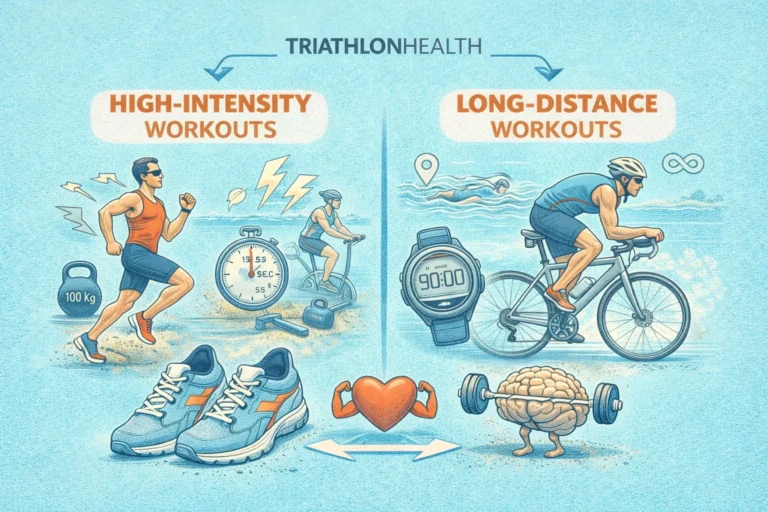
High-intensity vs long-distance triathlonhealth is a question many athletes ask as they plan training and buy gear. This article explains what each approach means, how your body responds, and how to choose training, tech, and products that match your race goals. Read on to learn clear, practical advice for training smarter and for shopping with purpose.
High-Intensity vs Long-Distance Triathlonhealth: What They Mean
High-intensity training focuses on short periods of hard effort followed by recovery. These sessions push heart rate and power, then give you rest to recover and repeat. The goal is to improve speed, power, and your ability to tolerate high effort for a short time.
Long-distance training centers on steady, lower-intensity work for much longer time frames. That includes long swims, long rides, and long runs that build endurance and teach your body to burn fat efficiently. The aim here is to increase time on task and resistance to fatigue over long efforts.
Both approaches change the body in different ways. High-intensity increases your peak speed and anaerobic capacity. Long-distance increases your aerobic base, efficiency, and muscular endurance. You will notice different adaptations depending on which style dominates your plan.
Choosing between them depends on your race distance, your strengths, and how much training time you have. Shorter races reward more speed and power work. Longer races reward steady endurance and energy management. Knowing these basics helps you match workouts to outcomes.
Physiological Effects of High-Intensity and Long-Distance
High-intensity sessions increase heart rate variability and push your body to use anaerobic energy systems. This trains your muscles and nervous system to handle surges and recover quickly. Over time, you will gain power and the ability to hold faster paces when you need them.
Long-distance sessions expand mitochondrial density and capillary networks in muscle. That improves how your body makes energy from fat and oxygen. You also build tolerance to long hours on the bike and long runs, which reduces the rate of perceived effort at race pace.
Both styles affect hormones and recovery. Intense work raises cortisol for short periods and needs solid recovery windows. Long, steady work stresses glycogen stores and requires fueling strategies to replace energy. Understanding these effects helps you pick the right rest, nutrition, and recovery tools.
Most triathletes need both aerobic base and some high-intensity exposure. For athletes focused on Olympic or sprint distances, high-intensity work carries more weight. For athletes preparing for half or full Ironman, long-distance work takes priority. Your body will respond best to a plan that fits the target event.
Training Goals and When to Use Each
Set clear training goals before you decide whether to favor high-intensity or long-distance work. Are you racing a sprint, an Olympic race, a half distance, or a full Ironman? Each goal benefits from different training emphasis. Goals shape weekly and monthly choices.
If your aim is speed and position in a short race, prioritize short, focused intervals, threshold sets, and race pace efforts. For a longer race, increase weekly volume with progressive long sessions and steady aerobic work. Both require attention to technique and recovery.
Time availability also matters. High-intensity sessions offer big fitness gains in less time, which is ideal for athletes with limited training hours. Long-distance training demands hours on the bike and in the pool, so it suits athletes who can commit more time each week.
Personal strengths and injury history influence your plan too. If you recover slowly or have a history of overuse injuries, lean toward moderate volume with carefully placed intensity. If you adapt quickly and need speed, include more intense work but monitor rest closely.
Sample Workouts for Both Approaches

Below are practical sample sessions you can use or adapt for your plan. Read each block, then choose what fits your race and training phase. These examples use simple language and clear structure to help you select a session.
Here are sample high-intensity sessions for swim, bike, and run that you can use to boost speed and threshold.
- Swim HIIT: Warm up 800 meters easy, then 10 x 50 meters fast with 20 seconds rest, 200 meters easy between sets, cool down 300 meters. Focus on stroke rate and smooth turns.
- Bike VO2 Max: Warm up 20 minutes, then 6 x 3 minutes at high intensity with 3 minutes easy recovery, finish with 15 minutes easy. Use power or perceived effort to target high intensity.
- Run Intervals: Warm up 10 minutes, then 8 x 400 meters at 5K pace with 90 seconds rest, cool down 10 minutes. Work on turnover and race pacing.
Now consider long-distance sample sessions for building endurance and race durability. These extend time and focus on steady effort and fueling practice.
- Long Swim: 60 to 90 minutes continuous steady pace if possible, or broken into 3 x 20 to 30 minute blocks with short breaks. Practice sighting and pacing.
- Century Ride: 3 to 6 hour ride with most kilometers at aerobic endurance pace, include a 30-minute block at race pace mid-ride. Focus on nutrition and position.
- Long Run: 90 to 150 minute run at an easy steady pace. Include the last 20 to 30 minutes at race-specific pace if fitness allows. Practice race fueling and gear choice.
Use these sessions as a template. Adjust volume, intensity, and recovery so you improve without injury. If you follow a coach or plan, adapt these samples to match your phase and weekly structure.
How to Combine High-Intensity and Long-Distance in a Week
Combining both styles creates a balanced athlete who can sustain long efforts and respond to race surges. A smart weekly plan includes one or two high-quality intensity sessions and several endurance sessions. That mix helps maintain both speed and aerobic base.
A common layout places harder sessions early in the week with recovery days before and after. For example, a Tuesday interval session, a Thursday tempo or threshold workout, and a long ride or run on the weekend. Put easy technique work and mobility in between.
Periodization matters. Build base with more long-distance work early, then add intensity as the race approaches. In the final weeks before a key race, reduce volume but keep some short sharp efforts to preserve speed without causing fatigue.
Training should also include strength work for injury prevention and power. Use short, targeted strength sessions two times per week. This combination helps maintain balance cardio strength triathlonhealth so you stay strong across disciplines.
Gear and Tech Choices for High-Intensity vs Long-Distance
Your gear needs change based on dominant training style. High-intensity work asks for accurate, responsive tech that tracks short efforts and recovery. Long-distance work asks for comfort, battery life, and reliable nutrition tools for long hours.
For high-intensity, a GPS watch with quick heart rate and power metrics helps you judge intervals. A smart trainer or power meter gives precise feedback for bike sessions. Good running shoes with responsive cushioning help you handle repeats.
For long-distance, prioritize fit and comfort. A reliable bike saddle, aero position that does not cause pain, and shoes built for long miles matter. A watch with long battery life and an easy fueling setup are essential on long days.
Below is a short list of gear categories with what to look for, so you make choices that match your focus.
- Watches: For intervals pick a watch with quick GPS and heart rate response. For long sessions choose longer battery life and easy activity segmentation.
- Power Meters and Trainers: Use a reliable power meter for structured intervals. For long rides, a comfortable trainer or stable bike fit helps replicate race position for hours.
- Shoes and Apparel: Interval shoes should be light and responsive. Long-distance shoes must provide support and cushioning to avoid fatigue and injury.
Nutrition, Hydration, and Recovery Differences
Nutrition changes significantly between intensity and long-distance work. High-intensity sessions need quick carbs to fuel hard efforts, and rapid recovery meals after. Short sessions can often be done on less pre-fuel but require targeted refuel soon after.
Long-distance sessions demand planned fueling during the session, usually combining carbs and electrolytes over time. You need to practice timing and quantities to avoid gut issues. Also, train your stomach to accept calories during exercise.
Hydration plays a larger role on long rides and runs. You should plan for varying temperatures and have a system for carrying fluids. For interval sessions, smaller hydration needs mean you can focus on cooling and short-term electrolytes if needed.
Recovery strategies differ too. After high-intensity efforts, prioritize sleep, protein intake, and short recovery rides or swims. After long sessions, focus on glycogen replacement, compression if that helps you, and active recovery to ease soreness.
Common Mistakes and How to Avoid Them
One common mistake is doing too much intensity without enough recovery. This leads to stalled progress or injury. Keep a clear schedule that balances hard days with easy days and full rest when needed.
Another mistake is thinking more volume always equals better preparation for long races. Without purpose and progressive overload, volume can cause fatigue and reduce race readiness. Build long sessions gradually and monitor performance markers.
Many athletes also forget to practice race nutrition during training. Going into a long race without practicing your fueling plan invites digestive trouble and energy crashes. Use long sessions to dial in food and fluid choices.
Finally, avoid equipment swaps on race day. Test shoes, tires, saddles, and tech during training. Familiarity reduces surprises and ensures you can perform your best on race day.
Measuring Progress and When to Shift Focus
Use objective metrics to measure progress. Power, pace at heart rate, FTP, and swim intervals on consistent sets give you useful data. Track trends over weeks, not single workouts, to judge improvement. Small consistent gains add up.
If intervals get easier and your race pace feels stable, you are ready to shift focus toward longer workouts or race-specific simulation. If long rides become more manageable and you still lack speed, add focused high-intensity blocks to sharpen top-end performance.
Be flexible with your plan. Illness, life, and small injuries will require shifting intensity and volume. Use easy weeks to maintain fitness without risking setbacks. A smart athlete adapts training rather than forcing a rigid schedule.
Work with data, but also monitor how you feel. Perceived exertion, sleep, appetite, and mood are strong indicators of recovery and readiness. Use both numbers and feeling to decide when to increase or reduce hard work.
Training Plans and Product Picks for Buyer Research
When researching products and plans, match them to your training focus. If you need guided plans, look for coaches or platforms that offer both HIIT-focused blocks and long-distance templates. Check reviews from triathletes who train for events like yours.
For gear purchases, prioritize these product types by training style. If you do more intervals, invest in accurate power meters, a smart trainer, and fast shoes. If you do more long sessions, invest in comfortable shoes, a reliable bike fit, and nutrition systems that you can carry for hours.
Below are recommended product categories and what to look for as you shop. Use these as a checklist while comparing models and reviews.
- GPS Watches: Look for accurate GPS, quick heart rate recording, and battery life proportional to your longest sessions. For long-distance, battery life and offline maps are helpful.
- Power Meters and Smart Trainers: Choose precision for intervals if you need power-based training. For long rides, a stable smart trainer that handles long hours without heating issues is best.
- Shoes and Apparel: Pick shoes that match your mileage and foot shape. For long training, comfort and durability matter more than minimal weight.
- Nutrition Systems: Test gels, bars, and drinks for how your stomach tolerates them during training. For long races, choose products with proven endurance performance and easy handling while on the move.
When you research, compare specs and user reviews from triathletes who train the way you do. Look for practical features, such as quick fueling bottles, comfortable cleats, or simple watch interfaces that do not distract you during hard sessions.
The big picture
High-intensity vs long-distance triathlonhealth is not an either-or choice for most athletes. You need both speed and endurance in varying amounts based on your event, time, and goals. A thoughtful plan mixes the two to build a strong, flexible athlete.
Choose your focus by asking honest questions about your race distance, available training hours, injury history, and what you enjoy. Use objective data from training and subjective feedback from your body to fine-tune the balance between intensity and volume.
When buying gear, match products to the training you do most. Spend on the tools that give you the most value, whether that is a power meter for intervals or comfortable gear for long hours. Test equipment during training, not on race day.
If you want a clear next step, write down your race goal, weekly training time, and top two weaknesses. Then pick one training block of 8 to 12 weeks that emphasizes either high-intensity or long-distance, while keeping maintenance for the other. This focused approach will help you make measurable progress and guide your product choices as you shop and train.