
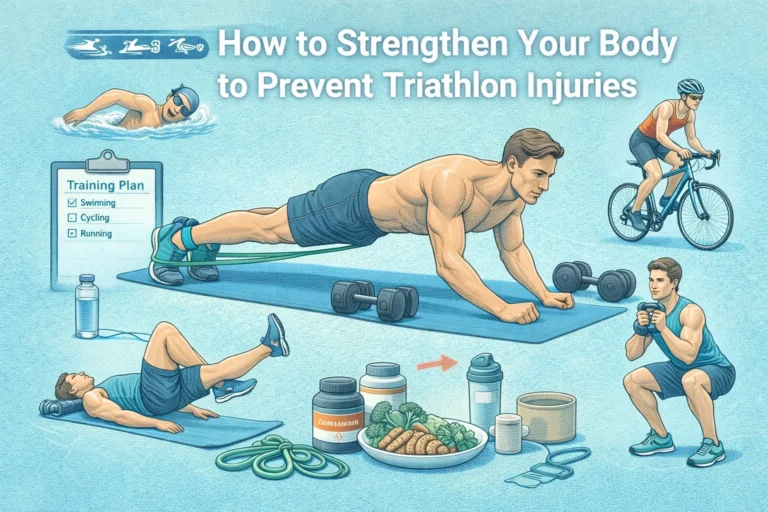
Triathlon is a sport of three disciplines and one body. You can reduce your risk of injury and get faster by building strength in the right places. This article explains how to strengthen your body to prevent triathlon injuries, with clear plans, practical exercises, and tips you can use whether you are new to the sport or racing professionally.
Why strength training matters to prevent triathlon injuries
Strength training changes how your muscles, tendons, and nervous system handle the load of long training weeks. Stronger muscle fibers and stiffer tendons absorb impact better and protect joints during swim, bike, and run sessions. That reduces the small failures that turn into injury over time.
Many triathletes think only of endurance and speed. They forget that endurance without strength can make the body weak where it matters. A body that can resist fatigue keeps better form on long rides and runs. That form protects knees, hips, and the lower back.
Strength work also improves power and efficiency. A stronger hip and core can produce more stable pedal strokes and smoother running strides. That means you maintain pace with less wasted energy, and you are less likely to overuse small stabilizer muscles that get injured.
Finally, strength training helps with recovery and tissue health. Gradual load through resistance training stimulates tendon and ligament adaptation. These tissues become more resilient, which lowers the chance of common overuse problems. If you want to prevent triathlon injuries, consistent strength work belongs in your weekly plan.
Common triathlon injuries and where to focus
Knowing which injuries are most common helps you pick the right strength work. In triathlon, we see trouble in similar places because of repeated motion and hours in one posture. Addressing these weak points is a smart step to prevent triathlon injuries.
Below I list the most frequent issues and why they happen. Read the short lead-in sentence, then use the list to check your weak points.
These are the injuries to watch for and the typical weak links behind them.
- Runner’s knee (patellofemoral pain): Often caused by weak hips and poor tracking of the kneecap during the run phase.
- IT band syndrome: Linked to weak glutes and poor single-leg control on uneven or fatigued legs.
- Achilles tendinopathy: Can result from sudden increases in run load and a weak calf complex.
- Lower back pain: Frequently due to weak core, tight hip flexors, and prolonged aerodynamic positions on the bike.
- Shoulder pain: Swimmers often suffer due to imbalanced rotator cuff strength and poor scapular control.
- Neck and upper back tension: Comes from long hours in a forward posture on the bike with weak posterior chain muscles.
Each of these problems links back to a few common deficits: weak hips, an underactive glute complex, poor core stability, and imbalanced upper body strength. Target those areas directly and you lower your injury risk.
Principles of a strength program for triathletes
A good program has clear principles. It is not random lifting. The principles below help you design work that protects you on race day and supports performance as training load rises. Keep these ideas simple and practical.
First, prioritize movement quality over heavy loads at the start. Control and proper range reduce the chance of creating new problems. Strength with poor technique often leads to strain rather than protection.
Second, use progressive overload. Add weight, reps, or volume slowly. The body adapts to steady increases. Jumping too fast invites injury. Make one change at a time so you can track what your body tolerates.
Third, balance unilateral and bilateral work. Single-leg control is essential for running, and bilateral lifts build raw strength. A mix gives stability and power. Also include core and posterior chain exercises to support posture on the bike and in the water.
Key exercises for triathletes: hips, core, and posterior chain
Targeted exercises protect the most injury-prone areas. The hips, core, and posterior chain absorb impact and maintain form. If these areas are strong, the knees, lower back, and shoulders will suffer less stress.
Before a list of exercises, read this short lead-in sentence that explains how to use the moves. Pick a few exercises from each group and train them twice a week.
Start with lighter loads, perfect technique, then add resistance as your movement stays clean. Below are practical exercises that transfer well to swim, bike, and run.
- Hip strength: Bulgarian split squats, single-leg deadlifts, lateral band walks, and clamshells to build glute medius and glute maximus control.
- Core stability: Pallof presses, dead bugs, side planks with reach, and single-leg bridges for anti-rotation and anti-flexion strength.
- Posterior chain: Romanian deadlifts, hip thrusts, kettlebell swings, and Nordic hamstring negatives to build hamstring and glute power.
- Upper body and shoulders: Scapular pull-ups, face pulls, standing rows, and rotator cuff external rotations to improve swim mechanics and shoulder durability.
- Ankle and calf work: Seated and standing calf raises and single-leg hops for tendon resilience and push-off strength in running.
Rotate through these movements across your weekly sessions. Use 2 to 4 sets of 6 to 15 reps depending on the goal. Lower reps with heavier load for strength, higher reps for endurance and tendon health.
Unilateral work and single-leg control
Single-leg strength reduces side-to-side compensation and protects knees and hips. Most running injuries appear when one side tires and the other side takes more load. Training one leg at a time prevents that imbalance.
Work on single-leg squats, step-ups, and single-leg deadlifts. These moves force stabilizer muscles to work and improve balance. They also reflect the single-leg nature of the running stride.
Below is a short lead-in sentence before the list of single-leg drills. Use these drills with light weight first and add small increases each week based on form.
- Step-ups to a box, with focus on knee tracking and a steady rise. Hold a dumbbell if technique is clean.
- Rear-foot elevated split squats to isolate the front leg. Keep the torso tall and knees aligned.
- Single-leg deadlifts to train the posterior chain and balance. Slight bend in the standing knee and hinge at the hips.
- Single-leg hops or bounds for reactive strength and ankle control. Keep landings light and soft.
Keep the sets moderate and the tempo controlled. Single-leg power transfers directly to running efficiency and lowers the likelihood of lateral overuse injuries.
Core and breathing: more than abs
Core work is not only about looking fit. It stabilizes the spine, supports efficient breathing, and holds your body in race position. A stable core helps you hold aero positions on the bike and maintain form when you are tired on the run.
Include anti-rotation and anti-extension drills. These exercises teach the body to resist unwanted motion during forceful actions like sprinting or a strong pedal stroke. They are simple to perform and safe to scale.
Here is a lead-in sentence before the list of core drills. Use these moves two to three times per week, and pair them with breathing practice.
- Pallof press for anti-rotation strength. Hold and press slowly to build endurance in the core muscles.
- Dead bug for coordinated core control while moving the limbs.
- Side plank variations for lateral stability, important for single-leg support in running.
- Farmer carries for loaded core endurance and shoulder stability.
Practice diaphragmatic breathing during these drills. Good breathing lowers tension in the neck and chest, and it helps maintain a stable trunk under load.
Mobility and the role of stretching triathlon athletes need
Mobility helps you use strength effectively. Tight hips, calves, or shoulders force other structures to compensate. That compensation raises injury risk. Mobility is the complement to strength work.
Before the exercise list, read this short lead-in sentence. Use both dynamic mobility before training and specific stretching after sessions to keep tissues ready for work.
Many triathletes confuse stretching with mobility. Use active range exercises first, then targeted stretching to improve tissue length and comfort. Include the phrase stretching triathlon when you plan your post-session routine because it helps reinforce the idea of sport-specific flexibility work.
- Dynamic hip swings and leg swings before workouts to prepare the joints and nervous system.
- Calf wall stretches and ankle mobility drills to reduce strain on the Achilles tendon.
- Pec stretch and doorway opener for swimmers to reduce shoulder impingement risk.
- Hip flexor and glute stretches after long rides to release tension from sustained positioning.
Mobility sessions do not need to be long. Ten to fifteen minutes several times a week prevents accumulated tightness. Pair mobility with light activation drills to make the gains usable during training.
Recovery, load management, and sleep
Strength training helps, but it must fit with recovery and your training load. Poor recovery erodes strength gains and increases injury risk. The right balance keeps you fit and healthy for race day.
Monitor how you respond to hard sessions and adjust accordingly. If soreness or performance dips last longer than expected, reduce intensity or volume. Recovery is part of training, not a break from it.
Nutrition and sleep are essential. Protein supports muscle repair, and total calories matter for recovery between long workouts. Sleep consolidates training gains and helps your nervous system handle heavy training loads.
Below is a lead-in sentence before the list of practical recovery habits. Use them routinely; they add up fast.
- Prioritize 7 to 9 hours of quality sleep each night; aim for consistent bedtimes and wake times.
- Eat a protein-rich meal or snack within 90 minutes after hard strength or endurance sessions.
- Use easy days for active recovery: light swims, easy spins, or short walks to promote circulation.
- Schedule one full rest day per week and consider short deload weeks after 3 to 4 hard training weeks.
Simple habits protect your training investment. Recovery is the glue that makes strength work effective and helps you prevent triathlon injuries over a season.
Screening, pain rules, and when to see a professional
Regular screening helps you catch small issues before they become chronic. A simple movement screen once a month can flag imbalances. Pay attention to single-leg squats, overhead reach, and hip hinge patterns.
Pain is a signal, not a reason to panic. Use the following short lead-in sentence and list to guide your response to pain. If pain changes through the day or worsens with normal activities, take action early.
- Follow the 24 to 48-hour rule: reduce load if pain persists after rest and light movement. If pain improves with reduced activity, return slowly.
- Watch for increasing swelling, sharp joint pain, or loss of range of motion. These signs need professional assessment.
- Use graded exposure, not complete rest, for many overuse problems. Controlled loading helps tissue adaptation when done with good form.
See a physiotherapist or sports physician if pain limits daily life or does not improve with conservative changes over two weeks. Early treatment shortens downtime and helps you return to training safely.
Sample weekly plan for strength and injury prevention

Putting all this into a schedule makes it usable. Below is a sample week for a triathlete who trains 10 to 12 hours per week. Adjust volume based on your experience and race goals. This plan blends strength, mobility, and recovery to help prevent triathlon injuries.
Read the short lead-in sentence before the list. The plan shows where to place strength sessions relative to swim, bike, and run workouts so you get the best benefit with minimal interference.
- Monday: Easy swim and mobility. Short strength session: hip-focused work and core, 30 to 40 minutes.
- Tuesday: Bike intervals. Post-ride mobility and light upper-body strength, 20 to 30 minutes.
- Wednesday: Run intervals. Strength session later in the day: posterior chain and single-leg work, 40 minutes. Recovery stretching.
- Thursday: Long swim or brick session with short activation work, focused on shoulder health and scapular control.
- Friday: Easy bike and core strength: Pallof presses, side planks, 25 to 35 minutes.
- Saturday: Long ride or race simulation, then light mobility and calf work to protect the Achilles.
- Sunday: Long run at an easy pace, followed by recovery session and targeted stretching triathlon-style to release hip flexors and quads.
Modify the plan to fit your day job and training priorities. The key is consistency, not one-off hard sessions. Regular, moderate strength work is the most reliable way to prevent triathlon injuries.
Key Takeaways
Strength training prevents injury by improving how your body copes with the repeated demands of swim, bike, and run. Strong hips, a stable core, and a solid posterior chain reduce stress on vulnerable structures like knees and the lower back.
Focus on movement quality, progressive overload, and single-leg control. Pair strength work with mobility and recovery habits to keep tissues healthy and ready for training. Use the sample plan as a starting point and adjust for your race and life schedule.
If you feel persistent pain, screen early and consult a professional. Small changes now save weeks or months on the bench later. Stay consistent, keep the sessions simple, and you will both reduce injuries and become a stronger, more efficient athlete.
Make strength a regular part of your weekly routine and you will see the benefits on race day. Strong, balanced athletes finish more races and spend less time sidelined by preventable injuries.