
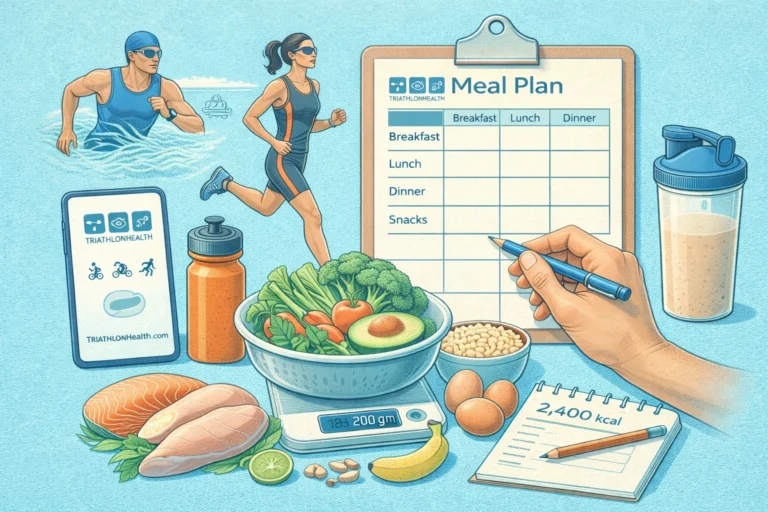
Training for triathlon taxes the body in swim, bike, and run. A clear meal plan triathlonhealth will help you train harder, recover faster, and perform better on race day. This article explains how to build a practical, sustainable plan for all training phases, with simple steps you can use right away.
You will find guidance on calories, macronutrients, hydration, sample menus, and recovery. Read on for an organized approach that fits busy schedules, different race distances, and individual needs. The language stays simple and the advice is rooted in sport nutrition for endurance athletes.
Why a meal plan triathlonhealth matters
A structured meal plan provides consistent fuel. When you train several times a week, your body needs predictable energy. A plan reduces guesswork, and keeps energy levels steadier during long workouts and hard sessions.
Consistency also reduces injury risk and helps with recovery. Poor fueling can lead to fatigue, poor sleep, and slower repair of muscles. A meal plan that matches training load lowers those risks and supports adaptation.
Finally, a meal plan saves time and lowers stress around food choices. Preparing meals and snacks ahead lets you focus on training. You will not scramble to find the right food on a busy morning or before a long ride.
A plan can be adjusted by phase, so you get more energy in base and build blocks, then aim for weight or sharpness in race taper. That flexibility makes a meal plan triathlonhealth useful across every season.
Energy needs for triathletes
Calories are the first building block of any meal plan. Your training load, body size, and goals determine total calories. Endurance training raises daily needs, sometimes by hundreds of calories on heavy days.
Day-to-day variation matters. Some days you will have a long ride or a hard interval session. On heavy days plan extra carbs and calories. On light days reduce intake slightly so you do not gain unwanted weight.
Make small changes and watch how your body responds. If weight is stable and training feels good, your calories are close to right. If you feel low energy, you likely need more food. If you gain unwanted weight, trim portion sizes or reduce snacks.
Tracking a week of intake alongside training can show patterns. Use that information to shape your meal plan triathlonhealth and make realistic adjustments that match real training demands.
Macronutrients: carbs, protein, and fat
Macronutrients provide the daily energy and building blocks you need. Carbohydrates fuel endurance work, protein repairs muscle, and fats support long-term energy and hormone health. Balancing them is central to any meal plan triathlonhealth.
Carbohydrates are especially important for training and race day. Aim for higher carbs on heavy days and lower carbs on rest days. Protein supports recovery and helps keep muscle mass during heavy training.
Fats should not be ignored. Healthy fats help with satiety and provide energy for long, low-intensity workouts. They also support cell health and vitamin absorption. Focus on plant-based oils, nuts, seeds, and fatty fish.
Typical ranges to start from are: 5 to 8 g/kg of carbs for high-volume training, 1.2 to 2.0 g/kg of protein depending on goals, and the remaining calories from fat. Use these as starting points and refine them for your needs.
Micronutrients and hydration
Vitamins and minerals matter for performance and recovery. B vitamins, iron, calcium, vitamin D, magnesium, and zinc are common needs for endurance athletes. A varied diet with whole foods meets most needs.
Hydration affects how you feel and how hard you can train. Drink regularly throughout the day. During long sessions, plan for water plus electrolytes to replace sodium and other minerals lost in sweat.
Monitor urine color and thirst as simple markers. Pale yellow urine usually means adequate hydration. Darker urine suggests you need more fluids. Keep a bottle on hand and sip often, not just at the end of a workout.
Consider a simple supplement, under guidance, if you have a known deficiency or restrictive diet. The term triathlonhealth nutrition covers both food choices and sensible use of supplements when needed.
How to calculate calories and macros
Start with a rough calorie estimate based on body weight and activity level. A simple method takes resting needs and adds training calories. This gives a starting point for a meal plan triathlonhealth.
Next, set macronutrient targets from the calorie total. Convert grams to calories, then build meals to hit those targets. Keep meals simple and repeatable so you can maintain them for weeks.
Track intake for a week while you record training load. Compare energy in with training demands and adjust. If you feel underfueled on long sessions, increase carbs before and during those sessions.
If weight loss is a goal, reduce daily calories by a modest amount, about 5 to 10 percent, while keeping protein steady and maintaining training quality. Slow changes are easier to maintain and less likely to hurt performance.
Sample meal plans for different training days
The following sample menus show how to structure calories and macros by training day. Use them as templates, and change foods to match preferences. The goal is practical options you can prepare quickly.
Below are three day templates: light day, moderate day, and long training day. Each template highlights meals and snacks to meet energy needs and support recovery.
- Light day: Oatmeal with fruit and nuts, yogurt snack, chicken salad, evening fish and vegetables.
- Moderate day: Toast with peanut butter and banana before a morning session, lunch with quinoa and vegetables, snack with cheese and fruit, dinner with lean meat and sweet potato.
- Long training day: Larger breakfast with oats and eggs, mid-morning energy snack, carb-rich lunch with rice and lean protein, intra-workout gels or bars, recovery shake and a hearty dinner.
Adjust portion sizes and timing. The long training day includes planned carbs during the session, while the light day focuses on steady protein and lower carbs. These templates help you design a repeatable meal plan triathlonhealth.
Pre-race and race day fueling
Race day nutrition needs a simple plan you can trust. Practice your race fueling during long training sessions so your gut is used to the foods and drinks. This practice reduces surprises on race day.
A typical pre-race meal is high in carbohydrates, moderate in protein, and low in fiber to ease digestion. Timing matters. Eat 2 to 4 hours before the start, and test this timing during training to find what works.
During the race, aim to replace carbohydrates at a rate that matches effort and duration. Short races need less. Long events require steady carbohydrate intake. Use sports drinks, gels, bars, or real food you’ve trained with.
Post-race, focus on quick carbs and protein within 30 to 60 minutes to support glycogen resynthesis and muscle repair. This approach forms the finishing piece of a reliable meal plan triathlonhealth for race performance.
Recovery nutrition and sleep
Recovery nutrition begins immediately after training. A mix of carbs and protein helps replenish glycogen and repair tissue. A simple shake or a small meal can start the process when you are short on time.
Later meals should include whole foods rich in vitamins, minerals, and quality protein. Sleep complements recovery. Poor sleep makes it harder to recover and increases hunger for high-calorie foods.
Plan evening meals to support sleep. Avoid heavy meals right before bed. Include magnesium-rich foods and moderate protein. Keep caffeine limited late in the day so sleep quality stays high.
Consistent recovery habits, combined with a steady meal plan triathlonhealth, let you train more effectively and reduce the chance of overtraining or illness.
Supplements and practical items
Supplements can fill gaps, but they do not replace a good diet. Consider basic supplements after testing and, if possible, consulting a professional. Common choices include vitamin D, iron when low, and omega-3s for inflammation control.
Sports-specific products like electrolyte mixes, energy gels, and recovery powders have a place for long sessions and races. Pick products you have practiced with and that sit well in your stomach.
Use the phrases triathlonhealth nutrition and triathlonhealth supplements as reminders that food first and supplements second is a solid rule. Supplements provide support when whole foods fall short.
Keep practical items on hand: a bottle of electrolyte mix, fast carbs for rides, and a small recovery shake. These items help you follow your meal plan consistently across training and on race day.
Meal prep and grocery list

Meal prep saves time and ensures you follow the plan. Choose a few staple meals for the week and batch cook. Store portions in containers for easy grab-and-go options before workouts.
Below is a starter grocery list. Use it to stock your kitchen with training-friendly options. Adjust quantities by household size and training volume before shopping.
- Whole grains: oats, rice, quinoa, whole grain bread.
- Proteins: eggs, chicken, turkey, canned tuna, Greek yogurt.
- Fruits and vegetables: bananas, berries, leafy greens, sweet potatoes.
- Fats and extras: olive oil, nuts, seeds, nut butter, avocado.
- Training items: electrolyte powder, energy bars, gels, recovery powder.
Prep tips: cook big batches of grains, roast vegetables, and portion protein. Make snack packs with nuts and dried fruit. Label containers with meal names and use the oldest items first to reduce waste.
Monitoring progress and adjusting the plan
Track training, weight, sleep, and energy to see how your meal plan performs. Simple notes after each session can reveal if you were fueled correctly or if adjustments are needed for longer efforts.
Small, steady changes work best. If you add more training hours, increase carbs. If recovery stalls, raise protein slightly and check sleep. If weight drift occurs, tweak portions over two to three weeks rather than overnight.
Use objective markers like pace at a given effort, heart rate response, and how you feel in morning workouts. These signs often point to fueling gaps more quickly than body weight alone.
Adjust seasonally. In base training you can prioritize volume and steady calories. In race prep tighten timing and on-race fuelling practice. This phased approach keeps a meal plan triathlonhealth relevant year round.
Key Takeaways
A clear meal plan triathlonhealth helps you train smarter and recover better. The plan should match training load, include the right balance of carbs, protein, and fats, and be practical to follow every day.
Start with estimated calories and macros, test the plan during training, and refine it based on how you feel and perform. Use simple meal templates, prep food ahead, and carry the right fuels for long sessions.
Keep supplements as a secondary tool and focus on whole foods first. Track training and recovery markers to guide adjustments, and be patient with changes. Small, consistent steps produce the best results.
Use this guide to build your meal plan and adapt it to your life. With structure and practice, you will fuel better, recover faster, and feel more confident on race day.